
 Connexion
Russia banned the scholars documenting Stalin’s starvation of Ukraine. They put their course out anyway—as Moscow repeats the famine.
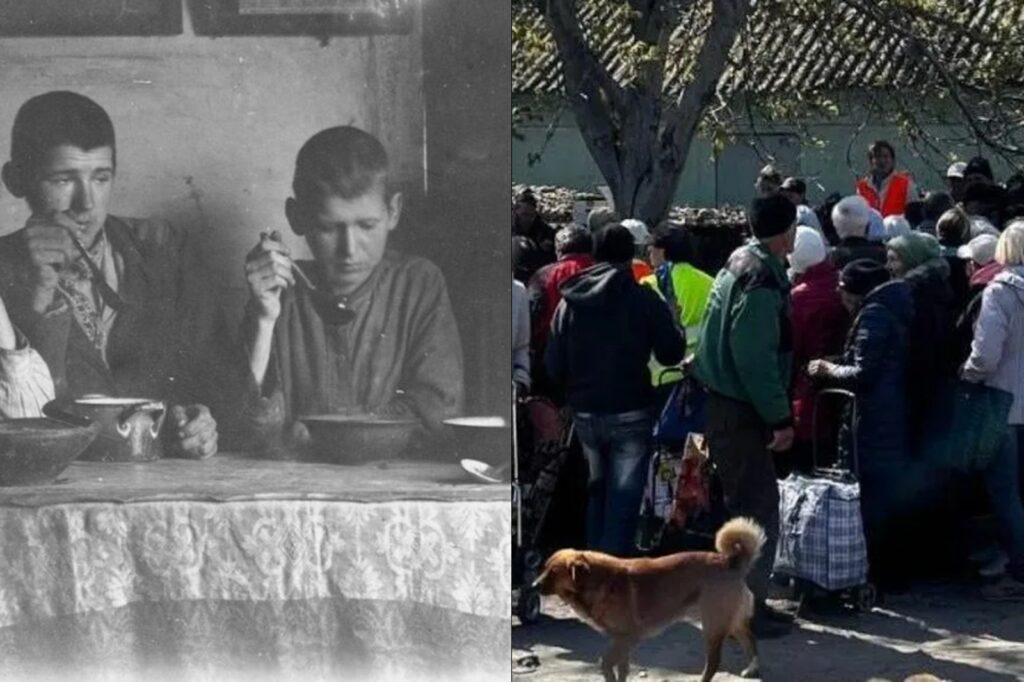
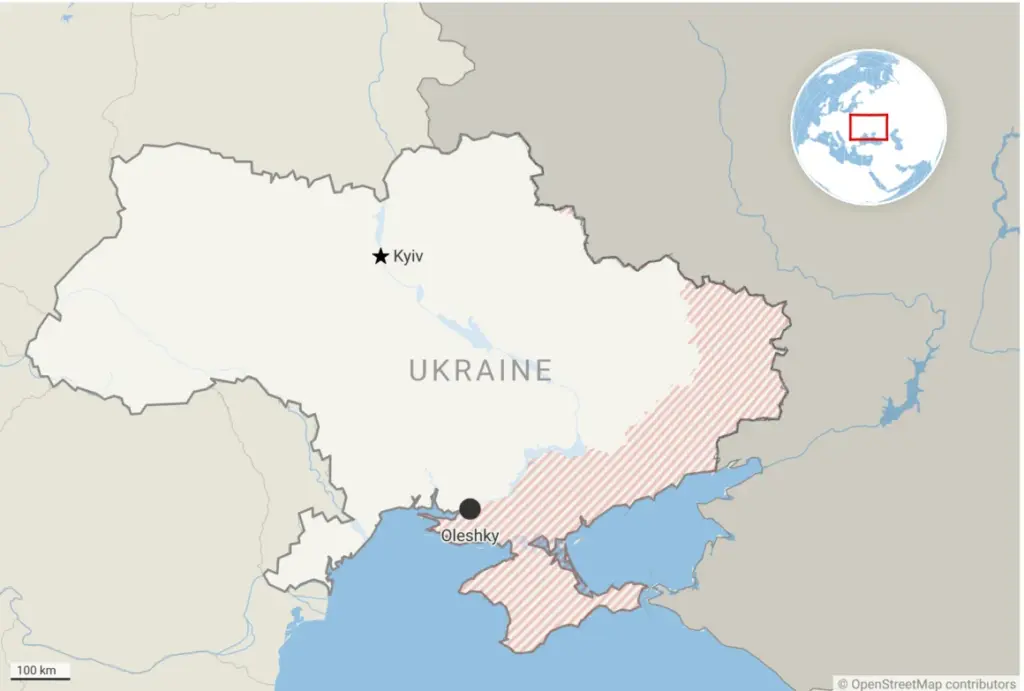
For months, Russian forces have cordoned off the occupied town of Oleshky. They have blocked roads and emptied pharmacies, all while mining the area. In June, a food truck ran over a landmine at the edge of town, killing a man bringing in aid. Up to 6,000 Ukrainians are still trapped in Oleshky and neighboring villages, more than 180 of them children. The last grocery store shut in January, and for stretches this spring no food reached the town at all.
Ukraine has seen this before. In its siege of Oleshky, Russia is reviving methods Stalin’s regime used against Ukrainian villages in 1932 and 1933: branding villages "hostile," cutting them off from supplies, barring the starving from leaving, and letting hunger kill the population. That famine—the Holodomor—killed millions.
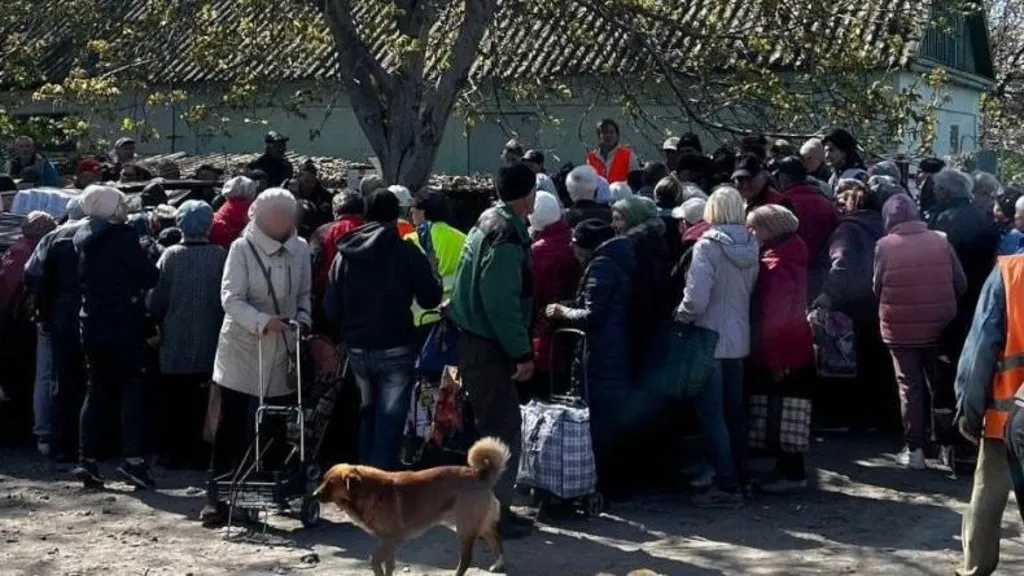
Yet as it besieges Oleshky, Russia says the Holodomor never happened. Moscow has dismissed the Holodomor as Western propaganda, rewritten its schoolbooks to blame the famine on the weather, and in occupied Ukraine has torn down the memorials to its dead.
Russia rewrites history in another way too: banning scholars. On 5 January 2026, it barred 28 Canadians from the country. Among them were 16 scholars of the Holodomor Research and Education Consortium (HREC) of the Canadian Institute of Ukrainian Studies at the University of Alberta. At the time, they were working on a course about the famine Russia denies.
They released it anyway. Seventy-seven days after the ban, Famine as Genocide: The Holodomor in Ukraine went live on Coursera—13 free modules, built by HREC at the University of Alberta.
What was the Holodomor?
The Holodomor—"murder by starvation"—was a man-made famine that struck Soviet Ukraine between 1932 and 1933. Scholars generally put the death toll at around 3.5 million; some figures go up to 7 million. Most died in the winter of 1932 and the spring and summer of 1933, as Soviet collectivization emptied whole villages.
The 1932 harvest was poor, but Soviet policy turned shortage into catastrophe. Stalin's government set grain quotas the farmers could not meet. Brigades entered the villages and seized what was left, killing those who resisted. Authorities blacklisted villages that fell short, sealing them off from the outside world. When peasants tried to flee to less famine-stricken parts of the USSR, a draconian passport system trapped them inside Ukraine.
One Ukrainian photographer left the famine its starkest visual record. In the spring of 1933, Mykola Bokan shot a near-daily record of the Holodomor from inside his own home in the Chernihiv Oblast. One photograph shows his family at the dining-room table, beneath his caption: "300 days without a single piece of bread to have with our meager lunch!"
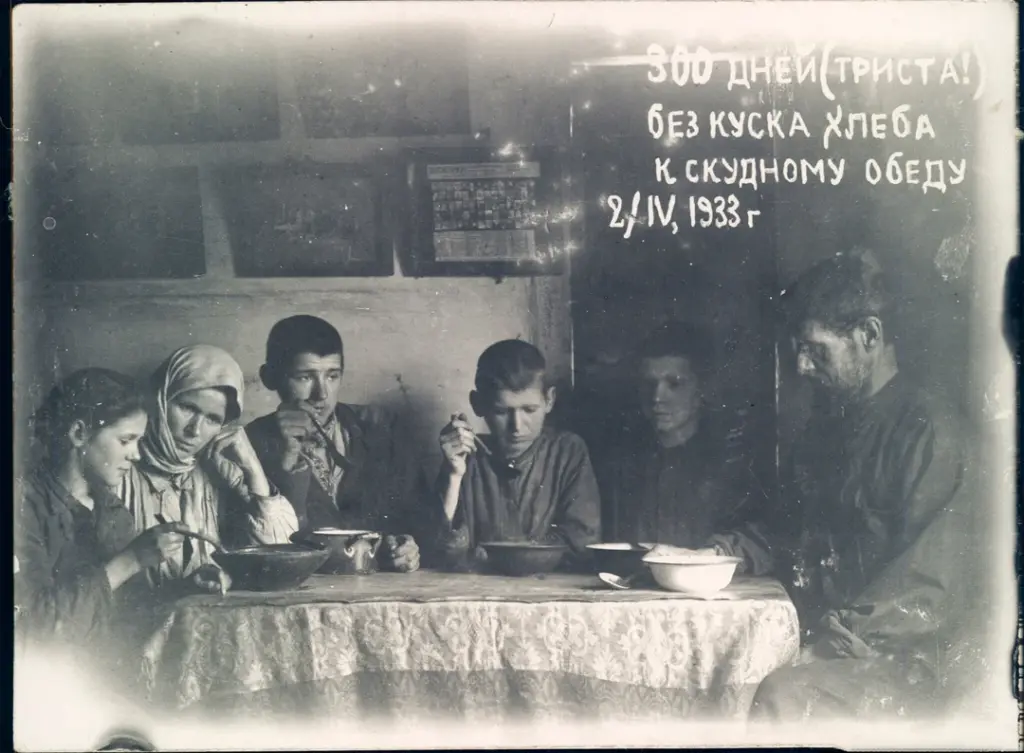
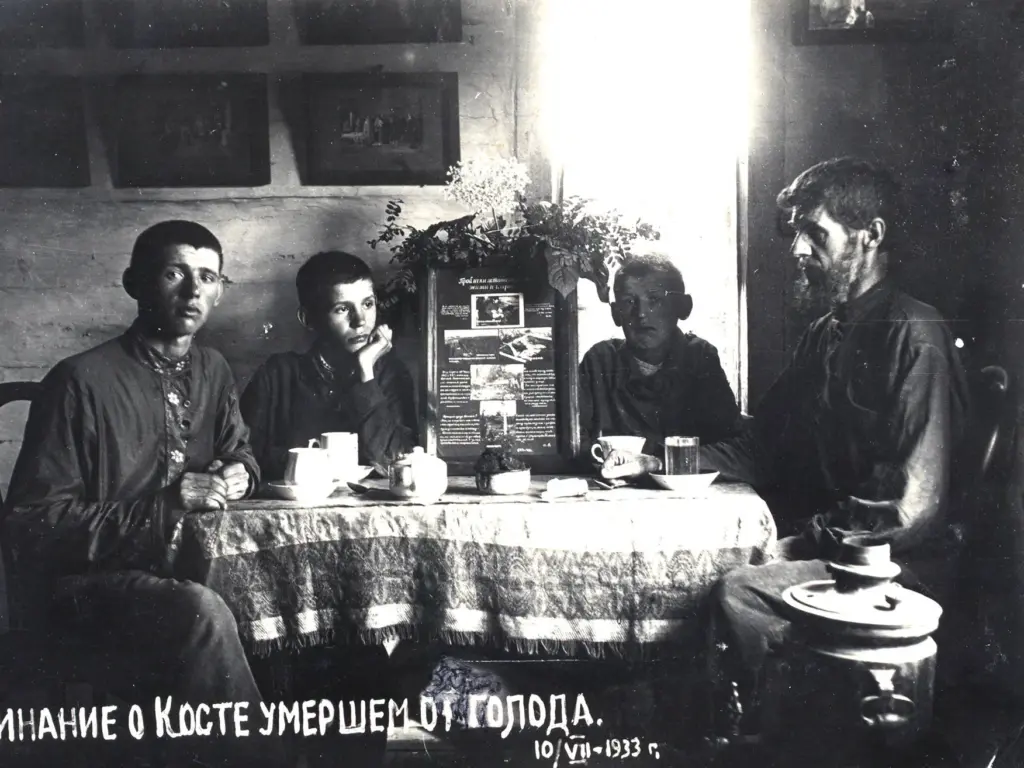
Three months later, his son Kostiantyn, one of the gaunt figures in the image, was dead. On 10 July 1933, Bokan gathered his surviving children around a smaller table, a framed portrait of Kostiantyn between them. The caption reads: "Remembrance for Kostia, who died of starvation."
Bokan was arrested for "counter-revolutionary activities." The photographs were among the evidence. He died in the Soviet camp system. His pictures sat in a secret police archive until researchers found them in 2007. They are now part of Famine as Genocide’s evidence.
Ukraine commemorates the Holodomor each year on the fourth Saturday of November, with a national minute of silence at four o’clock in the afternoon.
The permanent damage the deniers have to explain away
Russia’s denial now has to contend with a growing body of evidence—including the famine's mark on the bodies of people born long after it ended.
For decades, the Holodomor was usually told as a story of starvation. The Soviet archives remained locked until the early 1990s, preventing people from obtaining an accurate picture of the Soviet famine. Before that, scholars studying the Holodomor worked from the memories of émigré survivors and the cables foreign diplomats sent to their home countries in 1932-33.
That picture has changed. “Thanks to the amount of research done over the past twelve years, there is now a field called Holodomor studies,” Marta Baziuk, The Holodomor Research and Education Consortium’s (HREC) executive director and one of the course’s builders, told Euromaidan Press.
HREC’s course broadens that view by tracing the famine’s epigenetic legacy — its lingering physical and psychological effects — among survivors and their descendants.
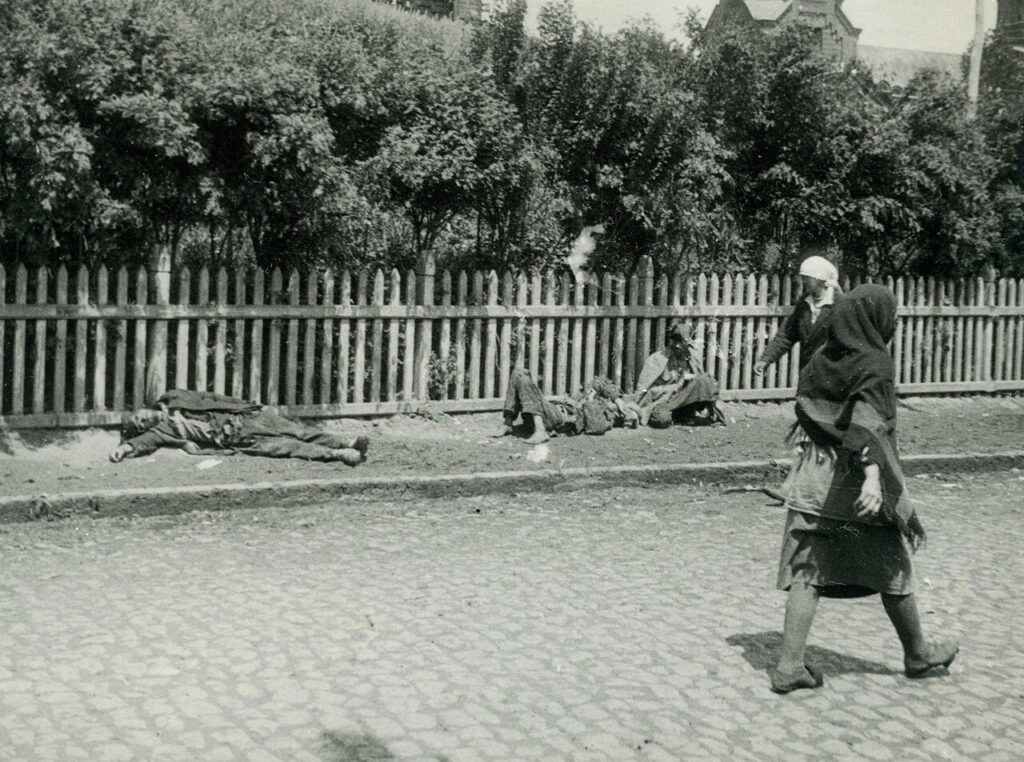
Research into other man-made famines, especially the Dutch Hunger Winter during World War II, informs this part. In the winter of 1944, German forces blockaded the western Netherlands and cut food supplies to civilians. A 2026 study groups Holodomor descendants with Dutch Hunger Winter and Holocaust survivors, pointing to shared histories of famine, mass deprivation, and inherited trauma.
Children conceived during the famine showed lasting epigenetic changes. Over sixty years later, the generation affected by famines showed accelerated biological aging and elevated risk of diabetes and heart disease compared to other generations.
Researchers studying three generations of Holodomor survivor families have found stress, mistrust, and food hoarding in grandchildren who never went hungry themselves. They describe it as “living in survival mode.”
"Russia’s war has made Ukrainian history important to a lot of people. This course might’ve been good before the war, but it would have sat quietly, with less interest." — Baziuk
The targeting of Ukrainians shows up in Soviet death records, Baziuk told Euromaidan Press. Even outside the Ukrainian Soviet republic, and even in mixed villages, ethnic Ukrainians died at noticeably higher rates than their neighbors.
The Executed Renaissance
HREC’s course does not treat the Holodomor in isolation. It situates the famine within a broader Soviet pattern of repression against non-Russian groups, in which physical destruction and material deprivation went hand in hand with the stifling of all culture hostile to Stalinism.
Raphael Lemkin, who coined the term "genocide," called the Holodomor the classic example of “Soviet genocide” in 1953. To him, the famine was one prong of a wider assault on Ukraine’s cultural figures, clergy, the peasantry, and Ukrainian national identity through resettlement with non-Ukrainians.
Over the course of the 1930s, Soviet security services arrested, deported, or executed roughly 30,000 Ukrainian writers, scholars, and clergy.
Ukrainian cultural figures flourished in the 1920s, as the Ukrainian language was more widely promoted, only for Soviet authorities to murder them in the 1930s. Today, Ukrainians remember that generation as the “Executed Renaissance.”
Many of those killed were themselves committed Communists. In the 1920s, the Bolsheviks had little organic support in Ukraine. They had recruited young, idealistic Ukrainians by promising room for a Ukrainian version of socialism.
Korenizatsia, the Soviet promotion of non-Russian nationalities, had once promised room for Ukrainian culture. Stalin’s Great Turn — the Soviet regime’s late-1920s drive toward forced collectivization and rapid industrialization — crushed that opening. Ukrainian national communists became, at best, relics of a discarded future, and at worst marked for death.
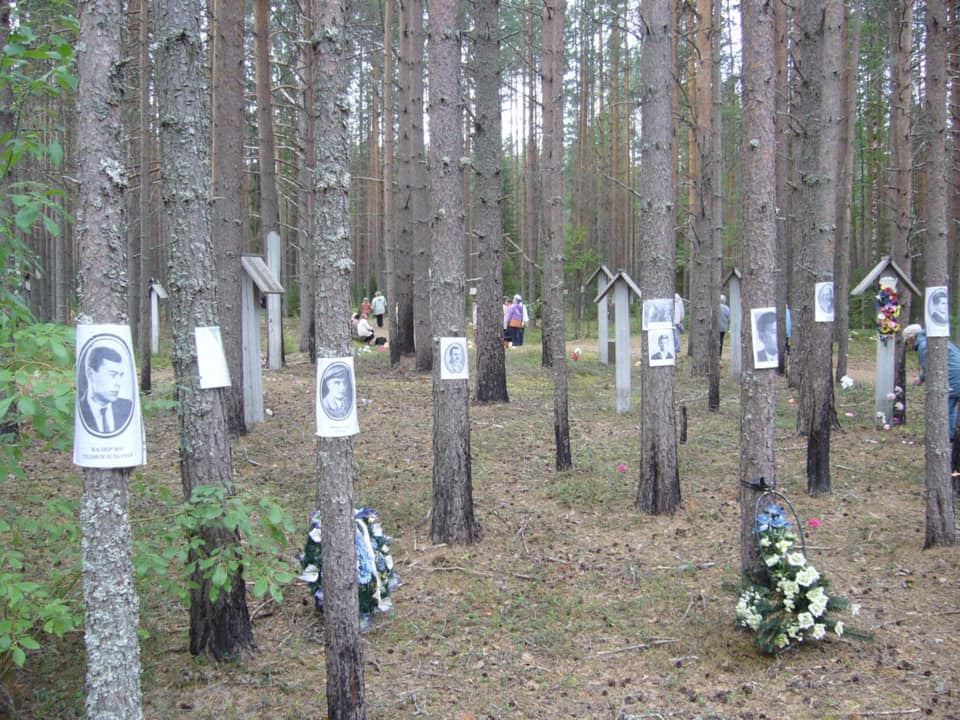
Russia’s present war follows a similar logic. Ukrainian writers are again being killed, as they were in the 1930s. In 2022, Russian forces seized the children’s author Volodymyr Vakulenko near Izium. He is among the more than 100 cultural figures killed by Russia, according to PEN Ukraine.
In Russian-occupied territory, churches not part of the Moscow Patriarchate have been closed, seized, or destroyed. Tens of thousands of Ukrainian children have also been forcibly transferred to Russia, where they are to be brought up as Russians. Moscow’s abduction of children has formed the basis for the ICC arrest warrants for Vladimir Putin and his children’s rights commissioner, Maria Lvova-Belova.
Forget what you’ve seen: Soviet-era denial of the Holodomor
Soviet denial began while Ukrainians were still dying. When the International Red Cross offered famine aid, Moscow refused, denying that mass starvation was taking place. Even as Ukraine’s villages became open-air morgues, Soviet ships carried Ukrainian grain out of Odesa for sale on foreign markets.
In March 1933, a young Welsh journalist named Gareth Jones went from village to village in Soviet Ukraine, recounting what he saw:
"There is hunger almost everywhere. Millions die from it. I travelled for several days in Ukraine, and there was no bread. The children had stomachaches, all the horses and cows were dying, and the people were also dying of hunger. The terror was on an unheard-of scale." — Gareth Jones in a letter to his parents, March 1933
For his trouble, Jones was mocked by name in The New York Times. NYT’s Moscow correspondent, Walter Duranty, responded to Jones in print, denying that any famine existed.
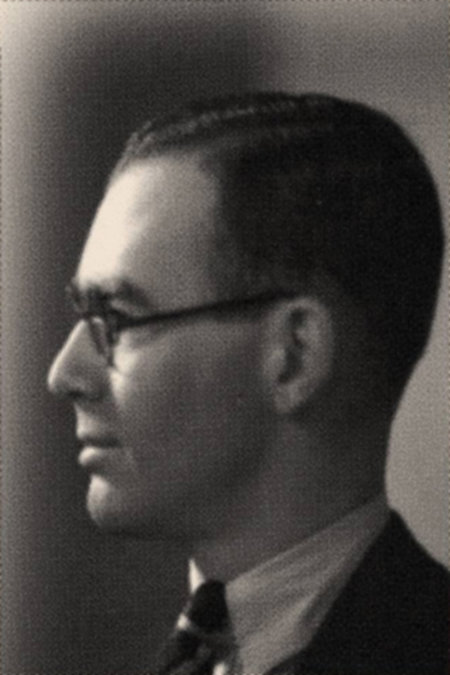
Duranty received more acclaim than Gareth Jones in his lifetime, receiving a Pulitzer Prize in 1932. The Times has since disavowed his coverage, calling his Soviet dispatches "some of the worst reporting to appear in this newspaper." Nevertheless, NYT has yet to return the award.
Jones was banned from the USSR and shot dead two years later in Inner Mongolia, in northern China. He did not live to see his findings vindicated.
Russia’s denial today
Following in Soviet footsteps, Russia continues to whitewash or deny the Holodomor. In 2014, Kremlin-backed outlets called it a “hoax invented by the West’s propaganda machine.” Since 2023, Russian school textbooks have blamed the famine on poor harvests and local mismanagement rather than the Stalinist policies.
Asked about intent, Baziuk did not treat it as a difficult question. The archives, she says, show Soviet officials knew people were starving and kept selling Ukrainian grain abroad as they died.
Beyond intimidating scholars, Russia's denial extends to physical destruction. On 19 October 2022, occupation forces in Mariupol dismantled the monument to victims of the Holodomor and political repression near the destroyed Drama Theatre, where up to 600 Ukrainian civilians were killed by a Russian airstrike. The granite, officials said, would be turned into construction materials.
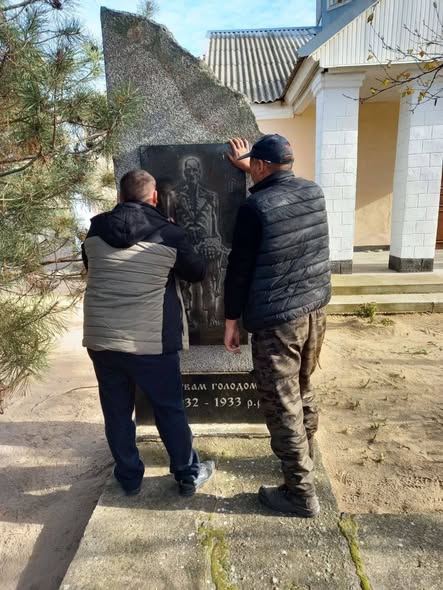
In November 2023, Russian-installed administrators in occupied Kherson Oblast began demolishing Holodomor memorials in Nova Kakhovka and the Oleshky community. They called the memorials "a tool for manipulating history," artificially created to incite hatred toward the Russian Federation.
Echoes of the Past: Russia’s Starvation of Oleshky in 2026
Russia’s destruction has not stopped at memorials.
In a 25 June report, UN monitors who interviewed residents recorded at least 29 civilians killed this year in Oleshky and neighboring villages, most by FPV drones. No food had reached Oleshky since 26 May. A few of Oleshky’s trapped residents escaped through ad-hoc volunteer runs, including 32 people during a three-day lull in the shelling. Others could not be moved at all.
One woman’s husband stayed behind with his 84-year-old father, who could not walk the ten kilometers to the meeting point.
Russian forces imposing these conditions, the monitors noted, are legally bound to feed the town they occupy.
The Soviet state followed the same logic, cutting off villages that missed grain quotas and barring peasants from leaving Soviet Ukraine in search of food.
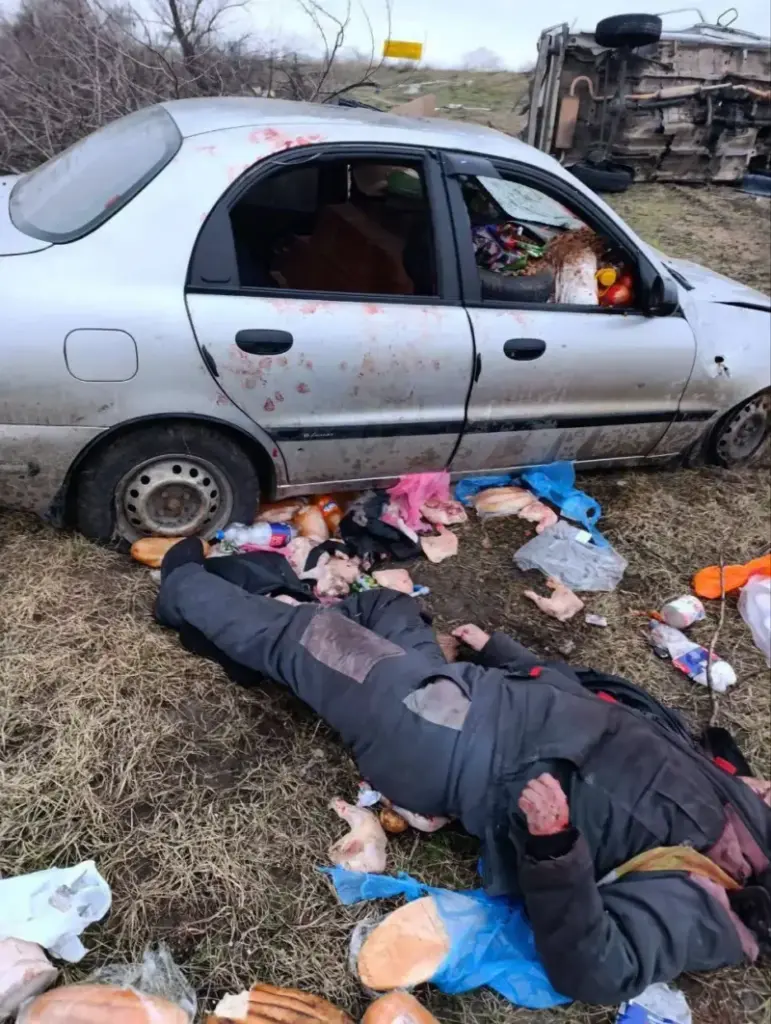
Ninety years on, Russia is doing it again in Oleshky. Parliament Commissioner Dmytro Lubinets calls Russia's siege deliberate terrorism.
Oleshky’s exiled administration describes what that means in practice: the dead buried in plastic bags, sometimes marked only with a name and two dates. One man who died in December lay unburied for nearly two months.
Concerning Oleshky, Oleksandr Prokudin, head of Kherson Regional Military Administration, told Censor.NET that Russian forces have “created a situation there akin to the Holodomor." The historical parallels are not lost on Ukrainians.
This material was produced as part of a project by the Institute of Mass Information with the support of the Ministry of Foreign Affairs of the Netherlands. The content of this publication does not reflect the official position of the IMI or the Kingdom of the Netherlands.
