❌

Vue normale

  • ✇Euromaidan Press
  • Russian drones watch the roads in Donetsk Oblast, but not the nearly 6 km route Ukraine has set up underground
    Ukraine’s Air Assault Forces have set up an underground tunnel between two settlements in Donetsk Oblast, Colonel Dmytro Pishko, head of the Support Forces Directorate at the Air Assault Forces Command, told Ukrinform in an interview published on 3 November. Drones have made the roads near the front deadly, and the underground war has so far been mostly about infiltration. Russian assault groups crawled through a gas pipeline into Sumy Oblast almost daily, Ukraine’s 71st Air Assault Bri
     

Russian drones watch the roads in Donetsk Oblast, but not the nearly 6 km route Ukraine has set up underground

3 novembre 2026 à 08:29

Ukraine’s Air Assault Forces engineers set up an anti-drone net

Ukraine’s Air Assault Forces have set up an underground tunnel between two settlements in Donetsk Oblast, Colonel Dmytro Pishko, head of the Support Forces Directorate at the Air Assault Forces Command, told Ukrinform in an interview published on 3 November.

Drones have made the roads near the front deadly, and the underground war has so far been mostly about infiltration. Russian assault groups crawled through a gas pipeline into Sumy Oblast almost daily, Ukraine’s 71st Air Assault Brigade said, and it stopped every recorded attempt. In October, Ukraine said it had answered by advancing more than 15 km underground near Kupiansk. The Donetsk tunnel is a different use of the idea: a standing supply line rather than a route for sneaking assault troops behind enemy lines, disclosed on Ukraine’s Engineering Troops Day.

Pishko does not name the settlements or say how deep the tunnel runs

Pishko called the tunnel, almost 6 km long, “another achievement of our engineering ingenuity,” saying it allows “uninterrupted and camouflaged” movement and carries deliveries of food and ammunition.

Meanwhile, Russia has kept using pipes of its own, including one into Kupiansk that Ukraine says became an escape route. Asked about Russia’s own defensive lines, Pishko said its army “knows how to dig, loves it, and does it constantly.”

Nets stop the first drone but not the second

By early June, Ukraine had covered 822 km of frontline roads with anti-drone nets and other protection built since January. Pishko said such nets work only if they are maintained. A net withstands the first drone, but a second can fly through the hole, so dedicated units patrol and repair them daily.

“Closer to the front line, the most reliable protection is to dig as deep underground as possible,” Pishko said.

Open trenches, he said, are a thing of the past.
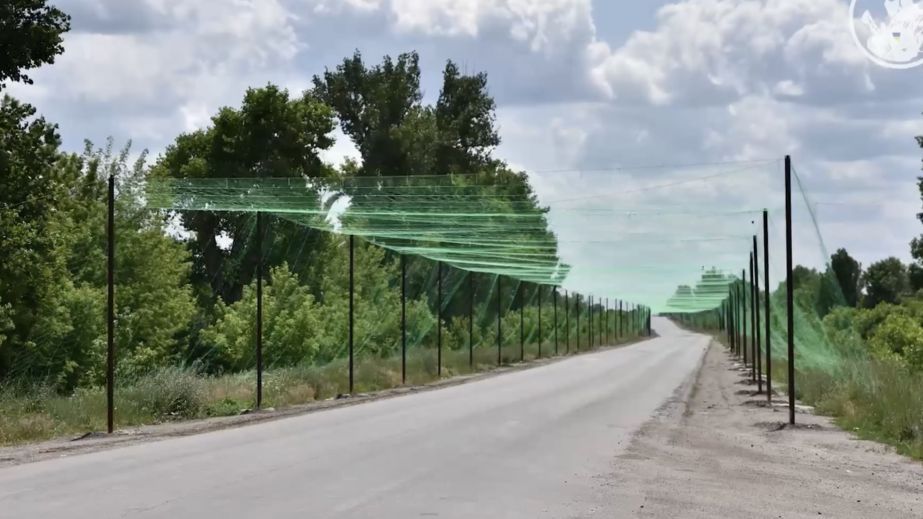
Netting tunnel over a road in Zaporizhzhia, protecting civilians and vehicles from FPV drone attacks.
Explore further

Ukraine makes its anti-drone road nets a national standard in a new strategy for defensive lines through 2028. It has already strung over more than 1,000 kilometers of road

A squad leader shot down two drones at an underground worksite

Even so, the work underground is not safe. Russian forces tried to attack one group with two FPV drones while it was setting up an underground tunnel, and squad leader Ivan Chokha shot down both, Pishko said.

  • ✇Euromaidan Press
  • No crew, a cargo bed, and pontoons: Ukraine’s MAT1LDA robot is built to cross water with 400 kg
    Ukrainian company Nodrics has developed MAT1LDA, an eight-wheeled amphibious ground robot that can carry supplies across water, swamps, and rough terrain, robot-maker Tencore said, Ukrainian military outlet Militarnyi reported on 17 October. The machine joins Tencore’s new family of ground robots, which the company has also shown in the US. Ukraine’s ground robots now haul supplies and evacuate wounded soldiers through zones where drones make every move deadly, and the Defense Ministry
     

No crew, a cargo bed, and pontoons: Ukraine’s MAT1LDA robot is built to cross water with 400 kg

18 octobre 2026 à 12:19

crew cargo bed pontoons ukraine’s mat1lda robot built cross water 400 kg · post amphibious ground video tencore амфібійний нрк у вод ukraine news ukrainian reports

Ukrainian company Nodrics has developed MAT1LDA, an eight-wheeled amphibious ground robot that can carry supplies across water, swamps, and rough terrain, robot-maker Tencore said, Ukrainian military outlet Militarnyi reported on 17 October. The machine joins Tencore’s new family of ground robots, which the company has also shown in the US.

Ukraine’s ground robots now haul supplies and evacuate wounded soldiers through zones where drones make every move deadly, and the Defense Ministry has launched its first competitive tender for them.

500 kg on land, 400 kg afloat

A petrol engine drives MAT1LDA’s eight wheels, and side pontoons keep it afloat, so it can cross water, marshland, and rough ground without preparation, Militarnyi said. Its makers claim it carries up to 500 kg on land and 400 kg on water, with a range of up to 160 km on land and 50 km on water.

Its open frame lets crews swap equipment quickly to suit the task, fitting cargo containers or evacuation stretchers.

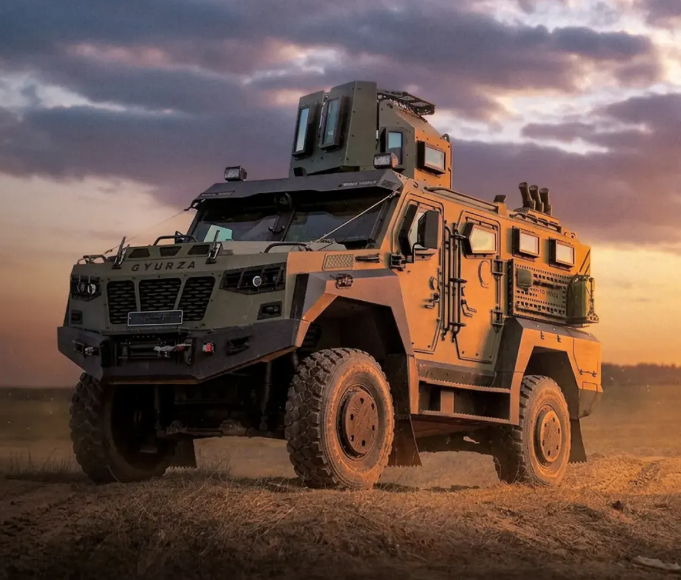
Ukraine's Gyurza-2 armored vehicle. Source: The Ukrainian Defense Ministry
Explore further

Robots won’t replace armored vehicles, says Ukrainian company that builds both. It reveals one job they can’t do

Four robots, one system

MAT1LDA is part of the Tencore Ecosystem, which brings together four classes of ground robots for military and civilian work, Militarnyi reported earlier. Besides the amphibious eight-wheeler, it includes the tracked TerMIT, the wheeled TOR 4×4, and the TRAX Utility firefighting and rescue robot. The company says it has delivered more than 4,000 robots to Ukraine’s armed forces since the full-scale invasion, used across more than 50 brigades.

The amphibious MAT1LDA ground robot
The amphibious MAT1LDA ground robot. Photo: Tencore

Tencore calls it Ukraine’s first integrated ecosystem of its kind. Putting the platforms into one system is meant to make them easier to use, maintain, and fit with extra equipment. One of the first shared add-ons is AI KIT, a hardware and software module that lets a robot keep to its route or drive back on its own after losing contact with its operator.

Ground robots from Tencore, clockwise: TerMIT, 4×4 TOR, 8×8 MAT1LDA, and TRAX
Ground robots from Tencore, clockwise: TerMIT, 4×4 TOR, 8×8 MAT1LDA, and TRAX. Collage: Militarnyi

On show in Washington

Tencore displayed MAT1LDA carrying a TerMIT robot at the Association of the US Army’s annual trade show in Washington this month, Breaking Defense reported.

Other Ukrainian makers have built swimming ground robots too: one switches from land to water in seconds, and another can tow 10 tons, its maker says. In April, Tencore formed a joint venture with France’s Shark Robotics.

❌