❌

Vue normale

  • ✇404 Media
  • An Invisible Force Has a Mysterious Effect on Aging, Scientists Discover in 'Startling' Breakthrough
    Scientists have discovered that the removal of Earth's magnetic field influences the lifespans of fruit flies in complex ways, a finding that sheds light on the aging process as well as the risks of future human space travel, according to a study published in the journal Aging on Wednesday. All life on Earth has evolved under the planet’s geomagnetic field, a vast bubble lined with electrical currents that is generated in the core and extends out into space. This protective magnetic shield is
     

An Invisible Force Has a Mysterious Effect on Aging, Scientists Discover in 'Startling' Breakthrough

23 septembre 2026 à 12:39
An Invisible Force Has a Mysterious Effect on Aging, Scientists Discover in 'Startling' Breakthrough

Scientists have discovered that the removal of Earth's magnetic field influences the lifespans of fruit flies in complex ways, a finding that sheds light on the aging process as well as the risks of future human space travel, according to a study published in the journal Aging on Wednesday. 

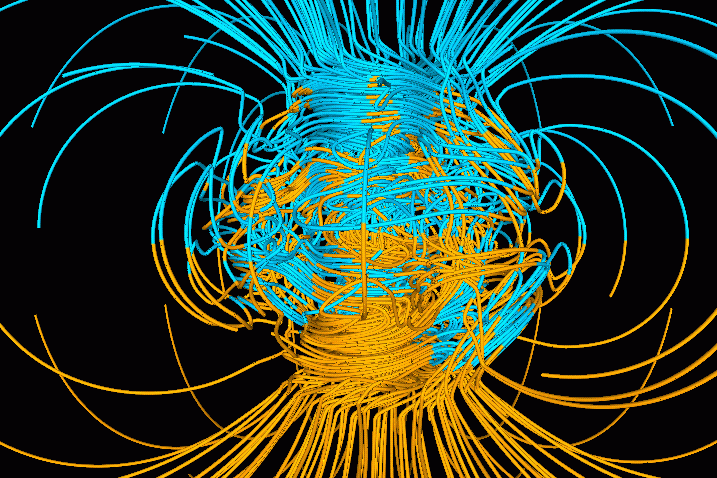
All life on Earth has evolved under the planet’s geomagnetic field, a vast bubble lined with electrical currents that is generated in the core and extends out into space. This protective magnetic shield is a major factor in Earth’s habitability, as it wards off harmful radiation from space, allowing life to flourish on the surface. 

Many migratory animals—including fish, birds, and insects—can clearly sense Earth’s magnetism and use it for navigation. But much less is known about how the field interacts with living cells and their components, such as mitochondria, the famous “powerhouses” that generate most of the energy that fuels life.

To better understand this mystery, scientists observed two populations of fruit flies in a “hypomagnetic” shield system, a cylindrical benchtop apparatus that essentially blocks the influence of Earth’s magnetic field. One group contained “wild-type” healthy flies, while the other was made up of “mutant” flies carrying a gene defect called Pink1, which is associated with early-onset Parkinson’s disease in humans and specifically involves mitochondrial dysfunction.

The removal of the magnetic field’s effect extended the lifespan of the Pink1 group by 20 percent but reduced their mobility, whereas the healthy flies experienced just the opposite—reduced lifespan, but improved mobility. 

“We had an idea that there would be a difference just based on the fact that we know that every organism has developed under a magnetic field,” said Jacob Reed, a PhD student in bioscience at the University of Nottingham who co-led the study, in a call with 404 Media. “But we didn't really plan that there would be this difference in the experiment.”

“I think we're the first to show that there's an effect in an organism that has a disease phenotype,” added co-lead Lisa Chakrabarti, a professor of biochemistry at the University of Nottingham, in the same call. “We're really drilling into what the differences are between having that applied pressure or relieving it.”  
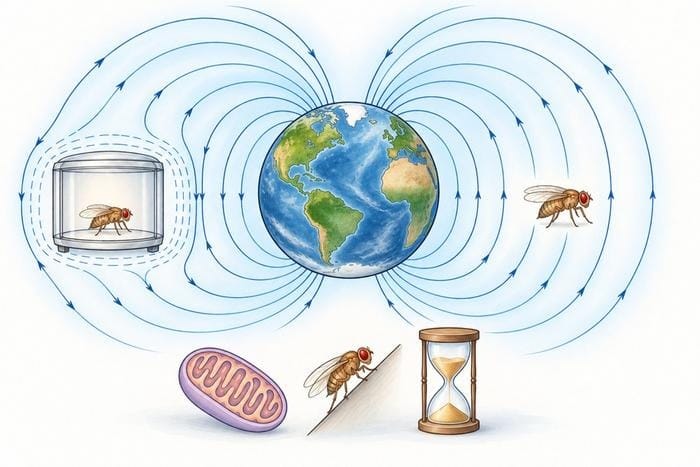
An Invisible Force Has a Mysterious Effect on Aging, Scientists Discover in 'Startling' Breakthrough
Diagram illustrating the experiment. Image: University of Nottingham

While there is a lot of research into the effects of hypermagnetic fields on life—meaning magnetic fields that are stronger than Earth’s—the “biological consequences of hypomagnetic fields remain poorly understood,” according to the new study.

To fill in this research gap, Reed developed an initial pilot study of diseased and healthy flies using the magnetic shielding apparatus, and was surprised to find that the Pink1 population of flies seemed to live longer.

“I was really confused at first,” Reed recalled. “I was thinking: ‘Why are these Parkinson's flies living longer than some of the wild-type flies?’ I had to double-check all of my data. From that, we realized that was what's happening and developed the experiment.”

The team observed dozens of diseased and healthy flies living in these hypomagnetic spaces over the course of their lives, which normally last about two months. In particular, they monitored shifts in the energy metabolisms and chemical outputs of mitochondria using quantum diamond sensors. 

The experiment showed that the absence of Earth’s magnetic field changes how cells age and produce energy, producing clear and measurable effects on longevity. The researchers also saw shifts in locomotion by tracking how far flies climbed upward against gravity in their containers. However, it will take more research to unravel the complex mechanisms that underlie these observable changes.

“This is the early stage, where we can say there is a very real effect,” Chakrabarti said. “As soon as you take off the geomagnetic field, there are physiological effects that we can measure in the mitochondria, in the cellular physiology, and in big things like lifespan and climbing as well. It's a definite interaction between Earth's magnetic field and physiology.” 

The researchers plan to build on their work by studying different organisms in hypomagnetic fields to see if they experience similar mitochondrial and behavioral changes. This work could eventually inspire therapeutic treatments for humans with various conditions, and could also help prepare astronauts for deep space missions beyond Earth’s magnetic field. It is already well-known that astronauts are exposed to harmful radiation outside of the magnetic field, but little is known about the specific impact of the absence of the field itself on human physiology.

“The link with interplanetary space travel is absolutely key,” said Chakrabarti. “There could be subtle differences that we don't really notice while we're on Earth. Unless we know what those parameters are to measure, we're going to be sending astronauts up there that are potentially going to really suffer over the short, or even or the longer, term.”

“All of this is out there at the moment, but what we're saying is that we definitely see a really reproducible and startling effect of removing the geomagnetic field,” she concluded.


  • ✇404 Media
  • ‘Supermountains’ Buried Under Antarctica Fueled Explosion of Life, Scientists Discover
    Welcome back to the Abstract! These are the studies this week that ate well, moved mountains, grew brains, and saved medieval texts.First, scientists set out to understand why Venus doesn’t have a moon and discover even more unnerving stuff about this delightfully nightmarish planet. Then: a hidden range of primordial supermountains, a literal brain-space, and evidence of Tudor-era subterfuge.As always, for more of my work, check out my book First Contact: The Story of Our Obsession with Aliens,
     

‘Supermountains’ Buried Under Antarctica Fueled Explosion of Life, Scientists Discover

19 septembre 2026 à 06:00
‘Supermountains’ Buried Under Antarctica Fueled Explosion of Life, Scientists Discover

Welcome back to the Abstract! These are the studies this week that ate well, moved mountains, grew brains, and saved medieval texts.

First, scientists set out to understand why Venus doesn’t have a moon and discover even more unnerving stuff about this delightfully nightmarish planet. Then: a hidden range of primordial supermountains, a literal brain-space, and evidence of Tudor-era subterfuge.

As always, for more of my work, check out my book First Contact: The Story of Our Obsession with Aliens, or subscribe to my personal newsletter the BeX Files. 

I’m so hungry I could eat my own moon

Kane, Stephen R. et al. “Tidal Demise: The Evolution and Fate of a Hypothetical Venus Moon.” The Astrophysical Journal.

Venus is a bizarro world with a year that is shorter than its day, a surface shaped by diabolical heat and pressure, and skies soaked in sulfuric acid. Frankly, this planet is metal enough as it is, but scientists have now suggested that Venus is also a moon-eater.  

For years, researchers have pondered why Venus lacks a moon, in contrast to all other planets except Mercury. One possibility is that Venus was once orbited by a primordial satellite that it ultimately tore apart and swallowed, according to a new study. And honestly, that sounds like something Venus would do. It’s in character.

‘Supermountains’ Buried Under Antarctica Fueled Explosion of Life, Scientists Discover
Venus as captured by Mariner 10 in the 1970s. Image: NASA

To reach this conclusion, scientists ran simulations of Venusian moons ranging from half to ten times as massive as Earth’s Moon. Because Venus has a very slow rotation rate equal to 243 Earth days, most of the modeled satellites were drawn inward, ultimately crashing into Venus. Earth’s fast rotation rate, in contrast, has pushed the Moon to recede farther from our world, at a rate of about 1.5 inches each year.

“The absence of a Venusian satellite can be understood as a natural consequence of tidal evolution alone,” said researchers led by Stephen Kane of the University of California, Riverside. The researchers added that the obliteration of a past moon around Venus may offer one reason why the planet became so aggressively inhospitable, while Earth evolved into a comfy haven for life. 

“The fate of a Venus moon carries direct implications for early Venus habitability,” the team said. “The eventual destruction of the moon…would deliver a massive energy pulse to the Venusian surface and atmosphere, with potential implications for the loss of surface water and the onset of a runaway greenhouse state.”

It’s possible that NASA’s DAVINCI orbiter, which is due for launch to Venus in 2029, could search for the chemical signatures of an ancient obliterated moon, according to the study. In the meantime, my takeaway is that Majora’s Mask is based on a true Venusian story. 

In other news…

If it’s not Gondwana, I don’t wanna

Chen, Bei and Campbell, Ian H. “Do Himalayan-style mountains lie under the Antarctic ice: Implication for the Gondwana Supermountains, the rise of oxygen and the Cambrian explosion?” Earth and Planetary Science Letters.

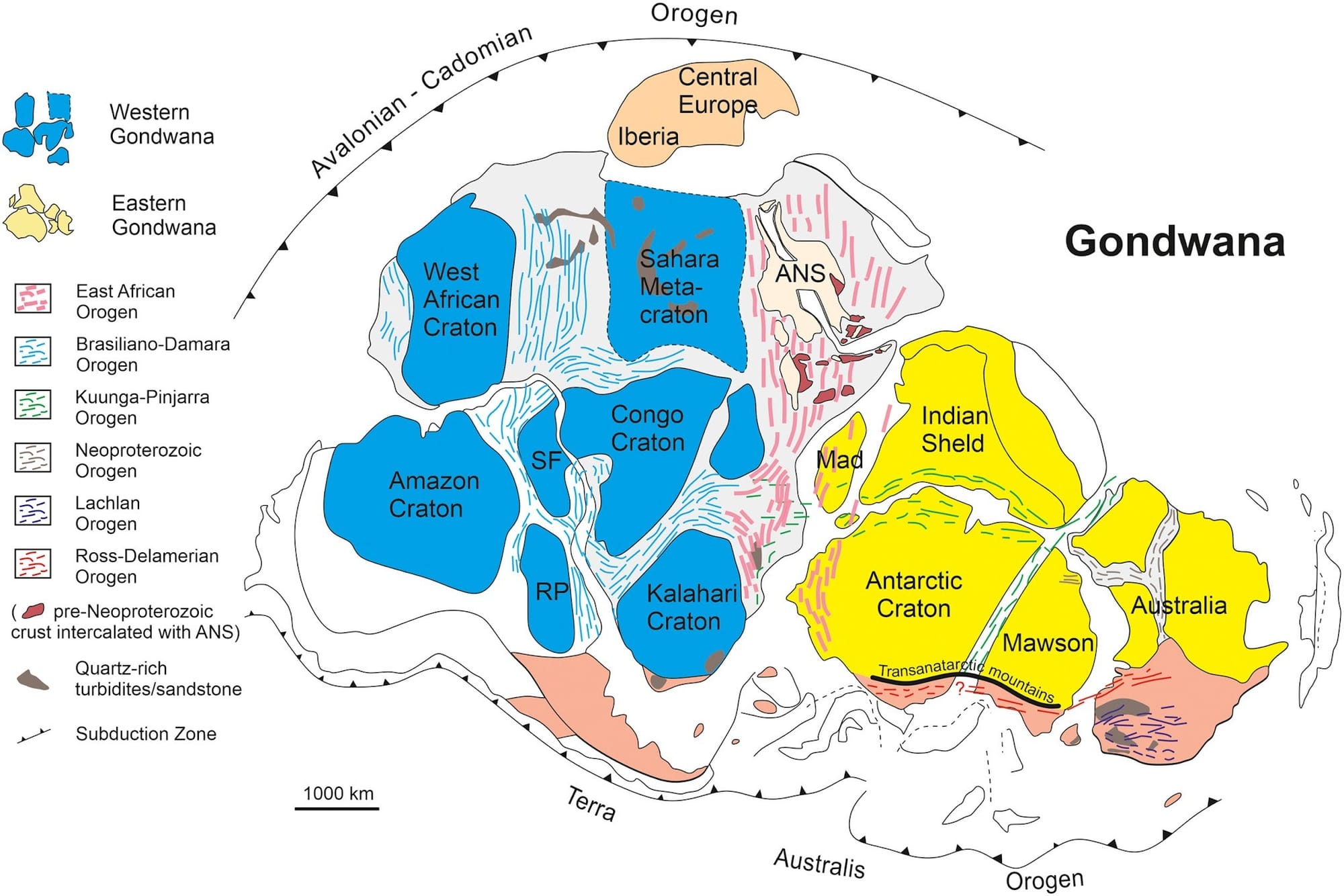
Shout out to my fellow Gondwana-heads! Just a week after a study came out minting Gondwana as a bonafide “supercontinent,” another work has probedthe remnants of Himalaya-scale “Gondwana supermountains” buried deep under Antarctica’s ice sheet.

Both studies argue that the geological upheaval associated with Gondwana’s formation directly led to the Cambrian “explosion” of complex life that began about 538 million years ago. But the new study focuses on the role of Gondwana’s colossal mountain range and the massive submarine “fan” system underneath it.

‘Supermountains’ Buried Under Antarctica Fueled Explosion of Life, Scientists Discover
Reconstruction of Gondwana highlighting core blocks, interior orogens and peripheral orogens. Image: Chen, Bei and Campbell, Ian H. 

“It is unlikely to be a coincidence that Earth’s most dramatic period of evolution correlates with the planet’s most important period of mountain building: the formation and erosion of the Gondwana Supermountains,” said authors Bei Chen and Ian H. Campbell of the Australian National University. 

By studying 1,700 zircons—hardy minerals that can be used to reconstruct continental timelines—the researchers found a disproportionate spike in Antarctic zircons dating from 650 and 450 million years ago, consistent with the formation of Gondwana. The supermountains and their underlying fan systems provided the necessary nutrients for the meteoric rise of animals and other complex life in the Cambrian period, according to the study.

“Analyses of detrital zircons from Antarctica show that its tectonics were dominated by Himalayan-style mountains, the roots of which now underlie the ice sheet,” the team concluded. 

Gondwana broke apart during the age of dinosaurs, but as these studies show, its body parts live on, scattered under ice and dispersed across new continents. This has been Gondwana News.

Occupy Mouse Brain

Konstantin Kaganovsky, Kevin W. Kelley, Tilo Gschwind, Paul M. Harary et al. 

“Developmental xenocortication using human-derived organoids in mice.” Nature.

It is notoriously challenging to study human brain tissue in vivo on both practical and ethical levels. It’s not as if you can just cut open someone’s noggin and rummage around in there like you’re Victor Frankenstein.  

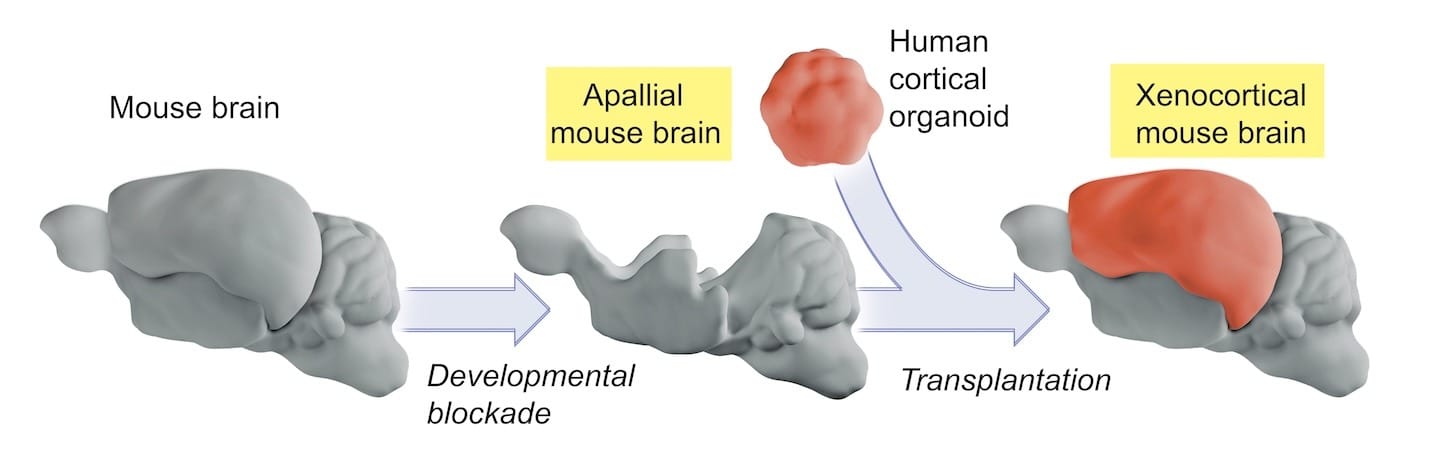
But scientists have now discovered a promising workaround by transplanting human brain “organoids”—lab-grown structures based on human stem cells—into the heads of mice that have been engineered to have open space in their brains instead of a cortex. Scientists who developed this new experimental technique of “xenocortication” report that the human organoids grew to occupy the cavities in the rodents’ heads, and showed analogous development to real brain tissues. 

The xenocortical (abbreviated XCX, no relation to Charli) mice seemed to behave more or less normally, despite having millions of human-derived neurons in their heads.

‘Supermountains’ Buried Under Antarctica Fueled Explosion of Life, Scientists Discover
Graphic showing the human organoid transplanted into the mouse brain. Image: Konstantin Kaganovsky, Kevin W. Kelley, Tilo Gschwind, Paul M. Harary et al. 

“We envision that xenocortication will be useful for obtaining circuit- and behaviour-level readouts using human neurons to study neurodevelopment, model disease and develop therapeutics,” said researchers co-led by Konstantin Kaganovsky, Kevin W. Kelley, Tilo Gschwind, and Paul M. Harary of Stanford University.

“Generating XCX mice with more mature and canonical cortical organization will require early and proactive engagement to establish ethical guidance,” the team emphasized.

Talk about living rent-free in someone else’s head. 

Hard to Gage his motivation

Walter, Katie and Wade, James. “Mirror of the Blessed Life of Jesus Christ: A missing fragment from Takamiya MS 20 in the holdings of The Keep.” Notes and Queries.

King Henry VIII, the English monarch notorious for disposing of wives and Catholic hegemony, relied on the courtier Sir John Gage to dissolve and plunder monasteries during his consequential reign. 

But the discovery of long-lost pages that were once possessed by Gage reveals that this royal ally may have saved an outlawed manuscript from destruction, hinting at a dangerous act of subterfuge. 

‘Supermountains’ Buried Under Antarctica Fueled Explosion of Life, Scientists Discover
Pages 8-9 of The Keep fragment of Nicholas Love’s early 15th-century Mirror of the Blessed Life of Jesus Christ with visible thread binding. Image: Courtesy of The Trustees of the Firle Estate Settlement and the University of Sussex

 Katie Walter of the University of Sussex and James Wade of Girton College, Cambridge identified a six-page fragment of a popular medieval text that had been misplaced within Gage’s belongings. The fragment came from Nicholas Love’s Mirror of the Blessed Life of Jesus Christ, which was popular in the 15th century, but had fallen out of favor by Henry VIII’s reign. It seems that Gage nonetheless saved a copy, despite orders to destroy such texts.

“One consequence of this puzzle is that the fragment, hereafter referred to as The Keep fragment, has gone undescribed,” said Walter and Wade in their new study. “John Gage possibly acquired the book at the time of the dissolution of the monasteries” and it later became “hidden in plain sight” in his belongings.

And Gage would have gotten away with it too, if it weren’t for those meddling historians!

Thanks for reading! See you next week.

  • ✇404 Media
  • A Digital Fly Brain Has Taken Over the Internet
    A digital fly brain has been trading bitcoin, parallel parking, exploring bisexuality, cutting doner kebab, playing games—including Minecraft, Doom, and Beat Saber—and generally lighting up social media timelines since it was released earlier this month.The simulated brain, known as a connectome, is a complete map of more than 166,000 neurons that make up the nervous system of an adult male Drosophila fruit fly. Developed by HHMI Janelia Research Campus in partnership with Google Research, th
     

A Digital Fly Brain Has Taken Over the Internet

15 septembre 2026 à 11:28
A Digital Fly Brain Has Taken Over the Internet

A digital fly brain has been trading bitcoin, parallel parking, exploring bisexuality, cutting doner kebab, playing games—including Minecraft, Doom, and Beat Saber—and generally lighting up social media timelines since it was released earlier this month.

The simulated brain, known as a connectome, is a complete map of more than 166,000 neurons that make up the nervous system of an adult male Drosophila fruit fly. Developed by HHMI Janelia Research Campus in partnership with Google Research, the connectome (dubbed MaleCNS v1.0) was unveiled earlier this month, following the release of the first adult female fruit fly connectome in 2024.

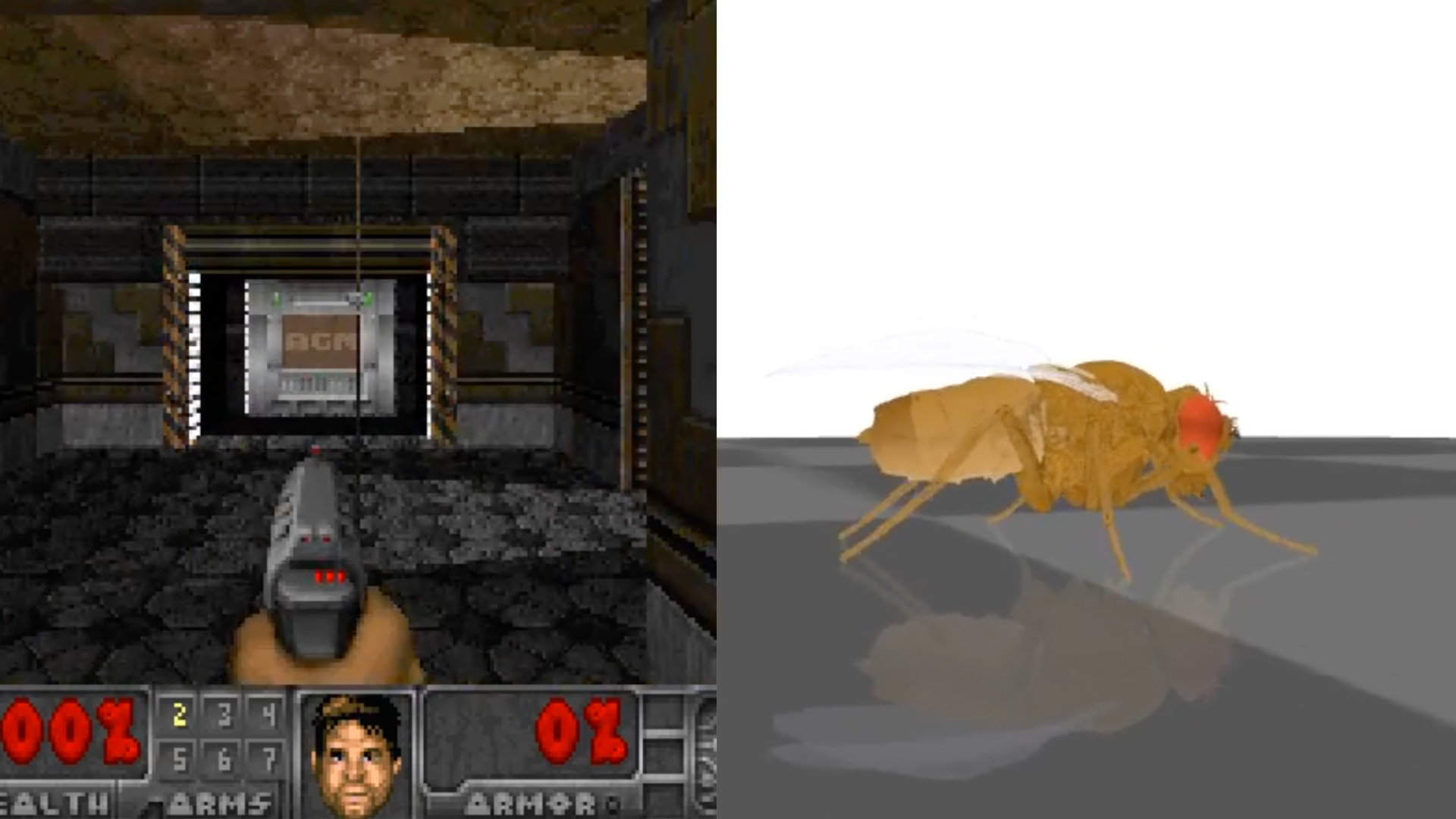
But can it run DOOM?!

Well...actually, yes. https://t.co/ZN6ELH751g pic.twitter.com/EYPCCeEgp4

— Andrei Apanasik 🔜 TGS (@a_apanasik) September 7, 2026

“We present the first finished connectome of an entire male Drosophila central nervous system, encompassing the central brain, optic lobes (analogous to mammalian retina) and the ventral nerve cord (analogous to the spinal cord),” the team announced in a press release on September 3. “Together with existing female connectomes, this resource enables the first comprehensive, synaptic-resolution comparison across sexes of an adult animal with complex anatomy and behaviors.”

The humble fruit fly is a powerhouse species in science for the same reason they might plague your kitchen—they reproduce quickly and are highly adaptable to different environments, distinguishing them as cheap and versatile model organisms. By virtually recreating their brains, researchers aim to make breakthroughs in neuroscience, pharmacology, biotechnology, artificial intelligence, and many other fields.

In the meantime, however, MaleCNS v1.0 has been enthusiastically received by online modders who have dropped the brain into a wide range of virtual environments and tasked it with different activities. Evan Sinclair Smith, a graduate student in computer science at Georgia Tech, pioneered the viral trend after he programmed the fly brain to play Minecraft. Within a day of releasing the results on September 4, the Minecraft fly had accumulated millions of views.

I’ve successfully run the full retained MaleCNS v1.0 fruit fly connectome, all 166,700 neurons, inside Minecraft, with its simulated neural activity driving a fly’s movement.

V1 Currently in development. Built with the help of GPT-6 Astra.

Props to the @OpenAI team and… https://t.co/wqsrsN5DFn pic.twitter.com/BN9cGvwVP1

— evnsnclr (@evnsnclr) September 4, 2026

“It's just been amazing how big this has gotten, and how many other people are just taking this idea and just making so many different creative projects,” Smith told 404 Media in a call. “That's been just really cool to see.”

In addition to playing video games, the fly has been trained to trade bitcoin (becoming “stonkfly”), write LinkedIn posts, and to retire to a virtual “fruit fly heaven.” Nico Christie, an entrepreneur and AI researcher, programmed the fly to be attracted to other males (becoming “bi fly”).

 In an email, Christie told 404 Media that he came across the trend on X and found it funny, but hoped to make “the science behind it more rigorous.”

I and @nicochristie ran the fly connectome and found the group of neurons (hΔH, hΔA, hΔI and hΔG) that could allow the fly to navigate using fast synaptic weight updates, not neural activations. This is fast-weight continual learning in a fly, something current LLMs don't do! https://t.co/TFgVaPA7B3 pic.twitter.com/kUqtfNTwQN

— Peter Wang (@BrainsAndTennis) September 14, 2026

In addition to fueling a wave of giddy online experimentation, the connectome has sparked moral and ethical debates on Reddit and other forums. However, it’s worth emphasizing that MaleCNS v1.0 is only a digital map of the brain that is not capable of sentience or conscious perception in any tangible biological sense. The connectome recreates a fly’s neural wirings and overall structure, but it does not contain any of the complex biochemical makeup of the real organism upon which it is based. 

Though the connectome has inspired a literal brain wave of online content, it is intended to be a resource for the scientific community. The female fruit fly brain that was released in 2024, known as FlyWire, has already been used in a host of studies about motor control, sensory systems, fly sociability, and more, according to the neuroscience publication The Transmitter. The completion of both the male and female fruit fly connectomes has also allowed researchers to assess differences in the neural wirings of this sexually dimorphic species.

 Smith, who made the Minecraft fly, hopes that these models will ultimately pave the way toward connectomes of the full human brain within his lifetime. Since the human brain contains 86 billion neurons, orders of magnitude more than the fruit fly brain, it would take an enormous amount of effort to create a digital copy with the same resolution as MaleCNS v1.0 or FlyWire. 

But Smith speculates that such an achievement could unlock new approaches to brain disorders, such as Alzheimer's disease, or enable human intelligence to navigate space missions without having to haul along our cumbersome meatbag bodies. 

“I think it has so many implications for understanding ourselves,” Smith said.

❌