During the public comment portion of a recent San Diego city council meeting, the council called for the next comment to take the podium: "Darth Vader?" As he approached the microphone in his black helmet and cape, his heavy breathing reached the mic before he did.At the Public Safety and Livable Neighborhoods Committee Meeting on August 19, Vader — whose identity is not revealed during the meeting — spoke passionately in support of Flock in San Diego.💡Are you the Dark Lord of the Sith in que
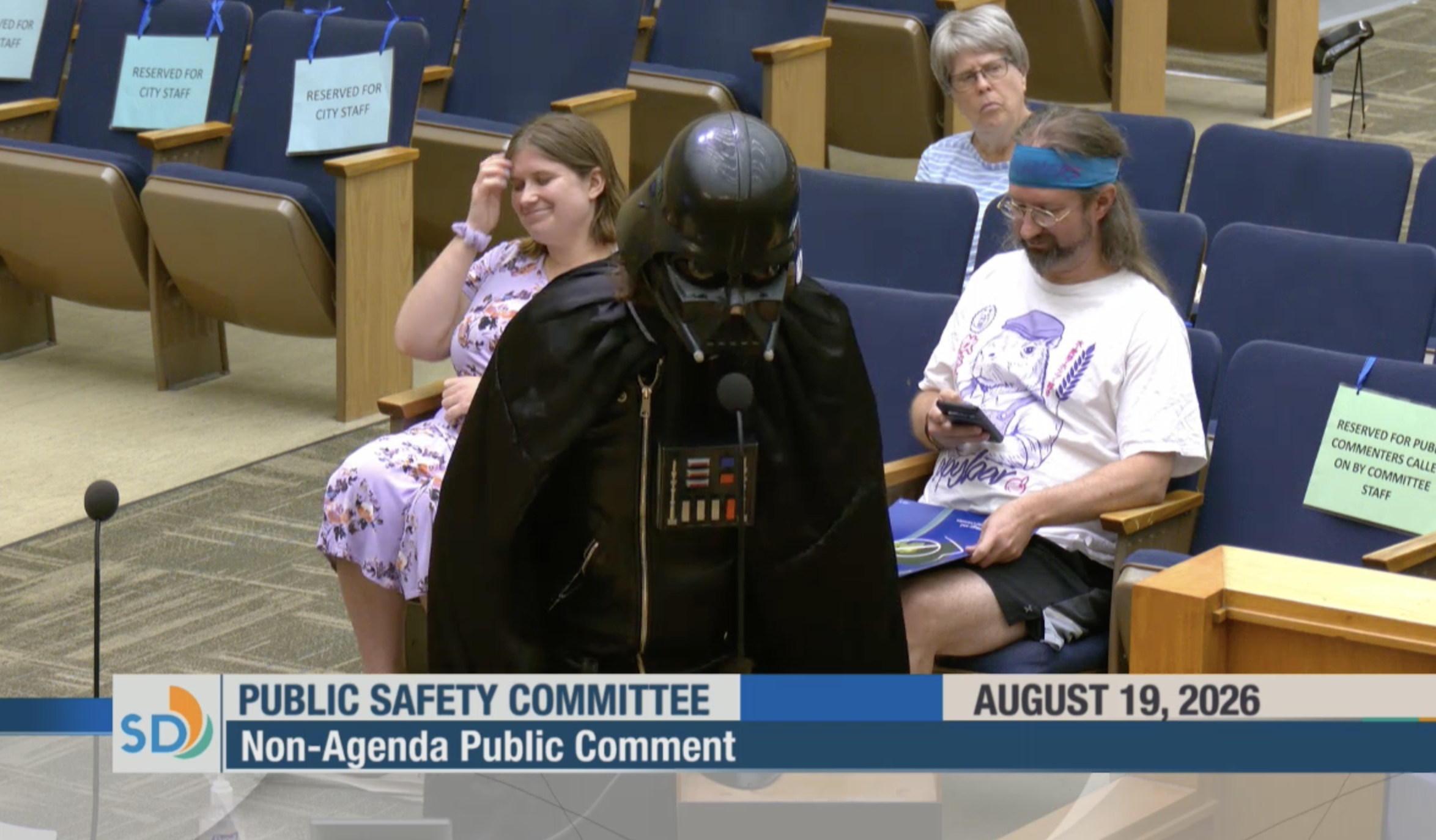
During the public comment portion of a recent San Diego city council meeting, the council called for the next comment to take the podium: "Darth Vader?" As he approached the microphone in his black helmet and cape, his heavy breathing reached the mic before he did.
At the Public Safety and Livable Neighborhoods Committee Meeting on August 19, Vader — whose identity is not revealed during the meeting — spoke passionately in support of Flock in San Diego.
💡
Are you the Dark Lord of the Sith in question? I would love to hear from you. Using a non-work device, you can message me securely on Signal at sam.404. Otherwise, send me an email at sam@404media.co.
Pornhub's parent company will pay $120 million to settle claims that its platforms violated federal sex trafficking and child sexual abuse imagery laws.The deal settles two 2021 class action lawsuits in California and Alabama that claim Mindgeek, which has since rebranded to Aylo, profited off of child abuse material allegedly posted by abusers to its platforms. In the California case, a woman alleged that her ex-boyfriend posted child sexual abuse videos of her when she was 16 years old to P
Pornhub's parent company will pay $120 million to settle claims that its platforms violated federal sex trafficking and child sexual abuse imagery laws.
The deal settles two 2021 class action lawsuits in California and Alabama that claim Mindgeek, which has since rebranded to Aylo, profited off of child abuse material allegedly posted by abusers to its platforms. In the California case, a woman alleged that her ex-boyfriend posted child sexual abuse videos of her when she was 16 years old to Pornhub. In the Alabama case, two women claimed to have been trafficked as minors and that their trafficker uploaded videos to Mindgeek's sites; one of the women claimed she was drugged and raped at 16, and that her abuser profited off of the videos of her abuse through Pornhub's Modelhub program.
The class includes anyone who was under the age of 18 "when they appeared in a video or image that has been made available for viewing" on a Mindgeek-owned or operated website between February 12, 2011 and December 6, 2024.
Mindgeek was bought by Ethical Capital Partners and rebranded to Aylo in 2023. Aylo will pay into the settlement fund with an initial $25 million in 2026 followed by six annual installments over the next six years. In a press release, Aylo noted that the settlement "resolves the matter with no admission of liability or wrongdoing by Aylo and remains subject to court approval."
In addition to paying $120 million, Aylo agreed to a series of content moderation terms, including verifying that all of the models in uploaded content are over the age of 18, human and automated review of content to prevent child sexual abuse material from going up on its sites, and reporting suspected abuse material to the relevant authorities. Aylo's sites have implemented many of these injunctive reliefs agreed to in the settlement for years.
In late 2020, following allegations of abuse material on the site and being dropped by major credit card processors including Visa and Mastercard, Pornhub overhauled its trust and safety measures to ban downloads, restrict uploads to verified users, and expand its moderation processes. It also launched its “Trusted Flagger Program" — mentioned as part of this settlement's terms — which allows a group of non-profit internet and child safety organizations around the world to immediately disable content it flags as abusive. In early 2021, Pornhub implemented biometric identity verification for uploaders through Yoti, and in 2024, it started requiring written proof of consent from everyone in every video.
The attorney for the plaintiff class did not immediately respond to a request for comment.
“Over the years, we have put in place robust measures to help protect our platform from abuse. Only verified content creators can publish on our platform, and every upload is subject to a combination of technological tools and human review by trained moderators before it goes live, to confirm that it complies with our Terms of Service, Community Guidelines and related Policies," Aylo management said in a statement. "Many of the commitments in this settlement reflect practices we already have in place. Trust and Safety should be a priority for every online platform, and we all share responsibility for a safer online experience. Every day, our trust and safety and engineering teams work alongside law enforcement, advocacy groups and other stakeholders to prevent online abuse and to hold those abusers to account.”
Twitch is going to train Amazon’s AI models on streamers’ content unless they deliberately go into their settings and opt out, potentially sweeping up a wealth of streamers who either don’t hear about the announcement or follow steps stop it.On Wednesday Twitch announced a new setting that lets streamers opt-out of the training. The announcement confirms rumors that have percolated over the last week: It is using streamers to train Amazon’s AI models. The new toggle says, "Allow your channel
Twitch is going to train Amazon’s AI models on streamers’ content unless they deliberately go into their settings and opt out, potentially sweeping up a wealth of streamers who either don’t hear about the announcement or follow steps stop it.
On Wednesday Twitch announced a new setting that lets streamers opt-out of the training. The announcement confirms rumors that have percolated over the last week: It is using streamers to train Amazon’s AI models.
The new toggle says, "Allow your channel content to train generative AI content models at Amazon." All users are opted in by default. It's located at the bottom of users' security settings page.
Instagram is full of first-person videos of men harassing women in public. They follow a similar script: A man walks up to a woman or group of women in a store, sitting outside a cafe, or walking home from a bar, and delivers a pickup line. The women almost always nervously laugh, react with barely-veiled disgust, or say "fuck off" while he stalks her or refuses to walk away. The men recording these videos capture them with Meta's smart glasses, which are designed to discreetly capture intera
Instagram is full of first-person videos of men harassing women in public. They follow a similar script: A man walks up to a woman or group of women in a store, sitting outside a cafe, or walking home from a bar, and delivers a pickup line. The women almost always nervously laugh, react with barely-veiled disgust, or say "fuck off" while he stalks her or refuses to walk away. The men recording these videos capture them with Meta's smart glasses, which are designed to discreetly capture interactions like these and upload the videos to Meta's platforms where the women in the videos are turned into content for "pickup artist" accounts.
New research reveals this ecosystem works, and how pickup artists (PUA) influencers are using Meta's products, including its smart glasses and social media platforms, to perpetuate a culture of harassment against women.
University of Sydney researchers Joanne Gray, Milica Stilinovic, Marcus Carter, and Ben Egliston watched hundreds of these videos to learn how pickup artist content creators use smart glasses, and what specific forms of gendered harms these recordings cause. They published their research paper, "Harm Through the '#RizzCam': Smart Glasses, Ambient Capture and Invisible Harassment," online this week as a preprint article.
This is Behind the Blog, where we share our behind-the-scenes thoughts about how a few of our top stories of the week came together. This week, we discuss Flock blogging, "rare" books, and Jesus Christ.EMANUEL: I was out last Friday so I want to talk about the story I published two weeks ago about AI companies buying printed books so they can scan them for training data. The story has gone mega viral on X, but mostly in the form of a post from an engagement farming account that both misrepres
This is Behind the Blog, where we share our behind-the-scenes thoughts about how a few of our top stories of the week came together. This week, we discuss Flock blogging, "rare" books, and Jesus Christ.
The story has gone mega viral on X, but mostly in the form of a post from an engagement farming account that both misrepresented my article and didn’t properly link back to our website. This is frustrating because it means a lot of other people siphoned traffic from our site and also because it caused a fair bit of confusion about what is happening.
On Wednesday morning, Ted Cruz’s Senate Commerce Committee will convene on five bills aimed at age verification and “child safety.” The bills each have their own issues when it comes to privacy, data collection, parental rights, and free speech. But one bill, the partisan Republican SCREEN Act, is a Christian nationalist nightmare.Utah Senator Mike Lee introduced the Shielding Children's Retinas from Egregious Exposure on the Net (SCREEN) Act in February 2025, alongside exclusively Republican
On Wednesday morning, Ted Cruz’s Senate Commerce Committee will convene on five bills aimed at age verification and “child safety.” The bills each have their own issues when it comes to privacy, data collection, parental rights, and free speech. But one bill, the partisan Republican SCREEN Act, is a Christian nationalist nightmare.
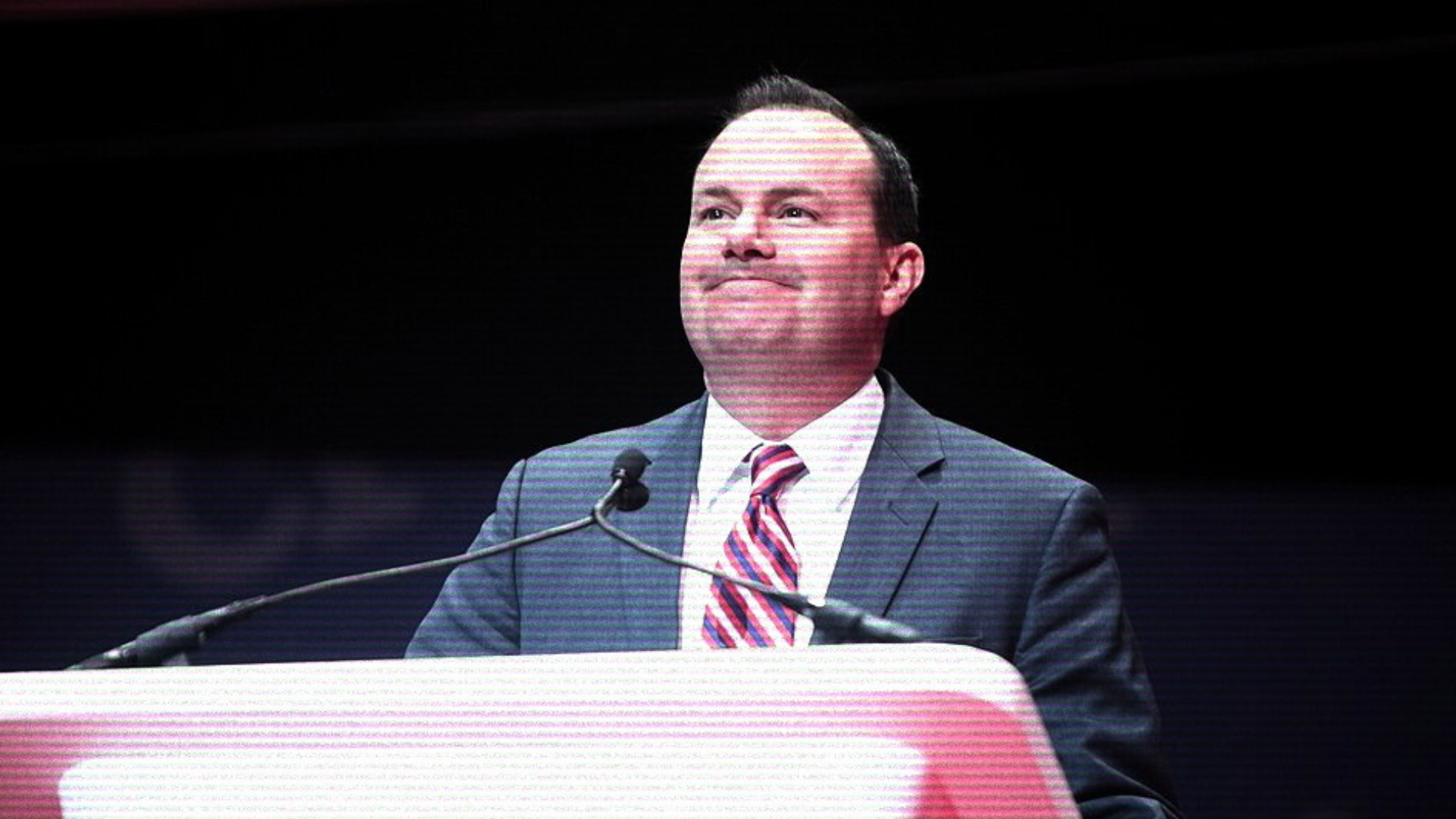
Utah Senator Mike Lee introduced the Shielding Children's Retinas from Egregious Exposure on the Net (SCREEN) Act in February 2025, alongside exclusively Republican cosponsors and supporters Senators John Curtis, Jim Banks, and Representative Mary Miller.
The SCREEN Act would require every website that includes even one piece of what the legislation describes as “harmful to minors” to verify visitors’ ages. It defines “harmful to minors” as content that “depicts, describes, or represents, in a patently offensive way with respect to what is suitable for minors, an actual or simulated sexual act or sexual contact, actual or simulated normal or perverted sexual acts, or lewd exhibition of the genitals;” is “obscene” or “child pornography;” or “appeals to the prurient interest in nudity, sex, or excretion.”
Unlike the many laws now in place around the U.S. that apply to sites made up of at least one third adult content, like porn sites and some social media platforms, SCREEN would place the burden and risk of verifying users’ ages to every website on the internet that falls under the law, which would be most sites with user-generated content and also mainstream entertainment platforms like Netflix. It also attacks virtual private networks (VPNs) by requiring sites to verify based on IP addresses; many people in states that have age verification laws in place use VPNs to get around submitting sensitive personal data like ID and biometrics to a smattering of third-party websites in use today. Critics say the SCREEN Act would be a privacy and free speech disaster.
And the agenda of its sponsors is clear: “Internet pornography has infected our culture and corroded the vulnerable minds of America’s kids, with the average age of initial exposure being 12 years old. That’s appalling,” Banks said in Lee’s press release.
A number of religious, conservative, Christian nationalist, and anti-pornography groups are in support of the bill, according to the press release from Lee’s office. They include the National Center on Sexual Exploitation (which recently represented a Kansas mother who sued multiple porn sites because her son found her old laptop and used it to watch Chaturbate), the National Decency Coalition, the Ethics and Public Policy Center (which is “working to apply the riches of the Jewish and Christian traditions to contemporary questions of law, culture, and politics,” according to its website), the Family Policy Alliance (whose stated mission is to “advance biblical values through civic engagement”), the Family Research Council (whose “mission is to serve in the kingdom of God by championing faith, family, and freedom in public policy and the culture from a biblical worldview”), and many more.
Heritage Action, a conservative lobbying group and one of the organizations Lee lists in support of the SCREEN Act, is a sister organization to the Heritage Foundation, which authored Project 2025. Heritage Action “works with lawmakers to implement Heritage Foundation solutions,” according to the Heritage Foundation website. This is important because of how Project 2025, the playbook for right-wing and extremist conservative leadership, has influenced policies and lawmaking in America in the last few years of the Trump Administration. That stretches from attacks on programs that promote diversity, equity and inclusion, to attacks on trans and queer people, to turning the FBI into a political entity.
One of Project 2025’s stated goals is to redefine and eradicate pornography: “Pornography, manifested today in the omnipresent propagation of transgender ideology and sexualization of children, for instance, is not a political Gordian knot inextricably binding up disparate claims about free speech, property rights, sexual liberation, and child welfare. It has no claim to First Amendment protection,” the playbook says, calling for imprisonment of pornographers but also educators and librarians. “And telecommunications and technology firms that facilitate its spread should be shuttered.”
The Senate Commerce Committee will also debate and mark up the text of the Youth AI Privacy Act which would require chatbots to disclose they’re not human among other features like limiting data retention; the CHATBOT Act which would require AI companies to build “family account” systems where parents can monitor kids’ activity; the Children’s Artificial Intelligence Toy Safety Act which would create a federal study into toys that include AI components; and the Kids Online Safety Act (KOSA).
KOSA would impose a legal “duty of care” on social media platforms to prevent and mitigate promotion of suicide, eating disorders, substance abuse, sexual exploitation, and advertisements for products like tobacco. KOSA has been introduced, and failed, multiple times since its first introduction in 2022; it has bipartisan lawmaker support but is extremely unpopular across all sides of the political spectrum among groups that care about freedom of speech because of its potential to increase censorship.
“Whatever disclaimers and exceptions the bill includes, the practical effect is unchanged,” the Electronic Freedom Foundation recently wrote about KOSA. “When platforms face liability for content that someone later claims contributed to harms like anxiety, eating disorders, or substance use, the safest response is to remove lawful speech or shut down forums discussing those topics altogether.”
Unlike KOSA and many of the other age verification laws that have spread across the country, the SCREEN Act does not have bipartisan support. It’s the latest in Lee’s repeated attempts to criminalize content he and his co-sponsors personally consider immoral. Last year, Lee introduced the now-stalled Interstate Obscenity Definition Act (IODA) for the third time. IODA would change the 1973 “Miller Test” for determining what qualifies as obscene, and seeks to make all pornography illegal at the federal level. “Obscenity isn’t protected by the First Amendment, but hazy and unenforceable legal definitions have allowed extreme pornography to saturate American society and reach countless children,” Lee said in a press release. “Our bill updates the legal definition of obscenity for the internet age so this content can be taken down and its peddlers prosecuted.”

 Connexion