World No 1 makes ‘difficult decision’ to miss slamDraper still recovering from bone bruise in left armJannik Sinner will miss the US Open with a right knee injury. The world No 1 has not played a match since beating Alexander Zverev last month to successfully defend his Wimbledon title, missing the Masters 1000 events in Canada and Cincinnati. Great Britain’s Jack Draper is also out of the event.The news comes a day after his great rival Carlos Alcaraz, whom the Italian lost to in the final in N
World No 1 makes ‘difficult decision’ to miss slam
Draper still recovering from bone bruise in left arm
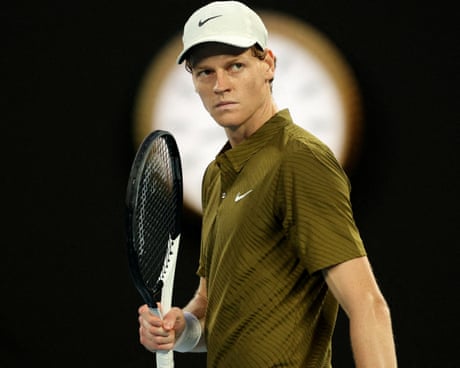
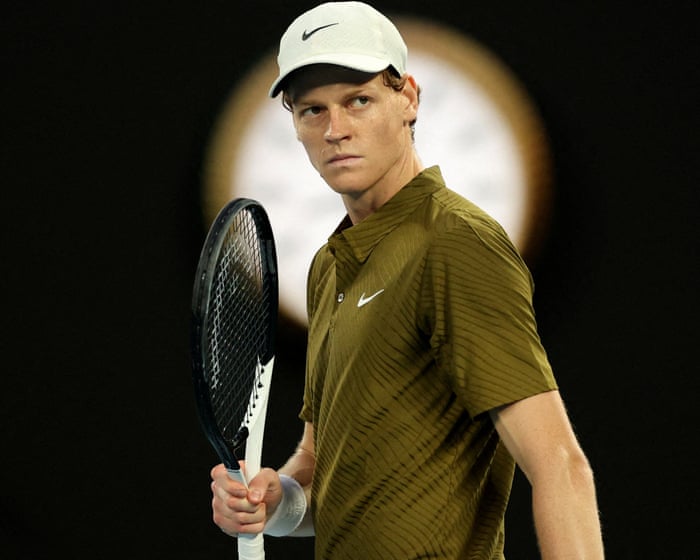
Jannik Sinner will miss the US Open with a right knee injury. The world No 1 has not played a match since beating Alexander Zverev last month to successfully defend his Wimbledon title, missing the Masters 1000 events in Canada and Cincinnati. Great Britain’s Jack Draper is also out of the event.
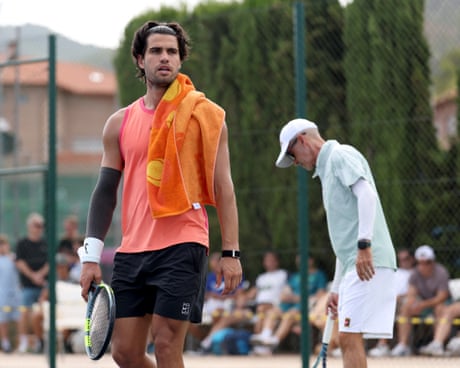
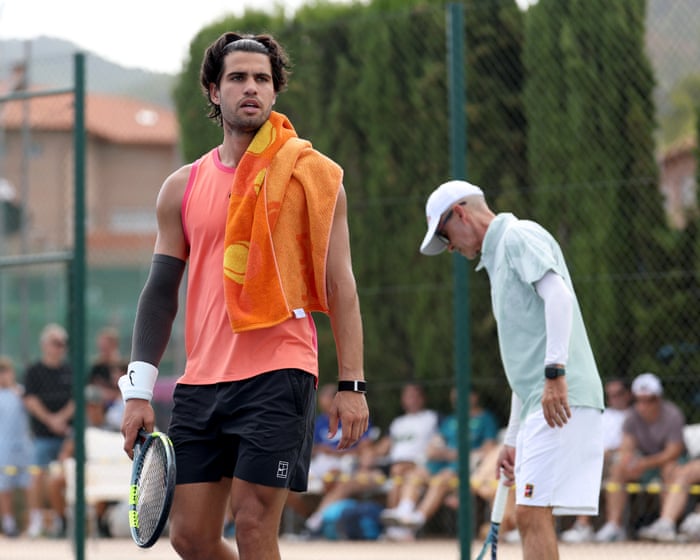
The news comes a day after his great rival Carlos Alcaraz, whom the Italian lost to in the final in New York 12 months ago, revealed he will make his comeback at Flushing Meadows after four months out with a wrist injury.
With one semi-final in her last seven tournaments, the coming months will define the next stage of her careerTowards the end of a messy first set tie-break late on Wednesday, Aryna Sabalenka wildly sprayed another painfully nervous backhand before slamming her racket to the ground. As the racket connected with the acrylic floor, its vibration dampener detached from the strings and rolled off in the direction of the broadcast camera pit by the side of the court.With the diminutive 20-year‑old Cze
With one semi-final in her last seven tournaments, the coming months will define the next stage of her career
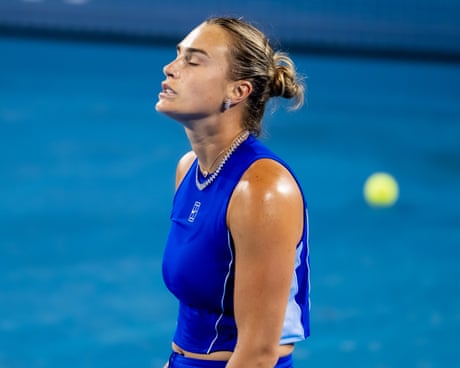
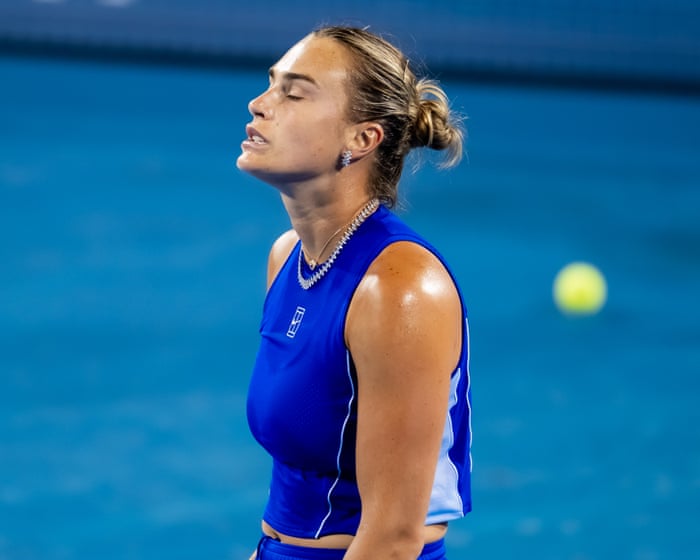
Towards the end of a messy first set tie-break late on Wednesday, Aryna Sabalenka wildly sprayed another painfully nervous backhand before slamming her racket to the ground. As the racket connected with the acrylic floor, its vibration dampener detached from the strings and rolled off in the direction of the broadcast camera pit by the side of the court.
With the diminutive 20-year‑old Czech player Sara Bejlek leading Sabalenka 6-5 in the tie-break, this slapstick sequence forced play to pause while the Belarusian and a couple of volunteers comically searched for the missing vibration damper underneath the cameras until she gave up and retrieved a new one. A few minutes later, Sabalenka trailed by a set.
Seven-time major winner has not played since AprilSpaniard missed French Open and WimbledonUS Open announces record $108m prize fundCarlos Alcaraz has won his battle to be fit for the US Open.The seven-time grand slam champion has not played on the ATP Tour since April due to an ongoing wrist issue, but enlisted the help of football transfer journalist Fabrizio Romano to announce his comeback. Continue reading...
Carlos Alcaraz has won his battle to be fit for the US Open.
The seven-time grand slam champion has not played on the ATP Tour since April due to an ongoing wrist issue, but enlisted the help of football transfer journalist Fabrizio Romano to announce his comeback.
Total prize pool for tournament will be $108mPlayers guaranteed $140,000 for making first roundThe world’s leading tennis players have welcomed the US Open’s announcement of a 20% increase in prize money and agreed not to continue their protests at this year’s tournament as a result.The build up to both the French Open and Wimbledon was overshadowed earlier this year by a media boycott as the players continue to demand a greater share of tournament revenues, but after the US Tennis Association a
Players guaranteed $140,000 for making first round
The world’s leading tennis players have welcomed the US Open’s announcement of a 20% increase in prize money and agreed not to continue their protests at this year’s tournament as a result.
The build up to both the French Open and Wimbledon was overshadowed earlier this year by a media boycott as the players continue to demand a greater share of tournament revenues, but after the US Tennis Association announced a record prize pot of $108m there will be no such disruption at Flushing Meadow.
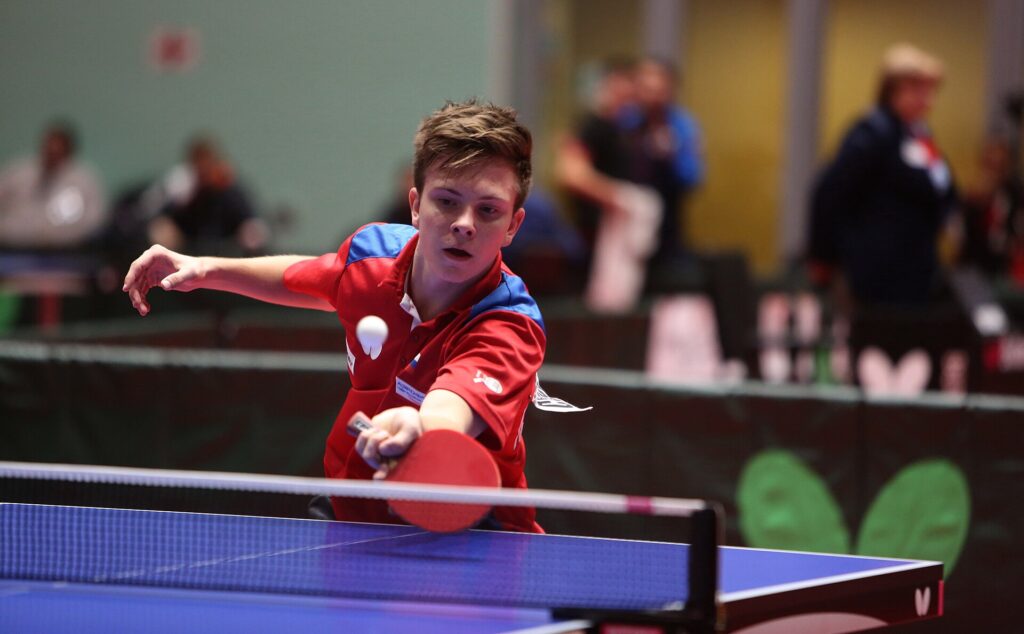
When Sweden’s Anton Källberg walks into the arena on Tuesday to face Vladimir Sidorenko at Europe Smash, the match carries a weight that reaches beyond the table.Sidorenko is Russian, and unlike the Russian players who spent recent years competing as neutrals, he now takes the table representing Russia, under its flag and anthem.
Flags and anthems are written into international sport precisely because they carry national and political meaning.
The change follows a Ju
When Sweden’s Anton Källberg walks into the arena on Tuesday to face Vladimir Sidorenko at Europe Smash, the match carries a weight that reaches beyond the table.
Sidorenko is Russian, and unlike the Russian players who spent recent years competing as neutrals, he now takes the table representing Russia, under its flag and anthem.
Flags and anthems are written into international sport precisely because they carry national and political meaning.
The change follows a July decision by the International Table Tennis Federation (ITTF) to lift the restrictions on athletes holding Russian passports. It took effect on 28 July, and Russian players can now enter under the same ordinary rules as everyone else.
For critics, the question is hard to avoid: what has changed in Ukraine to justify the change in sport?
What changed in Ukraine? Nothing
Russia’s full-scale invasion has not ended. Yet the penalty imposed in its wake—that Russian athletes compete without representing the Russian state—has now been lifted in international table tennis.
The Swedish Table Tennis Association has openly opposed the move. Its chairman, Tomas Eriksson, said in July that he saw no change in Ukraine that would justify shifting Swedish sport’s position toward Russian participation. The association has said it will not boycott the tournaments.
That tension now lands on Swedish soil.
Källberg and Sidorenko were drawn against each other at Europe Smash, held in Malmö from 8 to 16 August.
For Swedish supporters of Ukraine, the evening presents a real dilemma. Nobody needs to aim hostility at Sidorenko himself, and no one is claiming individual Russian athletes bear responsibility for their government’s actions. The question is what an athlete is asked to represent.
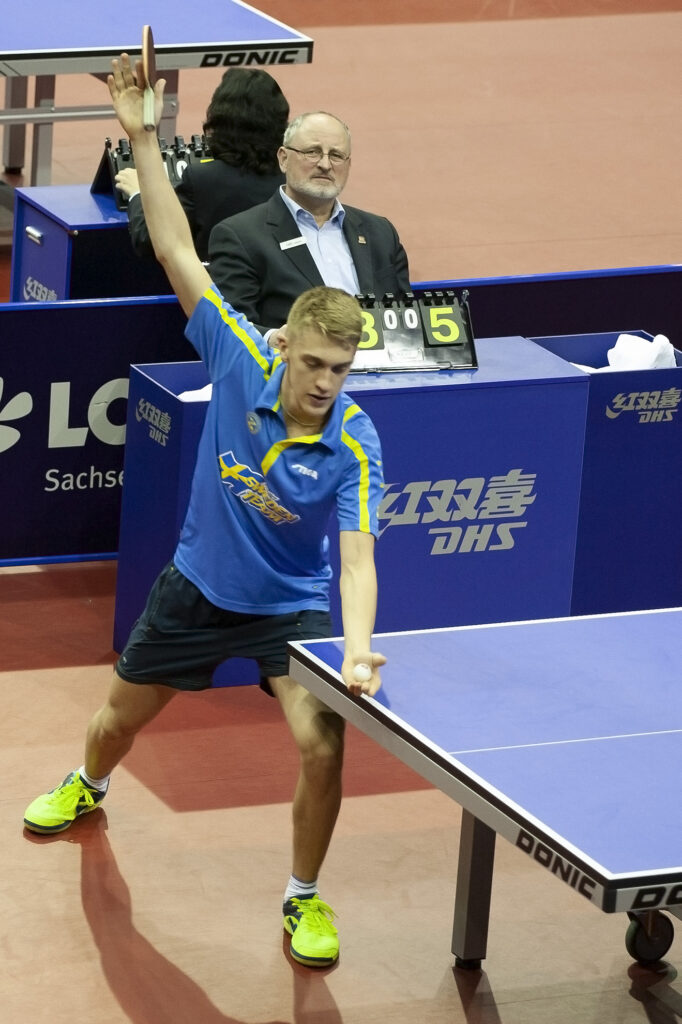
Sweden’s Anton Källberg, who faces Russia’s Vladimir Sidorenko at Europe Smash in Malmö. Photo: Peter Porai-Koshits / Wikimedia Commons, CC BY-SA 4.0
A flag is never neutral
A neutral athlete competes as an individual. Someone introduced beneath a national flag stands in, however indirectly, for a state. Flags and anthems are written into international sport precisely because they carry national and political meaning.
So restoring the Russian flag is more than an administrative tweak. It is a statement—and a pointed one while Russia’s war on Ukraine continues.
The dispute has an unmistakable Swedish dimension. ITTF is headed by Petra Sörling, the Swedish official who was re-elected president of world table tennis in 2025 for another four-year term. She is a former president of the Swedish Table Tennis Association.
Explore further
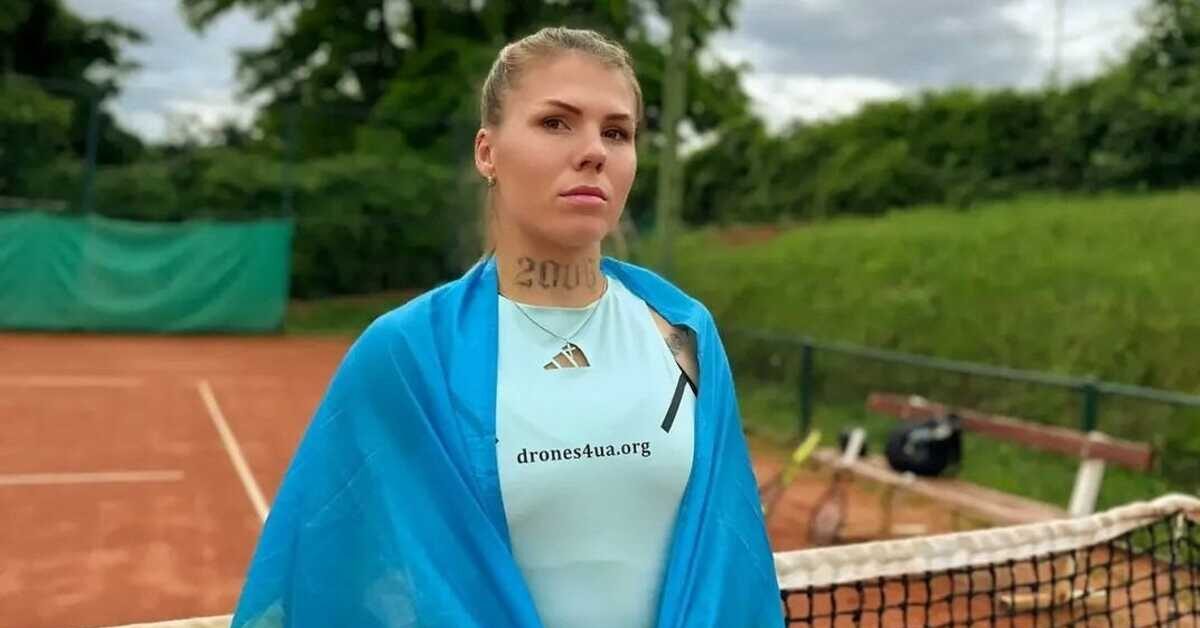
Sport is letting Russia back in. This Ukrainian tennis player says no.
That does not make the reinstatement hers alone to decide; the ITTF Executive Board considered the issue on 10 July. But leadership carries responsibility. ITTF has justified the change by citing equal treatment and proportionality—yet proportionate to what change in circumstances? With Russia’s war on Ukraine still ongoing, the federation has yet to explain what has materially shifted to make the earlier restrictions disproportionate now.
On the evening of 11 August 2026, all of it narrows to something plainer: two players and a table, in front of a Swedish crowd.
Källberg deserves what any Swedish athlete would want at a major home tournament: loud, passionate backing from the crowd. And those who object to the return of the Russian flag have every right to voice it, peacefully, from the same seats.
Symbols cut both ways
Sport does not stand outside the world around it. International federations prove as much every time they raise a flag or set a country’s name beside an athlete.
If those symbols matter when a nation celebrates victory, they matter when a governing body decides who may use them.
And until the reasons for restricting Russia’s national representation have gone, the question facing table tennis stays simple: Why should the restriction disappear first?

 Connexion