Vue normale

Reçu aujourd’hui — 13 décembre 2025
  • ✇404 Media
  • Earth-Like Planets Are More Common Than We Thought, Study Says
    Welcome back to the Abstract! These are the studies this week that got hosed with star spray, mounted a failed invasion, declined to comment, and achieved previously unknown levels of adorability.  First, a study about how the solar system wasn’t destroyed 4.5 billion years ago (phew!). Then: a human touch on an ancient boat, the duality of posters and lurkers, and an important update on toadlets.As always, for more of my work, check out my book First Contact: The Story of Our Obsession with Ali
     

Earth-Like Planets Are More Common Than We Thought, Study Says

13 décembre 2025 à 09:00
Earth-Like Planets Are More Common Than We Thought, Study Says

Welcome back to the Abstract! These are the studies this week that got hosed with star spray, mounted a failed invasion, declined to comment, and achieved previously unknown levels of adorability.  

First, a study about how the solar system wasn’t destroyed 4.5 billion years ago (phew!). Then: a human touch on an ancient boat, the duality of posters and lurkers, and an important update on toadlets.

As always, for more of my work, check out my book First Contact: The Story of Our Obsession with Aliens or subscribe to my personal newsletter the BeX Files

Sink into a warm cosmic-ray bath

Sawada, Ryo et al. “Cosmic-ray bath in a past supernova gives birth to Earth-like planets.” Science Advances.

Earth was cosmically conceived in part by a massive shockwave from a nearby supernova, which seeded our home world and neighboring rocky planets with telltale radioactive signatures, according to a new study.

The solar system’s rocky planets contain short-lived radionuclides (SLRs), which are ancient elements that were likely barfed out from exploding stars. For this reason, scientists have long suspected that stars must’ve detonated next to the gassy disk that gave rise to the solar system. The heat generated from these radioactive elements helped the building blocks of the rocky planets—Mercury, Venus, Earth, and Mars—melt together so they could become whole worlds, which means we owe our existence to these ancient supernovas.

Now, a team has developed a new model to explain how the primordial pyrotechnics didn’t just blow up the nascent solar system. The results suggest that rocky Earth-like worlds may be common in the universe, with potential implications for the search for extraterrestrial life.

“A key question in astronomy is how ubiquitous Earth-like rocky planets are,” said researchers led by Ryo Sawada of the University of Tokyo. “The formation of terrestrial planets in our Solar System was strongly influenced by the radioactive decay heat of SLRs, particularly aluminum-26, likely delivered from nearby supernovae.”

“However, the supernova injection scenario faces an unresolved problem in that existing supernova models could not reproduce both the relative and absolute abundances of SLRs without disrupting the protosolar disk,” an event that “would likely prevent the Solar System formation altogether,” the team added.

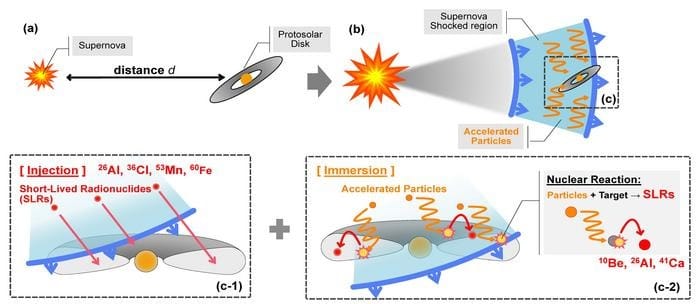
In other words, it’s hard to explain how the solar system got its high abundance of SLRs without killing it in the cradle. Sawada and his colleagues propose a solution that involves at least one star exploding about three light years of the disk, sparking a shockwave that created a cosmic-ray “bath.”  
Earth-Like Planets Are More Common Than We Thought, Study Says
Schematic picture of the system assumed in this study. Image: Sawada et al., Sci. Adv. 11, eadx7892

In this “immersion mechanism,” energetic cosmic rays trapped in the bath triggered SLR-producing reactions directly within the disk. This contrasts with the hypothesis that the SLRs were largely injected and then mixed up in the disk through some unknown process. This new solution can account both for the high abundance of certain SLRs, like aluminum-26, and the fact that the solar system was not destroyed, as evidenced by its apparent continued existence.

“Our results suggest that Earth-like, water-poor rocky planets may be more prevalent in the 

Galaxy than previously thought,” the team said, noting that many disks are rocked by similar supernova-shockwaves. “This challenges previous interpretations that classified the Solar System as an outlier with a particularly high [aluminum-26] abundance.”

In addition to offering a new hypothesis for an old astronomical problem, the study gets bonus points for its extremely poetic title: “Cosmic-ray bath in a past supernova gives birth to Earth-like planets.” If you say this enchanted phrase three times, somewhere an Earth-like world will be born.

In other news…

The biometrics of a Baltic boatsman

Fauvelle, Mikael et al. “New investigations of the Hjortspring boat: Dating and analysis of the cordage and caulking materials used in a pre-Roman iron age plank boat.” PLOS One

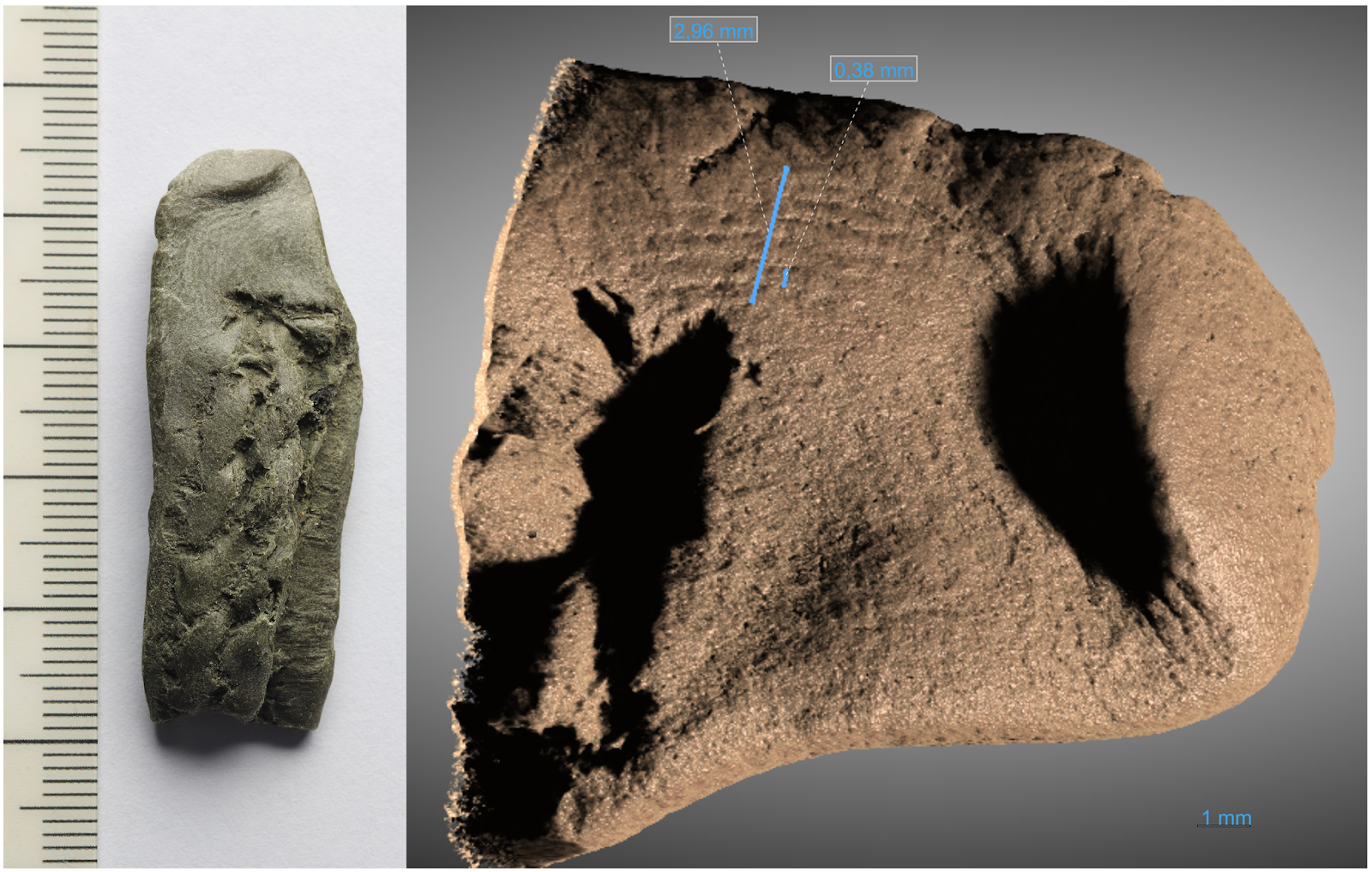
Stars aren’t the only things leaving their dirty fingerprints in unexpected places this week. Archeologists working on the mysterious Hjortspring boat, a 2,400-year-old Scandinavian vessel, discovered a tantalizing partial human fingerprint in its caulking, providing “a direct link to the ancient seafarers who used this boat,” according to the study.
Earth-Like Planets Are More Common Than We Thought, Study Says
Photo of caulking fragment showing fingerprint on the left and high-resolution x-ray tomography scan of fingerprint region on the right. Image: Photography by Erik Johansson, 3D model by Sahel Ganji

The ridges of the fingerprint “fall within average distributions for both adult male and females as well as for juvenile adults, making it difficult to say much about the individual who produced the print,” said researchers led by Mikael Fauvelle of Lund University. “The most likely interpretation, however, is that it was made during repairs by one of the crew members on the boat itself, providing a direct link to the seafarers of the ancient vessel.”

Regardless of this person’s identity, their voyage didn’t end well. Researchers think the crew of the Hjortspring boat probably sailed from the eastern Baltic Sea to attack the Danish island of Als, where they were defeated. “The victors [deposited] the weapons of their vanquished foes together with one of their boats into the bog,” where they remained for millennia until they were rediscovered in the 1880s, the team said. 

It’s a timeless reminder for would-be invaders: Don’t get caulky.

Long-time lurker, first-time poster

Oswald, Lisa et al. “Disentangling participation in online political discussions with a collective field experiment.” Science Advances.

At last, scientists have investigated the most elusive online demographic: the humble lurker. A team recruited 520 Redditors in the U.S. to participate in small subreddits focused on a variety of political topics during the summer of 2024. The aim was to probe why some people became prolific “power-users” that post with voluminous confidence, while others remained wallflowers.

“Online political discussions are often dominated by a small group of active users, while most remain silent,” said researchers led by Lisa Oswalt of the Max Planck Institute for Human Development. “This visibility gap can distort perceptions of public opinion and fuel polarization.” 

The team found that “lurking (posting nothing) was most common among users who perceived discussions as toxic, disrespectful, or unconstructive.” Lurkers were offered small payments to post in the experiment, which succeeded in motivating some to contribute to discussions. As a result, the study concluded that “future interventions may be able to make online political discussions more representative by offering more positive social rewards for lurkers to post.”

At last, an opportunity to unionize the lurkers of the world. Solidarity (in silence) forever.

It’s the great pumpkin toadlet, Charlie Brown 

Bornschein, Marcos R. et al. “A new species of Brachycephalus (Anura: Brachycephalidae) from Serra do Quiriri, northeastern Santa Catarina state, southern Brazil, with a review of the diagnosis among species of the B. pernix group and proposed conservation measures.” PLOS One.

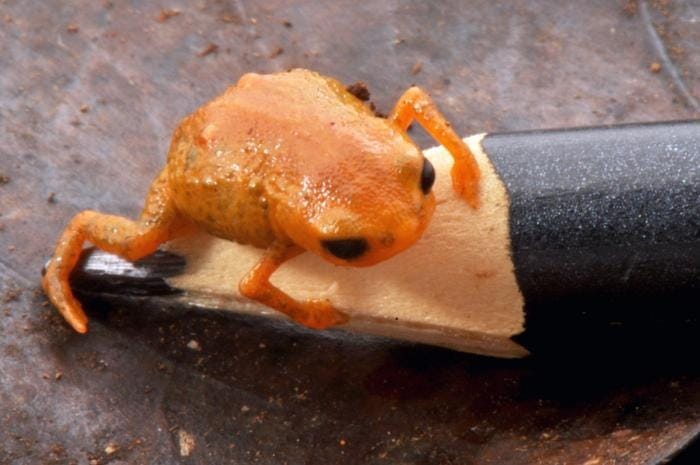
We will close, as we have before, with an impossibly cute toadlet. Scientists have discovered this new species of “pumpkin toadlet” in the “cloud forests” of Brazil, a sentence so twee that it’s practically its own fairy tale. The tiny toad Brachycephalus lulai, pictured below on a pencil tip, belongs to a family of “flea toads” that are among the smallest vertebrates on Earth. 
Earth-Like Planets Are More Common Than We Thought, Study Says
Basically it is very smol: Brachycephalus lulai is a tiny pumpkin toadlet measuring less than 14 mm in length. Photo: Luiz Fernando Ribeiro. Image credit 1: Luiz Fernando Ribeiro, CC-BY 4.0 (https://creativecommons.org/licenses/by/4.0/)

“Our team sought to better document the individual variation of all Brachycephalus species in southern Brazil, looking for them in the field over the past seven years,” said researchers led by Marcos R. Bornschein of São Paulo State University. “As a result of this work, we discovered and herein described a population collected on the eastern slope of Serra do Quiriri as a new species.”

The team also reported that the toads are actively colonizing newly formed cloud forests, which are high-altitude woods shrouded in mist. The researchers propose making these unique habitats into refuges for the adorable anurans. 

Thanks for reading! See you next week.

Reçu avant avant-hier
  • ✇404 Media
  • Scientists Discover the Earliest Human-Made Fire, Rewriting Evolutionary History
    🌘Subscribe to 404 Media to get The Abstract, our newsletter about the most exciting and mind-boggling science news and studies of the week. Humans made fires as early as 400,000 years ago, pushing the timeline of this crucial human innovation back a staggering 350,000 years, reports a study published on Wednesday in Nature. Mastery of fire is one of the most significant milestones in our evolutionary history, enabling early humans to cook nutritious food, seek protection from predators, and esta
     

Scientists Discover the Earliest Human-Made Fire, Rewriting Evolutionary History

11 décembre 2025 à 09:17
🌘
Subscribe to 404 Media to get The Abstract, our newsletter about the most exciting and mind-boggling science news and studies of the week.
Scientists Discover the Earliest Human-Made Fire, Rewriting Evolutionary History

Humans made fires as early as 400,000 years ago, pushing the timeline of this crucial human innovation back a staggering 350,000 years, reports a study published on Wednesday in Nature

Mastery of fire is one of the most significant milestones in our evolutionary history, enabling early humans to cook nutritious food, seek protection from predators, and establish comfortable spaces for social gatherings. The ability to make fires is completely unique to the Homo genus that includes modern humans (Homo sapiens) and extinct humans, including Neanderthals.

  • ✇404 Media
  • An Asteroid Threatening Earth Is Teeming With Ingredients for Life, Scientists Discover
    Welcome back to the Abstract! Here are the studies this week that fought for their food, took one for the team, passed the extraterrestrial sugar, and got lost in an ancient haze.  First, a story about the spiciest meatball in the animal kingdom. Then: ants are being interesting again, a new discovery about an old rock, and a walk in an ancient sulfur rainstorm.As always, for more of my work, check out my book First Contact: The Story of Our Obsession with Aliens or subscribe to my personal news
     

An Asteroid Threatening Earth Is Teeming With Ingredients for Life, Scientists Discover

6 décembre 2025 à 09:00
An Asteroid Threatening Earth Is Teeming With Ingredients for Life, Scientists Discover

Welcome back to the Abstract! Here are the studies this week that fought for their food, took one for the team, passed the extraterrestrial sugar, and got lost in an ancient haze.  

First, a story about the spiciest meatball in the animal kingdom. Then: ants are being interesting again, a new discovery about an old rock, and a walk in an ancient sulfur rainstorm.

As always, for more of my work, check out my book First Contact: The Story of Our Obsession with Aliens or subscribe to my personal newsletter the BeX Files

Pond frog versus murder hornet 

Sugiura, Shinji. “Pond frog as a predator of hornet workers: High tolerance to venomous stings.” Ecosphere.

Most animals don’t eat hornets, because dinner is just not as fun if it comes with a side of deadly venom and stab wounds. But a scientist has now observed an incredible exception to the rule with the humble black-spotted pond frog (Pelophylax nigromaculatus), which will straight-up house a hornet and ask for seconds.

Hornets have occasionally been found in the bellies of pond frogs, suggesting that the amphibians can tolerate their intense stings, but not much else is known about this unusual predator-prey relationship. To remedy the situation, Shinji Sugiura of Kobe University went out to the prefecture of Hyogo in Central Japan and netted a bunch of hornets from grasslands and forests—including the infamous “murder hornet” Vespa mandarinia, the largest in the world. He then captured pond frogs from wetlands with paddy fields and ponds in Hyogo and Shimane prefectures. Then, he let them duke it out in the lab in the world’s gnarliest series of cage matches.

“When a frog opened its mouth and its tongue made contact with a hornet, the action was classified as an attack on the hornet,” Sugiura said in the study. “If the frog did not stop the attack, spit out, or regurgitate the hornet, it was considered to have successfully consumed the hornet.”

The results revealed that most frogs made short work of the hornets (Videos S2) even though their meals were actively stinging them in their faces, eyes, tongues, palates, or throats of the frogs during attacks (Figure 3c,d). 

“None of the frogs regurgitated the hornets after swallowing them,” Sugiura noted. “All frogs that swallowed hornets excreted the undigested body parts of the hornets as feces 2–4 days after ingestion.”

Lets just sit with that mental image of poopy undigested hornets for a second. What a nightmare. But what’s truly wild about this study is that the insects are known to inject lethal doses of venom into much larger animals, like mice, so the frogs clearly have some unknown defense against their attacks.    

“Although many frogs were stung repeatedly by [hornets] in this study…none of the frogs died, and all individuals resumed normal behavior shortly after being stung,” Suguira said. “Moreover, despite repeated stings, most of the frogs ultimately consumed hornet workers…indicating a high level of predation success even against the largest hornet species.”

We humans are so lucky that when we sit down to dinner, our food generally does not try to kill us with repeated venomous needlepoint impalements. Count your blessings!

In other news…

Meet the ant-y Christs 

Dawson, Erika H. “Altruistic disease signalling in ant colonies.” Nature Communications.

We’ll move now from death by frog munchies to death by team spirit. Scientists have discovered that ant pupae (baby ants) will sacrifice themselves if they are sick, lest they risk the health of the entire colony.

“Here we show…that sick ant pupae instead actively emit a chemical signal that in itself is sufficient to trigger their own destruction by colony members,” said researchers led by Erika H. Dawson of the Institute of Science and Technology Austria. “Our data suggest the evolution of a finely-tuned signalling system…that triggers pupal signalling for sacrifice. This demonstrates a balanced interplay between individual and social immunity that efficiently achieves whole-colony health.”

In other words, if an ant gets bitten by a zombie in a movie, it would immediately let everyone know and offer its life for the good of the group. Do what you will with this information. 

Do you take sugar in your asteroid?

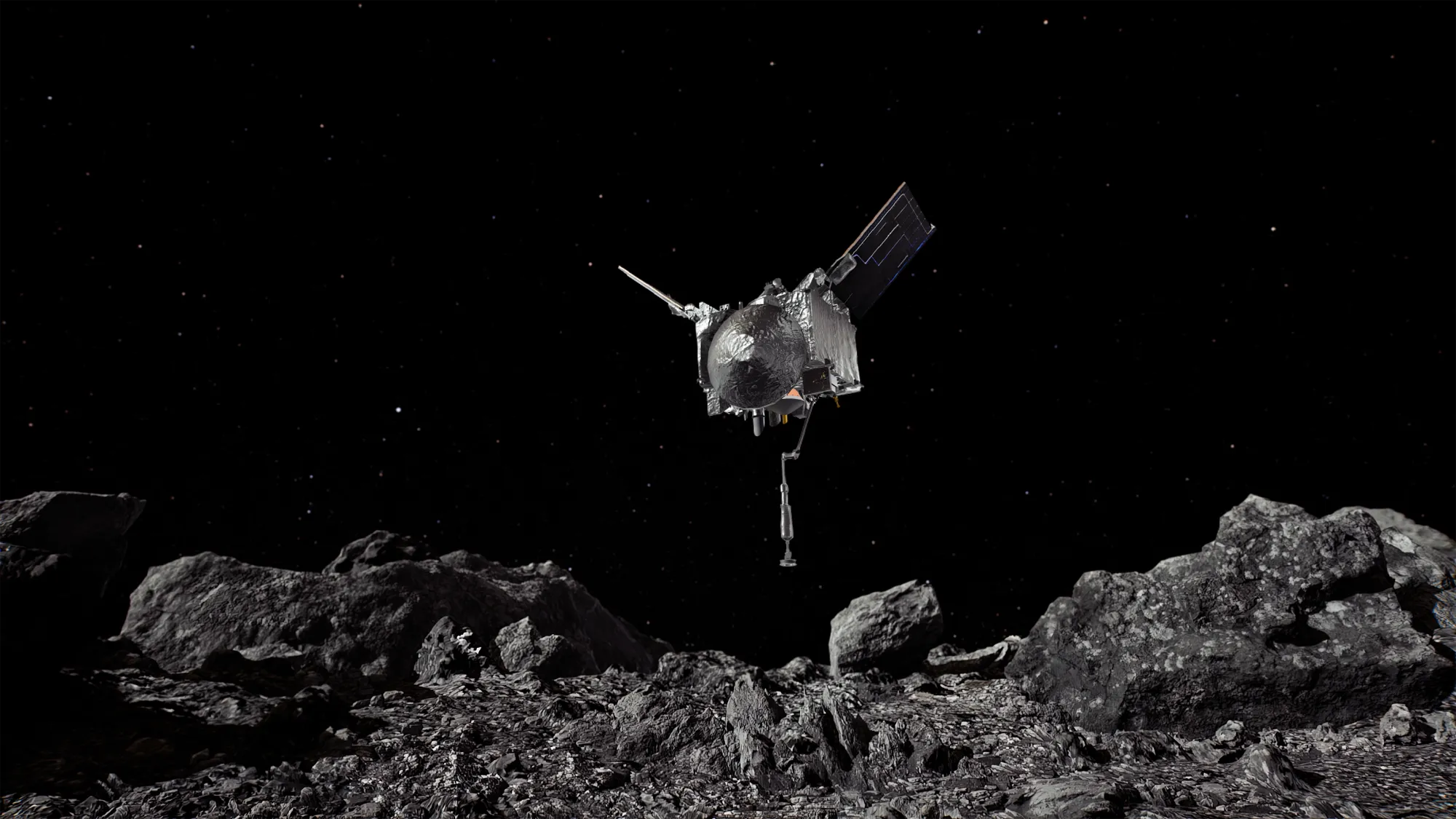
Furukawa, Yoshihiro et al. “Bio-essential sugars in samples from asteroid Bennu.” Nature Geoscience.

Scientists have found bio-essential sugars, including ribose and glucose, in samples of an asteroid called Bennu that were brought to Earth by NASA’s OSIRIS-REx mission in 2023. The discovery marks the first time key sugars have been found in any extraterrestrial sample. Ribose is an essential ingredient of RNA (ribonucleic acid), making it a particularly significant find in the quest to understand how life arose on Earth, and if it exists elsewhere.

“All five of the canonical nucleobases in DNA and RNA, and phosphate, were previously found in Bennu samples,” said researchers led by Yoshihiro Furukawa of Tohoku University. “Our detection of ribose means that all the components of RNA are present in Bennu.”

“Our confident detection in Bennu of abundant glucose—the hexose molecule that is life’s common energy source—and other hexoses indicates that they were present in the early solar system,” the team added. “Thus, all three crucial building blocks of life”— bio-essential sugars, nucleobases, and protein-building amino acids—”would have reached the prebiotic Earth and other potentially habitable planets.”

While Bennu bears the stuff of life, it may also be an omen of death: It has a 1 in 2,700 chance of hitting Earth on September 24, 2182. These are very low odds, but the risk is high enough to classify Bennu as potentially hazardous. So while visions of sugar plums may dance in your head this season, beware the nightmares about sugar-asteroids. 

It’s raining sulfur—hallelujah!  

Reed, Nathan W. “An Archean atmosphere rich in sulfur biomolecules.” Proceedings of the National Academy of Sciences.

I’ve made you walk through many valleys of death in this newsletter, but we’ll close with some unadulterated life. Scientists have discovered that many of the sulfur molecules that help make up all modern organisms may have rained down from the hazy skies of the Archean period four billion years ago.


Assuming the results are confirmed in future research, it would mean that these sulfur molecules could have predated life, upending a leading hypothesis that they were a product of life and thus emerged later.

The work challenges “the assumption that life must have ‘invented’ sulfur biomolecules during evolution…by demonstrating the production of a variety of sulfur biomolecules, including cysteine, in laboratory experiments mimicking the atmospheric chemistry of the early Earth,” said researchers led by Nathan Reed of NASA, who conducted the work while at the University of Colorado, Boulder. 

“The results presented here imply that an atmospheric organic haze is a potential powerhouse in providing a diversity of essential biomolecules in sufficient quantities for a budding global biosphere,” the team concluded.

Taken together with the Bennu study, it looks as if early Earth was positively marinating in life juices from multiple sources, including the sky and extraterrestrial impactors. Though this still doesn’t explain how living things sprang up from the prebiotic stew, it provides further confirmation that the ingredients of life as we know it are spread far and wide here in our solar system, and beyond. 

Thanks for reading! See you next week. 
  • ✇404 Media
  • Scientists Are Increasingly Worried AI Will Sway Elections
    🌘Subscribe to 404 Media to get The Abstract, our newsletter about the most exciting and mind-boggling science news and studies of the week. Scientists are raising alarms about the potential influence of artificial intelligence on elections, according to a spate of new studies that warn AI can rig polls and manipulate public opinion. In a study published in Nature on Thursday, scientists report that AI chatbots can meaningfully sway people toward a particular candidate—providing better results th
     

Scientists Are Increasingly Worried AI Will Sway Elections

4 décembre 2025 à 14:00
🌘
Subscribe to 404 Media to get The Abstract, our newsletter about the most exciting and mind-boggling science news and studies of the week.
Scientists Are Increasingly Worried AI Will Sway Elections

Scientists are raising alarms about the potential influence of artificial intelligence on elections, according to a spate of new studies that warn AI can rig polls and manipulate public opinion

In a study published in Nature on Thursday, scientists report that AI chatbots can meaningfully sway people toward a particular candidate—providing better results than video or television ads. Moreover, chatbots optimized for political persuasion “may increasingly deploy misleading or false information,” according to a separate study published on Thursday in Science. 

“The general public has lots of concern around AI and election interference, but among political scientists there’s a sense that it’s really hard to change peoples’ opinions, ” said David Rand, a professor of information science, marketing, and psychology at Cornell University and an author of both studies. “We wanted to see how much of a risk it really is.”

In the Nature study, Rand and his colleagues enlisted 2,306 U.S. citizens to converse with an AI chatbot in late August and early September 2024. The AI model was tasked with both increasing support for an assigned candidate (Harris or Trump) and with increasing the odds that the participant who initially favoured the model’s candidate would vote, or decreasing the odds they would vote if the participant initially favored the opposing candidate—in other words, voter suppression. 

In the U.S. experiment, the pro-Harris AI model moved likely Trump voters 3.9 points toward Harris, which is a shift that is four times larger than the impact of traditional video ads used in the 2016 and 2020 elections. Meanwhile, the pro-Trump AI model nudged likely Harris voters 1.51 points toward Trump.

The researchers ran similar experiments involving 1,530 Canadians and 2,118 Poles during the lead-up to their national elections in 2025. In the Canadian experiment, AIs advocated either for Liberal Party leader Mark Carney or Conservative Party leader Pierre Poilievre. Meanwhile, the Polish AI bots advocated for either Rafał Trzaskowski, the centrist-liberal Civic Coalition’s candidate, or Karol Nawrocki, the right-wing Law and Justice party’s candidate.

The Canadian and Polish bots were even more persuasive than in the U.S. experiment: The bots shifted candidate preferences up to 10 percentage points in many cases, three times farther than the American participants. It’s hard to pinpoint exactly why the models were so much more persuasive to Canadians and Poles, but one significant factor could be the intense media coverage and extended campaign duration in the United States relative to the other nations.  

“In the U.S., the candidates are very well-known,” Rand said. “They've both been around for a long time. The U.S. media environment also really saturates with people with information about the candidates in the campaign, whereas things are quite different in Canada, where the campaign doesn't even start until shortly before the election.” 

“One of the key findings across both papers is that it seems like the primary way the models are changing people's minds is by making factual claims and arguments,” he added. “The more arguments and evidence that you've heard beforehand, the less responsive you're going to be to the new evidence.”

While the models were most persuasive when they provided fact-based arguments, they didn’t always present factual information. Across all three nations, the bot advocating for the right-leaning candidates made more inaccurate claims than those boosting the left-leaning candidates. Right-leaning laypeople and party elites tend to share more inaccurate information online than their peers on the left, so this asymmetry likely reflects the internet-sourced training data. 

“Given that the models are trained essentially on the internet, if there are many more inaccurate, right-leaning claims than left-leaning claims on the internet, then it makes sense that from the training data, the models would sop up that same kind of bias,” Rand said.

With the Science study, Rand and his colleagues aimed to drill down into the exact mechanisms that make AI bots persuasive. To that end, the team tasked 19 large language models (LLMs) to sway nearly 77,000 U.K. participants on 707 political issues. 

The results showed that the most effective persuasion tactic was to provide arguments packed with as many facts as possible, corroborating the findings of the Nature study. However, there was a serious tradeoff to this approach, as models tended to start hallucinating and making up facts the more they were pressed for information.

“It is not the case that misleading information is more persuasive,” Rand said. ”I think that what's happening is that as you push the model to provide more and more facts, it starts with accurate facts, and then eventually it runs out of accurate facts. But you're still pushing it to make more factual claims, so then it starts grasping at straws and making up stuff that's not accurate.”

In addition to these two new studies, research published in Proceedings of the National Academy of Sciences last month found that AI bots can now corrupt public opinion data by responding to surveys at scale. Sean Westwood, associate professor of government at Dartmouth College and director of the Polarization Research Lab, created an AI agent that exhibited a 99.8 percent pass rate on 6,000 attempts to detect automated responses to survey data.

“Critically, the agent can be instructed to maliciously alter polling outcomes, demonstrating an overt vector for information warfare,” Westwood warned in the study. “These findings reveal a critical vulnerability in our data infrastructure, rendering most current detection methods obsolete and posing a potential existential threat to unsupervised online research.”

Taken together, these findings suggest that AI could influence future elections in a number of ways, from manipulating survey data to persuading voters to switch their candidate preference—possibly with misleading or false information. 

To counter the impact of AI on elections, Rand suggested that campaign finance laws should provide more transparency about the use of AI, including canvasser bots, while also emphasizing the role of raising public awareness. 

“One of the key take-homes is that when you are engaging with a model, you need to be cognizant of the motives of the person that prompted the model, that created the model, and how that bleeds into what the model is doing,” he said.

🌘
Subscribe to 404 Media to get The Abstract, our newsletter about the most exciting and mind-boggling science news and studies of the week.
  • ✇404 Media
  • Being Famous Can Shorten Your Lifespan, Scientists Find
    Welcome back to the Abstract! Here are the studies this week that hit the books, bottled alien lightning, reared wolf cubs, and tallied the price of fame. First, we’ve got a centuries-long history of an Indian savannah told through songs, folktales, and screaming peacocks. Then: Mars gets charged, the secrets of Stora Karlsö, and the epidemiology of stardom.As always, for more of my work, check out my book First Contact: The Story of Our Obsession with Aliens or subscribe to my personal newslett
     

Being Famous Can Shorten Your Lifespan, Scientists Find

29 novembre 2025 à 09:00
Being Famous Can Shorten Your Lifespan, Scientists Find

Welcome back to the Abstract! Here are the studies this week that hit the books, bottled alien lightning, reared wolf cubs, and tallied the price of fame. 

First, we’ve got a centuries-long history of an Indian savannah told through songs, folktales, and screaming peacocks. Then: Mars gets charged, the secrets of Stora Karlsö, and the epidemiology of stardom.

As always, for more of my work, check out my book First Contact: The Story of Our Obsession with Aliens or subscribe to my personal newsletter the BeX Files

When folk tales are field guides 

Nerlekar, Ashish N. et al. “Utilizing traditional literature to triangulate the ecological history of a tropical savanna.” People and Nature. 

It has happened again: Researchers have turned to the annals of literature to address a scientific question. Longtime readers of the Abstract will recall that this is a simply irresistible category of research to me (see: China’s porpoise corpus, Transylvanian weather reports, and milky seas). To the library! 

In this edition of Science from the Stacks, researchers probed the origins of the tropical savannah in western Maharashtra, India, by collecting references to plants in 28 stories and songs dating back at least 750 years. The aim was to reconstruct a vegetation history that could hint at shifts in the region between forest and savannah biomes.

“Ttraditional literature—for example, myths, folk songs and stories—is a culturally resonant, yet underutilized line of evidence to understand ecological histories and foster biodiversity conservation,” said researchers led by Ashish N. Nerlekar of Michigan State University.

Being Famous Can Shorten Your Lifespan, Scientists Find
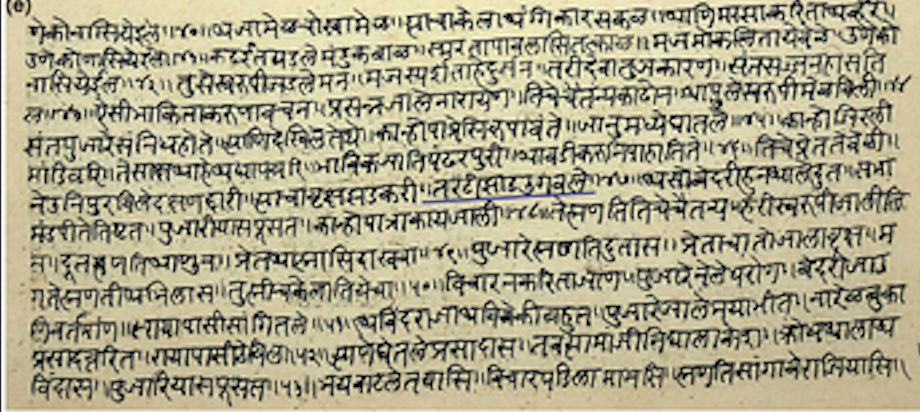
A folio from an early 19th-century manuscript of the Bhaktavijaya mentioning the taraṭī tree. Image: Nerlekar, Ashish N. et al. 

“We found that descriptions of both the landscape and specific plants point to an open-canopy savanna in the past rather than a forest,” the team said. “Of the 44 wild plant species recorded (i.e. omitting exclusively cultivated plants), a clear majority (27 species) were savanna indicators, 14 were generalists, and only three were forest indicators. Our ecological reconstructions from traditional literature complement data from archival paintings, revenue records, plant and animal fossils, and dated molecular phylogenies of endemic biodiversity—all attesting to the antiquity of India's savannas.”

It’s an out-of-the-box way to reconstruct the natural history of a region. But the highlights of these studies are always the excerpts from the literature, like the amazing origin story of this village:

“A folk tale illustrates the founding myth of Kolvihire village near Jejuri. The tale is about a robber-murderer named Vālhyā Koḷī, who lived near Kolvihire. Upon meeting a sage, Vālhyā Koḷī introspected on his wrongdoings and performed penance for 12 years. After completion of the penance, as a living testimony to Vālhyā Koḷī's sincere devotion, leaves sprouted from his stick, which he had used to hit and kill travellers to loot their money. Eventually, Vālhyā Koḷī became the sage-poet Vālmikī. According to the tale, the sprouted stick grew into a pāḍaḷa tree, and the tree still exists in Kolvihire.” 

You have to love a good botanical redemption story. Another standout line is this memorable description of a thorny patch in the savannah from the early 16th century: “Such is this thorny forest | it is highly frightening | this forest is empty | peacocks scream here.”

I don’t know exactly why, but “peacocks scream here” is just about the scariest description I’ve ever heard of a place. Shout out to this ancient poet for capturing some legendary bad vibes.  

In other news…

Extraterrestrial electricity

Chide, Baptiste et al. “Detection of triboelectric discharges during dust events on Mars.” Nature.

Lightning is a big deal on Earth, inspiring awe, fear, and some of the naughtiest deities imaginable. But lightning also strikes on other planets, including Jupiter and Saturn. For years, scientists have suspected that Mars might host its own bolts, but detecting them has remained elusive.

Now, scientists have finally captured lightning on Mars thanks to “serendipitous observations” from the SuperCam microphone aboard the Perseverance rover. 

“Fifty-five events have been detected over two Martian years, usually associated with dust devils and dust storm convective fronts,” said researchers led by Baptiste Chide of the Institut de Recherche en Astrophysique et Planétologie in Toulouse, France. “Beyond Mars, this work also reinforces the prospect of triboelectric discharges associated with wind-blown sediment on Venus and Titan.”

It goes to show that even a very dead world like Mars can still crackle and zap now and then. 

The wolves of Stora Karlsö

Girdland-Flink, Linus et al. “Gray wolves in an anthropogenic context on a small island in prehistoric Scandinavia.” Proceedings of the National Academy of Sciences.”

About 4,000 years ago on a small island in the Baltic sea, people cared for two wolves — perhaps as pets — feeding them fish, seals, and other marine fare. That’s the cozy portrait presented in a new study that analyzed the remains of ancient wolves buried in the Stora Förvar cave on the Swedish island of Stora Karlsö. 

While dogs are commonly buried at ancient human sites, wolves and humans rarely mix in the archaeological record. But the wolves at Stora Karlsö were unlikely to have reached the island without the aid of humans, and their primarily seafood diet—unusual for wild wolves—suggests they were also fed by people. Moreover, one of the animals suffered from a pathology that might have limited its mobility, hinting that it was kept alive by humans. 

Being Famous Can Shorten Your Lifespan, Scientists Find

The cave where the wolf remains were found. Image: Jan Storå/Stockholm University

The study presents the “possibility of prehistoric human control of wolves,” said researchers led by Linus Girdland-Flink of the University of Aberdeen. “Our results provide evidence that extends the discourse about past human–wolf interactions and relationships.”

Fame! I’m going to live forever (or not)  

Hepp, Johanna et al. “The price of fame? Mortality risk among famous singers.” Journal of Epidemiology and Community Health.

Celebrity may literally be to die for, according to a new study that evaluated fame as a comorbidity.

Scientists collected a list of 324 big music stars active between 1950 and 1990, including Elvis Presley, Kurt Cobain, Sam Cooke, and Janis Joplin. Those heavy-hitters were then matched with 324 “twin” musicians that were not household names, but otherwise shared many characteristics of the celebs, including gender, nationality, genre, and roughly similar birth dates. The idea was to directly compare the lifespans of A-listers and B-listers to isolate the extent to which fame itself is a mortality risk factor, rather than the lifestyle of a musician. 

The study suggests that famous singers die four years earlier, on average, compared to their B-list peers, demonstrating “a 33% higher mortality risk compared with less famous singers,” said researchers led by Johanna Hepp of the Central Institute of Mental Health in Mannheim, Germany. “This study provides new evidence suggesting that fame may be associated with increased mortality risk among musicians, beyond occupational factors.”

Lady Gaga had it right, as if there were ever any doubt: Under the glitz, the Fame Monster is always waiting.

Thanks for reading! See you next week. 

  • ✇404 Media
  • A Lone Astronomer Has Reported a Dark Matter ‘Annihilation’ Breakthrough
    🌘Subscribe to 404 Media to get The Abstract, our newsletter about the most exciting and mind-boggling science news and studies of the week. An astronomer has reported a possible new signature of dark matter, a mysterious substance that makes up most of the universe, according to a study published on Tuesday in the Journal of Cosmology and Astroparticle Physics. Dark matter accounts for 85 percent of all matter in the universe, but its existence has so far been inferred only from its indirect eff
     

A Lone Astronomer Has Reported a Dark Matter ‘Annihilation’ Breakthrough

26 novembre 2025 à 12:50
🌘
Subscribe to 404 Media to get The Abstract, our newsletter about the most exciting and mind-boggling science news and studies of the week.
A Lone Astronomer Has Reported a Dark Matter ‘Annihilation’ Breakthrough

An astronomer has reported a possible new signature of dark matter, a mysterious substance that makes up most of the universe, according to a study published on Tuesday in the Journal of Cosmology and Astroparticle Physics

Dark matter accounts for 85 percent of all matter in the universe, but its existence has so far been inferred only from its indirect effects on the familiar “baryonic” matter that makes up stars, planets, and life. 

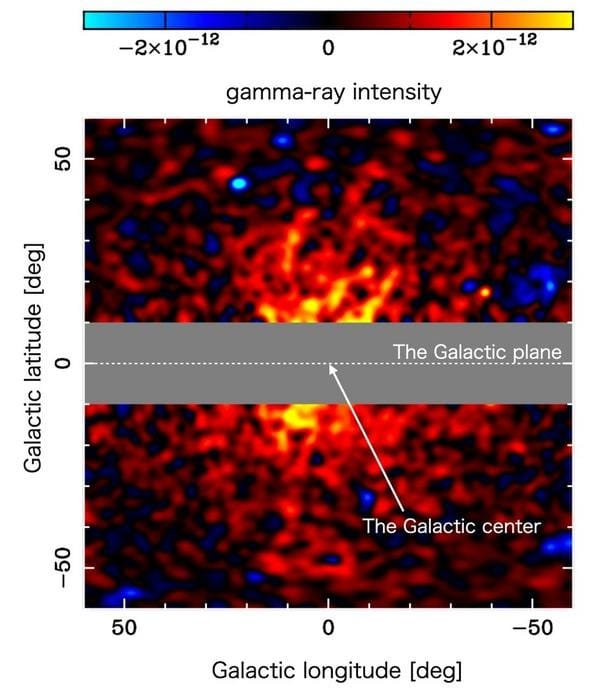
Tomonori Totani, a professor of astronomy at the University of Tokyo and the author of the study, believes he has spotted novel indirect traces of dark matter particles in the “halo” surrounding the center of our galaxy using new observations from NASA’s Fermi Gamma-ray Space Telescope. When these speculative particles collide—a process called dark matter annihilation—the crash is predicted to emit bright gamma rays, which is the light that Totani thinks he has identified.

“The discovery was made possible by focusing on the halo region (excluding the galactic center), which had received little attention, and by utilizing data accumulated over 15 years from the Fermi satellite,” Totani told 404 Media in an email. “After carefully removing all components other than dark matter, a signal resembling dark matter appeared.” 

“It was like playing the lottery, and at first I was skeptical,” he added. “But after checking meticulously and thinking it seemed correct, I got goosebumps!”

If the detection is corroborated by follow-up studies, it could confirm a leading hypothesis that dark matter is made of a hypothetical class of weakly interacting massive particles, or “WIMPs”—potentially exposing the identity of this mysterious substance for the first time. But that potential breakthrough is still a ways off, according to other researchers in the field. 

“Any new structure in the gamma-ray sky is interesting, but the dark matter interpretation here strikes me as quite preliminary,” said Danielle Norcini, an experimental particle physicist and

assistant professor at Johns Hopkins University, in an email to 404 Media. 

A Lone Astronomer Has Reported a Dark Matter ‘Annihilation’ Breakthrough
Gamma-ray intensity map excluding components other than the halo, spanning approximately 100 degrees in the direction of the Galactic center. The horizontal gray bar in the central region corresponds to the Galactic plane area, which was excluded from the analysis to avoid strong astrophysical radiation. Image: Tomonori Totani, The University of Tokyo

Dark matter has flummoxed scientists for almost a century. In the 1930s, astronomer Fritz Zwicky observed that the motions of galaxies hinted that they are much more massive than expected based solely on visible baryonic matter. Since then, astronomers have confirmed that dark matter, which accumulates into dense halos at the centers of galaxies, acts like a gravitational glue that holds structures together. Dark matter is also the basis of a vast cosmic web of gaseous threads that links galaxy clusters across billions of light years. 

But while dark matter is ubiquitous, it does not interact with the electromagnetic force, which means it does not absorb, reflect, or emit light. This property makes it difficult to spot with traditional astronomy, a challenge that has inspired the development of novel instruments designed to directly detect dark matter such as the subterranean LUX-ZEPLIN in South Dakota and the forthcoming DAMIC-M in France. 

For years, scientists have been probing possible emission from dark matter annihilation at the center of the Milky Way, which is surrounded by a halo of densely-clustered dark matter. Those previous studies focus on an excess emission pattern of about 2 gigaelectronvolts (GeV). Tontani’s study spotlights a new and different pattern with extremely energetic gamma rays at 20 GeV. 

“A part of the Fermi data showed a peculiar excess that our model couldn't explain, leading me to suspect it might be due to radiation originating from dark matter,” he said. “The most difficult part is removing gamma-ray emissions of origins other than dark matter, such as those from cosmic rays and celestial objects.”

This tentative report may finally fill in a major missing piece of our understanding of the universe by exposing the true nature of dark matter and confirming the existence of WIMPs. But given that similar claims have been made in the past, more research is needed to assess the significance of the results.

“For any potential indirect signal, the key next steps are independent checks: analyses using different background models, different assumptions about the Milky Way halo, and ideally complementary data sets,” Norcini said.

“Gamma-ray structures in the halo can have many astrophysical origins, so ruling those out requires careful modeling and cross-comparison,” she continued. “At this point the result seems too new for that scrutiny to have played out, and it will take multiple groups looking at the same data before a dark matter interpretation could be considered robust.”

Though Totani is confident in his interpretation of his discovery, he also looks forward to the input of other dark matter researchers around the world.

“First, I would like other researchers to independently verify my analysis,” he said. “Next, for everyone to be convinced that this is truly dark matter, the decisive factor will be the detection of gamma rays with the same spectrum from other regions, such as dwarf galaxies. The accumulation of further data from the Fermi satellite and large ground-based gamma-ray telescopes, such as the Cherenkov Telescope Array Observatory (CTAO) will be crucial.”

🌘
Subscribe to 404 Media to get The Abstract, our newsletter about the most exciting and mind-boggling science news and studies of the week.
  • ✇404 Media
  • A Lost Planet Created the Moon. Now, We Know Where It Came From.
    Welcome back to the Abstract! Here are the studies this week that overthrew the regime, survived outer space, smashed planets, and crafted an ancient mystery from clay.First, a queen gets sprayed with acid—and that’s not even the most horrifying part of the story. Then: a moss garden that is out of this world, the big boom that made the Moon, and a breakthrough in the history of goose-human relations.As always, for more of my work, check out my book First Contact: The Story of Our Obsession with
     

A Lost Planet Created the Moon. Now, We Know Where It Came From.

22 novembre 2025 à 09:00
A Lost Planet Created the Moon. Now, We Know Where It Came From.

Welcome back to the Abstract! Here are the studies this week that overthrew the regime, survived outer space, smashed planets, and crafted an ancient mystery from clay.

First, a queen gets sprayed with acid—and that’s not even the most horrifying part of the story. Then: a moss garden that is out of this world, the big boom that made the Moon, and a breakthrough in the history of goose-human relations.

As always, for more of my work, check out my book First Contact: The Story of Our Obsession with Aliens, or subscribe to my personal newsletter the BeX Files

What is this, a regime change for ants?

Shimada, Taku et al. “Socially parasitic ant queens chemically induce queen-matricide in host workers.” Current Biology.

Every so often, a study opens with such a forceful hook that it is simply best for me to stand aside and allow it to speak for itself. Thus:

“Matricide—the killing of a mother by her own genetic offspring—is rarely observed in nature, but not unheard-of. Among animal species in which offspring remain with their mothers, the benefits gained from maternal care are so substantial that eliminating the mother almost never pays, making matricide vastly rarer than infanticide.”

“Here, we report matricidal behavior in two ant species, Lasius flavus and Lasius japonicus, where workers kill resident queens (their mothers) after the latter have been sprayed with abdominal fluid by parasitic ant queens of the ants Lasius orientalis and Lasius umbratus.”

Mad props to this team for condensing an entire etymological epic into three sentences. Such murderous acts of dynastic usurpation were first observed by Taku Shimada, an ant enthusiast who runs a blog called Ant Room. Though matricide is sometimes part of a life cycle—like mommy spiders sacrificing their bodies for consumption by their offspring—there is no clear precedent for the newly-reported form of matricide, in which neither the young nor mother benefits from an evolutionary point of view.

In what reads like an unfolding horror, the invading parasitic queens “covertly approach the resident queen and spray multiple jets of abdominal fluid at her”—formic acid, as it turns out—that then “elicits abrupt attacks by host workers, which ultimately kill their own mother,” report Shimada and his colleagues.  

“The parasitic queens are then accepted, receive care from the orphaned host workers and produce their own brood to found a new colony,” the team said. “Our findings are the first to document a novel host manipulation that prompts offspring to kill an otherwise indispensable mother.”

My blood is curdling and yet I cannot look away! Though this strategy is uniquely nightmarish, it is not uncommon for invading parasitic ants to execute queens in any number of creative ways. The parasites are just usually a bit more hands-on (or rather, tarsus-on) about the process. 

“Queen-killing” has “evolved independently on multiple occasions across [ant species], indicating repeated evolutionary gains,” Shimada’s team said. “Until now, the only mechanistically documented solution was direct assault: the parasite throttles or beheads the host queen, a tactic that has arisen convergently in several lineages.”

When will we get an ant Shakespeare?! Someone needs to step up and claim that title, because these queens blow Lady MacBeth out of the water.

In other news…

That’s one small stem for a plant, one giant leaf for plant-kind

Maeng, Chang-hyun et al. “Extreme environmental tolerance and space survivability of the moss, Physcomitrium patens.” iScience, 

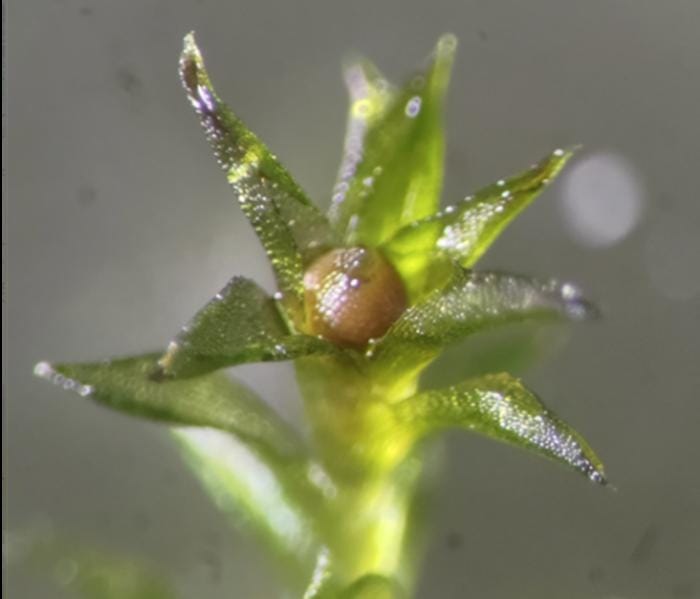
Scientists simply love to expose extremophile life to the vacuum of space to, you know, see how well they do out there. In a new addition to this tradition, a study reports that spores from the moss Physcomitrium patens survived a full 283 days chilling on the outside of the International Space Station, which is generally not the side of an orbital habitat you want to be stuck on. 

A Lost Planet Created the Moon. Now, We Know Where It Came From.
A reddish-brown spore similar to those used in the space exposure experiment. Image: Tomomichi Fujita

Even wilder, most of the spacefaring spores were reproductively successful upon their return to Earth. “Remarkably, even after 9 months of exposure to space conditions, over 80% of the encased spores germinated upon return to Earth,” said researchers led by Chang-hyun Maeng of Hokkaido University. “To the best of our knowledge, this is the first report demonstrating the survival of bryophytes”—the family to which mosses belong—”following exposure to space and subsequent return to the ground.”

Congratulations to these mosses for boldly growing where no moss has grown before.

Hints of a real-life ghost world

Hopp, Timo et al. “The Moon-forming impactor Theia originated from the inner Solar System.” Science.

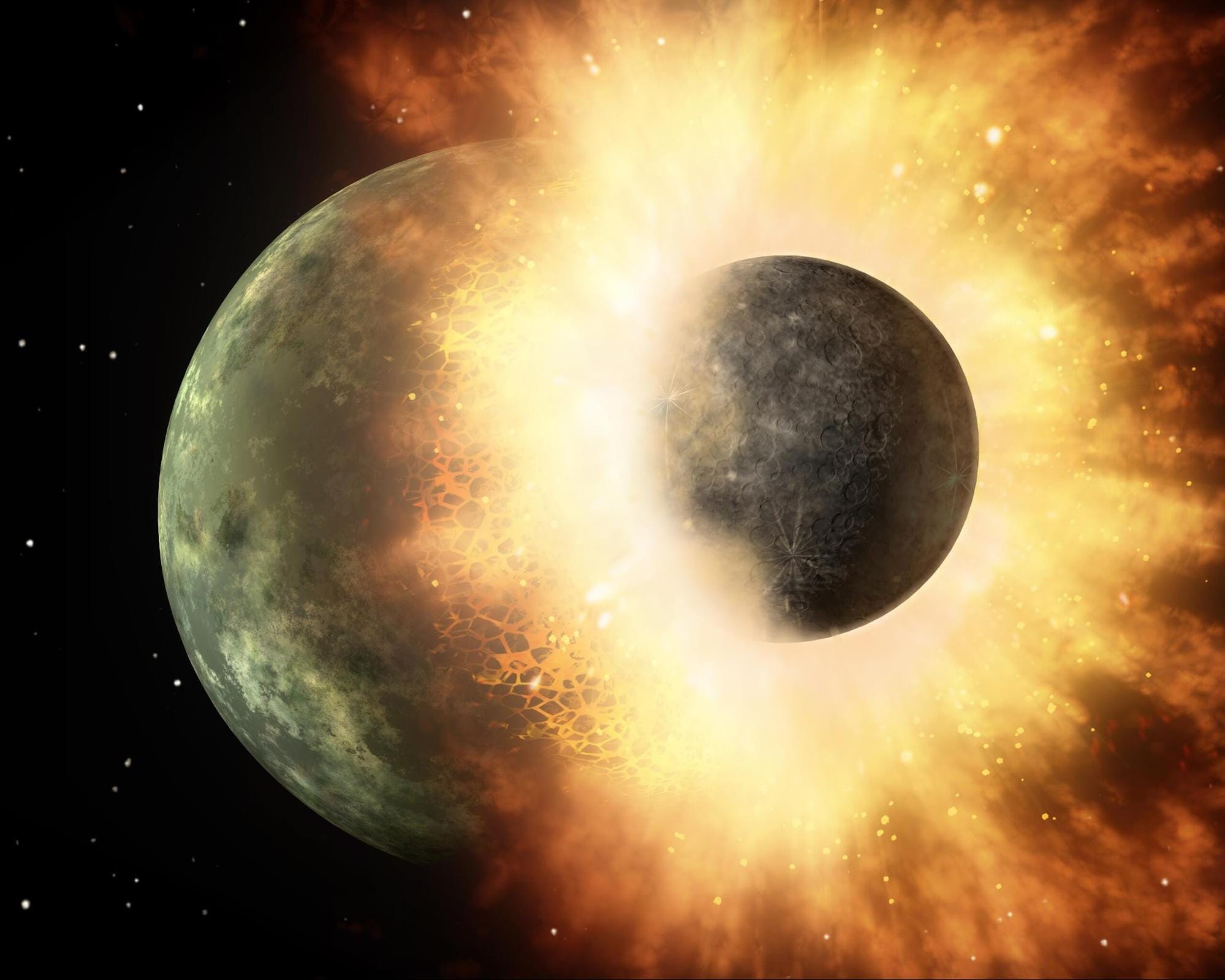
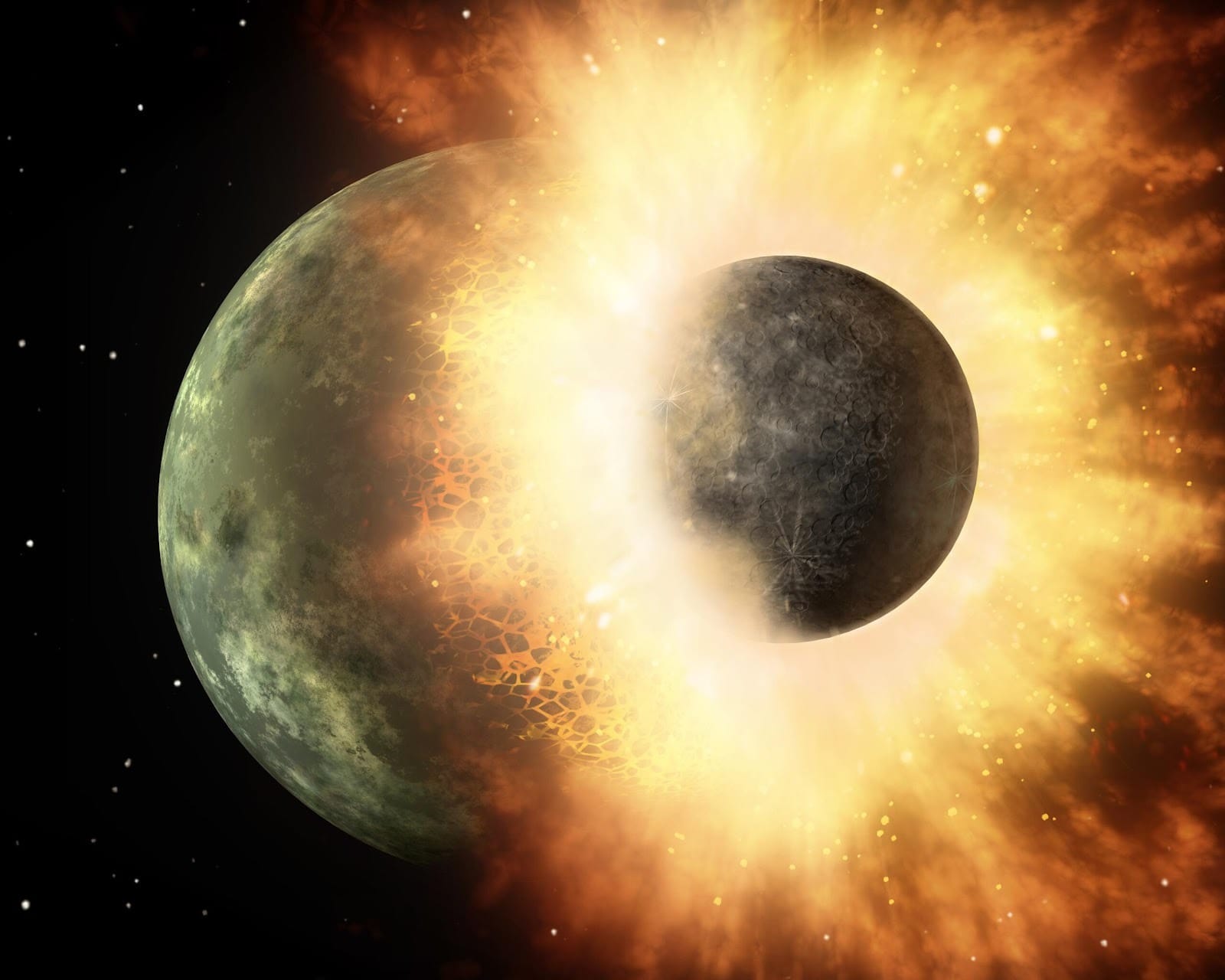
Earth had barely been born before a Mars-sized planet, known as Theia, smashed into it some 4.5 billion years ago. The debris from the collision coalesced into what is now our Moon, which has played a key role in Earth’s habitability, so we owe our lives in part to this primordial punch-up.

A Lost Planet Created the Moon. Now, We Know Where It Came From.
KABLOWIE! Image: NASA/JPL-Caltech

Scientists have now revealed new details about Theia by measuring the chemical makeup of “lunar samples, terrestrial rocks, and meteorites…from which Theia and proto-­Earth might have formed,” according to a new study. They conclude that Theia likely originated in the inner solar system based on the chemical signatures that this shattered world left behind on the Moon and Earth. 

“We found that all of Theia and most of Earth’s other constituent materials originated from the inner Solar System,” said researchers led by Timo Hopp of The University of Chicago and the Max Planck Institute for Solar System Research. “Our calculations suggest that Theia might have formed closer to the Sun than Earth did.”

Wherever its actual birthplace, what remains of Theia is buried on the Moon and as giant undigested slabs inside Earth’s mantle. Rest in pieces, sister.

Goosebumps of yore

Davin, Laurent et al. “A 12,000-year-old clay figurine of a woman and a goose marks symbolic innovations in Southwest Asia. Proceedings of the National Academy of Sciences.

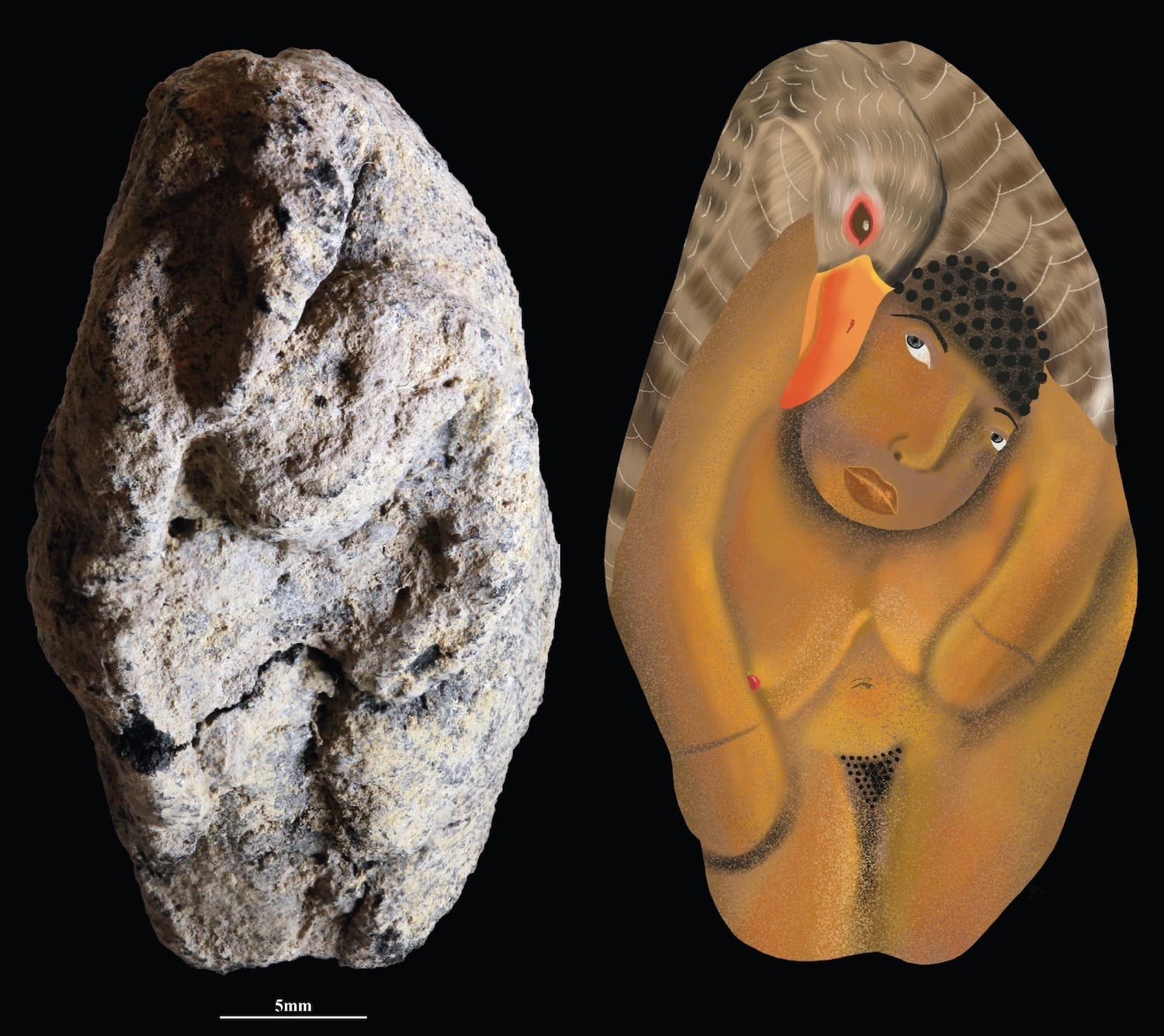
You’ve heard of the albatross around your neck, but what about the goose on your back? A new study reports the discovery of a 12,000-year-old artifact in Israel that is the “earliest known figurine to depict a human–animal interaction” with its vision of a goose mysteriously draped over a woman’s spine and shoulders.

The tiny, inch-high figurine was recovered from a settlement built by the prehistoric Natufian culture and it may represent some kind of sex thing. 

A Lost Planet Created the Moon. Now, We Know Where It Came From.
An image of the artifact, and an artistic reconstruction. Image: Davin, Laurent et al.

“We…suggest that by modeling a goose in this specific posture, the Natufian manufacturer intended to portray the trademark pattern of the gander’s mating behavior,” said researchers led by Laurent Davin of the Hebrew University of Jerusalem. “This kind of imagined mating between humans and animal spirits is typical of an animistic perspective, documented in cross-cultural archaeological and ethnographic records in specific situations” such as an “erotic dream” or “shamanistic vision.”

First, the bizarre Greek myth of Leda and the Swan, and now this? What is it about ancient cultures and weird waterfowl fantasies? In any case, my own interpretation is that the goose was just tired and needed a piggyback (or gaggle-back).

Thanks for reading! See you next week.

  • ✇404 Media
  • Scientists Discover the Origin of Kissing — And It’s Not Human
    🌘Subscribe to 404 Media to get The Abstract, our newsletter about the most exciting and mind-boggling science news and studies of the week. Kissing is one of humanity’s most cherished rituals—just think of the sheer variety of smooches, from the “wedding kiss” to the “kiss of death.” Now, scientists have discovered that the origins of this behavior, which is widespread among many primates, likely dates back at least 21 million years, according to a study published on Tuesday in the journal Evolu
     

Scientists Discover the Origin of Kissing — And It’s Not Human

18 novembre 2025 à 19:01
🌘
Subscribe to 404 Media to get The Abstract, our newsletter about the most exciting and mind-boggling science news and studies of the week.
Scientists Discover the Origin of Kissing — And It’s Not Human

Kissing is one of humanity’s most cherished rituals—just think of the sheer variety of smooches, from the “wedding kiss” to the “kiss of death.” Now, scientists have discovered that the origins of this behavior, which is widespread among many primates, likely dates back at least 21 million years, according to a study published on Tuesday in the journal Evolution and Human Behavior.  

In other words, our early primate relatives were sitting in a tree, K-I-S-S-I-N-G, in the early Miocene period. Moreover, the deep evolutionary roots of kissing suggest that Neanderthals likely smooched each other, and probably our human ancestors as well. The new study is the first attempt to reconstruct the evolutionary timeline of kissing by analyzing a wealth of observations about this behavior in modern primates and other animals. 

“It is kind of baffling to me that people haven't looked at this from an evolutionary perspective before,” said Matilda Brindle, an evolutionary biologist at the University of Oxford who led the study, in a call with 404 Media. “There have been some people who have put ideas out there, but no one's done it in a systematic way.”

“Kissing doesn't occur in all human cultures, but in those that it does, it's really important,” she added. “That's why we thought it was really exciting to study.”

Scientists Discover the Origin of Kissing — And It’s Not Human
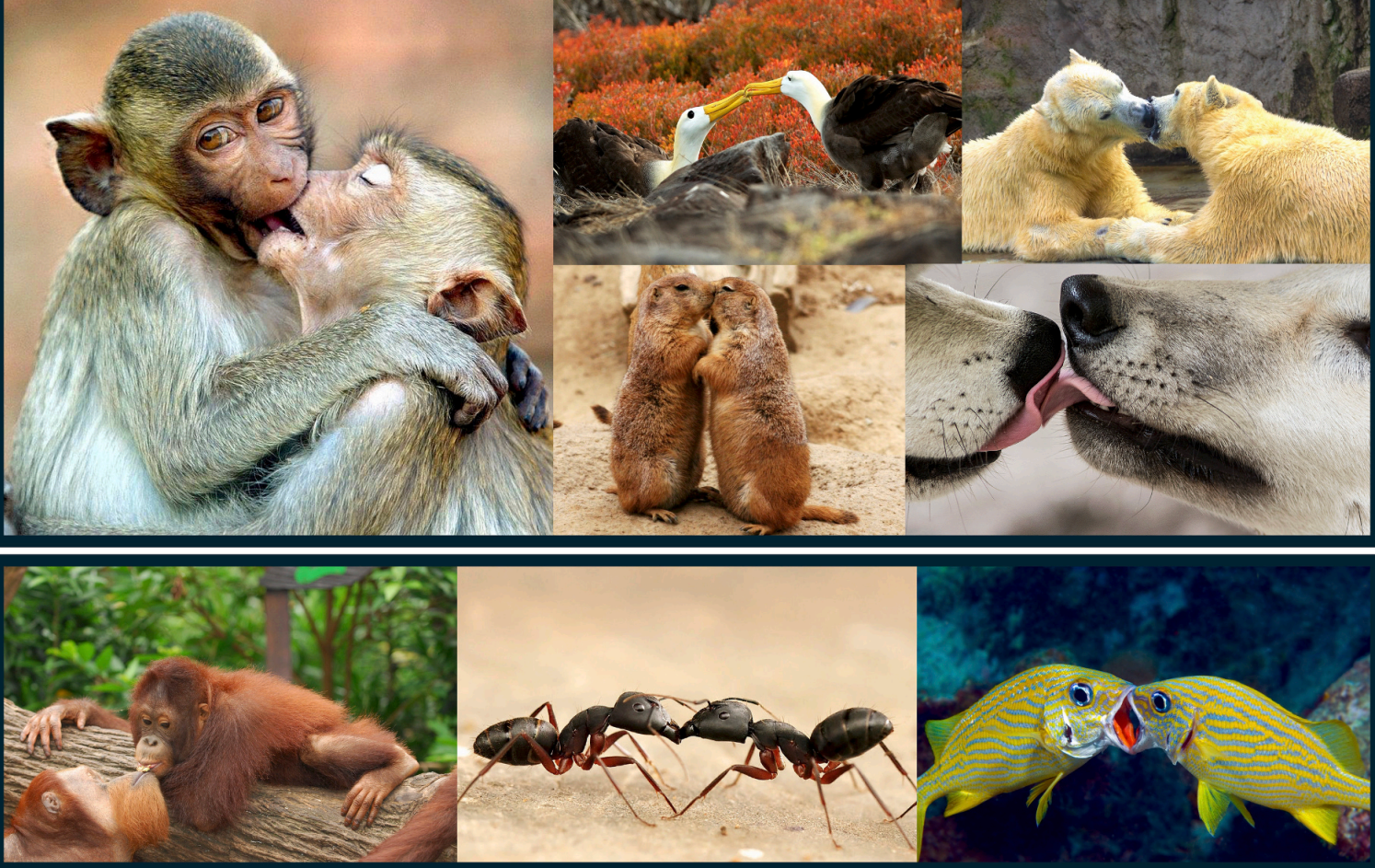
A collage of mouth-to-mouth contact across species. Image: Brindle, Matilda et al.

The ritual of the “first kiss” is a common romantic trope, but tracking down the “first kiss” in an evolutionary sense is no easy feat. For starters, the adaptive benefits of kissing have long eluded researchers. Mouth-to-mouth contact raises the odds of oral disease transfer, and it’s not at all clear what advantages puckering up confers to make it worth the trouble.

“Kissing is kind of risky,” Brindle said. “You're getting very close to another animal's face. There could be diseases. To me, that suggests that it is important. There must be some benefits to this behavior.”

Some common explanations for sex-related kissing include mate evaluation—bad breath or other red flags during a smoochfest might affect the decision to move on to copulation. Kissing may also stimulate sexual receptiveness and perhaps boost the odds of fertilization. In platonic contexts, kissing could serve a social purpose, similar to grooming, of solidifying bonds between parents and offspring, or even to smooth over conflicts between group members. 

“We know that chimpanzees, when they've had a bit of a bust up, will often go and kiss each other and make up,” Brindle said. “That might be really useful for navigating social relationships. Primates are obviously an incredibly social group of animals, and so this could be just a social lubricant for them.”

Though most of us have probably never considered the question, Brindle and her colleagues first had to ask: what is a kiss? They made a point to exclude forms of oral contact that don’t fall into the traditional idea of kissing as a prosocial behavior. For example, lots of animals share food directly through mouth-to-mouth contact, such as regurgitation from a parent to offspring. In addition, some animals display antagonistic behavior through mouth-to-mouth contact, such as “kiss-fighting” behavior seen in some fish. 

The team ultimately defined kissing as “a non-agonistic interaction involving directed, intraspecific, oral-oral contact with some movement of the lips/mouthparts and no food transfer.” Many animals engage in kissing under these terms—from insects, to birds, to mammals—but the researchers were most interested in primates.

To that end, they gathered observations of kissing across primate species and fed the data into models that analyzed the timeline of the behavior through the evolutionary relationships between species. The basic idea is that if humans, bonobos, and chimpanzees all kiss (which they do) then the common ancestor of these species likely kissed as well. 

The results revealed that the evolutionary “first kiss” likely occurred among primates at least 21 million years ago. Since Neanderthals and our own species, Homo sapiens, are known to have interbred—plus they also shared oral microbes—the team speculates that Neanderthals and our own human ancestors might have kissed as well.   

While the study provides a foundation for the origins of kissing, Brindle said there is not yet enough empirical data to test out different hypotheses about its benefits—or to explain why it is important in some species and cultures, but not others. To that end, she hopes other scientists will be inspired to report more observations about kissing in wild and captive animal populations.

“I was actually surprised that there were so few data out there,” Brindle said. “I thought that this would be way better documented when I started this study. What I would really love is, for people who see this behavior, to note it down, report it, so that we can actually start collecting more contextual information: Is this a romantic or a platonic kiss? Who were the actors in it? Was it an adult male and an adult female, or a mother and offspring? Were they eating at the time? Was there copulation before or after the kiss?”

“These sorts of questions will enable us to pick apart these potential adaptive hypotheses,” she concluded.

🌘
Subscribe to 404 Media to get The Abstract, our newsletter about the most exciting and mind-boggling science news and studies of the week.
  • ✇404 Media
  • Scientists Make Genetic Breakthrough with 39,000-Year-Old Mammoth RNA
    Welcome back to the Abstract! These are the studies this week that reached back through time, flooded the zone, counted the stars, scored science goals, and topped it all off with a ten-course meal.First, scientists make a major breakthrough thanks to a very cute mammoth mummy. Then: the climate case for busy beavers; how to reconnect with 3,000 estranged siblings; this is your brain on football; and last, what Queen Elizabeth II had for lunch on February 20, 1957. As always, for more of my work
     

Scientists Make Genetic Breakthrough with 39,000-Year-Old Mammoth RNA

15 novembre 2025 à 11:23
Scientists Make Genetic Breakthrough with 39,000-Year-Old Mammoth RNA

Welcome back to the Abstract! These are the studies this week that reached back through time, flooded the zone, counted the stars, scored science goals, and topped it all off with a ten-course meal.

First, scientists make a major breakthrough thanks to a very cute mammoth mummy. Then: the climate case for busy beavers; how to reconnect with 3,000 estranged siblings; this is your brain on football; and last, what Queen Elizabeth II had for lunch on February 20, 1957.

 As always, for more of my work, check out my book First Contact: The Story of Our Obsession with Aliens, or subscribe to my personal newsletter the BeX Files

The long afterlife of Yuka the mammoth

Mármol Sánchez, Emilio et al. “Ancient RNA expression profiles from the extinct woolly mammoth.” Cell.

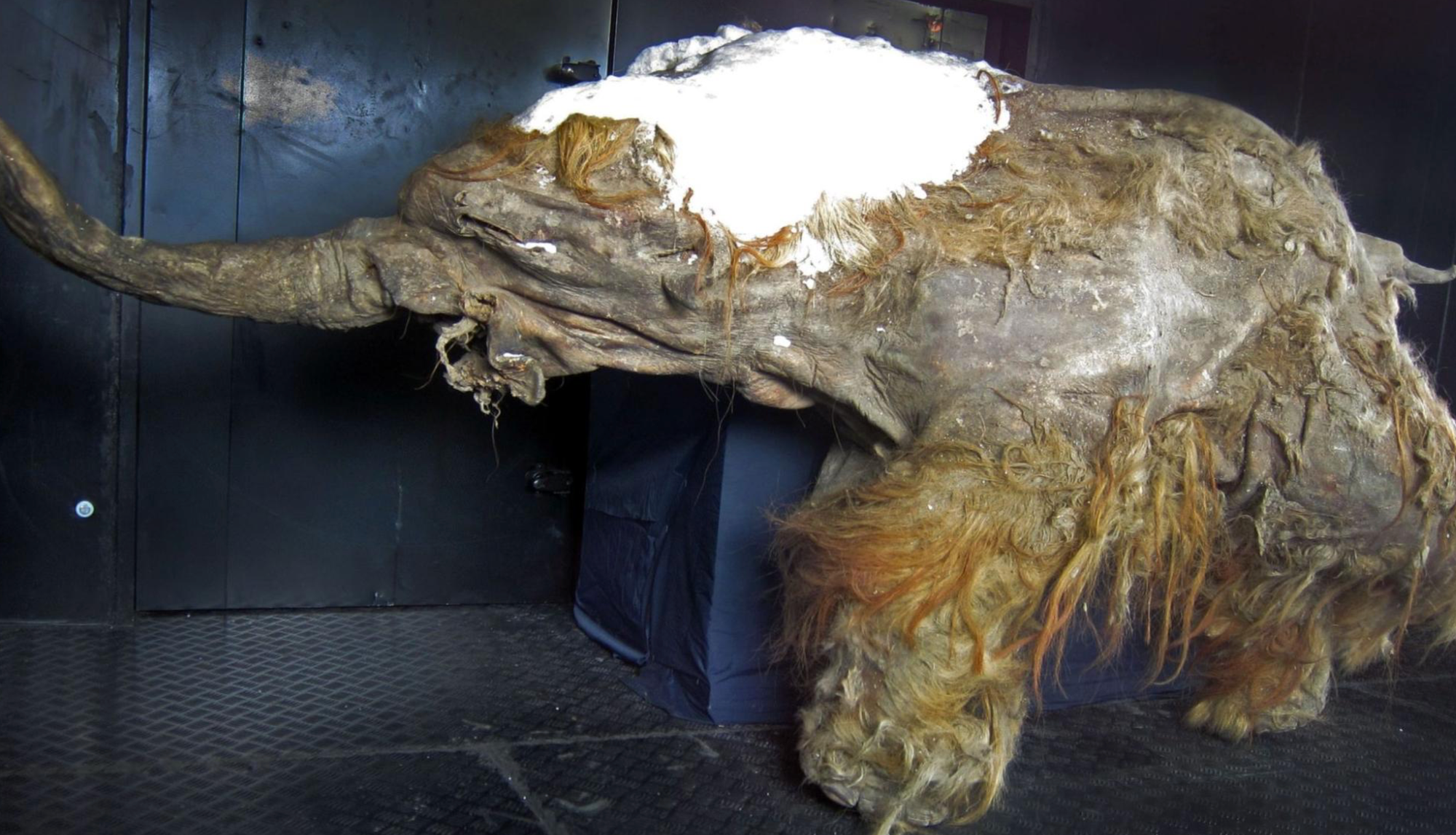
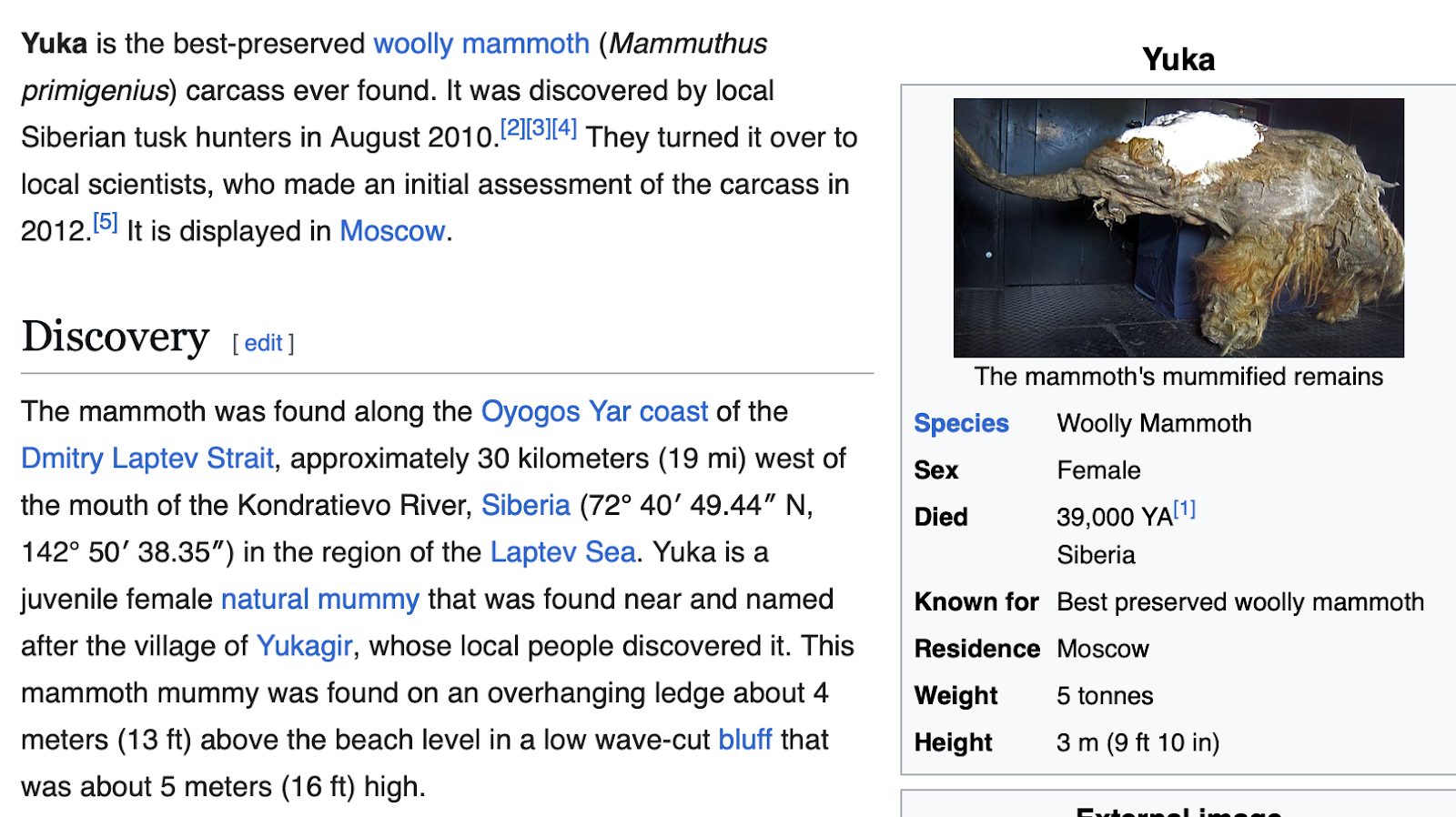
Scientists have sequenced RNA—a key ingredient of life as we know it—from the remains of a mammoth that lived 39,000 years ago during the Pleistocene “Ice Age” period, making it by far the oldest RNA on record. 

The previous record holder for oldest RNA was sourced from a puppy that lived in Siberia 14,300 years ago. The new study has now pushed that timeline back by an extraordinary 25,000 years, opening a new window into ancient genetics and revealing a surprise about a famous mammoth mummy called Yuka. 

“Ancient DNA has revolutionized the study of extinct and extant organisms that lived up to 2 million years ago, enabling the reconstruction of genomes from multiple extinct species, as well as the ecosystems where they once thrived,” said researchers led by Emilio Mármol Sánchez of the Globe Institute in Copenhagen, who completed the study while at Stockholm University.

“However, current DNA sequencing techniques alone cannot directly provide insights into tissue identity, gene expression dynamics, or transcriptional regulation, as these are encoded in the RNA fraction.”

“Here, we report transcriptional profiles from 10 late Pleistocene woolly mammoths,” the team continued. “One of these, dated to be ∼39,000 years old, yielded sufficient detail to recover…the oldest ancient RNA sequences recorded to date.”

DNA, the double-stranded “blueprint” molecule that stores genetic information, is far sturdier than RNA, which is why it can be traced back for millions of years instead of thousands. Single-stranded RNA, a “messenger” molecule that carries out the orders of DNA, is more fragile and rare in the paleontological record.

In addition to proving that RNA can survive much longer than previously known, the team discovered that Yuka—the mammoth that died 39,000 years ago—has been misgendered for years (yes, I realize gender is a social construct that does not apply to extremely dead mammoths, but mis-sexed just doesn’t have the same ring). 

Yuka was originally deemed female according to a 2021 study that observed the “presence of skin folds in the genital area compatible with labia vulvae structures in modern elephants and the absence of male-specific muscle structures.” Mármol Sánchez and his colleagues have now overturned this anatomical judgement by probing the genetic remnants of Yuka’s Y chromosome.

In fact, as I write this on Thursday, November 13—a day before the embargo on this study lifts on Friday—Yuka is still listed as female on Wikipedia. 

Scientists Make Genetic Breakthrough with 39,000-Year-Old Mammoth RNA

Just a day until you can live your truth, buddy.

In other news…

Leave it to beavers 

Burgher, Jesse A. S. et al. “Beaver-related restoration and freshwater climate resilience across western North America.” Restoration Ecology.

Every era has a champion; in our warming world, eager beavers may rise to claim this lofty title. 

These enterprising rodents are textbook “ecosystem engineers” that reshape environments with sturdy dams that create biodiverse havens that are resistant to climate change. To better assess the role of beavers in the climate crisis, researchers reviewed the reported behavioral beaver-related restoration (BRR) projects across North America. 

“Climate change is projected to impact streamflow patterns in western North America, reducing aquatic habitat quantity and quality and harming native species, but BRR has the potential to ameliorate some of these impacts,” said researchers led by Jesse A. S. Burgher of Washington State University. 

The team reports “substantial evidence that BRR increases climate resiliency…by reducing summer water temperatures, increasing water storage, and enhancing floodplain connectivity” while also creating “fire-resistant habitat patches.” 

So go forth and get busy, beavers! May we survive this crisis in part through the skin of your teeth.

One big happy stellar family

Boyle, Andrew W. et al. “Lost Sisters Found: TESS and Gaia Reveal a Dissolving Pleiades Complex.” The Astrophysical Journal.

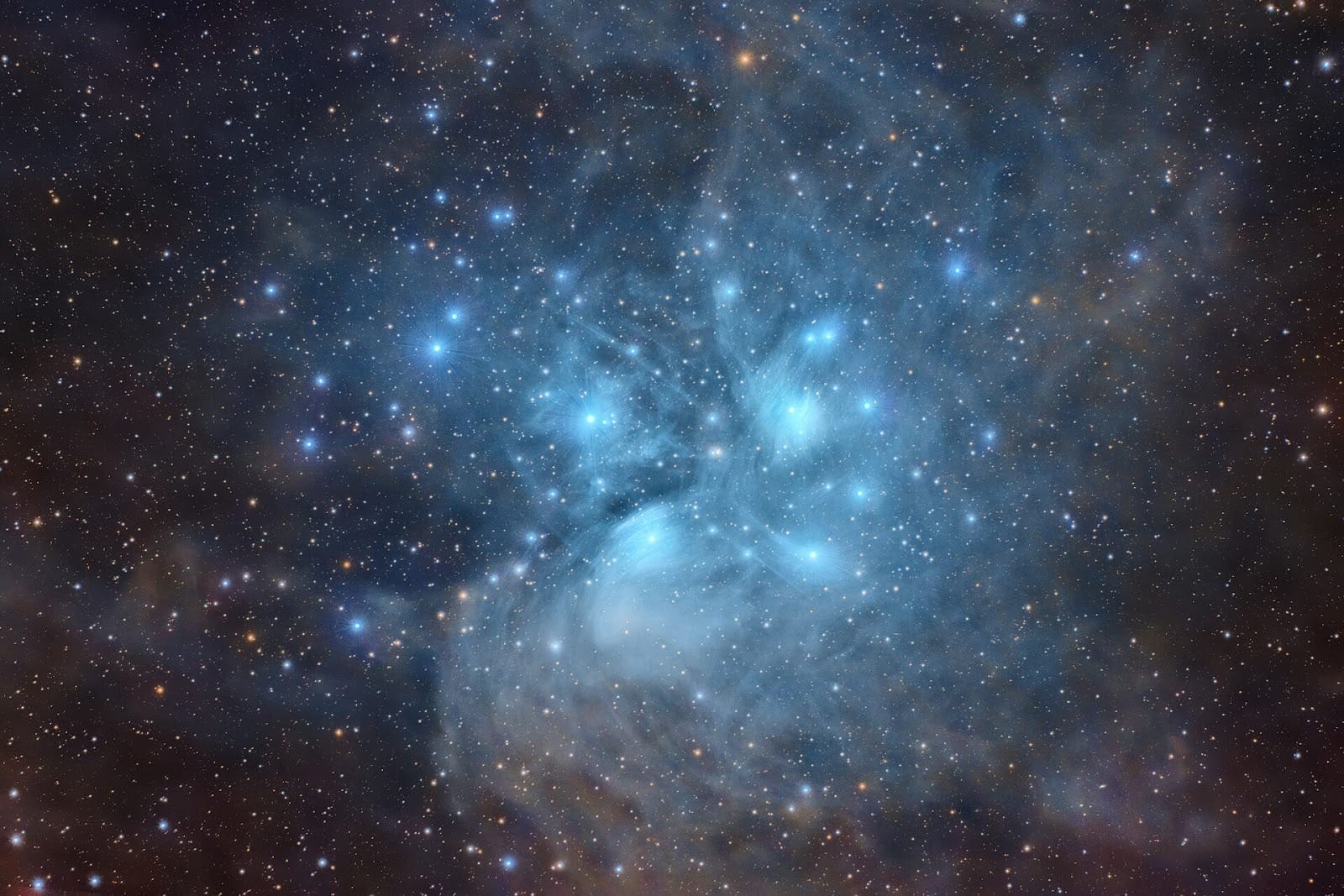
Visible from both the Northern and Southern Hemispheres, the Pleiades is the most widely recognized and culturally significant star cluster in the night sky. While this asterism is defined by a handful of especially radiant stars, known as the Seven Sisters, scientists have now tracked down thousands of other stellar siblings born from the same clutch scattered across some 2,000 light years.

Scientists Make Genetic Breakthrough with 39,000-Year-Old Mammoth RNA
Wide-field shot of Pleiades. Image Antonio Ferretti & Attilio Bruzzone

“We find that the Pleiades constitutes the bound core of a much larger, coeval structure” and “we refer to this structure as the Greater Pleiades Complex,” said researchers led by Andrew W. Boyle of the University of North Carolina at Chapel Hill. “On the basis of uniform ages, coherent space velocities, detailed elemental abundances, and traceback histories, we conclude that most stars in this complex originated from the same giant molecular cloud.” 

The work “further cements the Pleiades as a cornerstone of stellar astrophysics” and adds new allure to a cluster that first exploded into the skies during the Cretaceous age. (For more on the Pleiades, check out this piece I wrote earlier this year about the deep roots of its lore).

Getting inside your head(er)

Zamorano, Francisco et al. “Brain Mechanisms across the Spectrum of Engagement in Football Fans: A Functional Neuroimaging Study.” Radiology.

Scientists have peered into a place I would never dare to visit—the minds of football fans during high-stakes plays. To tap into the neural side of fanaticism, researchers enlisted 60 healthy male fans from the ages of 20 to 45 to witness dozens of goal sequences from matches involving their favorite teams, rival teams, and “neutral” teams while their brains were scanned by an fMRI machine. 

The participants were rated according to a “Football Supporters Fanaticism Scale (FSFS)” with criteria like “violent thought and/or action tendencies” and “institutional belonging and/or identification.” The scale divided the group up into 38 casual spectators, 19 committed fans, and four deranged fanatics (adjectives are mine for flourish).

Scientists Make Genetic Breakthrough with 39,000-Year-Old Mammoth RNA
Rendering of the negative effect of significant defeat. Image: Radiological Society of North America (RSNA)

“Our key findings revealed that scoring against rivals activated the reward system…while conceding to rivals triggered the mentalization network and inhibited the dorsal anterior cingulate cortex (dACC)”—a region responsible for cognitive control and decision-making—said researchers led by Francisco Zamorano of the Universidad San Sebastián in Chile. “Higher Football Supporters Fanaticism Scale scores correlated with reduced dACC activation during defeats, suggesting impaired emotional regulation in highly engaged fans.”

In other words, it is now scientifically confirmed that football fanatics are Messi bitches who love drama. 

Diplomacy served up fresh

Cabral, Óscar et al “Power for dinner. Culinary diplomacy and geopolitical aspects in Portuguese diplomatic tables (1910-2023).”

We’ll close, as all things should, with a century of fine Portuguese dining. In yet another edition of “yes, this can be a job,” researchers collected 457 menus served at various diplomatic meals in Portugal from 1910 to 2023 to probe “how Portuguese gastronomic culture has been leveraged as a culinary diplomacy and geopolitical rapprochement strategy.” 

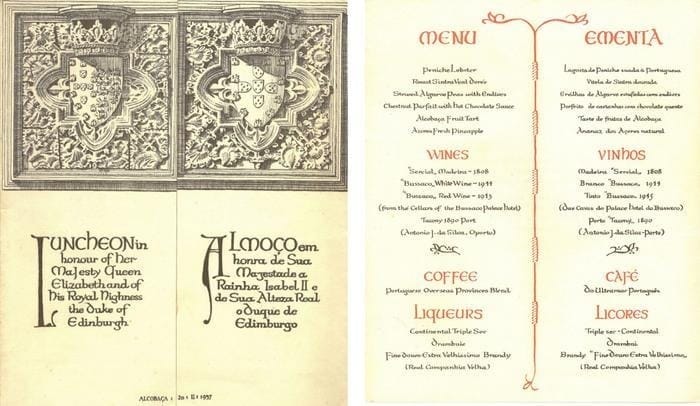
As a lover of both food and geopolitical bureaucracy, this study really hit the spot. Highlights include a 1957 “regional lunch” for Queen Elizabeth II that aimed to channel “Portugality” through dishes like lobster and fruit tarts from the cities of Peniche and Alcobaça. The study is also filled with amazing asides like “the inclusion of imperial ice cream in the European Free Trade Association official luncheon (ID45, 1960) seems to transmit a sense of geopolitical greatness and vast governing capacity.” Ice cream just tastes so much better when it’s a symbol of international power. 

Scientists Make Genetic Breakthrough with 39,000-Year-Old Mammoth RNA
Menu of the “Luncheon in honour of her Majesty Queen Elizabeth II and his Royal Highness the Duke of Edinburgh” held in Alcobaça (Portugal) on February 20th, 1957. Image: Cabral et al., 2025.

The team also unearthed a possible faux pas: Indian president Ramaswamy Venkataraman, a vegetarian who was raised Hindu, was served roast beef in 1990. In a footnote, Cabral and his colleagues concluded that “further investigation is deemed necessary to understand the context of ‘roast beef’ service to the Indian President in 1990.” Talk about juicy gossip!

 Thanks for reading! See you next week.
  • ✇404 Media
  • Remnants of Lost Continents Are Everywhere. Now, We Finally Know Why.
    🌘Subscribe to 404 Media to get The Abstract, our newsletter about the most exciting and mind-boggling science news and studies of the week. Tiny remnants of long-lost continents that vanished many millions of years ago are sprinkled around the world, including on remote island chains and seamounts, a mystery that has puzzled scientists for years. Now, a team has discovered a mechanism that can explain how this continental detritus ends up resurfacing in unexpected places, according to a study pu
     

Remnants of Lost Continents Are Everywhere. Now, We Finally Know Why.

11 novembre 2025 à 12:45
🌘
Subscribe to 404 Media to get The Abstract, our newsletter about the most exciting and mind-boggling science news and studies of the week.
Remnants of Lost Continents Are Everywhere. Now, We Finally Know Why.

Tiny remnants of long-lost continents that vanished many millions of years ago are sprinkled around the world, including on remote island chains and seamounts, a mystery that has puzzled scientists for years. 

Now, a team has discovered a mechanism that can explain how this continental detritus ends up resurfacing in unexpected places, according to a study published on Tuesday in Nature Geoscience.  

When continents are subducted into Earth’s mantle, the layer beneath the planet’s crust, waves can form that scrape off rocky material and sweep it across hundreds of miles to new locations.  This “mantle wave” mechanism fills in a gap in our understanding of how lost continents are metabolized through our ever-shifting planet.  

“There are these seamount chains where volcanic activity has erupted in the middle of the ocean,” said Sascha Brune, a professor at the GFZ Helmholtz Centre for Geosciences and University of Potsdam, in a call with 404 Media. “Geochemists go there, they drill, they take samples, and they do their isotope analysis, which is a very fancy geochemical analysis that gives you small elements and isotopes which come up with something like a ‘taste.’”

“Many of these ocean islands have a taste that is surprisingly similar to the continents, where the isotope ratio is similar to what you would expect from continents and sediments,” he continued. “And there has always been the question: why is this the case? Where does it come from?”

These continental sprinkles are sometimes linked to mantle plumes, which are hot columns of gooey rock that erupt from the deep mantle. Plumes bring material from ancient landmasses, which have been stuck in the mantle for eons, back to the light of day again. Mantle plumes are the source of key hot spots like Hawai’i and Iceland, but there are plenty of locations with enriched continental material that are not associated with plumes—or any other known continental recycling mechanisms. 

The idea of a mantle wave has emerged from a series of revelations made by lead author Tom Gernon, a professor at the University of Southampton, along with his colleagues at GFZ, including Brune. Gernon previously led a 2023 study that identified evidence of similar dynamics occurring within continents. By studying patterns in the distribution of diamonds across South Africa, the researchers showed that slow cyclical motions in the mantle dislodge chunks off the keel of landmasses as they plunge into the mantle. Their new study confirms that these waves can also explain how the elemental residue of the supercontinent Gondwana, which broke up over 100 million years ago, resurfaced in seamounts across the Indian Ocean and other locations. 

In other words, the ashes of dead continents are scattered across extant landmasses following long journeys through the mantle. Though it’s not possible to link these small traces back to specific past continents or time periods, Brune hopes that researchers will be able to extract new insights about Earth’s roiling past from the clues embedded in the ground under our feet.

“What we are saying now is that there is another element, with this kind of pollution of continental material in the upper mantle,” Brune said. “It is not replacing what was said before; it is just complementing it in a way where we don't need plumes everywhere. There are some regions that we know are not plume-related, because the temperatures are not high enough and the isotopes don't look like plume-affected. And for those regions, this new mechanism can explain things that we haven't explained before.”

“We have seen that there's quite a lot of evidence that supports our hypothesis, so it would be interesting to go to other places and investigate this a bit more in detail,” he concluded.

Update: This story has been update to note Tom Gernon was a lead author on the paper.

🌘
Subscribe to 404 Media to get The Abstract, our newsletter about the most exciting and mind-boggling science news and studies of the week.
  • ✇404 Media
  • A Fundamental ‘Constant’ of the Universe May Not Be Constant At All, Study Finds
    Welcome back to the Abstract! Here are the studies this week that took a bite out of life, appealed to the death drive, gave a yellow light to the universe, and produced hitherto unknown levels of cute.First, it’s the most epic ocean battle: orcas versus sharks (pro tip: you don’t want to be sharks). Then, a scientific approach to apocalyptic ideation; curbing cosmic enthusiasm; and last, the wonderful world of tadpole-less toads.As always, for more of my work, check out my book First Contact: T
     

A Fundamental ‘Constant’ of the Universe May Not Be Constant At All, Study Finds

8 novembre 2025 à 11:14
A Fundamental ‘Constant’ of the Universe May Not Be Constant At All, Study Finds

Welcome back to the Abstract! Here are the studies this week that took a bite out of life, appealed to the death drive, gave a yellow light to the universe, and produced hitherto unknown levels of cute.

First, it’s the most epic ocean battle: orcas versus sharks (pro tip: you don’t want to be sharks). Then, a scientific approach to apocalyptic ideation; curbing cosmic enthusiasm; and last, the wonderful world of tadpole-less toads.

As always, for more of my work, check out my book First Contact: The Story of Our Obsession with Aliens, or subscribe to my personal newsletter the BeX Files

Now, to the feast! 

I guess that’s why they call them killer whales

Higuera-Rivas, Jesús Erick et al. “Novel evidence of interaction between killer whales (Orcinus orca) and juvenile white sharks (Carcharodon carcharias) in the Gulf of California, Mexico.” Frontiers in Marine Science.

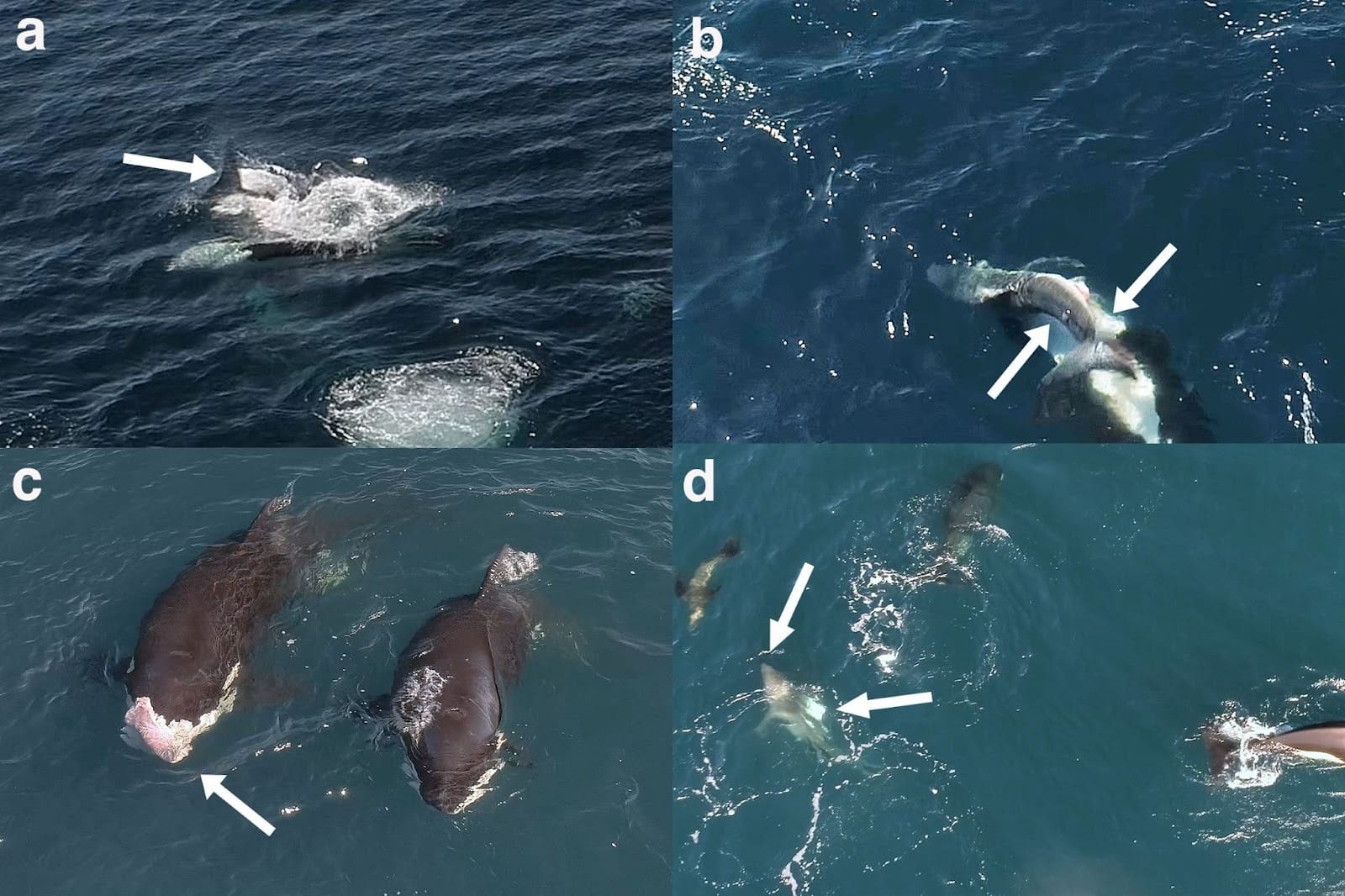
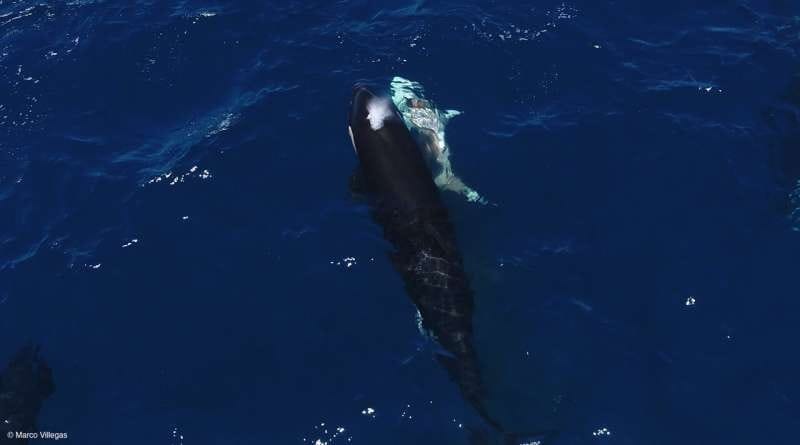
Orcas kill young great white sharks by flipping them upside down and tearing their livers out of their bellies, which they then eat family-style, according to a new study that includes new footage of these Promethean interactions in Mexican waters.

“Here we document novel repeated predations by killer whales on juvenile white sharks in the Gulf of California,” said researchers led by Jesús Erick Higuera Rivas of the non-profit Pelagic Protection and Conservation AC. 

“Aerial videos indicate consistency in killer whales’ repeated assaults and strikes on the sharks,” the team added. “Once extirpated from the prey body, the target organ is shared between the members of the pods including calves.”

A Fundamental ‘Constant’ of the Universe May Not Be Constant At All, Study Finds
Sequence of the killer whales attacking the first juvenile white sharks (Carcharodon carcharias) on 15th of August 2020. In (d) The partially exposed liver is seen on the right side of the second shark attacked. Photos credit: Jesús Erick Higuera Rivas.

I’ll give you a beat to let that sink in, like orca teeth on the belly of a shark. While it's well-established that orcas are the only known predator of great white sharks aside from humans, the new study is only the second glimpse of killer whales targeting juvenile sharks. 

This group of orcas, known as Moctezuma’s pod, has developed an effective strategy of working together to flip the sharks over, which interrupts the sharks’ sensory system and puts them into a state called tonic immobility. The authors describe the pod’s work as methodical and well coordinated.

“Our evidence undoubtedly shows consistency in the repeated assaults and strikes, indicating efficient maneuvering ability by the killer whales in attempting to turn the shark upside down, likely to induce tonic immobility and allow uninterrupted access to the organs for consumption, " the team said. Previous reports suggest that “the lack of bite marks or injuries anywhere other than the pectoral fins shows a novel and specialized technique of accessing the liver of the shark with minimal handling of each individual.”  

A Fundamental ‘Constant’ of the Universe May Not Be Constant At All, Study Finds

An orca attacking a juvenile great white shark. Image: Marco Villegas 

Sharks, by the way, do not attack orcas. Just the opposite. As you can imagine based on the horrors you have just read, sharks are so petrified of killer whales that they book it whenever they sense a nearby pod.

“Adult white sharks exhibit a memory and previous knowledge about killer whales, which enables them to activate an avoidance mechanism through behavioral risk effects; a ‘fear’- induced mass exodus from aggregations sites,” the team said. “This response may preclude repeated successful predation on adult white sharks by killer whales.”

In other words, if you’re a shark, one encounter with orcas is enough to make you watch your dorsal side for life—assuming you were lucky enough to escape with it. 

In other news…

Apocalypse now plz

Albrecht, Rudolf et al. “Geopolitical, Socio-Economic and Legal Aspects of the 2024PDC25 Event.” Acta Astronautica.

You may have seen the doomer humor meme to “send the asteroid already,” a plea for sweet cosmic relief that fits our beleaguered times. As it turns out, some scientists engage in this type of apocalyptic wish fulfillment professionally. 

Planetary defense experts often participate in drills involving fictional hazardous asteroids, such as the 2024PDC25, a virtual object “discovered” at the 2025 Planetary Defense Conference. In that simulation, 2024PDC25 had a possible impact date in 2041.

Now a team has used that exercise as a jumping off point to explore what might happen if it hit even earlier, channeling that “send the asteroid already” energy.. The researchers used this time-crunched scenario to speculate about the effect on geopolitics and pivotal events, such as the 2028 US Presidential elections.

“As it is very difficult to extrapolate from 2025 across 16 years in this ‘what-if’ exercise, we decided to bring the scenario forward to 2031 and examine it with today’s global background,” Rudolf Albrecht of the Austrian Space Forum. “Today would be T-6 years and the threat is becoming immediate.”

As the astro-doomers would say: Finally some good news.

Big dark energy

Son, Junhyuk et al. “Strong progenitor age bias in supernova cosmology – II. Alignment with DESI BAO and signs of a non-accelerating universe.” Monthly Notices of the Royal Astronomical Society.

First, we discovered the universe was expanding. Then, we discovered it was expanding at an accelerating rate. Now, a new study suggests that this acceleration might be slowing down. Universe, make up your mind!

But seriously, the possibility that the rate of cosmic expansion is slowing is a big deal, because dark energy—the term for whatever is making the universe expand—was assumed to be a constant for decades. But this consensus has been challenged by observations from the Dark Energy Spectroscopic Instrument (DESI) in Arizona, which became operational in 2021. In its first surveys, DESI’s observations have pointed to an expansion rate that is not fixed, but in flux.

Together with past results, the study “suggests that dark energy may no longer be a cosmological constant” and “our analysis raises the possibility that the present universe is no longer in a state of accelerated expansion,” said researchers led by Junhyuk Son of Yonsei University. “This provides a fundamentally new perspective that challenges the two central pillars of the [cold dark matter] standard cosmological model proposed 27 years ago.”

It will take more research to constrain this mystery, but for now it’s a reminder that the universe loves to surprise.

And the award for most squee goes to…

Thrane, Christian et al. “Museomics and integrative taxonomy reveal three new species of glandular viviparous tree toads (Nectophrynoides) in Tanzania’s Eastern Arc Mountains (Anura: Bufonidae).” Vertebrate Zoology

We’ll end, as all things should, with toadlets. Most frogs and toads reproduce by laying eggs that hatch into tadpoles, but scientists have discovered three new species of toad in Tanzania that give birth to live young—a very rare adaptation for any amphibian, known as ovoviviparity. The scientific term for these youngsters is in fact “toadlet.” Gods be good.

“We describe three new species from the Nectophrynoides viviparus species complex, covering the southern Eastern Arc Mountains populations,” said researchers led by Christian Thrane of the University of Copenhagen. One of the new species included “the observation of toadlets, suggesting that this species is ovoviviparous.”

A Fundamental ‘Constant’ of the Universe May Not Be Constant At All, Study Finds
One of the newly described toad species, Nectophrynoides luhomeroensis. Image: John Lyarkurwa. 

Note to Nintendo: please make a very tiny Toadlet into a Mario Kart racer.

Thanks for reading! See you next week.

❌