Vue normale

  • ✇Coda Story
  • As Iran burns, a new age of nuclear proliferation begins
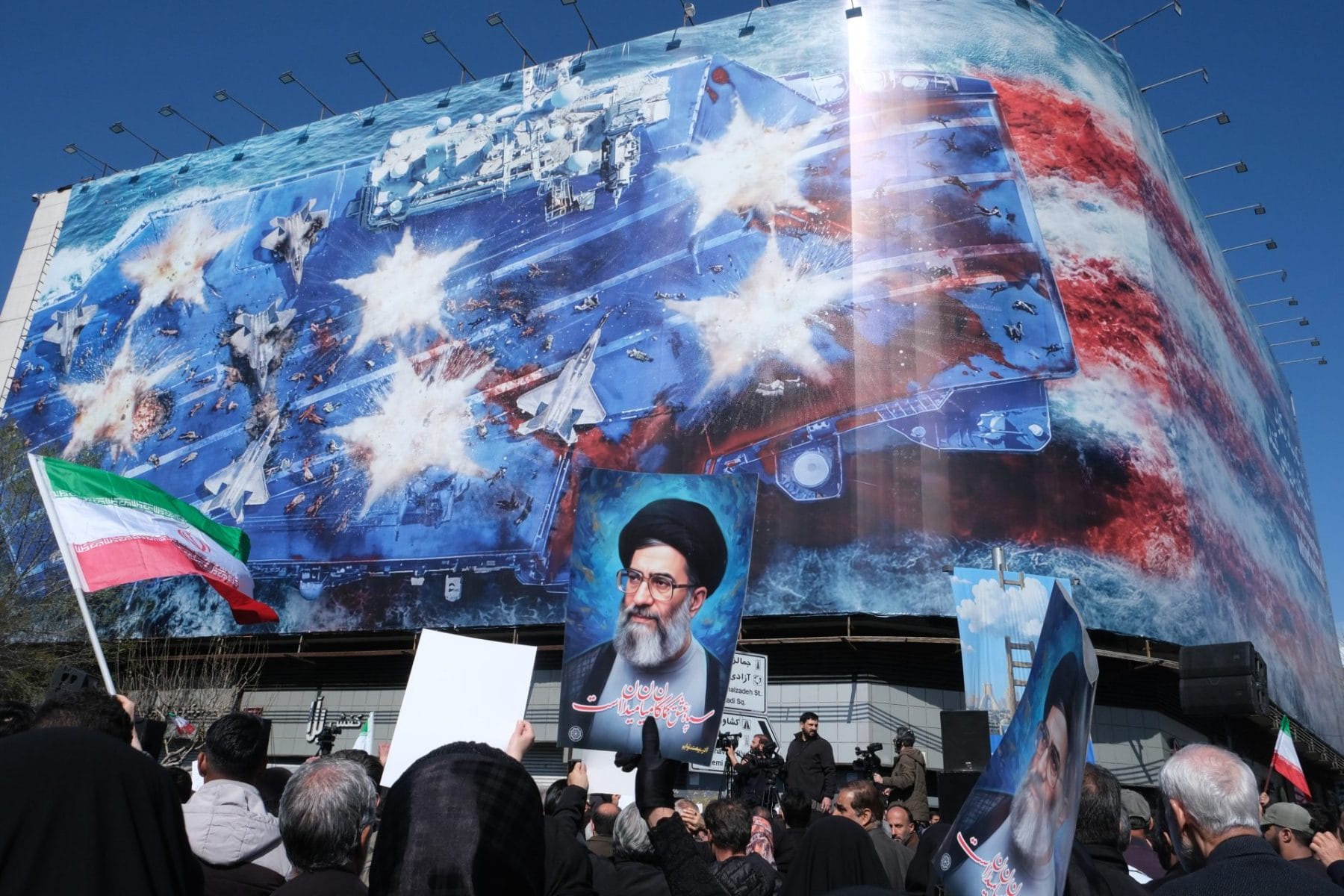
    As the Iran war pushes oil prices over $100 a barrel, and ships are attacked and mines are being laid in the Strait of Hormuz, a taboo has been broken and nuclear energy is back in fashion. European Commission president Ursula von der Leyen acknowledged that “the current Middle East crisis is a stark reminder” that it was “a strategic mistake for Europe to turn its back on” nuclear energy.  She was speaking at an International Atomic Agency summit hosted by France. Just days before the summit
     

As Iran burns, a new age of nuclear proliferation begins

13 mars 2026 à 09:04

As the Iran war pushes oil prices over $100 a barrel, and ships are attacked and mines are being laid in the Strait of Hormuz, a taboo has been broken and nuclear energy is back in fashion. European Commission president Ursula von der Leyen acknowledged that “the current Middle East crisis is a stark reminder” that it was “a strategic mistake for Europe to turn its back on” nuclear energy. 

She was speaking at an International Atomic Agency summit hosted by France. Just days before the summit, French president Emanuel Macron spoke — a nuclear submarine looming behind him — of the need to increase the country’s stockpile of nuclear warheads for the first time in several decades. “In this dangerous and uncertain world,” Macron said, “you have to be feared if you want to be free.” 

In February, the ‘New START treaty’, a mutual agreement between Russia and the U.S. to reduce and limit their nuclear arsenal, officially expired. The U.S. said China had conducted secret tests and that Beijing had to be part of any future non-proliferation agreement. For its part, the Chinese accused the U.S. government of seeking to mask its own expansionist ambitions. In the wake of the Iran war, started apparently because the Iranian regime was just days away from securing a bomb, other countries have spoken openly of their nuclear ambitions. After the start of the Iran war, North Korean leader Kim Jong Un spoke pointedly about preparing a nuclear-ready navy while inspecting a new destroyer and observing the testing of nuclear-capable cruise missiles. Even Polish prime minister Donald Tusk said Poland “will not want to be passive when it comes to nuclear security in a military context.”

On X, Tusk posted that Poland is in talks with France about joining its nuclear deterrence program. “We are arming together with our friends,” he wrote, “so that our enemies will never dare to attack us.” France is the only nuclear-capable European country, its systems (unlike the UK’s) completely independent of the U.S. and its new deterrence framework will include collaborations with Germany, Poland, Greece, Sweden, Denmark, the Netherlands and Belgium. Macron is calling France’s new strategy “advance deterrence,” a willingness to spread French nuclear armaments across the continent. A senior Pentagon official said the U.S. would “obviously at a minimum strenuously oppose” European countries seeking to acquire nuclear weapons. The U.S., as part of a NATO agreement, already deploys over 100 nuclear weapons in Europe — in Germany, Belgium, Italy, the Netherlands, and Turkey. 

Europe’s anti-nuclear tradition grew out of grassroots movements in the 1970s. In West Germany, protests against a planned nuclear plant in the small wine-growing town of Wyhl began when local farmers feared pollution would destroy their land and crops. By the 1980s, millions of Europeans were protesting nuclear weapons and the deployment of NATO missiles across the continent, bringing nuclear security debates into the public arena and pushing governments toward disarmament efforts. The political impact of those protests were long-lasting. Across Europe, nuclear energy programs were curtailed or abandoned entirely. Denmark banned nuclear power plants in 1985, Germany shut down its last nuclear reactors in 2023, and several countries imposed strict limits on nuclear development. Nuclear technology, whether for energy or weapons, remained politically toxic in much of Europe. But, as Denmark’s Mette Frederiksen said European deterrence “is necessary because the military threat from Russia is expected to increase,” and its reliance on U.S. military support can arguably no longer be taken for granted.

At the Paris summit, China, Brazil, Belgium and Italy all signed up to a pledge to triple global nuclear capacity by 2050. South Africa signed the pledge earlier this month. The war in Iran has once again made clear that the world must wean itself off fossil fuels. The U.S. — which imposed additional tariffs on India for buying Russian oil and thus helping to finance the continuation of the war in Ukraine — has, since the start of the attack on Iran, told India it can continue to buy Russian oil. Delhi promptly bought 30 million barrels of Russian crude oil. But this month India also signed a deal with Canada to receive uranium to expand its nuclear energy program. But in 1974, Canada provided India with nuclear technology for peaceful uses that were promptly put towards the building of nuclear weapons. Nuclear collaborations between the two countries were suspended for decades. It’s not a coincidence that those ties are once again being revived in the current geopolitical context. A growing clamor for nuclear energy has clear proliferation risks.

While France has been talking about greater nuclear deterrence, most European states are speaking about a revival of nuclear energy as an alternative to fossil fuels and as a means to achieve climate goals. The vast energy requirements of AI and data centres is also prompting nations to adopt an “atoms for algorithms” strategy, to be, as Macron said, “at the ​heart ​of ⁠the artificial intelligence challenge.” But to talk about energy alone is to ignore the appeal nuclear deterrence has for nation states trying to navigate dangerous geopolitical straits. Iran was attacked ostensibly because it was on the verge of having a bomb. Favored nations such as Saudi Arabia are able to sign nuclear pacts that remove non-proliferation guardrails, but the actions of the U.S. and Israel in Iran will make the bomb attractive to many more as a national security strategy.

A version of this story was published in this week’s Coda Currents newsletter. Sign up here.

The post As Iran burns, a new age of nuclear proliferation begins appeared first on Coda Story.

  • ✇Coda Story
  • The influencer bubble: Can content creators continue to airbrush the Gulf?
    Julia E, an 18-year-old influencer from Germany, was hanging out with her family on the Palm Jumeirah beach when she heard a blast and saw a fireball erupt into the sky. She knew tension was mounting following the U.S.-Israeli attack on Iran the previous day, but she didn’t imagine Dubai would be on the frontline. “I was a little scared,” she says. “Usually you just read about it in the newspapers, you see it online, but when you see it in front of you, it’s a different feeling — like your heart
     

The influencer bubble: Can content creators continue to airbrush the Gulf?

11 mars 2026 à 09:50

Julia E, an 18-year-old influencer from Germany, was hanging out with her family on the Palm Jumeirah beach when she heard a blast and saw a fireball erupt into the sky. She knew tension was mounting following the U.S.-Israeli attack on Iran the previous day, but she didn’t imagine Dubai would be on the frontline. “I was a little scared,” she says. “Usually you just read about it in the newspapers, you see it online, but when you see it in front of you, it’s a different feeling — like your heart just drops.”

The fear was not an emotion she expressed on Instagram. Julia’s family moved to Dubai from Germany in 2024, tempted by the business potential of an emirate that aggressively marketed itself as the influencer capital of the world — a digital utopia carved out of the desert, with its gleaming skyscrapers and Insta-ready waterfronts. Dubai’s state-backed Creator HQ offers content creators long-term residencies, legal support, networking opportunities, training and an environment geared towards digital entrepreneurship. Influencers need a permit to legally operate in Dubai but taxes are negligible — 5% VAT on taxable income from clients in the UAE over AED 375,000 (about $102,000), and a flat 9% corporate tax on income exceeding AED 1,000,000 (about $272,000). It has attracted over 50,000 content creators to Dubai, which has a population of about 4 million.

With 60,000 followers on TikTok and Instagram, Julia is looking to build her own marketing company in Dubai. In an effort, she says, to comfort her younger brother, she recorded a video shortly after witnessing the explosion. It showed Julia, a palm tree and the glittering night skyline behind her, with the caption: “You live in Dubai, aren’t you scared?” The video cuts to a montage of Mohamed bin Zayed Al Nahyan and other Emirati sheikhs: “No, because I know who protects us.” The short video is set to an AI-generated rendition of the Belgian singer Stromae’s ‘Papaoutai’, a song that laments the loss of a father.

According to Julia, she was the first content creator to post an ‘Are you safe?’-style video, a now viral trend across the Gulf as influencers counter the narrative of a region in turmoil. 

“I decided to make that video,” she says, “because I did feel safe. And I wanted to spread some positivity and my perspective that we are still being protected and we still have someone behind us here.” As Iranian drones hit the Gulf, including luxury tourist hotels destinations like Fairmont, The Palm hotel and the Burj Al Arab hotel, there was a wave of schadenfreude online. Some users outside Dubai could not contain their glee that the city’s glossy surface, its influencer-curated image of sunkissed luxury, had been ripped apart. The distress of those who spend their working hours flaunting luxury and throwing shade at the cities they come from, were, it has to be admitted, amusing to many.

But Dubai’s influencers doubled down, as the war spiralled and airports shut down, stressing the city’s safety, walking around in crowded public spaces, praising “the best air defense systems” and the men behind it: a reaction so seemingly choreographed that people questioned whether it was part of a government PR campaign. 

On March 3, the UAE’s president and crown prince were conspicuously filmed on a stroll through a Dubai mall, reassuring bewildered shoppers. It was eerily reminiscent of Volodymyr Zelensky’s “The President is here” video from four years ago, when Russia invaded Ukraine. Vogue Arabia, headquartered in the UAE, praised Gulf leaders and wrote about the influencer campaigns and the people’s “unwavering faith in their nation’s leadership and its steadfast commitment to protecting those who call it home.” 

As inviting as Dubai is to influencers, they must acquire advertiser permits that can cost up to $4,000 and are told to respect the state and avoid circulating rumors and unverified information or any content that can harm the UAE’s foreign relations or “offend or compromise national unity or social cohesion.” In the wake of Iran’s strikes, the UAE’s Public Prosecution announced that "anyone who shares or republishes content from unknown sources may face legal accountability under the country’s applicable laws, even if they are not the original creator of the content.”

There is a sense of vulnerability among Dubai’s influencers, says Zoe Hurley, associate professor of media at the American University of Sharjah and author of the 2023 book ‘Social Media Influencing in the City of Likes: Dubai and the Postdigital Condition’. “They haven't necessarily been trained professionally. They don't have institutional guardrails protecting them, or any formal buffer zones that might have protected people who are putting themselves out there.” she said. Hurley made a distinction between “influencers who are here on holiday who don't live here and who are followed by, say, people in the UK” and homegrown ones, representing diasporas in Dubai — from South Asia, the Levant and Europe — “who people are turning to because they're the thought leaders in their communities.”

None of the influencers we contacted in Dubai or across the Gulf confirmed ever being prompted or paid to post positive content. The German NTV network, however, reported concerns voiced by German influencers: "I don't know what I'm allowed to say and what I'm not allowed to say," one posted, "We're not allowed to post anything!” said another. These stories and reels have since been deleted.

https://www.instagram.com/reel/DVUQr2LEmtZ/?utm_source=ig_web_copy_link
Julia E., an 18-year old influencer in Dubai, said she was the first content creator to record the now-viral "Aren't you scared" video.
https://www.instagram.com/reel/DVbNjNZEjNU/?utm_source=ig_web_copy_link
Julia recorded a second video in response to the backlash she faced.

Julia made another video, responding to the accusations that influencers were essentially providing a PR service for Dubai. “I will tell you exactly how much I got paid,” she says. “Dubai pays me in business… in safety… in connections… with weather.” She adds that, unlike in Dubai, she would never venture outside alone in her native Germany after 8 at night.

This point about Dubai’s safety — leaving things in the car without being scared to be robbed, or walking alone at night — is echoed widely among European expatriates in the Emirates and Saudi Arabia who compare it to the relative anxiety they feel in Europe. Telegram’s CEO, Pavel Durov recently made the same point: “Unfortunately, I had to leave Dubai for Europe a week ago — so I’m not only missing the free fireworks from Iran, but also exposing myself to greater risk. Given Europe’s crime rates, Dubai is statistically safer even with missiles flying.” Elon Musk shared the sentiment, writing that “No country is perfect, but Dubai and UAE broadly are objectively safer and better run than many areas of Europe.” Notorius influencer and ‘manosphere’ icon, Andrew Tate, still facing human trafficking and rape charges in Romania, posted a video of himself dancing on a yacht “as bombs fall.” His brother Tristan Tate chimed in, comparing air attacks in Dubai to stabbings in London. 

What these influencers don’t discuss is Dubai’s underbelly, an invisible city occupied by an underpaid migrant workforce, their treatment explained away on the grounds that they make more money in Dubai than they would in the poor countries in South Asia and Africa that they come from. While the influencers enjoy government-sponsored benefits and status, these other migrant workers remain bound under the kafala (sponsorship) system that binds their residency status to their employer. Despite reforms, under the system their status remains uncertain, their earnings precarious, and imprisonment or fines for relatively minor offences is common. There are no golden visas for laborers and maids, never mind darker reports about human trafficking and sexual and physical abuse. 

London-based barrister Caoilfhionn Gallagher described the UAE’s exploitation of migrant workers as a “grubby reality, with rampant human rights abuses.” She said she had “acted for people prosecuted and jailed in the UAE for daring to work with human rights organisations or criticise the authorities,” referring to the mass trial in 2024, when 43 people, among them human rights activists, had been “subjected to enforced disappearance, solitary confinement and incommunicado detention.” 

The contrast between the city that influencers show their followers and the city built on the abuse of migrant labor is one that governments across the Gulf want to bury. The UAE’s 2031 vision sees creative industries contributing up to 5% of the country’s GDP. 

For decades now, the UAE has been trying to diversify its economy, to pivot away from its reliance on hydrocarbons. It is betting on the digital economy and tourism to be the cornerstones of economic growth. 


But for all the bravado on display, rich people and Western influencers are fleeing the Gulf, as war with Iran continues. Influencers unable or unwilling to leave, must keep grinding. Narcissus could not stop staring at his reflection even as he was dying. Will Dubai’s influencers be allowed to look away from their reflections in the city’s famous mirrored skyscrapers?

The post The influencer bubble: Can content creators continue to airbrush the Gulf? appeared first on Coda Story.

  • ✇Coda Story
  • Why Kleptocrats go to war without a care in the world
    Kleptocracy is a global system, which allows crooks, thieves, oligarchs, tycoons, and the like to enjoy their wealth while evading any responsibility to the society where they obtained that wealth. It infects different countries to different extents, and I’ve been very impressed by the Bloomberg investigations into how kleptocratic the Iranian elite has become. If you’d like a shortcut to those investigations, this new video is worth watching. Obviously, Iran’s regime has been vicious and aggres
     

Why Kleptocrats go to war without a care in the world

11 mars 2026 à 09:22

Kleptocracy is a global system, which allows crooks, thieves, oligarchs, tycoons, and the like to enjoy their wealth while evading any responsibility to the society where they obtained that wealth. It infects different countries to different extents, and I’ve been very impressed by the Bloomberg investigations into how kleptocratic the Iranian elite has become. If you’d like a shortcut to those investigations, this new video is worth watching. Obviously, Iran’s regime has been vicious and aggressive from the start, but I do think there is a new kind of vicious aggression that develops when a country’s elite becomes kleptocratic, and thus is — in essence — colonising its own country. 

If it is extracting wealth, hiding that wealth offshore and thus secure in its future, it is able to take risks and make decisions without concerning itself about their effect on ordinary people. “While ordinary Iranians contend with a collapsing currency, rising prices, fuel shortages and now war, elites like (Hossein) Shamkhani have translated political lineage into global capital — buying property abroad, securing foreign passports and moving freely through systems that everyday citizens cannot enter,” Bloomberg notes.

Much of the elite’s ability to enrich itself has come from its evasion of Western sanctions, which Iranians have had decades of practice in learning how to dodge. And the role of cryptocurrencies in enabling Iran’s kleptocrats is clearly significant, as demonstrated by this report from Chainalysis. But of course the backbone of the corruption has been the elite’s control over trade, and thus its ability to move value to safe havens like Dubai (that’s not looking as safe as it did of course but, don’t worry, the money can easily find a new home), which gives it the security to fire missiles without worrying too much about retaliation.

In this though, I’m not sure Iran is particularly unusual. A lot of the governments involved in the crisis in the Middle East are a bit like those F. Scott Fitzgerald characters who “smashed up things and creatures and then retreated back into their money or their vast carelessness”.

Israel’s Benjamin Netanyahu has been dancing on the edge of a corruption trial for the best part of a decade, ever since he was indicted in 2019 for, among other things, accepting “hundreds of thousands of pounds in luxury gifts from billionaire friends”. Donald Trump’s family has assets worth more than double what they were just two and a half years ago. The earnings from crypto alone are enough to guarantee the most comfortable of futures. These two are very definitely careless people, as is everyone around them.

If this ill-planned military adventure ends badly, then the elites of none of the combatant countries will end up suffering in the way that ordinary Iranians, Israelis or Americans will. This sense of impunity infects much of the discussion of the war: how, for example, could someone who feels any connection to other people be exulting in their death in the way that U.S. Secretary of War Pete Hegseth does? In this bloodthirstiness, as in so many other aspects of kleptocracy of course, Russia led the way, but the rest of the world is catching up and I don’t think we’re ready for what that will look like.

An important aspect of this, again long visible in Russia with its dreadful public services and military failure in Ukraine, is that corruption does not just enrich elites, it also degrades state capabilities. “Corruption at the top always rolls downhill. Once it becomes open and acknowledged, it leads to corrupt and slovenly acts throughout a system,” as Phillips Payson O’Brien argues, in a piece which builds on another article in which he lays out how the Russian model might be worth applying to much of what’s happening in the United States.

This of course adds fresh weight, not that it’s needed, to the urgency of shoring up defences not just against foreign interference in the democratic processes of those countries that still have them, but to getting big money out too. It’s great that a U.S. politician has, for the first time, taken the Political Integrity Pledge and won (though admittedly only a primary), but just to get to the stage of standing in the general election, he’s had to raise more than $20 million. Too much of that and pretty soon you’re talking about real money.

This week at Tether

Talking about real money, the latest episode of Tether watch is a weird one: our favourite crypto concern has just invested $50 million in a smart mattress company. Now admittedly, that isn’t even two days’ worth of last year’s profits, so it’s not exactly a big deal for CEO Paolo Ardoino but it’s still sufficiently sinister to be worthy of mention.

I find it disturbing enough that tech companies are harvesting our browsing history to make money from, but it’s a whole other level to have Tether — Tether!?! — monitoring what people get up to in bed. It’s all, apparently, about personal sovereignty, which is to say you should stop trusting big companies with your data and instead trust it to Tether, including with what’s happening in your head: “Paolo's $200 million acquisition of a majority stake in brain-computer interface company Blackrock Neurotech may not be because he is optimistic about the size of the brain-computer interface market, but because he does not want the brain-computer interface to be controlled by others”.

Historians are going to be so confused by this; assuming of course that there will still be historians, which may be an over-optimistic assumption about a future with brain-computer interfaces.

The need to know your enemy

I’ve been talking to quite a lot of people about money laundering of late, and one of the enduring problems is the lack of reliable ways to gauge the scale of the problem. We’ve been saying it’s between 2% to 5% of the world economy since the late 1990s, but beyond repeating that age-hallowed guesstimate, how do you measure it? 

Often we turn to other measures, such as how many suspicious activity reports get filed, or how many fines get imposed. So, on that note, is it good or bad that the UK’s Financial Conduct Authority imposed fines last year of just £124 million, a decline of 78% from half a decade earlier? Maybe this means there’s 78% less crime? Or maybe it means that the FCA has stopped investigating 78% of crime? Or maybe 2021 was just a really big year for fines (which it was)? Or maybe something else happened?

The answer to this is that we should properly investigate money laundering not just criminally but also academically, looking at gaps in statistics and devising new methods of measuring how large the criminal economy is, rather than rely on proxies for it. That would not only help us identify what to target, but also help us see what techniques are working as criminal wealth rises and falls. As it stands, it feels like we’re waging a war without a clear idea of where the enemy is, and what the final goal might be, and there’s quite enough of that going on elsewhere at the moment.


A version of this story was published in this week’s Oligarchy newsletter. Sign up here.

The post Why Kleptocrats go to war without a care in the world appeared first on Coda Story.

  • ✇Coda Story
  • The Belongers: What the Chagos Islands tells us about the new world order
    When the United States and Israel started blitzing Iran last weekend, eyes turned to the Chagos Islands in the Indian Ocean. The British-administered archipelago is home to a strategically vital US air base on the island of Diego Garcia. Would US President Donald Trump be using it in his “Operation Epic Fury”? It's fair to say Trump probably didn't give a damn about Misley Mandarin’s opinion. But the self-styled “interim first minister” of Chagos, who recently upped sticks from Britain in a “
     

The Belongers: What the Chagos Islands tells us about the new world order

10 mars 2026 à 08:01

When the United States and Israel started blitzing Iran last weekend, eyes turned to the Chagos Islands in the Indian Ocean. The British-administered archipelago is home to a strategically vital US air base on the island of Diego Garcia. Would US President Donald Trump be using it in his “Operation Epic Fury”?

It's fair to say Trump probably didn't give a damn about Misley Mandarin’s opinion. But the self-styled “interim first minister” of Chagos, who recently upped sticks from Britain in a “super, super secret” mission to take up residence on the long-deserted Peros Banhos atoll, gave Washington his official “blessing” anyway.

I spoke via WhatsApp to the 47-year-old Chagossian in his base camp: basically a few tents, with a solar generator and a Starlink satellite connection enabling him to beam reels to his 10,000 Facebook followers. He quit his job as a bus driver in London to come here, determined to halt Britain’s plan to hand over what he considers to be his land to Mauritius after a long-running decolonization battle.

“We’re British citizens here. We’re not moving,” he said.

Mandarin wants the land of his forebears to remain under the rule of Britain, the former colonial ruler that booted out about 1,500 native Chagossians, including his own father, to make room for the U.S. military base in the late 1960s. The removal consigned Chagossians to a miserable fate in newly independent Mauritius.

Now on home turf, Mandarin, his 72-year-old dad, and two other Chagossians have dodged immediate deportation: they’ve obtained an injunction from a British court allowing them to stay until a hearing on March 13. Since their arrival, two more Chagossians have joined them. “We can do self-determination right now. We don't want to cut any links with Britain. We're not looking for independence,” Mandarin says.

“The next generation will decide on independence.”

Marriage of convenience

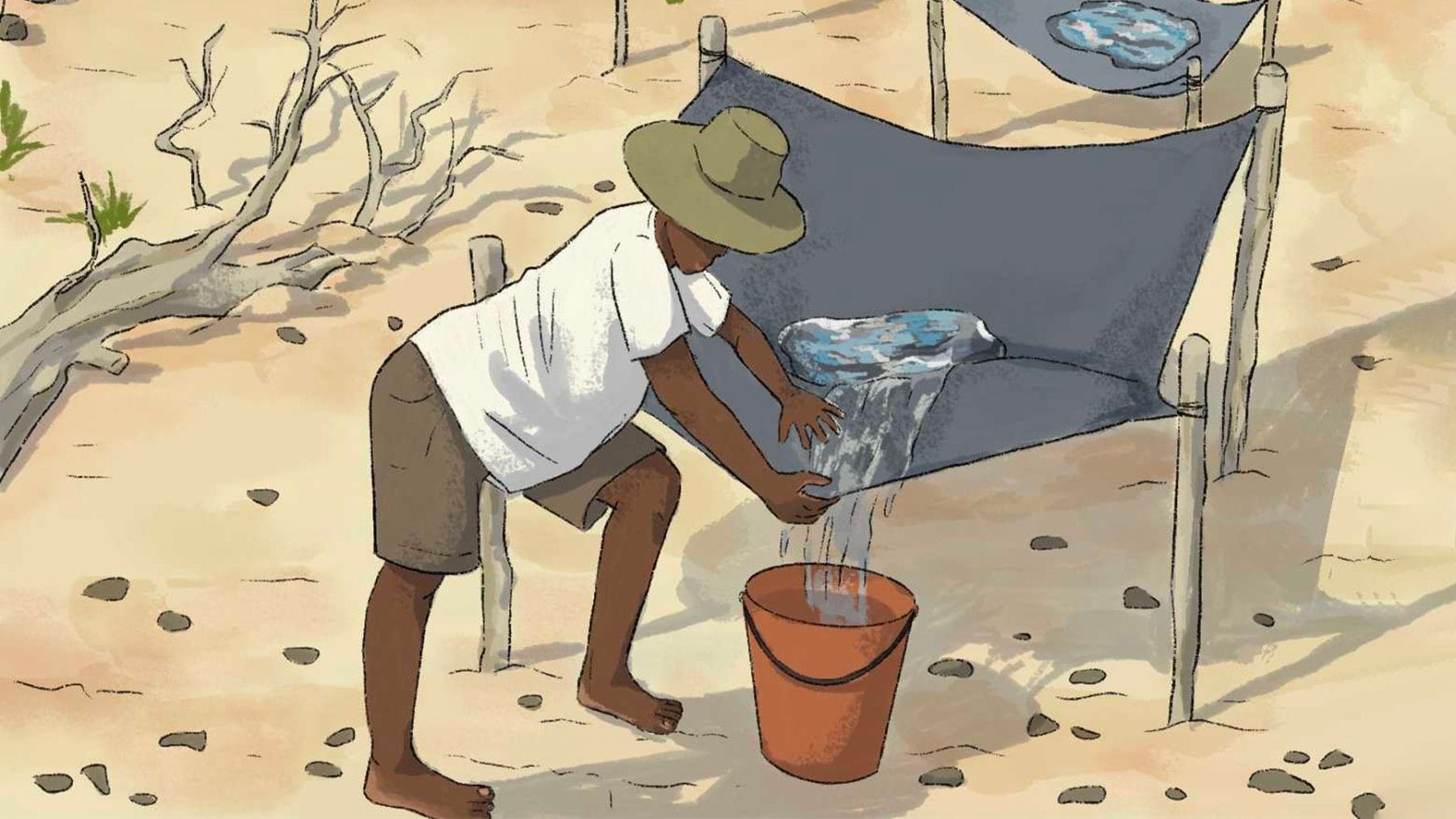
Life on Île du Coin, the largest island on Peros Banhos, is simple. The daily routine revolves around catching fish and finding a supply of fresh water. The new residents collect overnight rainfall in tarpaulin sheets to drink. Bathing involves a dip in the sea to wash off dirt, followed by a splash of precious rainwater to rinse. 

Mandarin appears to be relishing the experience. Soon after his arrival, the former army cook, who has bags of swagger, posted a video of himself cooking up “naan fromaaz”, or cheese naan, in a skillet on a makeshift stove. “Pa bizin madam isi mwa!” he jokes. I don't need a wife here!

The Chagossians arrived on the island on 16 February, accompanied by former army officer Adam Holloway, a former Conservative MP who recently defected to the radical right Reform UK party.

Reform, which is surging in the polls, is leading opposition to a bilateral treaty that would see Britain cede sovereignty of Chagos to Mauritius, while paying an average of £101-million ($135-million) per year to maintain a lease on Diego Garcia over the coming century. Negotiations began after the International Court of Justice ruled in 2019 that Britain should transfer sovereignty of Chagos to Mauritius “as rapidly as possible.”

The sleek yacht that brought the group on the five-day journey from Sri Lanka and travels back and forth with supplies was paid for by British-Thai businessman Christopher Harborne, a mega-donor to Reform. Its name is No Excuse – as in, “no excuse for us not to stay on Chagos,” says Mandarin.

Reform UK and the Chagossians make for curious bedfellows. On the one hand, there's a political party that has floated plans to create a Trump-inspired, ICE-style agency to carry out mass deportations in Britain. 

On the other, there’s Mandarin’s dad, finally back home after being brutally evicted from his atoll at the age of 14. “I will not go back to England. I want to die here,” said Michel Mandarin, as he set foot on his cherished Chagossian soil.

The unlikely pairing has had cause for joint celebration. Two days after they arrived, Trump withdrew his approval for the UK-Mauritius transfer treaty, which was supposed to provide legal certainty for the base in a hypothetical world governed by the rules-based international order. 

It turned out the president was annoyed at British Prime Minister Keir Starmer’s refusal to sanction the use of Diego Garcia for the Iran offensive. “DO NOT GIVE AWAY DIEGO GARCIA!” he told the British prime minister. The treaty was paused. Then war broke out and a beleaguered Starmer agreed to “defensive” strikes from Diego Garcia.

On Île du Coin, war seems like a distant prospect, even if it is potentially less than 200km (about 125 miles) away in Diego Garcia. As Tuesday drew to a close, there had so far been neither sight nor sound of the US’s deadly B-52, B-1, and B-2 bombers in the slightly overcast skies.

Wynona Mutisi/The Continent

Kicking the can

Mandarin left Mauritius at age 22. He joined the British army in a bid to improve his lot and later became a bus driver in south London. He says he always felt like a second-class citizen in Mauritius, with “no opportunity to progress”.

Rights groups have charted how evictees from Chagos struggled to cope in Mauritius, many of them ending up trapped in an urban nightmare of poverty, mental illness, and addiction — with little sympathy from their hosts. Many Chagossians left for Britain after securing citizenship rights.

Now the fate of their homeland is being decided by a treaty negotiated over their heads. Last year, a UN committee on racial discrimination warned that the treaty could perpetuate “long-standing violations” of Chagossian rights.

The treaty says Mauritius is “free” to resettle islanders on any of the Chagos islands — except Diego Garcia. But there is no binding obligation for it to do so and the exclusion of Diego Garcia rankles. The deal also includes a £40-million trust fund to be managed by Mauritius, which has been criticised as a ruse by Britain to avoid paying proper compensation. 

“People talk about decolonisation, but if Britain did the wrongs, Britain should have to repair the wrongs — not kick the can to Mauritius,” says Mandarin. “Or they will get away with it.”

One of the reels he has filmed on Île du Coin features an industrial oven that was used by colonial officials to burn the islanders’ dogs before they were evicted. Officials threatened the islanders with the same fate if they refused to leave. Britain must pay compensation, he says.

'Belongers'

Mandarin’s joint odyssey with Reform UK has provoked mixed feelings among the Chagossian diaspora in Britain, Seychelles, and Mauritius. 

“He’s put us back in the centre of the story, but will we be overshadowed by Reform’s agenda?” asked one Chagossian in the English town of Crawley – home to a 3,500-strong Chagossian community — who is also opposed to the deal.

As the treaty was being negotiated, Chagossians’ concerns were largely swept under the carpet as a complicating factor in a pragmatic decolonization drive.

The hard right has capitalized on the deal’s major flaw, positioning itself as the main champion of Chagossians, just as their ancestral land finds itself embroiled in a conflict that could upend the global order.

One video recently posted by Reform leader Nigel Farage saw him express outrage after being “denied access” to Île du Coin for the delivery of “humanitarian” supplies to Mandarin and his men, racking up a cool 4.7 million views on X. 

Asked whether he is being used by Reform and its supporters, Mandarin is sanguine. He says he also contacted the left-wing Green Party for support, but it never replied. “Only Reform responded. At the end of the day, it’s politics. You have to make your own judgements for the sake of your people,” he says. 

He views the upcoming hearing as a potential “turning point in our fight”. The injunction barring their removal was granted on the basis that their location was too far from the base to pose a security threat. “If the court says they can’t remove us, then maybe more people will come,” he says. “This is our people. This is our time. We’re not visitors — we’re belongers.”

The Age of Exile

This story is part of our Age of Exile series, which explores how displacement has evolved from historical punishment into a defining condition of our time—one that reveals profound transformations in how we construct identity, maintain community, and exercise power across borders. In an era where digital connection enables presence without physical proximity, exile has become more complex, more global, and more central to understanding our world. Explore The Age of Exile series

The post The Belongers: What the Chagos Islands tells us about the new world order appeared first on Coda Story.

  • ✇Coda Story
  • The AI-powered ‘forever wars’ start now
    Between them, the United States and Israel struck more than 2,000 targets within the first 24 hours of their war with Iran. For even the largest militaries, it is an almost impossible task to identify, select and then precisely locate such a high volume of targets. But the U.S. military had some help. Claude, the “next generation AI assistant” built by Anthropic, was used in the planning of ‘Operation Epic Fury’. This, even though the Department of War recently labeled Anthropic a “supply cha
     

The AI-powered ‘forever wars’ start now

6 mars 2026 à 08:55

Between them, the United States and Israel struck more than 2,000 targets within the first 24 hours of their war with Iran.

For even the largest militaries, it is an almost impossible task to identify, select and then precisely locate such a high volume of targets. But the U.S. military had some help. Claude, the “next generation AI assistant” built by Anthropic, was used in the planning of ‘Operation Epic Fury’. This, even though the Department of War recently labeled Anthropic a “supply chain risk”.

Anthropic is one of the world’s leading AI companies. Together with Palantir, another Big Tech company, it has been working since 2024 with the Pentagon to embed its systems in military decision-making – creating what is arguably the operating platform of present-day U.S. warfare and intelligence. Even though secretary of defense Pete Hegseth said the company “delivered a master class in arrogance and betrayal” and that the government would “cease all use of Anthropic's technology,” the company is too integrated into modern U.S. warfare for it not to be essential to the U.S. attack on Iran. The question might be not whether companies like Anthropic can ringfence their tech but whether the Pentagon might just commandeer it. 

Craig Jones, an academic who studies automated kill chains at the University of Newcastle, has told reporters that “the AI machine is making recommendations for what to target, which is actually much quicker in some ways than the speed of thought.” Similar AI systems have been used by Israel to coordinate its bombing campaign in Gaza, which is among the most destructive in human history. 

Among the first hits in the United States and Israel’s aerial bombardment of Iran was the Shajarah Tayyebeh primary school for girls, in the southern town of Minab. It was a Saturday morning, and school was in session. According to Iranian state media, at least 165 people were killed, mostly young girls between the ages of seven and 12. Another 96 were severely injured. Eyewitness and open source intelligence reports corroborate the claims of mass civilian casualties. Both Iran and Israel have denied responsibility. The United States has said it is “looking into” allegations that the school was destroyed by one of its missiles. Maybe, given the volume of the bombardment, they’ve lost track. 

It is too soon to know why the school was targeted – or whether it was an error. Either way, the U.S. military’s reliance on AI raises difficult questions.

AIs get things wrong all the time. Maybe it’s an extra finger in an AI-generated image, or a ‘hallucinated’ reference in a research report. Or, maybe, an algorithm sends a missile to the wrong address. That’s why Anthropic CEO Dario Amodei has said that weapons “that take humans out of the loop entirely and automate selecting and engaging targets” are simply not reliable enough. That position — along with Anthropic’s refusal to allow Claude to be used for mass domestic surveillance (although they are just fine with foreign surveillance) — led to the Pentagon cancelling a $200-million contract with the company on Friday, the day before the attacks on Iran began. The Department of War immediately signed a new deal, minus any ethical guardrails, with OpenAI.

Anthropic’s confrontation with the Pentagon has burnished its reputation as an “ethical” AI company. But it may have found its ethical backbone too late. Critics argue that even within Anthropic’s “red lines”, there is enormous potential for abuse, while a “human in the loop” does not necessarily prevent mistakes — raising questions about who, exactly, is responsible when these mistakes result in fatalities. Francesca Albanese, the United Nations special rapporteur for Palestine, accused Amazon, Google and Microsoft in a 2025 of being “complicit in genocide” for providing cloud storage systems to the Israeli military. Anthropic’s integration into the U.S. military has been much deeper.

While Israel and the U.S. are waging an AI-powered war, Iran is responding with a technological revolution of its own. The Islamic Republic has pioneered the production of low-cost one-way attack drones, most notably the Shahed-136, which costs just $34,000 to produce and as much as $4 million to shoot down. These are battle-tested: Russia has launched an estimated 57,000 Shahed-type drones in its war against Ukraine. Despite U.S. reliance on its own high-tech AI-powered systems, an American version of the Shahed also made its debut, alongside Claude, in the attack on Iran. 

In response, Iran has aimed more than 1000 drones at neighboring Gulf states since the war broke out on Saturday. Hundreds have been shot down, but even the most sophisticated air defences struggle with this sheer volume, and dozens have struck their targets, threatening to prolong this war and cause more damage to U.S. allies than anticipated. It is significant that these targets included at least three Amazon data centers in Dubai and Bahrain. Just last month, Amazon announced that it was making Anthropic’s Claude available to its Middle Eastern customers. Claude experienced two global outages this week — it is not clear if these were related to the data center attacks. 

Tech evangelists promise that artificial intelligence will, one day, cure cancer, end poverty and greatly increase our quality of life. But the new technology’s most obvious impact has been on warfare. For those with access to them, AI systems like Claude make it dramatically easier to bomb hundreds of targets at the same time — and much harder to figure out who is accountable when something goes wrong. On Truth Social, Donald Trump — who has promised to stop wars, not start them — posted approvingly that technology and munitions now mean Wars “can be fought ‘forever,’ and very successfully.” 

As the bombing of Iran continues, we are not far from a time when AI not only parses data to select targets, it actually chooses when to pull the trigger. And advanced AI models have far fewer qualms, for instance, about deploying nuclear weapons than humans faced with similar scenarios. One day, when — if — war crimes investigators are able to pin down exactly who is responsible for killing dozens of young girls in Minab, tech bosses may find themselves implicated alongside military and political leaders. “The AI did it” can’t be their defense.


A version of this story was published in this week’s Coda Currents newsletter. Sign up here.

The post The AI-powered ‘forever wars’ start now appeared first on Coda Story.

  • ✇Coda Story
  • Can a Task Force set up to punish the little guy, take on Trump?
    This is going to be a big year for the Financial Action Task Force, the world’s standard-setter on money laundering regulations, under its new president Giles Thomson. Quite apart from the standard folderol of plenary meetings, reports and publications, it is due to send a mission to assess the United States. This whole process will not be quick, and there will be the usual abundant opportunity for acronyms, circumlocution and horse-trading. But eventually the hooves are going to have to hit
     

Can a Task Force set up to punish the little guy, take on Trump?

4 mars 2026 à 08:55

This is going to be a big year for the Financial Action Task Force, the world’s standard-setter on money laundering regulations, under its new president Giles Thomson. Quite apart from the standard folderol of plenary meetings, reports and publications, it is due to send a mission to assess the United States.

This whole process will not be quick, and there will be the usual abundant opportunity for acronyms, circumlocution and horse-trading. But eventually the hooves are going to have to hit the road. There is simply no way of hiding the fact that, under Donald Trump, the United States has broken its promise to bring greater transparency to shell companies; nor that it has scaled back prosecution of financial crimes, pardoned convicted financial criminals, and unleashed a crypto frenzy.

Throughout its history the FATF, set up by the G7, has been able and willing to overlook transgressions from big countries that it wouldn’t tolerate from smaller ones. It punished the remote island states of Niue and the Marshall Islands in its first ever blacklist for their lack of transparency around shell companies, for example, while merrily tolerating the fact that not even the Federal Bureau of Investigation could figure out who owned a corporation in Nevada. Nauru got punished for moving dirty Russian wealth while the UK and Switzerland didn’t.

The FATF’s structure, which ensures it is dominated by large economies, is a classic example of how, if you’re not at the table, you’re on the menu. But, in the past, those large economies have at least pretended to go along with its recommendations. They’ve made promises, passed legislation, convened working groups, said the right things: all of which has given everyone the diplomatic cover they need to keep each other off the naughty step.

Trump’s not doing any of that, and it’s hard to believe that he’s going to change that habit. If the FATF criticizes his administration, I think we can safely assume Trump won’t take that well, and could — if past behavior is any guide — pull the United States out. But if the FATF doesn’t criticize what he’s been up to, it will lose all credibility. 

Speaking for myself, I think the FATF’s conception, structure and techniques are all flawed, perhaps irreparably, and that it has been part of the problem, rather than part of the solution, for most if not all of its 37-year history. Perhaps, therefore, Giles Thomson should get ahead of the looming fiasco by declaring a complete overhaul of the whole organization, re-examining its recommendations, its memberships, its strategy, and more.

What are the chances of that happening? Well, here’s some news from the Pacific: “Papua New Guinea one step away from being blacklisted, global money laundering watchdog warns”. Is Papua New Guinea the problem? No. Do we get anywhere by pretending that it is? Also no. Will the FATF carry on regardless anyway? I would love to be surprised by the answer to that question.

The need to clean house 

I’m a big fan of this video from Transparency International’s UK chapter, which lays out the inglorious history of corruption in British politics, and urges the government to be more ambitious in its new piece of legislation. TI has pointed out three areas where it thinks the government should go further, and I agree with all of them, but I would also like to see a complete ban on crypto donations, which would help prevent compliance departments being overwhelmed by automated efforts to circumvent donation limits.

I would also urge you to read this comment piece from RUSI about the threat to democracy posed by big funders from the American right, which has significance far beyond British politics. The world’s remaining democracies have been slow to recognize how radically the values of many U.S. billionaires have diverged from what we traditionally associate with conservatism, and to shore up their defences against them. “The task now is to strengthen our democratic guardrails — calmly, transparently and proportionately — before those boundaries are redrawn by others,” the writers Neil Barnett and Eliza Lockhart conclude.

Transparency International’s Russian chapter has been in exile since 2022 for obvious reasons (last year, for example, it had to issue a statement to argue that “fighting corruption is not terrorism”) but it has continued to conduct really valuable investigations into how illicit wealth flows in and out of its home country, including a recent one detailing the use of shell companies in the UK’s tax havens to trade with Russia, and identifying $8 billion worth of transactions.

The worst offender as a source of opaque companies was the British Virgin Islands, though Bermuda was also a problem, moving sanctioned products — including lead and zinc — as well as oil and other fossil fuels, a surprisingly large number of yachts, and a jet that ended up belonging to Chechen strongman Ramzan Kadyrov (whose ill-health is, apparently, once more the subject of speculation, poor chap).

“For many years now, we have observed a dysfunctional equilibrium in which illicit financial flows, tax evasion, sanctions circumvention, and other forms of misconduct are channelled through firms and intermediaries registered in unaccountable jurisdictions,” TI-Russia notes. Fortunately, however, the British government is hosting an illicit finance summit this June and so has the perfect opportunity to set an example by making sure this kind of thing stops happening on the territory it’s responsible for if nowhere else.

Here’s an interesting story from the Netherlands, where luxury firm Louis Vuitton was fined half a million euros for failing to identify customers spending large amounts of cash. This case was part of an investigation into the Chinese money laundering technique known as ‘daigou’, in which value is transferred internationally not via the financial system but by buying expensive objects and then reselling them in China. High-end fashion is often used in the system, and it will be intriguing to see if other countries follow the Dutch lead and investigate unusual cash purchases.

And here’s a piece on our favorite crypto company Tether, which is apparently valued by market participants at between $200 and $350 billion. That is less than estimates made in the summer, but still an awful lot of money. Fun fact: finance firm Cantor Fitzgerald has a five percent stake in Tether, which is thus worth $10 to $17.5 billion, via a convertible bond. Another fun fact: Cantor Fitzgerald is owned by Commerce Secretary Howard Lutnick’s children. 

Interesting question, would the prospect of your family earning a windfall of that size affect how stringently you would approach the regulation of a financial institution accused of involvement in industrial-scale money laundering? Lutnick, who led Cantor Fitzgerald for over 30 years, is of course not the kind of man who would let petty cash cloud his judgement, so this question is of academic interest only, but still, worth thinking about.

A version of this story was published in this week’s Oligarchy newsletter. Sign up here.

The post Can a Task Force set up to punish the little guy, take on Trump? appeared first on Coda Story.

  • ✇Coda Story
  • The strike, the illusion of regime change, and what comes next
    That Iran's Supreme Leader, Ayatollah Ali Khamenei, should disappear, or be disappeared, from the scene was not a novel notion.  Throughout my nearly five years in Tehran at the turn of this century, speculation about his health and longevity was a near-constant background hum. He was reported, or rumoured, to be mortally stricken by prostate cancer, his constitution already weakened by an assassination attempt in 1981 that left his right arm largely useless. Who would succeed him was far f
     

The strike, the illusion of regime change, and what comes next

2 mars 2026 à 03:34

That Iran's Supreme Leader, Ayatollah Ali Khamenei, should disappear, or be disappeared, from the scene was not a novel notion. 

Throughout my nearly five years in Tehran at the turn of this century, speculation about his health and longevity was a near-constant background hum. He was reported, or rumoured, to be mortally stricken by prostate cancer, his constitution already weakened by an assassination attempt in 1981 that left his right arm largely useless. Who would succeed him was far from clear, and the object of further speculation. 

As he lived on into more recent times, reaching the same age of 86 attained by his predecessor – the Islamic Republic's founding father Ayatollah Ruhollah Khomeini – the prospect of his demise became a more immediate issue, though the question of succession remained equally shrouded in uncertainty. As Supreme Leader, Ayatollah Khamenei was the commanding voice behind the ruthless crackdown that took the lives of tens of thousands of citizens early this year in the latest and greatest of many escalating protests, at which the slogan "Marg Bar Diktator!" — Death to the Dictator! — became an increasingly prominent slogan. 

Their wish was confirmed to be true at 5 a.m. local time on Sunday morning by Iranian broadcasters. The previous morning, Khamenei’s compound in Tehran was demolished as the Israeli-American onslaught got under way while the Ayatollah was heading a meeting of the Defence Council. That ensured that top military figures were also killed, including the commander of the Revolutionary Guards, Mohammad Pakpour, the Army Chief of Staff Abdolrahim Musavi, and Khamenei's top military adviser, Ali Shamkhani, who had been wounded but survived the attack in June last year. 

The Iranian leadership appears to have been caught by surprise, as it was last year when the opening Israeli strike, which culled many top military leaders as well as nuclear scientists, was launched between two rounds of indirect negotiations between Iran and the U.S. Oman, which was mediating the talks, was furious then, denouncing Israel as the real destabilising factor in the region. 

Perhaps the Iranian leaders — and the Omani mediators — thought that such a dirty trick could only be pulled once. But it has happened again, with no evidence that the talks in Geneva had broken down. The chief Omani negotiator, Badr Albusaidi, was livid. Only hours before the strike, he was in Washington for meetings “to explain that a peace agreement between the U.S. and Iran is now within reach. No nuclear weapons. Not ever. Zero stockpiling. Comprehensive verification. Peacefully and permanently. Let’s support the negotiators in closing the deal.”

After learning of the attack, he expressed his outrage in another tweet: “I am dismayed. Active and serious negotiations have yet again been undermined. Neither the interests of the United States nor the cause of global peace are well served by this. And I pray for the innocents who will suffer. I urge the United States not to get sucked in further. This is not your war.”

But Donald Trump and the U.S. were already thoroughly sucked in, and it was indeed their war, or at least his. According to the Israelis, the date had been decided jointly weeks before, after months of planning. Which meant that the Geneva negotiations, focused on the nuclear issue, were simply deceptive camouflage designed to give time for the U.S. to complete the marshalling of its biggest naval and air buildup in the region since the 2003 invasion of Iraq. 

Trump and the Israeli prime minister Benjamin Netanyahu soon made it clear that the campaign now had little to do with the niceties of Iran's nuclear programme: the agenda was regime change in Tehran, and a surprise attack to decapitate the regime was an essential element. 

With Iran's air defences largely taken out in last year's 12 days of war, it was like shooting fish in a barrel. Hundreds of air, missile and drone strikes were carried out on missile launchers, military bases and other targets around the country, with inevitable "collateral damage", including a girl's primary school in the southern town of Minab where scores of children were reported killed.

People gathered in Tehran's Revolution Square to mourn the assassination of Iran's Supreme Leader Ayatollah Ali Khamenei on March 1, 2026.

The Iranians did their best to live up to their dire warnings of deadly reprisals against Israel, and against American bases and allies on the Arab side of the Gulf and elsewhere. Missiles hailed down on airports and other installations in Kuwait, Bahrain, the UAE, Saudi Arabia and even Oman, despite its active mediation. While some U.S. bases may have been hit, so too were many civilian sites such as Dubai's iconic Burj al Arab hotel. Explosions too are being heard in Beirut, after Hezbollah fired rockets and drones at northern Israel to "avenge" Khamenei's death and the Israel Defense Forces struck back.

Air traffic was halted throughout a region rich in international hubs, sowing chaos worldwide. Iran's declaration that the strategic Strait of Hormuz was closed to shipping forced cargo shippers to suspend the voyages that transport some 20% of the world's oil and a lot of liquid gas, causing tremors through international markets. Once again, a decision taken by a tiny circle of men in Washington, Jerusalem and Tehran instantly rewired daily life, reminding us who actually gets to pull the global emergency brake.

What all this would do to Iran's relations with the Arab side of the Gulf was one of many open questions. While Oman was actively mediating, the other Arab oil states had been pressing the Americans not to allow a campaign that would predictably destabilise the region, and declaring their airspace not available for any hostilities. But any sympathy for Tehran quickly evaporated when the missiles started flying in: the Gulf Arab states closed ranks.

Trump and the Israelis made it clear that this was not one quick spectacular strike, but an ongoing campaign that would last days, perhaps even weeks. Presumably at the end, Iran would find its missile capabilities "obliterated," in Trump's favourite term, along with any nuclear activities. 

Once the bombs stop falling, Trump and Netanyahu urged, the Iranians should come out of their basements and take over a government that would be theirs for the taking. A historic opportunity that would likely not recur for generations, Iranians were told. 

But it is hard to imagine such regime change being wrought remotely from the skies. The regime lost little time in filling the leadership vacuum, setting up a three-man ruling council in line with the constitution, composed of the President, Masood Pezeshkian, the head of the Judiciary, Gholamhossein Mohseni-Ejei, and Ayatollah Alireza Arafi from the Council of Guardians. All regime loyalists, and the latter two noted hard-liners. So business as usual as far as they are concerned. But the fact is that the assassination of the Supreme Leader and the attendant bludgeoning of the regime's capabilities will inevitably usher in a new and unpredictable phase in Iran's turbulent history.

On the streets, reactions were fractured: jubilation in areas that had long chanted “Death to the dictator”, state-promote mourning in others, but also fear and a grim resignation, an understanding that power vacuums are often filled with fresh repression or civil war.

A smooth transition to a peaceful democracy is about the least likely scenario among the many possibilities. So too is an imminent return of the monarchy, with a comeback by Israeli-backed Reza Pahlavi, son of the Shah ousted by the 1979 revolution. So far there has been no sign visible to the outside world of a split in the ranks of the defenses built up by the Islamic Republic, which still has regular military forces numbering around 400,000, Revolutionary Guards of up to 190,000, and its auxiliary militia enforcers, the Basij, who may be able to mobilise around a million at street level. 

There must be much anger among regime loyalists, which may fall on the heads of any opposition protestors who imagine they can move in and take over the reins of government from the bombed-out wreckage of the Islamic Republic. The U.S. military is not likely to be able to remain engaged in the detail of defanging the regime once the main thrust of the campaign is done. But Israel likely will. Its equivalent of the CIA, the Mossad, has spent years building up formidable intelligence at street level, and will be doing its utmost to continue hamstringing the regime from within and fomenting opposition.Among the many unanswerable questions is whether all this will lead simply to chaos and fragmentation, which is probably Israel's preferred outcome, or to a more compliant regime willing to compromise with the U.S. in order to get crippling economic sanctions lifted. As Trump concedes the war might last weeks, who knows what Iran will eventually emerge from the smoke and the rubble?

The post The strike, the illusion of regime change, and what comes next appeared first on Coda Story.

  • ✇Coda Story
  • The phoney war: Will the U.S. strike a decisive blow against Iran?
    Will he or won't he? The Middle East is on tenterhooks as the U.S. continues to build up a massive and menacing military posture around Iran, threatening an attack that could trigger a conflagration whose tremors would be felt throughout the region.  If anybody hoped that the man on whose word it all hangs, President Donald Trump, might clarify his intentions in his State of the Union address on Tuesday night, they were disappointed.  Speaking 36 hours before a third round of indirect an
     

The phoney war: Will the U.S. strike a decisive blow against Iran?

27 février 2026 à 08:55

Will he or won't he? The Middle East is on tenterhooks as the U.S. continues to build up a massive and menacing military posture around Iran, threatening an attack that could trigger a conflagration whose tremors would be felt throughout the region. 

If anybody hoped that the man on whose word it all hangs, President Donald Trump, might clarify his intentions in his State of the Union address on Tuesday night, they were disappointed. 

Speaking 36 hours before a third round of indirect and ultimately inconclusive talks with the Iranians in Geneva on Thursday, he said, "My preference is to stop this problem through diplomacy but one thing is for certain, I will never allow the world's number one sponsor of terror, which they are by far, to have a nuclear weapon...they want to make a deal, but we haven't heard those secret (sic) words, 'We will never have a nuclear weapon.’”

In the run-up to the Geneva talks, led on the U.S. side by real estate moguls Steve Witkoff and Trump son-in-law Jared Kushner, Iranian officials voiced optimism that a deal could be struck and insisted they would be flexible on the nuclear issue. Various formulas were being bandied around, such as Iran sending abroad half of its estimated 300kg of highly enriched uranium and diluting the rest under supervision, participating in a regional consortium for peaceful enrichment and so on. 

In theory, for Iran to say "We will never have a nuclear weapon" should not be an issue — it has said all along that it is not pursuing that goal, which is banned by a fatwa. Iranian foreign minister Abbas Araghchi posted on X this week that Tehran “will under no circumstances ever develop a nuclear weapon.” Which begs the question as to why it has enriched uranium to 60% — short of weapons grade but well beyond the levels needed for peaceful civilian purposes.  

Witkoff and Kushner will be vigilant for signs of Iranian duplicity and foot-dragging. But with another set of talks ending with no deal apart from promises of more talks, both sides might simply be playing for time, Iran to delay the feared blow, and the U.S. to finish assembling the assault force, its biggest mobilization of naval and air power in the region since the 2003 invasion of Iraq.

There is strong apprehension in the region that the huge and costly U.S. buildup must mean business. American bombs and missiles would hit Iran. The Iranians would make good on their threat to make it a regional war, not a symbolic retaliation as happened in the 12-day war in June last year after American bunker-buster bombs hit Iran's nuclear facilities in Isfahan, Natanz and Fordow. This time Iranian missiles would target U.S. military assets, bases on the Arab side of the Gulf and elsewhere, and perhaps oil installations. And Israel. The Israelis would hit back hard. Hezbollah in Lebanon would do its best to join in, prompting a further massive Israeli response. 

There were ominous straws in the wind. The U.S. withdrew non-essential personnel from bases in the Gulf, and from its embassy in Beirut. The Israelis reportedly warned Lebanon that if Hezbollah joined in, they would hit back at government targets, including Beirut airport, which were unscathed throughout the earlier hostilities. They stepped up their daily attacks on suspected Hezbollah targets, including a big missile attack on February  20 on the eastern Beqaa valley which left 12 dead, including eight Hezbollahis. Since the November 2024 ceasefire, Hezbollah has not fired so much as a peashooter at Israel while well over 400 of their people have been killed in Israeli attacks on Lebanon.

Does all this mean the doomsday scenario is inexorable? Are the Americans set on a clear game plan, with identified objectives and the means to attain them?

Apparently not. Trump is reportedly receiving divided counsel from his advisers, military and political, some more hawkish and others more cautious than others. Above all, he has an eye on the looming mid-term elections in November. He was elected on a platform of ending the "forever" wars in the Middle East, yet could be on the brink of starting another one, which would not go down well with part of his MAGA base or the public in general. 

The signs are that he was hoping the swashbuckling display of power would intimidate the Iranians into buckling. Witkoff admitted Trump was puzzled that Iran had not capitulated. “Why, under this pressure, with the amount of sea power and naval power over there, why haven’t they come to us and said, ‘We profess we don’t want a weapon, so here’s what we’re prepared to do?’ And, yet, it’s sort of hard to get them to that place,” he told Fox News. Iran's Foreign Minister Abbas Araqchi explained: "It's because we're Iranian."

Trump's adrenalin was clearly set pumping by the adventure in Venezuela, where a similar military buildup culminated in the operation to abduct President Nicolas Maduro. But Iran is not Venezuela. It is a highly militarized regime which has spent 47 years preparing its internal and external defences, and which has different power bases that make it hard simply to decapitate. There is no magic bullet that might not set the region on fire. 

Taking out the Supreme Leader, Ayatollah Ali Khamene'i (who is also a religious leader, and this is Ramadan) would not be likely to bring about a change in regime behavior as in Venezuela. Bringing the regime down altogether would require a prolonged and detailed campaign that the U.S. military machine might not be able to sustain. 

That's where Israel comes in. Some White House advisers reportedly believe it would play better politically for Israel to strike first rather than the U.S., and thus force Iran to retaliate. Like Trump, Israel’s Prime Minister Benjamin Netanyahu is a man with an eye on impending elections (October at the latest) is Prime Minister Benjamin Netanyahu, who makes no secret of his ambition to see the Iranian regime brought down. Netanyahu — backed by almost the entire Israeli political spectrum — is clearly champing at the bit, but aware of the danger of being seen to drag the U.S. into a potentially messy embroilment. One reason perhaps for the unusually discreet nature of Netanyahu's sixth visit to the White House on  February 11 — in through the back door, no lovefest press appearances. 

Which may also actually have been a sign that the two allies might not be on the same strategic page. Plunging Iran into fragmentation and chaos would absolutely fit Israel's playbook, but not necessarily America's. The two are working at cross-purposes in Syria, where the Israelis are pushing against a strong central government which the U.S. is supporting, even against its erstwhile Kurdish allies in the north-east. 

If there are two constants in the current equation, they are that the Iranian people’s disillusionment and rage against the regime will not go away, and neither will Israel's desire to overthrow it. But if Trump does not share that goal, he will have to find a face-saving way to wriggle off the hook he has created with his ostentatious military buildup. 

A version of this story was published in this week’s Coda Currents newsletter.Sign up here.

The post The phoney war: Will the U.S. strike a decisive blow against Iran? appeared first on Coda Story.

  • ✇Coda Story
  • Why we must make elections cheap again
    I like writing about the huge consequences of tiny details: a compromise made at a G7 meeting in 1989 by people who didn’t know what they were doing that now defines all anti-money laundering work; an opportunist deal among London bankers in the mid-1950s which created the globalized financial system; things like that (read my books if you want more.) Few tiny details are more consequential than the rules around democratic processes, and particularly those that define who pays for them: just
     

Why we must make elections cheap again

25 février 2026 à 08:55

I like writing about the huge consequences of tiny details: a compromise made at a G7 meeting in 1989 by people who didn’t know what they were doing that now defines all anti-money laundering work; an opportunist deal among London bankers in the mid-1950s which created the globalized financial system; things like that (read my books if you want more.)

Few tiny details are more consequential than the rules around democratic processes, and particularly those that define who pays for them: just look at the effects of the U.S. Supreme Court’s decision in a dull-sounding case in 2010. A lot of other democracies are looking at the U.S. right now and thinking they’d like to avoid replicating this experiment with endless money, which is one reason why the UK has a new ‘Representation of the People Bill’.

As it stands, it looks like a big missed opportunity.

Much of the requirement for the tighter rules proposed in the bill is the need to tackle foreign interference, a concern stoked by suggestions that the Kremlin helped secure victory for both Brexit and Donald Trump in 2016. Although I can see why we don’t want Vladimir Putin near our political systems, I’ve always thought these concerns missed the point: home-grown oligarchs dislike democracy as much as Russian ones do and, since they are more numerous, richer and far better-connected, we should worry about them more.

So, it is a great shame that the UK’s new bill hasn’t imposed a cap on political donations to prevent the kind of funding arms race that has infected the United States, and which is gearing up in the UK too, or stripped away a lot of the unnecessary complexity in the existing regulations that create the kind of loopholes exploited in the Brexit referendum. Most importantly, it has failed to address the growing threat of cryptocurrencies and impose the same kind of ban on crypto donations that Ireland has.

A democracy is sovereign, and a crucial defence of that sovereignty is ensuring only actual voters fund its operations. British law enforcement agencies acknowledge that they already don’t have the resources they need to keep up with what bad actors are doing with crypto, so why would politicians take the risk of allowing crooks to buy influence by making it easier for them to hide what they’re doing?

“If you put an element of crypto in what is already a complicated and sometimes lengthy trail to hide the true source of the funds, you are just adding another layer of complexity. Anything we can do to take away that friction is good,” said Rachael Herbert, director of the National Economic Crime Centre, to a parliamentary committee.

It is not too late to close this gap in the bill, and to prevent it from becoming one of those little details with huge consequences. Blocking cryptocurrencies will not solve the problem caused by oligarchs’ assault on democracy, but at least it would help not make it worse, and it is always easier to mend things before they break.

On that note, credit to Daniel Lobo-Lewis for trying to use some of the mechanisms of the unregulated U.S. political funding system for a good cause (“Give us money to get money out of politics. It makes sense if you don't think about it too hard”) by creating the political integrity project. He’s built a tracker so you can see how much cash different candidates have raised, and which of them have pledged to try to get money out of politics, and it’s a lot of fun to play around with. 

Here’s what it looks like when there is unfettered money in politics. Lobbyists for crypto firms are planning to spend $263 million on the midterm elections this year. That is not only more than the entire oil and gas industry spent in 2024, but more than double the total spent by all parties in the UK’s last general election. This is not healthy.

I’ve largely avoided writing about the Jeffrey Epstein revelations, because I don’t feel like I have anything to add to what everyone else has already said, but they do spectacularly demonstrate the size of the threat posed to girls in particular and society in general when the political, cultural, financial and economic elites of a country become entangled, give each other money, do each other favours, and generally take over the world. 

Preventing this kind of collusion is why it’s important to keep big money out of politics, so at least there is a source of power in society that’s independent of the oligarchs.

Crooks thriving in chaos

While on the subject of human trafficking, Chainalysis has produced this alarming report on how crypto helped traffickers move their profits last year, including from child sexual abuse material (CSAM), with a staggering 85% increase in them dong so over 2024.

“CSAM networks have evolved to subscription-based models and show increasing overlap with sadistic online extremism (SOE) communities, while strategic use of U.S.-based infrastructure suggests sophisticated operational planning,” the report notes.

The report gives more evidence for how Chinese money laundering networks based in Southeast Asia are using cryptocurrencies to expand their influence globally (as they also are in fraud), with business deals coordinated via the encrypted messaging app Telegram, and laundered via sophisticated techniques beyond the reach of law enforcement even at the best of times.

And this is not the best of times, what with the United States having abdicated its traditional role as the only country serious about investigating, prosecuting and convicting financial criminals.

“Enforcement is now solely in Washington’s hands, allowing politically driven cases to proceed or be stifled,” noted John Lothian in this scathing commentary contextualised by the FT. “Given the pardons issued by President Trump, there has never been a better time to be a crook. This chaotic formula for enforcement is a disaster or a cluster of disasters waiting to happen, given the explosive growth in retail futures trading, prediction markets, and legitimized crypto trading… ‘God help us’ is the last defence.”

A version of this story was published in this week’s Oligarchy newsletter. Sign up here.

The post Why we must make elections cheap again appeared first on Coda Story.

  • ✇Coda Story
  • First, they came for the journalists
    Hundreds of journalists are forced into exile each year, from every corner of the world. As authoritarianism and censorship rise, reporters are among the first to feel the pressure — pushed out of their homes and separated from the careers, sources and communities they’ve built. The number of journalists forced into exile is rising. In Latin America alone, more than 900 journalists were forced into exile between 2018 and 2024. Almost half of the journalists killed around the world last year were
     

First, they came for the journalists

23 février 2026 à 09:00

Hundreds of journalists are forced into exile each year, from every corner of the world. As authoritarianism and censorship rise, reporters are among the first to feel the pressure — pushed out of their homes and separated from the careers, sources and communities they’ve built. The number of journalists forced into exile is rising. In Latin America alone, more than 900 journalists were forced into exile between 2018 and 2024. Almost half of the journalists killed around the world last year were by Israeli forces in Gaza; the tally is close to 300 for the duration of the war. The genocide created impossible conditions for Palestinian journalists, forcing some to flee the Gaza strip entirely.

In a digitized, connected world, exile doesn’t mean silence. Using open source intelligence techniques, encrypted messaging, and data, journalists can report in real time from thousands of miles away, serving communities they can no longer reach in person.

We spoke to four journalists from four countries who have spent the past decade working in exile. Some left gradually, step by step. Others had only hours to abandon their lives. Every year, hundreds more join them — barred from returning home, facing imprisonment or persecution if they do, uncertain when or whether they’ll see their families again.

Still, they keep reporting. These are their stories.

Ekaterina Fomina – Russia 

When Ekaterina Fomina was working as a reporter in Moscow, her favorite kind of journalism was old-school shoeleather reporting: traveling to far-flung regions of Russia, knocking on doors, talking to rural families who lived most of their lives offline. “My main tools were my legs and arms,” she said. 

In the lead-up to Russia’s invasion of Ukraine, Fomina began to grasp that one day soon, she might have to leave the country. Media outlets across Russia were facing intense pressure. As each day passed, the government implemented new censorship and repression laws. “We knew that if the government labeled us an “undesirable organization”— a criminal label in Russia — we could be arrested,” she said. Every newsroom had some kind of contingency plan in place for leaving, but the plans were vague and abstract. Fomina and her colleagues made sure they had visas ready in their passports for Europe, in case they had to leave quickly. “But we were not ready for a real tragedy.”

Russia launched its full-scale invasion of Ukraine in February 2022, and Fomina went into overdrive, covering the war. 

“The polarization, the open war towards another country, made me realize that my position in society was completely different from those of many people around me. It was very difficult for me to accept that my fellow citizens could support such cruelty,” she said. “In the first weeks of the war, seeing this support made me realize that it would be very hard to live in this country.” 

Fomina — who was reporting for the independent outlet iStories — understood it would be impossible to cover the war from inside the country without facing prosecution. “The only option was to leave the country and continue covering the war openly.” 

It was not immediately obvious how long she would be away for. Her friends and colleagues reassured her that this wouldn’t last forever, but she wasn’t so sure. “Everything was unpredictable, and it was unclear how it would affect our destinies,” she said. She had no illusions that she would ever come back to Russia. 

“I don’t even remember the whole process of escape, because in the very first days of the war my colleagues and I were constantly working — covering events, talking to people on both sides, but especially people in Ukraine.” In the meantime, she packed up her life in one day.  She packed just one suitcase, giving a few things to her mother, and throwing the rest away. She took a handful of souvenirs from Russia — gifts from friends and family, a T-shirt with Cyrillic letters on it, talismans of the life she was leaving behind. 

In the middle of a cold March night in Moscow, she said goodbye to her mother and grandmother, not knowing when she would see them again. “The scale of my personal tragedy couldn’t be compared to the scale of the tragedy happening in Ukraine. Only years later can I evaluate how awful, how tragic, and how traumatic those events were for me. But at that moment, it was just a feeling of adrenaline,” she said. “At an intuitive level, I felt that this was the last peaceful moment of my life in Russia.” 

Living in exile in Europe, Fomina began to reorient her reporting techniques. She could no longer be a shoeleather reporter, using her legs and arms as tools and knocking on doors. She began investigating war crimes using open-source intelligence techniques. 

currents

Subscribe to our coda currents newsletter

Insights from the Coda newsroom on the global forces that shape local crises.

Not long into her exile, she investigated Russian soldiers who had been there during the massacre in Bucha. She started by tracing evidence from a survivor’s phone. The phone and its calling credit had been confiscated by Russian soldiers, then used to call their families back home. When it ran out of credit, the soldiers left it behind. One survivor recovered it and gave it to Fomina. Using investigative techniques and leaked data, she identified the numbers on the call log as belonging largely to relatives — mothers and wives — of Russian soldiers. She was then able to verify precisely which soldiers had been deployed in the area. 

For her work on this investigation, Fomina was arrested in Russia in absentia in the summer of 2024. Then, on March 31, 2025, a Moscow court sentenced Fomina to 8.5 years in prison for disseminating “fake news” about Ukraine out of “political hatred.”

“On the one hand, you know that you did everything right,” Fomina said, describing her schooling, her education, her constant pursuit of the truth in journalism. “But on the other hand, you are facing such limitations and such punishment.”

“I suppress my trauma in order to continue doing this,” she said. “But I can’t stop doing my work because the war crimes are continuing.” 

It is now four years since Fomina fled Russia. Barring a dramatic regime change in the future, there’s no prospect she’ll ever return.

Luz Mely Reyes - Venezuela

Luz Mely Reyes left Venezuela in slow motion. In 2015, she was the editor-in-chief Efecto Cocuyo, a small newspaper in Caracas. “Our heart as journalists was not to be too close to power. Power can be very seductive. But when you are too close to power you can lose the heart of your duty. So we tried always to be close to the common people,” she said.  

In 2018, a Venezuelan politician and opposition member called Fernando Albán mysteriously fell from a tenth-floor window while being held in custody. Nicolás Maduro’s government said he jumped. Reyes wasn’t so sure. “I asked questions on my Twitter account — why was he on the 10th floor, how did he jump?” she recalled. After tweeting, she turned her phone off to focus on writing. Suddenly, her husband’s phone began to ring. It was a tip-off: police were discussing Reyes’ tweet online, and talking about detaining her. Reyes scrambled to leave the country, only coming back a few months later when the dust had settled. 

All too soon, she had to leave Venezuela again — this time because of her coverage of a journalist who had been arrested in the middle of a blackout.

And so her wandering years began. Whenever Reyes felt too much pressure from the authorities, she would leave Venezuela for extended periods, spending time in neighboring Brazil and Colombia, before slipping back into Venezuela when she felt it was safe. 

“I had to accept that I wouldn’t be able to live in Venezuela anymore,” she said. But she continued to shuttle back and forth. The authorities canceled her passport twice, threatened to imprison her, increasing the pressure all the time. Her team told her how it didn’t make sense to be in Venezuela — that she couldn’t do her work properly while she was constantly in hiding, on high alert. 

Finally, after five years of this, she booked a one-way ticket out of Venezuela. She now lives in Austin, Texas, and doesn’t know if she’ll ever go home. 

“I had been struggling for about five years to accept that the government was expelling me from the country. I finally accepted that I was in exile — because if you can’t return to your country without the risk of being persecuted, well, you’re an exile.”

Reyes hasn’t stopped working for the people of Venezuela. During the US military strike on Venezuela and the capture of Maduro, she mobilized her sources and contacts across the country. She and her team livestreamed updates for ten hours straight, confirming the facts, debunking disinformation as the extraordinary events of January 3 unfolded. 

She feels the pain of being away from home acutely. “They say there are seven stages of grief when you’re forced to migrate. One grief I always have is for the landscape, for the weather, for the beach, for the space I was in, for the sun,” she said. “It’s very physical. I feel like a tree that has been ripped out of the ground.” 

There is no job she would rather do, though. “If I had to do it all over again, I would choose to be a journalist.”

Zahra Joya - Afghanistan

Zahra Joya’s world changed forever over just a few days in August 2021. On August 14, she was working in Kabul as editor-in-chief of Rukhshana Media, an Afghan women’s journalism platform. The following day, Kabul fell to the Taliban. Joya joined the chaos of people fleeing the country out of Kabul airport. She arrived in a hotel room in London on August 26 — in less than a fortnight, everything she knew was gone.  “Everything vanished overnight,” Joya said. From her hotel, she couldn’t stop reporting. 

“I personally was safe, but when I looked back to all our achievements, to all the work that we had done, it gave me this chance to rethink my circumstances. I realized I could not stop my work. So we continued.”

Rukhshana Media’s burgeoning team scattered to the four winds following the collapse — some made it out of Afghanistan like her, others took shelter within the country, where it was no longer safe for them to keep working openly.

Founded in 2020, Rukhshana Media is a platform for female journalists — a space for stories by and about women in Afghanistan. It was named after an Afghan teenager who was stoned to death after being accused of adultery in 2015. 

Joya had to find a way to keep Rukhshana Media alive. She began, frantically, to build a completely new team, from thousands of miles away. 

“It was a terrible moment of my life. It was something I never, ever imagined I would go through,” she said. ““It was impossible for me to not think about Afghanistan just because I was outside.”

Joya scoured social media for new reporters. Then came the complex problem of how to hire them. How to look after journalists on the ground in Afghanistan under Taliban rule, keep them anonymous, and keep them safe, from thousands of miles away? She drew up a security plan and a code of conduct for her team. “I tell my colleagues, “please prioritize your safety. No information is worth your safety.”” She decided not to tell each reporter who their colleagues were, so that if they were captured by the Taliban, they would have no information to hand over under interrogation.

Bathed in the glow of her computer in her government-issued hotel room in London — where she stayed for a year — Joya worked and worked to publish as many stories as possible from on the ground in Afghanistan. 

“For the women of Afghanistan, one of the only ways to raise their voices is through media,” Joya said, describing how Afghan families often call her asking for help, asking if she can write about their situation. Families of female activists call Joya as soon as their relatives are imprisoned by the Taliban. 

“I feel guilty sometimes because people rely on me. They’re inside the country and they want to raise their voice,” she said. “My colleagues are taking their life in their hands to gather information.”

To evade capture, Rukhshana Media’s reporters often need to switch phone numbers without warning, meaning people can go dark at any time, and there are panicked moments where Joya doesn’t know what’s happened to them. 

In September 2025, the entire country went dark without warning. The Taliban had shut down the internet completely — stating it was being blocked "for the prevention of vices." All of Joya’s contacts, reporters and sources stopped responding. 

“Afghanistan was cut off from the world. It was terrible. It reminded us of the fall of Kabul all over again. We had no idea what was going on in the country,” she said. When the internet came back on, her work continued, the pace relentless — and it hasn’t stopped since.

Jesús Adonis Martínez Peña - Cuba

The idea for El Estornudo — a narrative journalism magazine covering Cuba — started on a balcony in Havana in 2015. A group of young people, many of them university students, gathered together and talked about their dream to tell the stories of Cuba on their own terms. 

“It was a time of bilateral tension between the United States and Cuba, and the situation in Cuba wasn't as serious in terms of the social, political, and economic crisis as it is now,” remembers the editor-in-chief of El Estornudo, Jesús Adonis Martinez Peña. Widespread internet had not yet arrived in Cuba, but more and more people were getting access every day, and new media outlets were springing up –– “basically in what had been, up until that point, a wasteland in terms of independent media.”

Together, the young journalists drafted a manifesto for their magazine, which they published on March 16, 2015, Journalist’s Day in Cuba. 

“In Cuba, the press is a neo-colonial republic. With flags, coats of arms, statutes, organizations, prizes, forums, infinite debates — but without independence,” they wrote. “If you want to know Cuba beyond the clash of slogans and the three or four topics recycled by the contemporary media world, you have to read this magazine.”

They decided to call their magazine ‘El Estornudo’ — The Sneeze. The name, they said, reflected their own reflexive need to “react against the prevailing climate, the urgent need to expel something.” 

More than a decade has passed since that balcony brainstorming session. “Ten years later, and here we are. And most of our founders are scattered around the world,” Peña, who is now based in Chicago, said. Peña himself believes he can still go back to Cuba if he stays low-profile, doesn’t work, and just sees his family. But a number of his colleagues can’t. “My colleague who edits the magazine with me, they wouldn’t even let him board the American Airlines flight.”

The situation for Cuban journalists is specific to the island. “In Cuba, no one is going to shoot us in the head for journalism,” the Estornudo staff wrote in their founder’s letter ten years ago. This still holds true today — and it’s important, Peña said, “to respectfully acknowledge the realities for our colleagues in the region, in Central America, in countries like Mexico, where there are journalists being killed. We have the imperative, the duty, to do journalism under our own specific conditions of totalitarianism.” Reporters in Cuba exist within an insidious culture of fear and control. “The press is constantly under siege by state security. They monitor our colleagues, restrict their movements within the island, put police patrols in front of their houses — it functions almost like a temporary house arrest,” Peñam said. “There have been arrests, interrogations; they put pressure on the families of journalists too, pushing them into exile too.”

Since the Trump administration’s kidnapping of Venezuelan President Nicolás Maduro and the subsequent blocking of Venezuelan oil to Cuba, the country has been plunged into fresh crisis. President Trump has called on Cuba to “make a deal before it’s too late” and threatened to implement Secretary of State Marco Rubio as the “next President of Cuba.” Looking on, Peña’s team has been on high alert. They’re preparing themselves for every outcome — from a spiralling social crisis resulting from the U.S.-imposed fuel blockade, to a direct American attack on Havana. “We are considering every scenario, and we are not ruling anything out. And whatever happens, we are ready to report.”

Drop in Illustrations by Teona Tsintsadze.

The Age of Exile

This story is part of our Age of Exile series, which explores how displacement has evolved from historical punishment into a defining condition of our time—one that reveals profound transformations in how we construct identity, maintain community, and exercise power across borders. In an era where digital connection enables presence without physical proximity, exile has become more complex, more global, and more central to understanding our world. Explore The Age of Exile series

The post First, they came for the journalists appeared first on Coda Story.

  • ✇Coda Story
  • Europe vs Big Tech: A battle for democracy?
    “The impunity of the giants must end,” posted Spanish prime minister Pedro Sánchez on X. His government has instructed the public prosecutor to “investigate the crimes that X, Meta and TikTok may be committing through the creation and dissemination of child pornography by means of their AI.” Sánchez has said the state “cannot allow” platforms to affect the “mental health, dignity and rights of our sons and daughters.” But Republican legislators, seemingly in response, released Part II of a repor
     

Europe vs Big Tech: A battle for democracy?

20 février 2026 à 09:14

“The impunity of the giants must end,” posted Spanish prime minister Pedro Sánchez on X. His government has instructed the public prosecutor to “investigate the crimes that X, Meta and TikTok may be committing through the creation and dissemination of child pornography by means of their AI.” Sánchez has said the state “cannot allow” platforms to affect the “mental health, dignity and rights of our sons and daughters.” But Republican legislators, seemingly in response, released Part II of a report, titled ‘The Foreign Censorship Threat’, in which it accuses the European Commission of “directly infringing on Americans’ online speech.”

Almost simultaneously, Ireland’s Data Protection Commission launched an investigation into Grok, X’s generative AI chatbot, for producing sexualized deepfakes which might have included personal data of Europeans, including children. Even British prime minister Keir Starmer, who has signed a sweeping “Technology Prosperity Deal” with the U.S. has, spoken about the need to “protect children’s wellbeing” from Grok. And earlier this month, French police searched the Paris offices of X as part of a process that X described as a “politicized criminal investigation.” 

With Australia having set a precedent for “age-gating” the Internet through legislation, France’s under-15 ban is now due to come into force in September. The UK already requires age verification for certain content via the Online Safety Act, and Spain, Slovenia, Denmark, Germany, and Greece are among those considering similar measures. ​​The social and political consensus is striking. A 30-country Ipsos survey found strong majorities in every country supporting bans for under-14s.

Elon Musk responded to the Spanish prime minister’s comments about social media being essentially a failed state, rife with criminality and a disregard for law, by calling him “a tyrant and traitor to the people of Spain.” The U.S. government has only been marginally more restrained. The House Judiciary Committee’s report accused Europe of mounting a decade-long campaign to “censor the global internet.” 

The involvement of the U.S. government, and its consistent defence of U.S. tech companies, means the battle is increasingly less about European regulators and Silicon Valley and more about what appears to be a profound ideological mismatch. “Though often framed as combating so-called ‘hate speech’ or ‘disinformation’,” said the Republican legislators’ report, the EU was working to “censor true information and political speech about some of the most important policy debates in recent history — including the Covid-19 pandemic, mass migration, and transgender issues.” Meanwhile, a recently published report in Europe shows how Silicon Valley companies spent 151 million euros lobbying far right European parliamentarians in 2025 to water down regulations. 

Big Tech forging links to the European far right dovetails with a Trump administration in which senior figures, including Donald Trump himself, endorse certain candidates in elections and routinely repeat far right talking points as part of an “unapologetic defense of Western civilization.” And now the U.S. State Department has openly touted the building of a “freedom.gov” portal that enables people to access restricted content, even if it contravenes local laws in sovereign countries.

But European regulations are not the only challenge to the impunity with which social media platforms seem to be able to act. As momentum builds to hold social media platforms to account in Europe, in the U.S. Meta owner Mark Zuckerberg has been defending Instagram in a Los Angeles courtroom. He was testifying in a lawsuit, one of several hundred filed in U.S. civil courts, alleging that social media platforms are addictive, harm the mental health of children and that platforms are aware of these effects but do little to safeguard teenage users from harm. 

The lawsuits have the effect of making the Australian, European, and perhaps global attempt to ban teens from setting up social media accounts appear necessary. But Paige Collings, a digital policy expert at the Electronic Frontier Foundation and board member at European Digital Rights, said that bans are politically attractive precisely because they are simple. “Complex problems require complex solutions,” she said. “It’s more expensive. It’s longer-term. It can’t just be implemented overnight. But blocking under-16s from social media — that is something you can implement overnight.” 

Collings is among a growing chorus of experts that are cautious about embracing bans as a comprehensive solution. For instance, she explains, to ban children, platforms first need to know who is a child. This relies on national digital ID systems, facial recognition, and third-party age verification. In all scenarios, Collings said, “we are trusting that these services and platforms are not storing this information, not selling the information,” often without meaningful guardrails to ensure that is the case. 

When the UK introduced age restrictions last summer, searches for VPNs surged as users of all ages tried to avoid giving away personal information. Now the government has floated expanding restrictions to VPN usage to plug enforcement gaps. The purpose of a VPN itself is to preserve the privacy of its user, however imperfectly. VPNs are essential tools for businesses to secure communications, for journalists to protect sources, and for citizens in restrictive environments to access independent information. Forcing identification to use them fundamentally undermines their purpose. And when the argument for banning them is framed around the protection of children, it reinstates the urgency of an entire infrastructure required to keep children off the internet and risks normalizing identity checks as conditions for access to online spaces. In a digital economy where personal data is highly valuable, such measures raise the question of who ultimately benefits.Beyond privacy concerns, Collings points out that age-gating can become “a fantastic tool for censorship with no accountability or remedy.” It does, in fact, do in part what the U.S. government and Silicon Valley companies say it does, which is restrict speech. At an AI summit in Delhi, French president Emmanuel Macron dismissed Silicon Valley’s invocation of censorship as a defense against European regulation. “Free speech,” he said, “is pure bullshit if nobody knows how you are guided through this… having no clue about how the algorithm is made, how it is tested and where it will guide you — the democratic biases of this could be huge.” But, forcing accountability and improving safety would perhaps be better than a blanket ban where the cutoff is 14 or 16, leaving everyone else to take cover as best they can in a “digital Wild West,” to borrow the Spanish prime minister’s phrase.

currents

Subscribe to our coda currents newsletter

Insights from the Coda newsroom on the global forces that shape local crises.

The post Europe vs Big Tech: A battle for democracy? appeared first on Coda Story.

  • ✇Coda Story
  • The war against corruption: Why corruption is winning
    Transparency International has published its annual Corruption Perceptions Index and, for once, I think this rather tiresome survey of how likely various countries’ public officials are to be crooked has something important to tell us. Generally speaking, the CPI spends its time informing us that poor countries have worse governance than rich countries, which is not a very useful insight. What it fails to do is tell us that a significant reason for this fact is that rich countries make it very e
     

The war against corruption: Why corruption is winning

18 février 2026 à 08:55

Transparency International has published its annual Corruption Perceptions Index and, for once, I think this rather tiresome survey of how likely various countries’ public officials are to be crooked has something important to tell us. Generally speaking, the CPI spends its time informing us that poor countries have worse governance than rich countries, which is not a very useful insight. What it fails to do is tell us that a significant reason for this fact is that rich countries make it very easy for poor countries’ rulers to steal from their subjects, obscure the theft, and spend the proceeds on property in Mayfair, Miami or St Moritz.

But I do think it’s important that, this year, influential Western countries are sliding down the rankings: the United States has dropped to its lowest-ever score and last year’s crackdown on independent media and judges haven’t even been reflected in that score yet. “We’re seeing a concerning picture of long-term decline in leadership to tackle corruption,” noted TI. “Even established democracies, like the U.S., UK and New Zealand, are experiencing a drop in performance. The absence of bold leadership is leading to weaker standards and enforcement, lowering ambition on anti-corruption efforts around the world.”

Hopefully, TI’s index and its grave conclusions will help galvanize opposition to the pro-oligarch policies that are infesting the world, and help to stave off oligarchical takeover in places that are still doing okay. That is, I suppose, valuable. 

Still, I haven’t changed my opinion that the Corruption Perceptions Index should be abolished. It is absurd that Hong Kong is ranked as the 12th cleanest jurisdiction in the world, while China — the country it exists to loot — is 76th. Just as ridiculous is the position of the United Arab Emirates at 21st in the list, considering its growing role as a lynchpin of global kleptocracy, including from Russia (ranked a lowly 157).

The United Kingdom may have fallen to 20th but that is still far too high for a country that, by its own admission, launders a hundred billion pounds a year. That’s equivalent to the entire GDP of Kenya, which is down at 130 in the list.

You simply cannot understand corruption on a country-by-country basis because kleptocracy is a globalized phenomenon, and anything that suggests you can — particularly something so crude as a league table — is too misleading to be useful. 

Talking about multijurisdictional wizardry, check out this report from the FACT coalition on how U.S. companies structure their affairs. Thanks to new accounting rules, it is possible to see how and where U.S. corporations pay tax. Some of the results are pretty remarkable: Boeing pays more tax in Germany than in the United States; Tesla pays only $28 million to the U.S. Treasury, fully 27 (!) times less tax than it pays in China.

Of course, a large chunk of these companies’ profits barely get taxed at all, but instead are routed to countries that treat them generously, of which Ireland, the Netherlands, Bermuda and Singapore are particular standouts. 

The fact that this information is disclosed is good, because it allows ordinary citizens to see how big companies win special treatment, and hopefully thus increases public pressure for fair taxation. I would not therefore be at all surprised if some skilled and energetic lobbyists are right now working very hard to make sure the disclosures end as soon as possible.

Of course, you do not need to leave the United States to obtain complicated corporate structures, as shown in this recent piece from Bloomberg, about how the Russian oligarch, party-goer and billionaire Suleiman Kerimov opened a Delaware-based trust to, er, manage assets held by a Liechtenstein-based foundation but originating from his business empire in Russia, where he remains a member of the upper house of parliament. But then Kerimov was sanctioned in 2018 for what the first Trump administration called “worldwide malign activity”. He was specifically accused of bringing millions of euros into France in suitcases, using it to purchase villas, and evading taxes on them (there’s no school like the old school).

Despite the sanctions, Kerimov continued to benefit from the trust, according to Bloomberg. But the Treasury Department has gradually been catching up with everyone involved: a $216 million fine for a venture capital firm in June; an $11.5 million settlement from a private equity firm in December; and a $1.1 million fine for an attorney around the same time.

I’d like to say that hopefully this will focus minds on the majesty of sanctions and the importance of complying with them. And there are certainly some — such as the excellent folks of Collectif Sassoufit who are campaigning against corruption in Congo — who want the United States to designate more people, since justice can’t be obtained at home. I, however, think it’s time to have a serious reconsideration of Western over-reliance on sanctions, particularly in the light of the way that the United States is using them now. 

If you want an example of what I mean, consider the case of Kimberly Prost, an impeccably-credentialled Canadian judge at the International Criminal Court who was sanctioned because the White House didn’t like the way she’d authorised investigations into U.S. military personnel in Afghanistan (other ICC staff were also sanctioned for investigating other alleged American and Israeli transgressions), and who suffers repeated indignities as a result. “I have an e-reader,” she said. “it’s not even an American product, but for some reason, I assume tied to the payment, I’d purchase books, I’d start to read them and then they’d disappear.” You just, she admitted, “sort of end up using cash a lot.”

Frivolous sanctions like this are just driving countries to find ways around the restrictions (it’s notable that banks in Canada, the UK, and the Netherlands are happy to keep serving her, and it seems unlikely they’d be doing that without permission from their respective governments) and, in decades to come when genuine criminals can bank with impunity, future generations will despair at how U.S. governments wasted the powerful weapon that was their dominance of the global financial system.

A version of this story was published in this week’s Oligarchy newsletter. Sign up here.

currents

Subscribe to our coda currents newsletter

Insights from the Coda newsroom on the global forces that shape local crises.

The post The war against corruption: Why corruption is winning appeared first on Coda Story.

  • ✇Coda Story
  • Why the law lets financial criminals off the hook
    There’s a story I often tell when I talk about my new book: a couple of years ago, an adviser to a senior politician here in the UK asked me for some suggestions for policy proposals for tackling financial crime. I told him I’d like more resources for law enforcement agencies. His reply: “that’s not going to get us many headlines, is it?” This story is intended to illustrate how one of the reasons for the world’s failure to stop money laundering is that politicians are addicted to the sugar r
     

Why the law lets financial criminals off the hook

11 février 2026 à 08:55

There’s a story I often tell when I talk about my new book: a couple of years ago, an adviser to a senior politician here in the UK asked me for some suggestions for policy proposals for tackling financial crime. I told him I’d like more resources for law enforcement agencies. His reply: “that’s not going to get us many headlines, is it?”

This story is intended to illustrate how one of the reasons for the world’s failure to stop money laundering is that politicians are addicted to the sugar rush of new policy announcements, but shun the hard work of enforcing old ones. But it’s indicative of a problem with journalism too. Journalists like to talk about shiny new things — crypto! AI! — and ignore the old ones that we’ve already reported on. 

This is the lesson I draw from the horror of the Jeffrey Epstein revelations, with the rich, powerful men dividing up the world between themselves. Crooks and thieves may invent new tools, but they’re always designed to do the same old job: steal. A world-weary shrug — “politicians on the take? How is that a story? Bring me something new” — just lets them off the hook.

So in a small gesture towards being the change I want to see in the world, this week’s newsletter is about massive problems that have been going on for so long that everyone’s kind of forgotten about them, but which we should still be trying to solve because they’re still massive problems.

Global Financial Integrity, a research and advocacy organisation in Washington DC, has been arguing for almost two decades that we need to spend as much time looking at how illicit value flows through the trade system as we do looking at the financial system. In simple terms, by lying on the documentation that accompanies trade shipments, exporters can suck wealth out of poorer countries and — according to GFI’s analysis — have been doing so on a vast scale for decades.

In its latest analysis of trade flows out of Sub-Saharan African nations, GFI has identified “a renewed intensification of trade misinvoicing risks across the region”, with an average of $112.97 billion in value disappearing each year over the past decade, and at an accelerating rate. This total significantly exceeds that of the countries’ new debt over the same period, meaning that they should be seen effectively as net creditors to the world, rather than as net debtors.

“Illicit outflows on the scale observed in Africa have dire consequences for development. Every dollar siphoned out of African economies is a dollar not taxed or invested at home,” GFI concludes.

This phenomenon is often called ‘Trade-Based Money Laundering’, and is central to how illicit finance works, including the business model of the giant new ‘Chinese Money Laundering Networks’, but policy proposals for how to tackle it are sorely lacking. 

There has been, however, no shortage of suggestions for how to stop criminals being able to hide their identities behind shell companies when moving illicit funds. Corporate transparency has been pushed by the Financial Action Task Force since its earliest days. 

Efforts to achieve that goal have foundered in the European Union and the United States, but the UK has been a bright spot, with its notoriously filthy corporate registry of a decade ago adopting new rules to clean itself up. It would be nice to think this would mean we’d no longer see insiders from ex-Soviet republics using UK-registered companies to arrange questionable deals, but here’s the Organised Crime and Reporting Project to set us right.

“Two UK companies with no prior record in the mining industry have won tens of millions of dollars in Uzbek state procurement contracts,” the report states. “One was owned, on paper, by a septuagenarian British bookkeeper with no evident ties to Central Asia. The other, by a UK corporate services provider that for years managed corporate structures that shielded their true ownership from public view.”

The real meat in this sandwich, however, is how — after the journalists asked questions about the companies — their owners were able to seamlessly change the inconsistent pieces of information in the registry, much of it backdated, despite the supposedly more stringent new requirements.

I know this may all seem a bit academic because, thanks to the gutting of the U.S. Corporate Transparency Act, it’s easier, cheaper and murkier to use an American shell company these days anyway, but it’s important to remember that the battle hasn’t yet been won anywhere.

And one of the reasons it hasn’t been won is incompetence by underfunded and under-supported regulatory bodies. This was once again on display in the disastrous attempt to punish a British lawyer for allegedly persecuting a whistleblower who helped to expose the workings of the vast OneCoin scam. 

Everything about the case has been a fiasco: the fact that the fraud happened in the first place; the fact that the fraudster was able to retain a British lawyer; the fact that the regulatory action took eight years to happen; the fact the tribunal threw the case out; and now the fact the regulator is on the hook for everyone’s costs. I would say this has achieved nothing, but it’s worse than that: now the regulators have a reason to be even more timid than they already are.

It means that theft keeps happening and even when efforts are made to find the stolen wealth and punish those responsible, the damage has already been done. For instance, it’s good that UK prosecutors are launching a case against Nigeria’s notorious former oil minister, but how much better would it have been if theft hadn’t been so easy in the first case?

Of course that’s not to say that we shouldn’t talk about shiny new problems too, so here’s this week’s instalment of Tether watch. Fair warning — it is unusually gross, even by the low standards of this newsletter’s most regularly-appearing crypto company.

“Private Telegram groups for the sharing of secretly taken footage of women and girls take payment via the popular Chinese digital payments systems Alipay and WeChat Pay, as well as the cryptocurrency Tether.” One group “offers access to more than 40,000 videos of secretly taken footage from hotels, homes and public toilets for a $20 ‘V.I.P.’ membership”.

Tether denies any wrongdoing, and says that it cooperates with dozens of law enforcement agencies worldwide. It’s clearly doing something right anyway, since it claims to have made more than $10 billion in profits last year, having issued $50 billion worth of new crypto currency, and has launched a separate stablecoin — USAT, as opposed its normal USDT — for the American market.

A version of this story was published in this week’s Oligarchy newsletter. Sign up here.

The post Why the law lets financial criminals off the hook appeared first on Coda Story.

  • ✇Coda Story
  • A Trump corridor through the Caucasus
    After a trip to the Winter Olympics in Italy, already marred by anger and protests at the presence of ICE agents at the games, JD Vance will embark on a victory lap of Armenia and Azerbaijan. It will be the first ever visit by a U.S. vice president to the Armenian capital Yerevan and the first to Baku since Dick Cheney’s brief 2008 whistlestop tour of the region. At war for decades, Armenia and Azerbaijan agreed to make peace in Washington, DC in August last year. The deal included the building
     

A Trump corridor through the Caucasus

6 février 2026 à 08:55

After a trip to the Winter Olympics in Italy, already marred by anger and protests at the presence of ICE agents at the games, JD Vance will embark on a victory lap of Armenia and Azerbaijan. It will be the first ever visit by a U.S. vice president to the Armenian capital Yerevan and the first to Baku since Dick Cheney’s brief 2008 whistlestop tour of the region. At war for decades, Armenia and Azerbaijan agreed to make peace in Washington, DC in August last year. The deal included the building of a “Trump Route for International Peace and Prosperity” (TRIPP), a 21st century version of a Panama-style “canal zone” — a narrow strip of land that decides who moves energy, freight, and data between continents, and who gets paid for the privilege. And, vitally, a U.S.-backed counter to infrastructure being built by China. 

TRIPP is more than a photo-op or a vanity project. The South Caucasus, particularly since Russia’s full-scale invasion of Ukraine, has become an area of critical strategic value as a corridor between East and West and a new arena of superpower competition. “Vance is not well known for flying around the world just for fun,” said Svante Cornell, Research Director of the Central Asia-Caucasus Institute in Stockholm. “The U.S. is serious about the TRIPP Corridor and they want everybody in the region to know that.” 

Armenia and Azerbaijan have fought two wars over disputed Nagorno-Karabakh since the late-1980s, as the Soviet Union collapsed. It has been a brutal, society-shaping conflict, followed in 2023 by Azerbaijan’s rapid takeover of Nagorno-Karabakh and the flight of nearly the entire ethnic Armenian population.

Russia, though formally cast as a mediator, spent years manipulating the conflict: arming both sides, managing ceasefires and preventing resolution in a familiar imperial tactic later perfected in Ukraine: manufacturing and freezing instability until it could be turned into full-scale war on Moscow’s terms. But Trump changed the narrative by brokering a peace that has continued to hold. In December, officials from both countries discussed “lasting peace” and a “joint future” at a summit in the Qatari capital Doha. Armenia and Azerbaijan are also deep in discussion about integrating their energy systems. And Washington is now trying to lock that peace into concrete: rails, roads, and fiber that physically re-route the region away from Russian and Iranian gatekeeping.

This, wrote Trump on Truth Social recently, “was a nasty War… but now we have peace and prosperity.” For once, the self-congratulation isn’t entirely empty. Trump – who has confused Armenia for Albania and talked about settling its war with “Aber-baijan” in Davos just weeks ago – can legitimately take credit for making geopolitical gains in what Russia considered its backyard. 

The US president has repeatedly quoted Vladimir Putin as telling him: “‘I cannot believe you got this war settled’... cause it’s his territory.” That line matters because the South Caucasus is to Russia what the Caribbean Basin and the Panama “backyard” once was to the United States: a strategic near-abroad where outside powers aren’t supposed to build permanent leverage. 

Hemispheric defense, the Trump administration has made clear when it comes to Latin America, is at the heart of its defense strategy and that it expects other superpowers to be similarly focused on their spheres of influence. Thus, Russia’s inability to be a reliable ally to Armenia will be seen as weakness to be preyed upon by rival powers. Armenia is now even talking to Turkey, a historical adversary, about opening their shared border and establishing diplomatic relations.

Construction of roads and railways is underway through the Zangezur Corridor, one of the routes extending from China to Central Asia. Resul Rehimov/Anadolu via Getty Images.

Still, Armenia remains a member of the Russian-led Eurasian Economic Union and has its railway networks handled by Russia’s RZhD national rail operator — a factor Russia tried to use in an attempt to get involved with TRIPP. “Regarding the 'Trump Road' project, as it's being called, we confirm our readiness to explore possible options for our involvement,” Russian Foreign Ministry spokeswoman, Maria Zakharova said in January. Armenia’s Parliament Speaker shot down the possibility as “absurd.”

As for Azerbaijan, Trump said on Truth Social that part of Vance’s visit to Baku would be dedicated to “the sale of Made in the U.S.A. Defense Equipment,” a prospect that won’t please Moscow.

Georgia, once considered Washington's closest partner in the South Caucasus, is notably absent from JD Vance’s itinerary and being left behind is as consequential as being included.

For two decades, Georgia’s power and growing prosperity came from being the corridor: the place where pipelines, highways, and rail lines had to pass if Europe wanted Caspian energy without Russian control. The Baku–Tbilisi–Ceyhan pipeline was the signature project of that era, an “East–West energy corridor” literally running through Georgia. TRIPP threatens to redraw that map. A corridor through southern Armenia that becomes the new headline route doesn’t just “leave Georgia behind” — it means Georgia loses its most significant geopolitical bargaining chip because transit was the card it could play with Washington, Brussels, Ankara and Baku.

Now, as Washington invests in a new flagship corridor, countries like Georgia that fall outside it are forced to hedge. Over the past decade, Georgia has deepened ties with China through trade deals, cultural exchanges, and visa-free travel, while simultaneously sliding back toward Russia despite Moscow’s 2008 invasion of South Ossetia and Abkhazia. Under the Georgian Dream government, repressive legislation and violent crackdowns on protest have widened the gap with the EU and the U.S. Georgian prime minister Irakli Kobakhidze has appealed directly to Trump for a reset, but TRIPP makes clear where Washington’s priorities now lie. With Azerbaijan and Armenia at the heart of a new U.S.-backed route, influence in the South Caucasus is reorganizing around infrastructure — and power is flowing along it.

TRIPP, even if it exists just on paper for now, indirectly challenges the Chinese Belt and Road Initiative, a network of railways, ports, pipelines, and trade corridors aimed at boosting international trade under Beijing’s leadership. It enables the moving of goods while bypassing Russia and, where possible, Iran — an approach that became more urgent after 2022. And it undermines China, which has been busy paving routes to Iran. Both countries have been in intense contact with Central Asian countries and last summer inaugurated a railway route that connects China and Iran through Kazakhstan, Turkmenistan, and Uzbekistan. 

The South Caucasus is just a small piece in a puzzle that fits together over 140 Belt and Road countries — and Cornell is skeptical about the scale of China’s ambition versus its actual investment. “Belt and Road maps include a lot of infrastructure in this part of the world that has nothing to do with China,” he told me. “Most everything that's been built in the region has been built as a result of the funding from the countries in the region, not by Chinese funds.“  In keeping with this strategy, a fully operational TRIPP might be seen by China as a benefit, a way to trade while avoiding unreliable maritime routes. But researchers in China say that the problem will be if TRIPP “becomes securitized or if Washington leverages its control for geopolitical influence.” And with U.S. foreign policy increasingly waged as a battle with China for resources and global influence, TRIPP could become a threat to Chinese influence in the region. 

Vice President Vance’s visit is a sign of sustained U.S. engagement in the region and a sign that Trump’s attention has not waned after a ceremonial peace agreement in Washington.

The simplest way to read TRIPP is as a 27-mile project with an outsized consequence: it reorders who controls the “land bridge” between Europe and Central Asia and it tells every capital nearby who Washington thinks matters. 

And China will have to prepare for an economic standoff in terrain it once assumed was ripe for Chinese dominance. Russia, meanwhile, finds itself on slippery ground, no longer the indispensable broker it once was in its immediate neighborhood. TRIPP also adds an unexpected edge to the Ukraine-shaped narrative of a Trump administration willing to accommodate Moscow at every turn, suggesting instead a relationship that is less uniform and more selectively disruptive than it first appears.

currents

Subscribe to our coda currents newsletter

Insights from the Coda newsroom on the global forces that shape local crises.

The post A Trump corridor through the Caucasus appeared first on Coda Story.

  • ✇Coda Story
  • How Stablecoins make it easy to sidestep sanctions
    In recent years, Western countries have been very reliant on sanctions as a tool of foreign policy and I think it’s a mistake. It’s not too much of an exaggeration to say that sanctions are law enforcement by press release. They punish people without a trial, with little if any chance of appeal, while outsourcing all the hard work to private companies. There’s a small insight into what this looks like in practice from a fine imposed on Britain’s Bank of Scotland last week over its failure t
     

How Stablecoins make it easy to sidestep sanctions

4 février 2026 à 09:33

In recent years, Western countries have been very reliant on sanctions as a tool of foreign policy and I think it’s a mistake. It’s not too much of an exaggeration to say that sanctions are law enforcement by press release. They punish people without a trial, with little if any chance of appeal, while outsourcing all the hard work to private companies.

There’s a small insight into what this looks like in practice from a fine imposed on Britain’s Bank of Scotland last week over its failure to notice that a new customer had been sanctioned for his role in Russian-occupied Crimea. He had registered with a slightly-different spelling of his name — “a changed character and an additional character in the forename, a missing middle name and a changed character in the surname” — which briefly out-foxed the bank’s compliance systems.

I’ve written about this particular gentleman’s adventures in transliteration before. Having opened the account, the bank failed to notice that although he had been removed from the European Union’s sanctions list, he had not been removed from the equivalent UK list, meaning that for 18 days he had access to financial services he should not have had, until various automatic systems and manual checks caught up with him.

In the circumstances, the Bank of Scotland is probably happy to pay its 160,000-pound fine, which also serves to remind financial institutions to invest in all possible compliance-related software, to employ more people who can check and double-check everyone and everything, just in case the next fine is bigger and comes with sharper teeth. 

The upshot is that sanctions just got more expensive, more laborious and more complicated. But have they got any more effective? For that, we need to remember what they were supposed to achieve. “Our actions, taken in coordination with partners and allies, will degrade Russia’s ability to project power and threaten the peace and stability of Europe,” said then-Treasury Secretary Janet Yellen in February 2022, when announcing a first tranche of sanctions, to which many others have since been added, in many countries.

Now, I’m not saying this hasn’t been completely without effect – Russian oil revenues dropped sharply last year, for example — but it’s important to remember she was talking almost exactly four years ago, which means Ukraine has been resisting Vladimir Putin’s Russia for longer than either the USSR or the USA spent fighting Adolf Hitler’s Germany. Whatever the argument about the effectiveness or otherwise of sanctions in eventually stopping Putin’s war machine, you have to agree that they haven’t worked very quickly.

And this creates a problem. As with incompletely applied restrictions on money laundering, sanctions imposed without other enforcement mechanisms fail to defeat the people they’re aiming at, while incentivising them to learn how to circumvent restraints. 

So what’s the solution? Should we just give up on sanctions altogether and create a financial free-for-all equivalent of this year’s Enhanced Games, when cheating will be legalised so a rich man “with a mission to build superhumanity” can pay poorer people to take performance-enhancing drugs and see what happens?

You might think that’s a rhetorical question to which the answer is “OBVIOUSLY NOT!!!”, but that’s kind of what’s already happened. In April, Donald Trump’s Department of Justice decided to step back from the Biden administration’s policy of trying to make crypto companies obey the law. “The Department will no longer target virtual currency exchanges, mixing and tumbling services, and offline wallets for the acts of their end users,” the deputy attorney general said in a memorandum titled ‘ending regulation by prosecution’.

It is hard to over-stress quite how wildly this Enhanced Games-esque policy diverges from the approach taken towards money laundering since 1970, when the authors of the Bank Secrecy Act specifically stated that banks were responsible for the criminal acts of their clients, a financial anti-doping policy subsequently adopted by the whole world.

What’s been the result of the White House’s unilateral surrender? Obviously, it’s too early to see the full effects, but the general outlines of a catastrophe are already visible.

“Illicit cryptocurrency addresses received at least $154 billion in 2025. This represents a 162% increase year-over-year, primarily driven by a dramatic 694% increase in the value received by sanctioned entities,” said Chainalysis, the respected crypto investigations organisation. “We must caveat that this figure represents a lower-bound estimate based on illicit addresses we’ve identified to date.”

That means sanctioned entities moved almost seven times more value via crypto in 2025 than in 2024! That whole approach of using Western dominance of the financial system to restrain geopolitical adversaries is gone, and who knows what, if anything, will replace it.

Stablecoins now account for 84% of all illicit volume, according to Chainalysis, which also separated out the booming business being done by Chinese money laundering networks, which are seizing an ever-greater share of the market with their “industrial-scale processing capacity, operational resilience, and technical sophistication”.

US officials love stablecoins, since their issuers tend to buy Treasury bills to guarantee their assets’ value, which helps provide some extra support for the long-term U.S. policy of piling debt onto future generations rather than raising taxes on presidents’ wealthy friends. But if the approach now involves handing a sanctions-evasion opportunity to mobbed-up Chinese kleptocrats, Russians and others, then it is even more disastrously short-termist than it already appears.

Stablecoin giant Tether, by the way, may be buying a lot of U.S. government debt but is also hedging its bets and investing heavily in gold, of which it buys two tonnes a week. Of course, it keeps its stash in nuclear bunkers in Switzerland. Because why wouldn’t the people behind Tether want to resemble Bond villains even more than they do already? Next month perhaps they’ll announce a new corporate headquarters inside a Japanese volcano, with its own shark pool, stealth catamaran, and space station.

And that’s before we get to the effect of artificial intelligence on how criminals can complicate and obfuscate crypto laundering schemes, something I’ve been hearing about for a while. “The intersection of AI and cryptocurrency reflects the operational reality of contemporary jihadism,” notes one rather terrifying report. “Current counter-terrorism finance systems” it warns, “are structurally misaligned with how terrorists use crypto today.” I see no sign that any government minister anywhere is close to being ready for any of this, or to be honest, even aware that it’s happening.

A version of this story was published in this week’s Oligarchy newsletter. Sign up here.

currents

Subscribe to our coda currents newsletter

Insights from the Coda newsroom on the global forces that shape local crises.

The post How Stablecoins make it easy to sidestep sanctions appeared first on Coda Story.

❌