Vue normale

  • ✇Coda Story
  • First, they came for the journalists
    Hundreds of journalists are forced into exile each year, from every corner of the world. As authoritarianism and censorship rise, reporters are among the first to feel the pressure — pushed out of their homes and separated from the careers, sources and communities they’ve built. The number of journalists forced into exile is rising. In Latin America alone, more than 900 journalists were forced into exile between 2018 and 2024. Almost half of the journalists killed around the world last year were
     

First, they came for the journalists

23 février 2026 à 09:00

Hundreds of journalists are forced into exile each year, from every corner of the world. As authoritarianism and censorship rise, reporters are among the first to feel the pressure — pushed out of their homes and separated from the careers, sources and communities they’ve built. The number of journalists forced into exile is rising. In Latin America alone, more than 900 journalists were forced into exile between 2018 and 2024. Almost half of the journalists killed around the world last year were by Israeli forces in Gaza; the tally is close to 300 for the duration of the war. The genocide created impossible conditions for Palestinian journalists, forcing some to flee the Gaza strip entirely.

In a digitized, connected world, exile doesn’t mean silence. Using open source intelligence techniques, encrypted messaging, and data, journalists can report in real time from thousands of miles away, serving communities they can no longer reach in person.

We spoke to four journalists from four countries who have spent the past decade working in exile. Some left gradually, step by step. Others had only hours to abandon their lives. Every year, hundreds more join them — barred from returning home, facing imprisonment or persecution if they do, uncertain when or whether they’ll see their families again.

Still, they keep reporting. These are their stories.

Ekaterina Fomina – Russia 

When Ekaterina Fomina was working as a reporter in Moscow, her favorite kind of journalism was old-school shoeleather reporting: traveling to far-flung regions of Russia, knocking on doors, talking to rural families who lived most of their lives offline. “My main tools were my legs and arms,” she said. 

In the lead-up to Russia’s invasion of Ukraine, Fomina began to grasp that one day soon, she might have to leave the country. Media outlets across Russia were facing intense pressure. As each day passed, the government implemented new censorship and repression laws. “We knew that if the government labeled us an “undesirable organization”— a criminal label in Russia — we could be arrested,” she said. Every newsroom had some kind of contingency plan in place for leaving, but the plans were vague and abstract. Fomina and her colleagues made sure they had visas ready in their passports for Europe, in case they had to leave quickly. “But we were not ready for a real tragedy.”

Russia launched its full-scale invasion of Ukraine in February 2022, and Fomina went into overdrive, covering the war. 

“The polarization, the open war towards another country, made me realize that my position in society was completely different from those of many people around me. It was very difficult for me to accept that my fellow citizens could support such cruelty,” she said. “In the first weeks of the war, seeing this support made me realize that it would be very hard to live in this country.” 

Fomina — who was reporting for the independent outlet iStories — understood it would be impossible to cover the war from inside the country without facing prosecution. “The only option was to leave the country and continue covering the war openly.” 

It was not immediately obvious how long she would be away for. Her friends and colleagues reassured her that this wouldn’t last forever, but she wasn’t so sure. “Everything was unpredictable, and it was unclear how it would affect our destinies,” she said. She had no illusions that she would ever come back to Russia. 

“I don’t even remember the whole process of escape, because in the very first days of the war my colleagues and I were constantly working — covering events, talking to people on both sides, but especially people in Ukraine.” In the meantime, she packed up her life in one day.  She packed just one suitcase, giving a few things to her mother, and throwing the rest away. She took a handful of souvenirs from Russia — gifts from friends and family, a T-shirt with Cyrillic letters on it, talismans of the life she was leaving behind. 

In the middle of a cold March night in Moscow, she said goodbye to her mother and grandmother, not knowing when she would see them again. “The scale of my personal tragedy couldn’t be compared to the scale of the tragedy happening in Ukraine. Only years later can I evaluate how awful, how tragic, and how traumatic those events were for me. But at that moment, it was just a feeling of adrenaline,” she said. “At an intuitive level, I felt that this was the last peaceful moment of my life in Russia.” 

Living in exile in Europe, Fomina began to reorient her reporting techniques. She could no longer be a shoeleather reporter, using her legs and arms as tools and knocking on doors. She began investigating war crimes using open-source intelligence techniques. 

currents

Subscribe to our coda currents newsletter

Insights from the Coda newsroom on the global forces that shape local crises.

Not long into her exile, she investigated Russian soldiers who had been there during the massacre in Bucha. She started by tracing evidence from a survivor’s phone. The phone and its calling credit had been confiscated by Russian soldiers, then used to call their families back home. When it ran out of credit, the soldiers left it behind. One survivor recovered it and gave it to Fomina. Using investigative techniques and leaked data, she identified the numbers on the call log as belonging largely to relatives — mothers and wives — of Russian soldiers. She was then able to verify precisely which soldiers had been deployed in the area. 

For her work on this investigation, Fomina was arrested in Russia in absentia in the summer of 2024. Then, on March 31, 2025, a Moscow court sentenced Fomina to 8.5 years in prison for disseminating “fake news” about Ukraine out of “political hatred.”

“On the one hand, you know that you did everything right,” Fomina said, describing her schooling, her education, her constant pursuit of the truth in journalism. “But on the other hand, you are facing such limitations and such punishment.”

“I suppress my trauma in order to continue doing this,” she said. “But I can’t stop doing my work because the war crimes are continuing.” 

It is now four years since Fomina fled Russia. Barring a dramatic regime change in the future, there’s no prospect she’ll ever return.
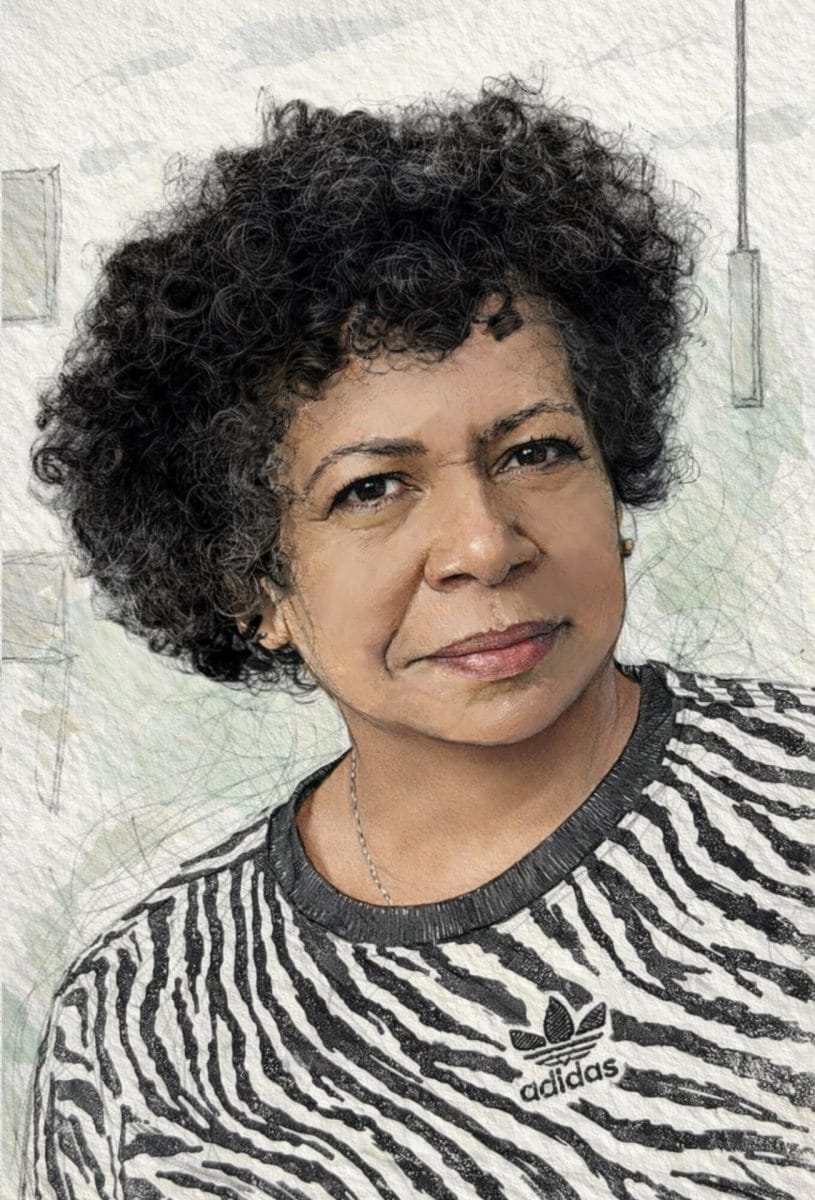
Luz Mely Reyes - Venezuela

Luz Mely Reyes left Venezuela in slow motion. In 2015, she was the editor-in-chief Efecto Cocuyo, a small newspaper in Caracas. “Our heart as journalists was not to be too close to power. Power can be very seductive. But when you are too close to power you can lose the heart of your duty. So we tried always to be close to the common people,” she said.  

In 2018, a Venezuelan politician and opposition member called Fernando Albán mysteriously fell from a tenth-floor window while being held in custody. Nicolás Maduro’s government said he jumped. Reyes wasn’t so sure. “I asked questions on my Twitter account — why was he on the 10th floor, how did he jump?” she recalled. After tweeting, she turned her phone off to focus on writing. Suddenly, her husband’s phone began to ring. It was a tip-off: police were discussing Reyes’ tweet online, and talking about detaining her. Reyes scrambled to leave the country, only coming back a few months later when the dust had settled. 

All too soon, she had to leave Venezuela again — this time because of her coverage of a journalist who had been arrested in the middle of a blackout.

And so her wandering years began. Whenever Reyes felt too much pressure from the authorities, she would leave Venezuela for extended periods, spending time in neighboring Brazil and Colombia, before slipping back into Venezuela when she felt it was safe. 

“I had to accept that I wouldn’t be able to live in Venezuela anymore,” she said. But she continued to shuttle back and forth. The authorities canceled her passport twice, threatened to imprison her, increasing the pressure all the time. Her team told her how it didn’t make sense to be in Venezuela — that she couldn’t do her work properly while she was constantly in hiding, on high alert. 

Finally, after five years of this, she booked a one-way ticket out of Venezuela. She now lives in Austin, Texas, and doesn’t know if she’ll ever go home. 

“I had been struggling for about five years to accept that the government was expelling me from the country. I finally accepted that I was in exile — because if you can’t return to your country without the risk of being persecuted, well, you’re an exile.”

Reyes hasn’t stopped working for the people of Venezuela. During the US military strike on Venezuela and the capture of Maduro, she mobilized her sources and contacts across the country. She and her team livestreamed updates for ten hours straight, confirming the facts, debunking disinformation as the extraordinary events of January 3 unfolded. 

She feels the pain of being away from home acutely. “They say there are seven stages of grief when you’re forced to migrate. One grief I always have is for the landscape, for the weather, for the beach, for the space I was in, for the sun,” she said. “It’s very physical. I feel like a tree that has been ripped out of the ground.” 

There is no job she would rather do, though. “If I had to do it all over again, I would choose to be a journalist.”
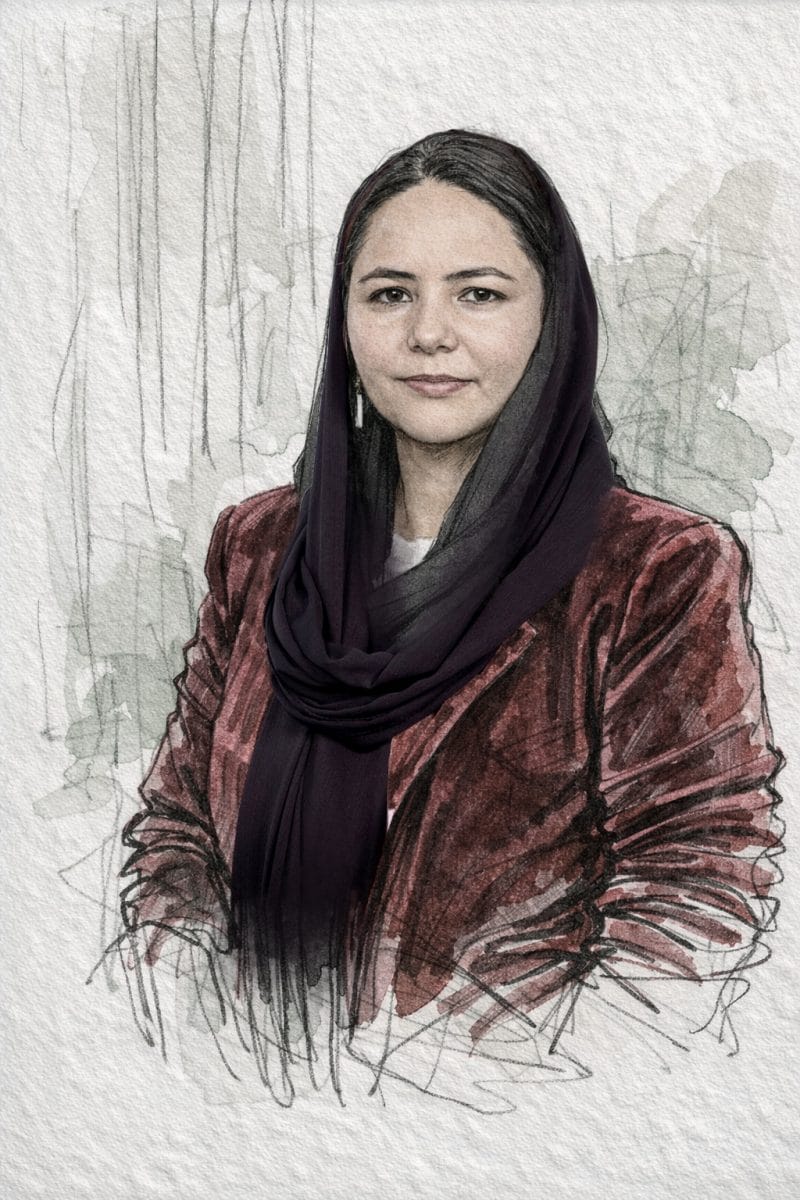
Zahra Joya - Afghanistan

Zahra Joya’s world changed forever over just a few days in August 2021. On August 14, she was working in Kabul as editor-in-chief of Rukhshana Media, an Afghan women’s journalism platform. The following day, Kabul fell to the Taliban. Joya joined the chaos of people fleeing the country out of Kabul airport. She arrived in a hotel room in London on August 26 — in less than a fortnight, everything she knew was gone.  “Everything vanished overnight,” Joya said. From her hotel, she couldn’t stop reporting. 

“I personally was safe, but when I looked back to all our achievements, to all the work that we had done, it gave me this chance to rethink my circumstances. I realized I could not stop my work. So we continued.”

Rukhshana Media’s burgeoning team scattered to the four winds following the collapse — some made it out of Afghanistan like her, others took shelter within the country, where it was no longer safe for them to keep working openly.

Founded in 2020, Rukhshana Media is a platform for female journalists — a space for stories by and about women in Afghanistan. It was named after an Afghan teenager who was stoned to death after being accused of adultery in 2015. 

Joya had to find a way to keep Rukhshana Media alive. She began, frantically, to build a completely new team, from thousands of miles away. 

“It was a terrible moment of my life. It was something I never, ever imagined I would go through,” she said. ““It was impossible for me to not think about Afghanistan just because I was outside.”

Joya scoured social media for new reporters. Then came the complex problem of how to hire them. How to look after journalists on the ground in Afghanistan under Taliban rule, keep them anonymous, and keep them safe, from thousands of miles away? She drew up a security plan and a code of conduct for her team. “I tell my colleagues, “please prioritize your safety. No information is worth your safety.”” She decided not to tell each reporter who their colleagues were, so that if they were captured by the Taliban, they would have no information to hand over under interrogation.

Bathed in the glow of her computer in her government-issued hotel room in London — where she stayed for a year — Joya worked and worked to publish as many stories as possible from on the ground in Afghanistan. 

“For the women of Afghanistan, one of the only ways to raise their voices is through media,” Joya said, describing how Afghan families often call her asking for help, asking if she can write about their situation. Families of female activists call Joya as soon as their relatives are imprisoned by the Taliban. 

“I feel guilty sometimes because people rely on me. They’re inside the country and they want to raise their voice,” she said. “My colleagues are taking their life in their hands to gather information.”

To evade capture, Rukhshana Media’s reporters often need to switch phone numbers without warning, meaning people can go dark at any time, and there are panicked moments where Joya doesn’t know what’s happened to them. 

In September 2025, the entire country went dark without warning. The Taliban had shut down the internet completely — stating it was being blocked "for the prevention of vices." All of Joya’s contacts, reporters and sources stopped responding. 

“Afghanistan was cut off from the world. It was terrible. It reminded us of the fall of Kabul all over again. We had no idea what was going on in the country,” she said. When the internet came back on, her work continued, the pace relentless — and it hasn’t stopped since.
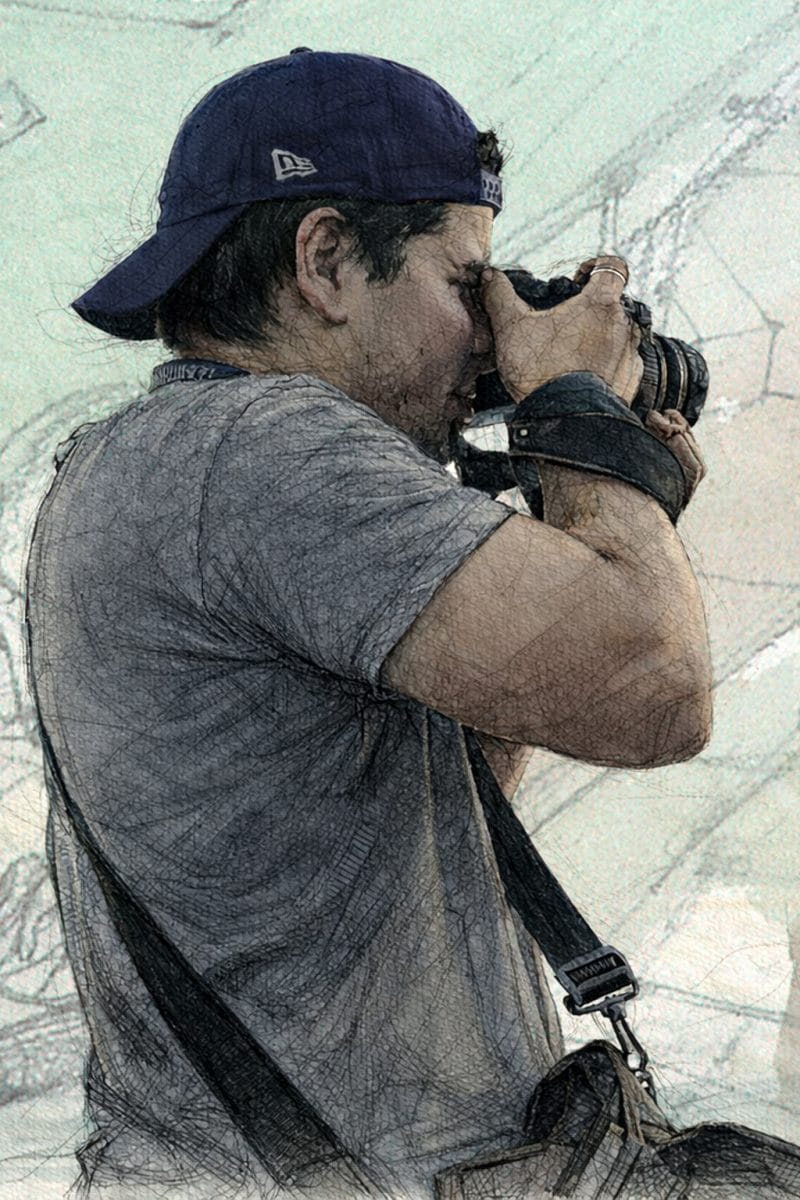
Jesús Adonis Martínez Peña - Cuba

The idea for El Estornudo — a narrative journalism magazine covering Cuba — started on a balcony in Havana in 2015. A group of young people, many of them university students, gathered together and talked about their dream to tell the stories of Cuba on their own terms. 

“It was a time of bilateral tension between the United States and Cuba, and the situation in Cuba wasn't as serious in terms of the social, political, and economic crisis as it is now,” remembers the editor-in-chief of El Estornudo, Jesús Adonis Martinez Peña. Widespread internet had not yet arrived in Cuba, but more and more people were getting access every day, and new media outlets were springing up –– “basically in what had been, up until that point, a wasteland in terms of independent media.”

Together, the young journalists drafted a manifesto for their magazine, which they published on March 16, 2015, Journalist’s Day in Cuba. 

“In Cuba, the press is a neo-colonial republic. With flags, coats of arms, statutes, organizations, prizes, forums, infinite debates — but without independence,” they wrote. “If you want to know Cuba beyond the clash of slogans and the three or four topics recycled by the contemporary media world, you have to read this magazine.”

They decided to call their magazine ‘El Estornudo’ — The Sneeze. The name, they said, reflected their own reflexive need to “react against the prevailing climate, the urgent need to expel something.” 

More than a decade has passed since that balcony brainstorming session. “Ten years later, and here we are. And most of our founders are scattered around the world,” Peña, who is now based in Chicago, said. Peña himself believes he can still go back to Cuba if he stays low-profile, doesn’t work, and just sees his family. But a number of his colleagues can’t. “My colleague who edits the magazine with me, they wouldn’t even let him board the American Airlines flight.”

The situation for Cuban journalists is specific to the island. “In Cuba, no one is going to shoot us in the head for journalism,” the Estornudo staff wrote in their founder’s letter ten years ago. This still holds true today — and it’s important, Peña said, “to respectfully acknowledge the realities for our colleagues in the region, in Central America, in countries like Mexico, where there are journalists being killed. We have the imperative, the duty, to do journalism under our own specific conditions of totalitarianism.” Reporters in Cuba exist within an insidious culture of fear and control. “The press is constantly under siege by state security. They monitor our colleagues, restrict their movements within the island, put police patrols in front of their houses — it functions almost like a temporary house arrest,” Peñam said. “There have been arrests, interrogations; they put pressure on the families of journalists too, pushing them into exile too.”

Since the Trump administration’s kidnapping of Venezuelan President Nicolás Maduro and the subsequent blocking of Venezuelan oil to Cuba, the country has been plunged into fresh crisis. President Trump has called on Cuba to “make a deal before it’s too late” and threatened to implement Secretary of State Marco Rubio as the “next President of Cuba.” Looking on, Peña’s team has been on high alert. They’re preparing themselves for every outcome — from a spiralling social crisis resulting from the U.S.-imposed fuel blockade, to a direct American attack on Havana. “We are considering every scenario, and we are not ruling anything out. And whatever happens, we are ready to report.”

Drop in Illustrations by Teona Tsintsadze.

The Age of Exile

This story is part of our Age of Exile series, which explores how displacement has evolved from historical punishment into a defining condition of our time—one that reveals profound transformations in how we construct identity, maintain community, and exercise power across borders. In an era where digital connection enables presence without physical proximity, exile has become more complex, more global, and more central to understanding our world. Explore The Age of Exile series

The post First, they came for the journalists appeared first on Coda Story.
  • ✇Coda Story
  • Europe vs Big Tech: A battle for democracy?
    “The impunity of the giants must end,” posted Spanish prime minister Pedro Sánchez on X. His government has instructed the public prosecutor to “investigate the crimes that X, Meta and TikTok may be committing through the creation and dissemination of child pornography by means of their AI.” Sánchez has said the state “cannot allow” platforms to affect the “mental health, dignity and rights of our sons and daughters.” But Republican legislators, seemingly in response, released Part II of a repor
     

Europe vs Big Tech: A battle for democracy?

20 février 2026 à 09:14

“The impunity of the giants must end,” posted Spanish prime minister Pedro Sánchez on X. His government has instructed the public prosecutor to “investigate the crimes that X, Meta and TikTok may be committing through the creation and dissemination of child pornography by means of their AI.” Sánchez has said the state “cannot allow” platforms to affect the “mental health, dignity and rights of our sons and daughters.” But Republican legislators, seemingly in response, released Part II of a report, titled ‘The Foreign Censorship Threat’, in which it accuses the European Commission of “directly infringing on Americans’ online speech.”

Almost simultaneously, Ireland’s Data Protection Commission launched an investigation into Grok, X’s generative AI chatbot, for producing sexualized deepfakes which might have included personal data of Europeans, including children. Even British prime minister Keir Starmer, who has signed a sweeping “Technology Prosperity Deal” with the U.S. has, spoken about the need to “protect children’s wellbeing” from Grok. And earlier this month, French police searched the Paris offices of X as part of a process that X described as a “politicized criminal investigation.” 

With Australia having set a precedent for “age-gating” the Internet through legislation, France’s under-15 ban is now due to come into force in September. The UK already requires age verification for certain content via the Online Safety Act, and Spain, Slovenia, Denmark, Germany, and Greece are among those considering similar measures. ​​The social and political consensus is striking. A 30-country Ipsos survey found strong majorities in every country supporting bans for under-14s.

Elon Musk responded to the Spanish prime minister’s comments about social media being essentially a failed state, rife with criminality and a disregard for law, by calling him “a tyrant and traitor to the people of Spain.” The U.S. government has only been marginally more restrained. The House Judiciary Committee’s report accused Europe of mounting a decade-long campaign to “censor the global internet.” 

The involvement of the U.S. government, and its consistent defence of U.S. tech companies, means the battle is increasingly less about European regulators and Silicon Valley and more about what appears to be a profound ideological mismatch. “Though often framed as combating so-called ‘hate speech’ or ‘disinformation’,” said the Republican legislators’ report, the EU was working to “censor true information and political speech about some of the most important policy debates in recent history — including the Covid-19 pandemic, mass migration, and transgender issues.” Meanwhile, a recently published report in Europe shows how Silicon Valley companies spent 151 million euros lobbying far right European parliamentarians in 2025 to water down regulations. 

Big Tech forging links to the European far right dovetails with a Trump administration in which senior figures, including Donald Trump himself, endorse certain candidates in elections and routinely repeat far right talking points as part of an “unapologetic defense of Western civilization.” And now the U.S. State Department has openly touted the building of a “freedom.gov” portal that enables people to access restricted content, even if it contravenes local laws in sovereign countries.

But European regulations are not the only challenge to the impunity with which social media platforms seem to be able to act. As momentum builds to hold social media platforms to account in Europe, in the U.S. Meta owner Mark Zuckerberg has been defending Instagram in a Los Angeles courtroom. He was testifying in a lawsuit, one of several hundred filed in U.S. civil courts, alleging that social media platforms are addictive, harm the mental health of children and that platforms are aware of these effects but do little to safeguard teenage users from harm. 

The lawsuits have the effect of making the Australian, European, and perhaps global attempt to ban teens from setting up social media accounts appear necessary. But Paige Collings, a digital policy expert at the Electronic Frontier Foundation and board member at European Digital Rights, said that bans are politically attractive precisely because they are simple. “Complex problems require complex solutions,” she said. “It’s more expensive. It’s longer-term. It can’t just be implemented overnight. But blocking under-16s from social media — that is something you can implement overnight.” 

Collings is among a growing chorus of experts that are cautious about embracing bans as a comprehensive solution. For instance, she explains, to ban children, platforms first need to know who is a child. This relies on national digital ID systems, facial recognition, and third-party age verification. In all scenarios, Collings said, “we are trusting that these services and platforms are not storing this information, not selling the information,” often without meaningful guardrails to ensure that is the case. 

When the UK introduced age restrictions last summer, searches for VPNs surged as users of all ages tried to avoid giving away personal information. Now the government has floated expanding restrictions to VPN usage to plug enforcement gaps. The purpose of a VPN itself is to preserve the privacy of its user, however imperfectly. VPNs are essential tools for businesses to secure communications, for journalists to protect sources, and for citizens in restrictive environments to access independent information. Forcing identification to use them fundamentally undermines their purpose. And when the argument for banning them is framed around the protection of children, it reinstates the urgency of an entire infrastructure required to keep children off the internet and risks normalizing identity checks as conditions for access to online spaces. In a digital economy where personal data is highly valuable, such measures raise the question of who ultimately benefits.Beyond privacy concerns, Collings points out that age-gating can become “a fantastic tool for censorship with no accountability or remedy.” It does, in fact, do in part what the U.S. government and Silicon Valley companies say it does, which is restrict speech. At an AI summit in Delhi, French president Emmanuel Macron dismissed Silicon Valley’s invocation of censorship as a defense against European regulation. “Free speech,” he said, “is pure bullshit if nobody knows how you are guided through this… having no clue about how the algorithm is made, how it is tested and where it will guide you — the democratic biases of this could be huge.” But, forcing accountability and improving safety would perhaps be better than a blanket ban where the cutoff is 14 or 16, leaving everyone else to take cover as best they can in a “digital Wild West,” to borrow the Spanish prime minister’s phrase.

currents

Subscribe to our coda currents newsletter

Insights from the Coda newsroom on the global forces that shape local crises.

The post Europe vs Big Tech: A battle for democracy? appeared first on Coda Story.

  • ✇Coda Story
  • The war against corruption: Why corruption is winning
    Transparency International has published its annual Corruption Perceptions Index and, for once, I think this rather tiresome survey of how likely various countries’ public officials are to be crooked has something important to tell us. Generally speaking, the CPI spends its time informing us that poor countries have worse governance than rich countries, which is not a very useful insight. What it fails to do is tell us that a significant reason for this fact is that rich countries make it very e
     

The war against corruption: Why corruption is winning

18 février 2026 à 08:55

Transparency International has published its annual Corruption Perceptions Index and, for once, I think this rather tiresome survey of how likely various countries’ public officials are to be crooked has something important to tell us. Generally speaking, the CPI spends its time informing us that poor countries have worse governance than rich countries, which is not a very useful insight. What it fails to do is tell us that a significant reason for this fact is that rich countries make it very easy for poor countries’ rulers to steal from their subjects, obscure the theft, and spend the proceeds on property in Mayfair, Miami or St Moritz.

But I do think it’s important that, this year, influential Western countries are sliding down the rankings: the United States has dropped to its lowest-ever score and last year’s crackdown on independent media and judges haven’t even been reflected in that score yet. “We’re seeing a concerning picture of long-term decline in leadership to tackle corruption,” noted TI. “Even established democracies, like the U.S., UK and New Zealand, are experiencing a drop in performance. The absence of bold leadership is leading to weaker standards and enforcement, lowering ambition on anti-corruption efforts around the world.”

Hopefully, TI’s index and its grave conclusions will help galvanize opposition to the pro-oligarch policies that are infesting the world, and help to stave off oligarchical takeover in places that are still doing okay. That is, I suppose, valuable. 

Still, I haven’t changed my opinion that the Corruption Perceptions Index should be abolished. It is absurd that Hong Kong is ranked as the 12th cleanest jurisdiction in the world, while China — the country it exists to loot — is 76th. Just as ridiculous is the position of the United Arab Emirates at 21st in the list, considering its growing role as a lynchpin of global kleptocracy, including from Russia (ranked a lowly 157).

The United Kingdom may have fallen to 20th but that is still far too high for a country that, by its own admission, launders a hundred billion pounds a year. That’s equivalent to the entire GDP of Kenya, which is down at 130 in the list.

You simply cannot understand corruption on a country-by-country basis because kleptocracy is a globalized phenomenon, and anything that suggests you can — particularly something so crude as a league table — is too misleading to be useful. 

Talking about multijurisdictional wizardry, check out this report from the FACT coalition on how U.S. companies structure their affairs. Thanks to new accounting rules, it is possible to see how and where U.S. corporations pay tax. Some of the results are pretty remarkable: Boeing pays more tax in Germany than in the United States; Tesla pays only $28 million to the U.S. Treasury, fully 27 (!) times less tax than it pays in China.

Of course, a large chunk of these companies’ profits barely get taxed at all, but instead are routed to countries that treat them generously, of which Ireland, the Netherlands, Bermuda and Singapore are particular standouts. 

The fact that this information is disclosed is good, because it allows ordinary citizens to see how big companies win special treatment, and hopefully thus increases public pressure for fair taxation. I would not therefore be at all surprised if some skilled and energetic lobbyists are right now working very hard to make sure the disclosures end as soon as possible.

Of course, you do not need to leave the United States to obtain complicated corporate structures, as shown in this recent piece from Bloomberg, about how the Russian oligarch, party-goer and billionaire Suleiman Kerimov opened a Delaware-based trust to, er, manage assets held by a Liechtenstein-based foundation but originating from his business empire in Russia, where he remains a member of the upper house of parliament. But then Kerimov was sanctioned in 2018 for what the first Trump administration called “worldwide malign activity”. He was specifically accused of bringing millions of euros into France in suitcases, using it to purchase villas, and evading taxes on them (there’s no school like the old school).

Despite the sanctions, Kerimov continued to benefit from the trust, according to Bloomberg. But the Treasury Department has gradually been catching up with everyone involved: a $216 million fine for a venture capital firm in June; an $11.5 million settlement from a private equity firm in December; and a $1.1 million fine for an attorney around the same time.

I’d like to say that hopefully this will focus minds on the majesty of sanctions and the importance of complying with them. And there are certainly some — such as the excellent folks of Collectif Sassoufit who are campaigning against corruption in Congo — who want the United States to designate more people, since justice can’t be obtained at home. I, however, think it’s time to have a serious reconsideration of Western over-reliance on sanctions, particularly in the light of the way that the United States is using them now. 

If you want an example of what I mean, consider the case of Kimberly Prost, an impeccably-credentialled Canadian judge at the International Criminal Court who was sanctioned because the White House didn’t like the way she’d authorised investigations into U.S. military personnel in Afghanistan (other ICC staff were also sanctioned for investigating other alleged American and Israeli transgressions), and who suffers repeated indignities as a result. “I have an e-reader,” she said. “it’s not even an American product, but for some reason, I assume tied to the payment, I’d purchase books, I’d start to read them and then they’d disappear.” You just, she admitted, “sort of end up using cash a lot.”

Frivolous sanctions like this are just driving countries to find ways around the restrictions (it’s notable that banks in Canada, the UK, and the Netherlands are happy to keep serving her, and it seems unlikely they’d be doing that without permission from their respective governments) and, in decades to come when genuine criminals can bank with impunity, future generations will despair at how U.S. governments wasted the powerful weapon that was their dominance of the global financial system.

A version of this story was published in this week’s Oligarchy newsletter. Sign up here.

currents

Subscribe to our coda currents newsletter

Insights from the Coda newsroom on the global forces that shape local crises.

The post The war against corruption: Why corruption is winning appeared first on Coda Story.

  • ✇Coda Story
  • Why the law lets financial criminals off the hook
    There’s a story I often tell when I talk about my new book: a couple of years ago, an adviser to a senior politician here in the UK asked me for some suggestions for policy proposals for tackling financial crime. I told him I’d like more resources for law enforcement agencies. His reply: “that’s not going to get us many headlines, is it?” This story is intended to illustrate how one of the reasons for the world’s failure to stop money laundering is that politicians are addicted to the sugar r
     

Why the law lets financial criminals off the hook

11 février 2026 à 08:55

There’s a story I often tell when I talk about my new book: a couple of years ago, an adviser to a senior politician here in the UK asked me for some suggestions for policy proposals for tackling financial crime. I told him I’d like more resources for law enforcement agencies. His reply: “that’s not going to get us many headlines, is it?”

This story is intended to illustrate how one of the reasons for the world’s failure to stop money laundering is that politicians are addicted to the sugar rush of new policy announcements, but shun the hard work of enforcing old ones. But it’s indicative of a problem with journalism too. Journalists like to talk about shiny new things — crypto! AI! — and ignore the old ones that we’ve already reported on. 

This is the lesson I draw from the horror of the Jeffrey Epstein revelations, with the rich, powerful men dividing up the world between themselves. Crooks and thieves may invent new tools, but they’re always designed to do the same old job: steal. A world-weary shrug — “politicians on the take? How is that a story? Bring me something new” — just lets them off the hook.

So in a small gesture towards being the change I want to see in the world, this week’s newsletter is about massive problems that have been going on for so long that everyone’s kind of forgotten about them, but which we should still be trying to solve because they’re still massive problems.

Global Financial Integrity, a research and advocacy organisation in Washington DC, has been arguing for almost two decades that we need to spend as much time looking at how illicit value flows through the trade system as we do looking at the financial system. In simple terms, by lying on the documentation that accompanies trade shipments, exporters can suck wealth out of poorer countries and — according to GFI’s analysis — have been doing so on a vast scale for decades.

In its latest analysis of trade flows out of Sub-Saharan African nations, GFI has identified “a renewed intensification of trade misinvoicing risks across the region”, with an average of $112.97 billion in value disappearing each year over the past decade, and at an accelerating rate. This total significantly exceeds that of the countries’ new debt over the same period, meaning that they should be seen effectively as net creditors to the world, rather than as net debtors.

“Illicit outflows on the scale observed in Africa have dire consequences for development. Every dollar siphoned out of African economies is a dollar not taxed or invested at home,” GFI concludes.

This phenomenon is often called ‘Trade-Based Money Laundering’, and is central to how illicit finance works, including the business model of the giant new ‘Chinese Money Laundering Networks’, but policy proposals for how to tackle it are sorely lacking. 

There has been, however, no shortage of suggestions for how to stop criminals being able to hide their identities behind shell companies when moving illicit funds. Corporate transparency has been pushed by the Financial Action Task Force since its earliest days. 

Efforts to achieve that goal have foundered in the European Union and the United States, but the UK has been a bright spot, with its notoriously filthy corporate registry of a decade ago adopting new rules to clean itself up. It would be nice to think this would mean we’d no longer see insiders from ex-Soviet republics using UK-registered companies to arrange questionable deals, but here’s the Organised Crime and Reporting Project to set us right.

“Two UK companies with no prior record in the mining industry have won tens of millions of dollars in Uzbek state procurement contracts,” the report states. “One was owned, on paper, by a septuagenarian British bookkeeper with no evident ties to Central Asia. The other, by a UK corporate services provider that for years managed corporate structures that shielded their true ownership from public view.”

The real meat in this sandwich, however, is how — after the journalists asked questions about the companies — their owners were able to seamlessly change the inconsistent pieces of information in the registry, much of it backdated, despite the supposedly more stringent new requirements.

I know this may all seem a bit academic because, thanks to the gutting of the U.S. Corporate Transparency Act, it’s easier, cheaper and murkier to use an American shell company these days anyway, but it’s important to remember that the battle hasn’t yet been won anywhere.

And one of the reasons it hasn’t been won is incompetence by underfunded and under-supported regulatory bodies. This was once again on display in the disastrous attempt to punish a British lawyer for allegedly persecuting a whistleblower who helped to expose the workings of the vast OneCoin scam. 

Everything about the case has been a fiasco: the fact that the fraud happened in the first place; the fact that the fraudster was able to retain a British lawyer; the fact that the regulatory action took eight years to happen; the fact the tribunal threw the case out; and now the fact the regulator is on the hook for everyone’s costs. I would say this has achieved nothing, but it’s worse than that: now the regulators have a reason to be even more timid than they already are.

It means that theft keeps happening and even when efforts are made to find the stolen wealth and punish those responsible, the damage has already been done. For instance, it’s good that UK prosecutors are launching a case against Nigeria’s notorious former oil minister, but how much better would it have been if theft hadn’t been so easy in the first case?

Of course that’s not to say that we shouldn’t talk about shiny new problems too, so here’s this week’s instalment of Tether watch. Fair warning — it is unusually gross, even by the low standards of this newsletter’s most regularly-appearing crypto company.

“Private Telegram groups for the sharing of secretly taken footage of women and girls take payment via the popular Chinese digital payments systems Alipay and WeChat Pay, as well as the cryptocurrency Tether.” One group “offers access to more than 40,000 videos of secretly taken footage from hotels, homes and public toilets for a $20 ‘V.I.P.’ membership”.

Tether denies any wrongdoing, and says that it cooperates with dozens of law enforcement agencies worldwide. It’s clearly doing something right anyway, since it claims to have made more than $10 billion in profits last year, having issued $50 billion worth of new crypto currency, and has launched a separate stablecoin — USAT, as opposed its normal USDT — for the American market.

A version of this story was published in this week’s Oligarchy newsletter. Sign up here.

The post Why the law lets financial criminals off the hook appeared first on Coda Story.

  • ✇Coda Story
  • A Trump corridor through the Caucasus
    After a trip to the Winter Olympics in Italy, already marred by anger and protests at the presence of ICE agents at the games, JD Vance will embark on a victory lap of Armenia and Azerbaijan. It will be the first ever visit by a U.S. vice president to the Armenian capital Yerevan and the first to Baku since Dick Cheney’s brief 2008 whistlestop tour of the region. At war for decades, Armenia and Azerbaijan agreed to make peace in Washington, DC in August last year. The deal included the building
     

A Trump corridor through the Caucasus

6 février 2026 à 08:55

After a trip to the Winter Olympics in Italy, already marred by anger and protests at the presence of ICE agents at the games, JD Vance will embark on a victory lap of Armenia and Azerbaijan. It will be the first ever visit by a U.S. vice president to the Armenian capital Yerevan and the first to Baku since Dick Cheney’s brief 2008 whistlestop tour of the region. At war for decades, Armenia and Azerbaijan agreed to make peace in Washington, DC in August last year. The deal included the building of a “Trump Route for International Peace and Prosperity” (TRIPP), a 21st century version of a Panama-style “canal zone” — a narrow strip of land that decides who moves energy, freight, and data between continents, and who gets paid for the privilege. And, vitally, a U.S.-backed counter to infrastructure being built by China. 

TRIPP is more than a photo-op or a vanity project. The South Caucasus, particularly since Russia’s full-scale invasion of Ukraine, has become an area of critical strategic value as a corridor between East and West and a new arena of superpower competition. “Vance is not well known for flying around the world just for fun,” said Svante Cornell, Research Director of the Central Asia-Caucasus Institute in Stockholm. “The U.S. is serious about the TRIPP Corridor and they want everybody in the region to know that.” 

Armenia and Azerbaijan have fought two wars over disputed Nagorno-Karabakh since the late-1980s, as the Soviet Union collapsed. It has been a brutal, society-shaping conflict, followed in 2023 by Azerbaijan’s rapid takeover of Nagorno-Karabakh and the flight of nearly the entire ethnic Armenian population.

Russia, though formally cast as a mediator, spent years manipulating the conflict: arming both sides, managing ceasefires and preventing resolution in a familiar imperial tactic later perfected in Ukraine: manufacturing and freezing instability until it could be turned into full-scale war on Moscow’s terms. But Trump changed the narrative by brokering a peace that has continued to hold. In December, officials from both countries discussed “lasting peace” and a “joint future” at a summit in the Qatari capital Doha. Armenia and Azerbaijan are also deep in discussion about integrating their energy systems. And Washington is now trying to lock that peace into concrete: rails, roads, and fiber that physically re-route the region away from Russian and Iranian gatekeeping.

This, wrote Trump on Truth Social recently, “was a nasty War… but now we have peace and prosperity.” For once, the self-congratulation isn’t entirely empty. Trump – who has confused Armenia for Albania and talked about settling its war with “Aber-baijan” in Davos just weeks ago – can legitimately take credit for making geopolitical gains in what Russia considered its backyard. 

The US president has repeatedly quoted Vladimir Putin as telling him: “‘I cannot believe you got this war settled’... cause it’s his territory.” That line matters because the South Caucasus is to Russia what the Caribbean Basin and the Panama “backyard” once was to the United States: a strategic near-abroad where outside powers aren’t supposed to build permanent leverage. 

Hemispheric defense, the Trump administration has made clear when it comes to Latin America, is at the heart of its defense strategy and that it expects other superpowers to be similarly focused on their spheres of influence. Thus, Russia’s inability to be a reliable ally to Armenia will be seen as weakness to be preyed upon by rival powers. Armenia is now even talking to Turkey, a historical adversary, about opening their shared border and establishing diplomatic relations.

Construction of roads and railways is underway through the Zangezur Corridor, one of the routes extending from China to Central Asia. Resul Rehimov/Anadolu via Getty Images.

Still, Armenia remains a member of the Russian-led Eurasian Economic Union and has its railway networks handled by Russia’s RZhD national rail operator — a factor Russia tried to use in an attempt to get involved with TRIPP. “Regarding the 'Trump Road' project, as it's being called, we confirm our readiness to explore possible options for our involvement,” Russian Foreign Ministry spokeswoman, Maria Zakharova said in January. Armenia’s Parliament Speaker shot down the possibility as “absurd.”

As for Azerbaijan, Trump said on Truth Social that part of Vance’s visit to Baku would be dedicated to “the sale of Made in the U.S.A. Defense Equipment,” a prospect that won’t please Moscow.

Georgia, once considered Washington's closest partner in the South Caucasus, is notably absent from JD Vance’s itinerary and being left behind is as consequential as being included.

For two decades, Georgia’s power and growing prosperity came from being the corridor: the place where pipelines, highways, and rail lines had to pass if Europe wanted Caspian energy without Russian control. The Baku–Tbilisi–Ceyhan pipeline was the signature project of that era, an “East–West energy corridor” literally running through Georgia. TRIPP threatens to redraw that map. A corridor through southern Armenia that becomes the new headline route doesn’t just “leave Georgia behind” — it means Georgia loses its most significant geopolitical bargaining chip because transit was the card it could play with Washington, Brussels, Ankara and Baku.

Now, as Washington invests in a new flagship corridor, countries like Georgia that fall outside it are forced to hedge. Over the past decade, Georgia has deepened ties with China through trade deals, cultural exchanges, and visa-free travel, while simultaneously sliding back toward Russia despite Moscow’s 2008 invasion of South Ossetia and Abkhazia. Under the Georgian Dream government, repressive legislation and violent crackdowns on protest have widened the gap with the EU and the U.S. Georgian prime minister Irakli Kobakhidze has appealed directly to Trump for a reset, but TRIPP makes clear where Washington’s priorities now lie. With Azerbaijan and Armenia at the heart of a new U.S.-backed route, influence in the South Caucasus is reorganizing around infrastructure — and power is flowing along it.

TRIPP, even if it exists just on paper for now, indirectly challenges the Chinese Belt and Road Initiative, a network of railways, ports, pipelines, and trade corridors aimed at boosting international trade under Beijing’s leadership. It enables the moving of goods while bypassing Russia and, where possible, Iran — an approach that became more urgent after 2022. And it undermines China, which has been busy paving routes to Iran. Both countries have been in intense contact with Central Asian countries and last summer inaugurated a railway route that connects China and Iran through Kazakhstan, Turkmenistan, and Uzbekistan. 

The South Caucasus is just a small piece in a puzzle that fits together over 140 Belt and Road countries — and Cornell is skeptical about the scale of China’s ambition versus its actual investment. “Belt and Road maps include a lot of infrastructure in this part of the world that has nothing to do with China,” he told me. “Most everything that's been built in the region has been built as a result of the funding from the countries in the region, not by Chinese funds.“  In keeping with this strategy, a fully operational TRIPP might be seen by China as a benefit, a way to trade while avoiding unreliable maritime routes. But researchers in China say that the problem will be if TRIPP “becomes securitized or if Washington leverages its control for geopolitical influence.” And with U.S. foreign policy increasingly waged as a battle with China for resources and global influence, TRIPP could become a threat to Chinese influence in the region. 

Vice President Vance’s visit is a sign of sustained U.S. engagement in the region and a sign that Trump’s attention has not waned after a ceremonial peace agreement in Washington.

The simplest way to read TRIPP is as a 27-mile project with an outsized consequence: it reorders who controls the “land bridge” between Europe and Central Asia and it tells every capital nearby who Washington thinks matters. 

And China will have to prepare for an economic standoff in terrain it once assumed was ripe for Chinese dominance. Russia, meanwhile, finds itself on slippery ground, no longer the indispensable broker it once was in its immediate neighborhood. TRIPP also adds an unexpected edge to the Ukraine-shaped narrative of a Trump administration willing to accommodate Moscow at every turn, suggesting instead a relationship that is less uniform and more selectively disruptive than it first appears.

currents

Subscribe to our coda currents newsletter

Insights from the Coda newsroom on the global forces that shape local crises.

The post A Trump corridor through the Caucasus appeared first on Coda Story.

  • ✇Coda Story
  • How Stablecoins make it easy to sidestep sanctions
    In recent years, Western countries have been very reliant on sanctions as a tool of foreign policy and I think it’s a mistake. It’s not too much of an exaggeration to say that sanctions are law enforcement by press release. They punish people without a trial, with little if any chance of appeal, while outsourcing all the hard work to private companies. There’s a small insight into what this looks like in practice from a fine imposed on Britain’s Bank of Scotland last week over its failure t
     

How Stablecoins make it easy to sidestep sanctions

4 février 2026 à 09:33

In recent years, Western countries have been very reliant on sanctions as a tool of foreign policy and I think it’s a mistake. It’s not too much of an exaggeration to say that sanctions are law enforcement by press release. They punish people without a trial, with little if any chance of appeal, while outsourcing all the hard work to private companies.

There’s a small insight into what this looks like in practice from a fine imposed on Britain’s Bank of Scotland last week over its failure to notice that a new customer had been sanctioned for his role in Russian-occupied Crimea. He had registered with a slightly-different spelling of his name — “a changed character and an additional character in the forename, a missing middle name and a changed character in the surname” — which briefly out-foxed the bank’s compliance systems.

I’ve written about this particular gentleman’s adventures in transliteration before. Having opened the account, the bank failed to notice that although he had been removed from the European Union’s sanctions list, he had not been removed from the equivalent UK list, meaning that for 18 days he had access to financial services he should not have had, until various automatic systems and manual checks caught up with him.

In the circumstances, the Bank of Scotland is probably happy to pay its 160,000-pound fine, which also serves to remind financial institutions to invest in all possible compliance-related software, to employ more people who can check and double-check everyone and everything, just in case the next fine is bigger and comes with sharper teeth. 

The upshot is that sanctions just got more expensive, more laborious and more complicated. But have they got any more effective? For that, we need to remember what they were supposed to achieve. “Our actions, taken in coordination with partners and allies, will degrade Russia’s ability to project power and threaten the peace and stability of Europe,” said then-Treasury Secretary Janet Yellen in February 2022, when announcing a first tranche of sanctions, to which many others have since been added, in many countries.

Now, I’m not saying this hasn’t been completely without effect – Russian oil revenues dropped sharply last year, for example — but it’s important to remember she was talking almost exactly four years ago, which means Ukraine has been resisting Vladimir Putin’s Russia for longer than either the USSR or the USA spent fighting Adolf Hitler’s Germany. Whatever the argument about the effectiveness or otherwise of sanctions in eventually stopping Putin’s war machine, you have to agree that they haven’t worked very quickly.

And this creates a problem. As with incompletely applied restrictions on money laundering, sanctions imposed without other enforcement mechanisms fail to defeat the people they’re aiming at, while incentivising them to learn how to circumvent restraints. 

So what’s the solution? Should we just give up on sanctions altogether and create a financial free-for-all equivalent of this year’s Enhanced Games, when cheating will be legalised so a rich man “with a mission to build superhumanity” can pay poorer people to take performance-enhancing drugs and see what happens?

You might think that’s a rhetorical question to which the answer is “OBVIOUSLY NOT!!!”, but that’s kind of what’s already happened. In April, Donald Trump’s Department of Justice decided to step back from the Biden administration’s policy of trying to make crypto companies obey the law. “The Department will no longer target virtual currency exchanges, mixing and tumbling services, and offline wallets for the acts of their end users,” the deputy attorney general said in a memorandum titled ‘ending regulation by prosecution’.

It is hard to over-stress quite how wildly this Enhanced Games-esque policy diverges from the approach taken towards money laundering since 1970, when the authors of the Bank Secrecy Act specifically stated that banks were responsible for the criminal acts of their clients, a financial anti-doping policy subsequently adopted by the whole world.

What’s been the result of the White House’s unilateral surrender? Obviously, it’s too early to see the full effects, but the general outlines of a catastrophe are already visible.

“Illicit cryptocurrency addresses received at least $154 billion in 2025. This represents a 162% increase year-over-year, primarily driven by a dramatic 694% increase in the value received by sanctioned entities,” said Chainalysis, the respected crypto investigations organisation. “We must caveat that this figure represents a lower-bound estimate based on illicit addresses we’ve identified to date.”

That means sanctioned entities moved almost seven times more value via crypto in 2025 than in 2024! That whole approach of using Western dominance of the financial system to restrain geopolitical adversaries is gone, and who knows what, if anything, will replace it.

Stablecoins now account for 84% of all illicit volume, according to Chainalysis, which also separated out the booming business being done by Chinese money laundering networks, which are seizing an ever-greater share of the market with their “industrial-scale processing capacity, operational resilience, and technical sophistication”.

US officials love stablecoins, since their issuers tend to buy Treasury bills to guarantee their assets’ value, which helps provide some extra support for the long-term U.S. policy of piling debt onto future generations rather than raising taxes on presidents’ wealthy friends. But if the approach now involves handing a sanctions-evasion opportunity to mobbed-up Chinese kleptocrats, Russians and others, then it is even more disastrously short-termist than it already appears.

Stablecoin giant Tether, by the way, may be buying a lot of U.S. government debt but is also hedging its bets and investing heavily in gold, of which it buys two tonnes a week. Of course, it keeps its stash in nuclear bunkers in Switzerland. Because why wouldn’t the people behind Tether want to resemble Bond villains even more than they do already? Next month perhaps they’ll announce a new corporate headquarters inside a Japanese volcano, with its own shark pool, stealth catamaran, and space station.

And that’s before we get to the effect of artificial intelligence on how criminals can complicate and obfuscate crypto laundering schemes, something I’ve been hearing about for a while. “The intersection of AI and cryptocurrency reflects the operational reality of contemporary jihadism,” notes one rather terrifying report. “Current counter-terrorism finance systems” it warns, “are structurally misaligned with how terrorists use crypto today.” I see no sign that any government minister anywhere is close to being ready for any of this, or to be honest, even aware that it’s happening.

A version of this story was published in this week’s Oligarchy newsletter. Sign up here.

currents

Subscribe to our coda currents newsletter

Insights from the Coda newsroom on the global forces that shape local crises.

The post How Stablecoins make it easy to sidestep sanctions appeared first on Coda Story.

❌