
 Connexion

A fake torture chamber, a real riot: Russia scores points on Ukraine’s mobilization crisis
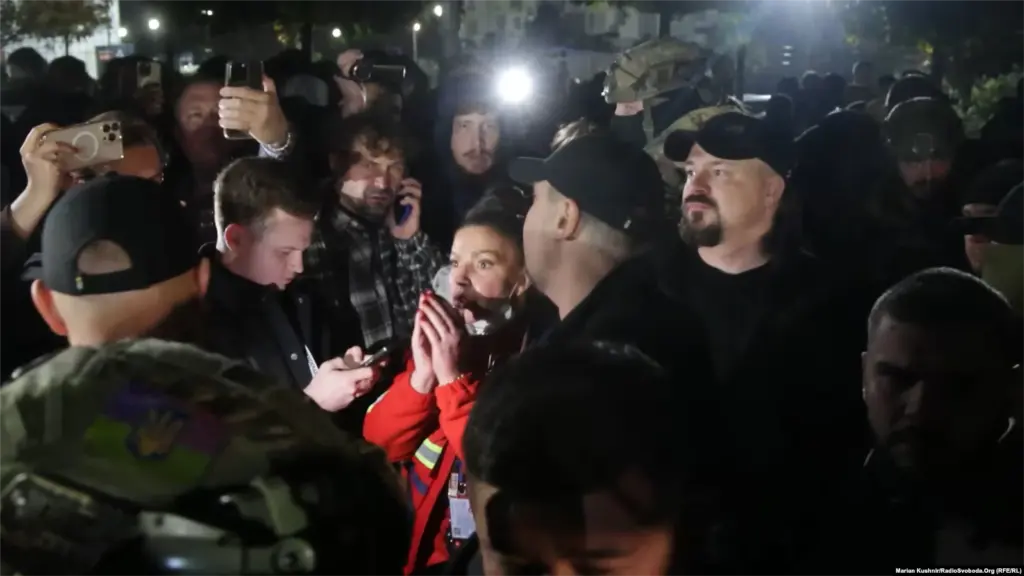
On 2 November in Petropavlivska Borshchahivka, on the outskirts of Kyiv, an enraged crowd rocked a bus with mobilized men inside, threatening to overturn it. These were the men the crowd had come to "free." Hours earlier, a woman in a medic's uniform with impeccable makeup had pulled up to a private house nearby in an ambulance, knelt at its gate, and livestreamed a dramatic plea to be let in to the "unlawfully held mobilized." Their relatives had called her, she said, because the men were in grave condition after "torture."
The video spread like wildfire through networks of anonymous Telegram channels and posts in Facebook groups. There is an underground torture chamber in that house, they alleged. Forty men are kept inside against their will, they claimed.
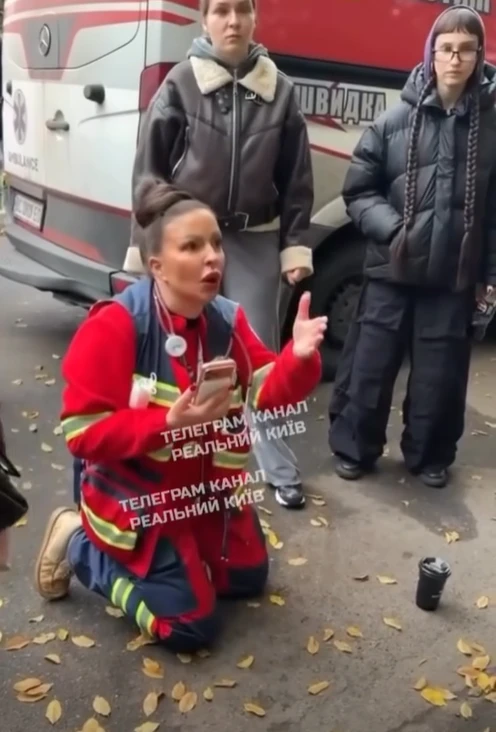
The reality was less dramatic. The kneeling woman was not a medic but the owner of a plastic surgery clinic, investigative outlet Slidstvo.Info found. The private ambulance she arrived in? The medical company that once owned it stopped operating in 2023 and sold the vehicle in 2024, on condition that its logos be removed. The director of the emergency medical center whose uniform she wore told Slidstvo she had never worked there and had bought or sewn the uniform herself.
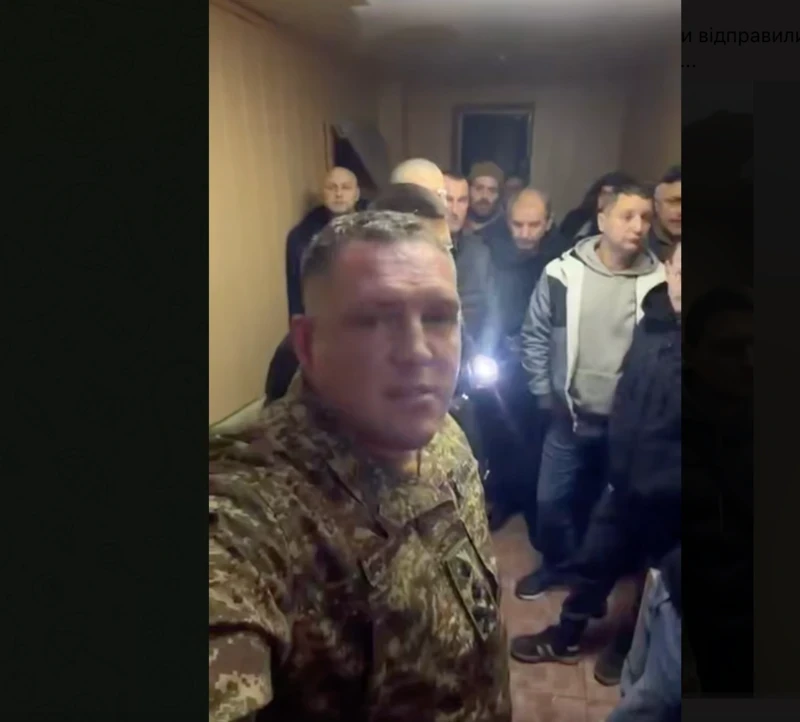
The house was in fact a temporary deployment point of military unit 3121, part of the 1st Azov Corps of Ukraine's National Guard. The Guard's commander, Oleksandr Pivnenko, came to the scene, and later so did Kyrylo Budanov, head of the Presidential Office, whose arrival signaled a code red. Together they let about ten people from the crowd inside, including the "medic" and the bloggers streaming beside her.
There are signs the story was seeded in advance. The day before the riot, an anonymous source sent soldier Serhii Hnezdilov a tip about a “torture chamber” in Borshchahivka where some forty innocent Ukrainians were held and people were being killed.
Hnezdilov is no friend of the mobilization system: in 2024, he publicly went AWOL to protest the lack of fixed terms of service, and he says he will always defend AWOL soldiers when they are in the right. Yet he checked the tip, found a temporary placement point for mobilized men, and published nothing.
The same plants, with supposedly horrific videos and rumors of corpses, were pushed to others too, he wrote, calling it “a well-planned information plant.”
RFE/RL reported that the visitors found no torture chamber, only newly mobilized men and soldiers detained after going AWOL, waiting to be processed before training. The mobilized men said nobody had used force against them, and a mother of one of them said those inside were "fine," though she called the conditions terrible, Ukrainska Pravda reported.
Inside they also found a 14-year-old boy who had been cursing at the police from the fence and had fallen into the yard. Four of the men, whom Pivnenko identified as soldiers detained after going AWOL, did have injuries; how they got them is now under investigation.

From one rumor to 40 hostages in three hours
The mundane reality was a striking contrast to the passions brewing outside: the crowd egged and cussed at the police and servicemen guarding the building, set off flares, shouted, and climbed over the fence. But this was nothing compared to the passions swirling on social media. Among the Telegram channels that opposition MP Yaroslav Zhelezniak tracked in his 25-channel mapping, the first post went out at 13:16, reporting a rumor about one detained and injured person. Half an hour later, another channel claimed 40 were held, citing unnamed local media. An "alarming video" of the "ambulance medics" started circulating on Facebook, and a burst of 34 posts in 40 minutes followed, almost every one adding an alarming unsourced detail.
In three hours, the rumors went from one person to 40, to a basement, to four in critical condition, to men "tortured and killed" in a mobilization center and released only for ransom. The first fact-check, by TV channel TSN, came at 16:47.
According to Ukraine's state Center for Countering Disinformation (CCD), the first public call to go to the house had appeared even earlier, on Threads at 11:34. At 13:57, Russian outlets such as Ukraina.ru joined the campaign, and from 14:00, 361 Facebook posts used one standardized text: " 40 people held in a basement by armed men in Petropavlivska Borshchahivka… four in critical condition…" Around 19:00, 110 Russian channels published the same template: "Concentration camp in Borshchahivka, Ukrainians' revolt."
Nothing was clear, except that some kind of scandal was happening in Kyiv and it was related to military service. That morning, Russia had dropped nine guided bombs on an underground school in frontline Komyshuvakha, in Zaporizhzhia Oblast, that served as a humanitarian aid point. At least 31 people who had come for bread and aid were killed, and dozens more are still missing.
Yet it was the chaos on Kyiv's outskirts that caught the attention of Alice Weidel, co-leader of Germany's far-right AfD. The next morning, she quote-posted on X a claim that "a torture chamber of Zelensky" held "over 40 mobilized men" and that "the youngest victim was reportedly just 14." The 14-year-old was the boy who had fallen off the fence.
Weidel wrote that she expected the German government to raise it "today in Berlin during the Selensky visit." The post had about 755,000 views by that evening. It did not mention Komyshuvakha. That same day, a Russian drone killed a 14-year-old girl in her home in Khotiv, just outside Kyiv.

A familiar Kremlin script
For observers of Russian influence campaigns, this is a familiar script. Hacked emails of Putin's gray cardinal Vladislav Surkov are replete with campaigns in which Russia attempted to fabricate a virtual reality, pushing for such pro-Kremlin outcomes as Ukraine's federalization in 2014–2015, the first years after Russia's occupation of Crimea and eastern Ukraine.
As a RUSI study of the leaks I co-authored found, Surkov's office paid local collaborators for protests and rallies that imitated genuine civic engagement, and wrapped Kremlin goals in local causes: in Zaporizhzhia, a push for "special status" ran under an ecological flag. At one Kremlin-curated "All-Ukrainian Constitutional Forum" calling for federalization, the foreign guests included Franz Weise of Germany's AfD.
The 3 October "rally for peace" in Kyiv, which the kneeling "medic" helped organize and whose online promotion bore signs of Russian interference, demanded an end to the war, early presidential elections, open borders, and an international audit of aid to Ukraine, fact-checkers at Zmina found.
However, said observers will be right to note that Russia's influence campaigns work best when they exploit real seams in Ukrainian society, and Ukraine's mobilization crisis is the realest one there is.

Who was behind it
We do not yet know how large Russia's role was in the riot on 2 November. The CCD says the incident "has signs of a pre-planned campaign with external interference." Law enforcement detained the kneeling "medic" and her driver. Budanov said she had scouted the house at least three days earlier and had corresponded with administrators of "certain Telegram channels."
Officials describe a more mundane motive too. Interior Minister Ivan Vyhivskyi called it "a kind of scheme for extracting draft evaders," and the SBU said the real aim was to snatch one serviceman who had gone AWOL.
Veteran Anton Kolumbet, a former deputy minister of veterans affairs, has described a shadow business of "rapid response groups" (a lawyer, a doctor, a blogger, a driver, muscle, and social media support) hired to pull recruits out of military custody before they reach their units. Russia, he wrote, is involved only indirectly, by amplifying the anti-mobilization channels.
The Soviet disease plaguing both armies—and the Ukrainian brigades trying to cure it
A crisis Russia did not have to invent
We do know that resistance to mobilization in Ukraine has reached an inflection point. For too many Ukrainians, mobilization brigades are now seen as the number one enemy, an attitude which, inflamed by Russian channels, blossomed as anonymous Telegram channels turned every reported abuse into proof of a system. Complaints to Ukraine's human rights ombudsman about the conduct of recruitment centers rose from 18 at the start of the full-scale invasion to 6,127 in 2025.
The acute feeling of an existential threat to family and nation has plunged since the climactic moment of February 2022, when so many men volunteered to take up arms that recruitment centers sent some home. Instead, a split reality has set in, in which Putin's demands are rejected and the nation must be defended, but the defending is seen as the obligation of others.
More and more people on the home front go on living their best lives, as much as they can under incessant Russian strikes, while nearly a million soldiers are stuck plugging the Russian deluge, outmanned, with no hope of being replaced. Too many eligible men are busy overturning mobilization buses, are too spooked to go outside lest their documents be checked, or have escaped over the border. There is no mandatory draft for women.
The only army Ukraine has
Granted, Ukraine's army system is far from ideal. Mobilization groups have been reported to use force, and the human rights ombudsman has documented men held unlawfully for up to 48 days at a recruitment center in Uzhhorod. Journalists at Babel documented alleged abuse and more than 20 deaths among mobilized men in the Skelia assault regiment, drawing on more than 30 testimonies.
Yes, the prevalent Soviet mentality in the army has led commanders to sacrifice soldiers' lives for the sake of positions on paper. Nevertheless, these cases are known because journalists published them, the ombudsman inspected, and the State Bureau of Investigation opened criminal cases; in the Skelia case, the bureau served a notice of suspicion, the first formal step toward charges, on a junior sergeant accused of beating two fellow servicemen.
Yet this is the only army Ukraine has, it is improving each day, and it is the only reason Ukraine still exists as an independent nation.
Ukraine’s new top commander is pushing to unwind a Soviet-inherited command model mid-war. He wants combat-tested sergeants to have real authority
It is also the only reason the crowd at Borshchahivka could shout at soldiers and walk home. Russia's own army has held soldiers who refused to fight in basements and pits in occupied Luhansk and Donetsk oblasts, Russian independent media reported. The Russian outlet Astra knew of no case in which those holding them were brought to justice, though some of the men held there were prosecuted.
"The uniform in no way strips a person of the right to dignity, safety, and protection from threats, humiliation, and violence," Ukraine's General Staff said on 3 November. "Respect for a serviceman is not a reward for being flawless." It backed an impartial investigation and warned that "Russia is trying to use internal conflicts to undermine trust in the Defense Forces."
Among the men stationed at the house were soldiers who had fought for Mariupol and Azovstal, survived Russian captivity, and returned to service, Ukraine's military ombudsman Olha Reshetylova wrote. "The population repaid them with spit, eggs, smashed windows, and swearing teenagers." Whether trust between the army and society can be restored, she added, "is an open question."
Standing before the crowd that night, Pivnenko warned that the enemy now knew the location. "If we die here, then in principle there's no problem, but it will all be on your conscience, dear Ukrainians," he said.
The unit now has to move. The commander of Azov, Denys Prokopenko, called the events "sabotage in the rear in Russia's interests."
Nobody wants to be the adult in the room
War is hell. The problem in Ukraine is that too many have forgotten that a Russian occupation is a greater hell. The psyche adapts: Russia's daily drone and missile obliteration has become the new normal. Hoping that the problem of Russia's war will somehow go away by itself is prevalent; the drive to join the fight is not. But the psyche still demands an explanation for the problems surrounding us. The mobilization brigades yanking Ukrainians out of their comfortable, false reality have taken the place of the enemy.
Opposition MP Volodymyr Viatrovych writes of "Russian breakthroughs on the front of trust." Russia's operations work, he argues, because they wrap around real problems: corruption and incompetence, unresolved mobilization, lies and hype in the media. Zelenskyy, he wrote, slid into "systematic avoidance" of problems, from corruption scandals to mobilization. Trust at war, he wrote, matters "not only at the front and in the rear, but, most importantly now, between them."
The issue has become politically toxic and nobody in the Ukrainian establishment wants to become the adult in the room: announce to Ukrainians that if preserving nationhood is important, mobilization is here to stay and all must serve. Even if the war is frozen, somebody will have to man the 1,000 km front line facing Russian troops, until Russia invades again.
Political commentator Valeriy Pekar puts it bluntly: the political leadership is "the main evader" on mobilization, going for five years without decisions or public communication.
President Zelensky, who was in Berlin on 3 November, has not commented publicly on Borshchahivka as of this writing. That, opposition MP Inna Sovsun says, is a problem: the commander-in-chief should stand up for one of his most effective units. Refusing to talk about mobilization will lead to more incidents like this, she warned. Similar incidents have erupted elsewhere, including the patriotic city of Lviv, where a crowd overturned a recruitment center vehicle this July.
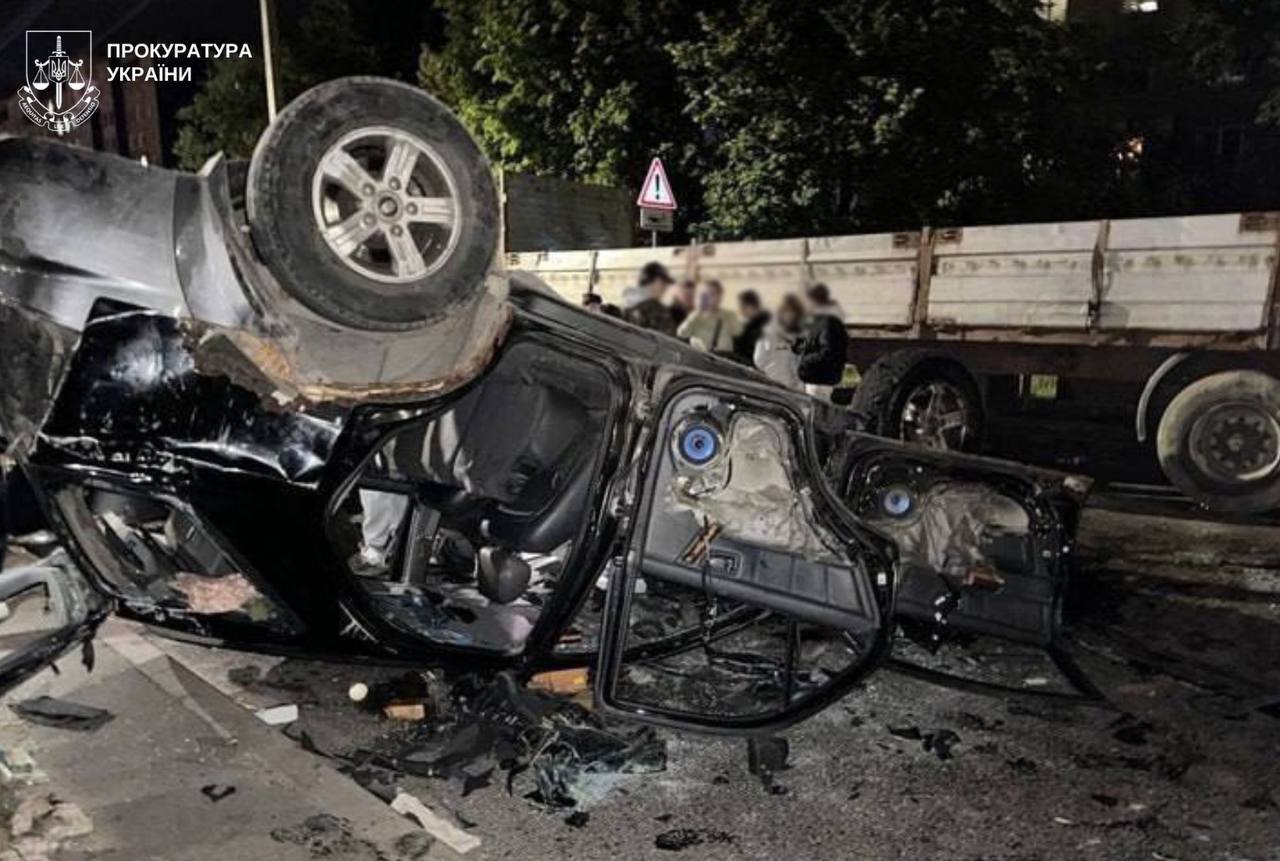
Lviv mobilization riot exposes the draft system Ukraine’s government has refused to fix
Some moves are underway. In May, President Zelenskyy announced an army reform to start in June, with higher pay and phased demobilization, and lawmakers registered ten bills on mobilization and military service, including one to turn recruitment centers into an online “service.”
On 26 October, Prime Minister Serhii Koretskyi promised a “new social contract” on mobilization and draft exemptions by 1 December, under which companies would commit to sending a predictable share of their workers to the army. If such a solution were found, he said, “the need to search for people on the streets would disappear,” though he called it an “idealistic model.”
None of it amounts to telling Ukrainians that everyone must serve.
In the meantime, Ukraine’s mobilization crisis remains the Kremlin’s dream come true: Ukrainians who see their own soldiers, not the Russian invader, as the enemy, something no number of Surkov’s paid rallies could ever buy.

What we know about the riot at Petropavlivska Borshchahivka, and what we don't
What we know
- The house was a temporary deployment point of military unit 3121, part of the National Guard's 1st Azov Corps, Azov said. Troops are dispersed in rented buildings so they can't be struck in one place. "We can't hold 100, 200, 300 men at one point," said National Guard spokesman Ruslan Muzychuk.
- Inside were 18 servicemen being processed before training, four of them detained after going AWOL, according to Pivnenko. Police counted 26 people inside.
- Debunked: the "40 hostages" and the dead man (Kyiv Oblast police) and the "broken spine" (National Guard spokesman, via UP).
- Casualties: 16 National Guard soldiers working outside were injured, none seriously, when the crowd threw stones and sprayed gas, Pivnenko told reporters. Four of the men inside had injuries and were taken to a National Guard hospital.
- Detentions: the "medic" and her driver are detained. The SBU has identified about 100 active participants and opened three criminal cases.
- The campaign: coordinated, by every dataset so far (CCD; LetsData via UP; Zhelezniak). Within hours on 2 November, Telegram posts about the incident gathered over 4mn views, the Stop Panika service found.
What we don't know
- How the four men inside were injured. The State Bureau of Investigation (DBR) has opened a criminal case for exceeding authority by a military official and says it will check "the legality of the actions of all involved."
- Who organized the riot, and why. Budanov said investigators are weighing whether the motive was personal, anti-state, a bid for attention, or money. Yuriy Honcharenko, head of the InfoLight.UA Research and Analysis Group and chairman of the Ukrainian Security Club, who says he has long tracked clashes over mobilization, believes that the riot was organic, not staged.
- Whether Russia ordered it, or joined and amplified it.
Ukrainian officials promise to investigate. The DBR, the Prosecutor General's Office, and the SBU have opened cases. Military ombudsman Reshetylova's office was at the scene and at the hospital that night; its inspection will examine how recruits and returned AWOL soldiers ended up at the house, their medical fitness findings, and how they were returned to service.
Human rights ombudsman Dmytro Lubinets has asked law enforcement to establish the legal basis for holding the men there, and to assess the actions of the civilians who attacked the soldiers.
Whatever the investigation finds, one thing is clear: it is being led by public bodies, and that is the biggest difference with the Russians. In occupied Luhansk Oblast in 2022, independent Russian outlet Verstka found at least 234 Russian soldiers who refused to fight held in basements in Bryanka, guarded by Wagner mercenaries. Mediazona reported that the most stubborn were put in "pits" and beaten. No investigation of comparable openness followed.
So far, the result is that 16 National Guard soldiers were hurt by the crowd that came to "free" the men inside. Four men in the house had injuries, and the state authorities, including the military ombudsman, promise to investigate how they got them.
Editor's note: article was updated after publication to include Hnezdilov's statement.
