Vue lecture

US prosecutors refuse to say if they secretly obtained Don Lemon’s phone records

Experts have expressed deep concerns that the practice runs afoul of the fourth amendment’s right to privacy

Federal prosecutors have declined to say whether they secretly obtained phone records for the journalist Don Lemon using an unusual administrative summons, his lawyers said in a Monday court filing, highlighting concern about a controversial legal authority the government has claimed to gather information as it charged Lemon and dozens of others with civil rights crimes in connection to a January protest at a church in Saint Paul, Minnesota.

In January, officials served Verizon with an administrative summons for a log of Lemon’s phone records between 19 December and 20 January. The subpoena did not come from a grand jury, as is typical in criminal investigation, and also was not a court-approved search warrant. Instead, it was a unilateral request from the Department of Homeland Security (DHS), which said it was requesting the information under 19 USC 1509 – an obscure law that gives the department power to investigate records related to customs issues. Experts say the government is abusing that authority to gather records on journalists, activists, unions, non-profits and online critics, and have expressed deep concerns that the practice runs afoul of the fourth amendment’s right to privacy.

Continue reading...

© Photograph: Paras Griffin/Getty Images

© Photograph: Paras Griffin/Getty Images

© Photograph: Paras Griffin/Getty Images

  •  

US lawmakers demand investigation into Trump administration’s secret surveillance of Americans

Exclusive: Two congressmembers respond to revelations of government snooping on journalists, non-profits and unions

Two congressional Democrats asked a government watchdog on Tuesday to investigate the Trump administration’s use of an obscure law to secretly collect records on journalists, non-profits and unions without judicial oversight.

The request from the Oregon senator Ron Wyden and the representative Pramila Jayapal of Washington seen by the Guardian comes amid mounting scrutiny over the way the Department of Homeland Security (DHS) recently used its power to issue administrative summonses related to customs matters to make extraordinary unilateral demands for information. They sent their request to the government accountability office (GAO), the non-partisan congressional watchdog.

Continue reading...

© Photograph: Annabelle Gordon/Reuters

© Photograph: Annabelle Gordon/Reuters

© Photograph: Annabelle Gordon/Reuters

  •  

Trump’s DHS is using an obscure law to secretly snoop on journalists, non-profits and unions: ‘It’s outrageous’

Even after judges rejected the same ploy, the Trump administration is going directly to social media and telecommunications companies

The Trump administration has been deploying an obscure legal maneuver to try to obtain private information on journalists, non-profits and unions, raising alarm over a power the government has asserted without judicial oversight.

In one instance, the government obtained six months of telephone records for Georgia Fort, a Minneapolis journalist. Fort was not notified of the request for her information, nor was she given a chance to contest the government’s effort to obtain them, her lawyers said in court papers.

Continue reading...

© Photograph: Julius Constantine Motal/The Guardian

© Photograph: Julius Constantine Motal/The Guardian

© Photograph: Julius Constantine Motal/The Guardian

  •  

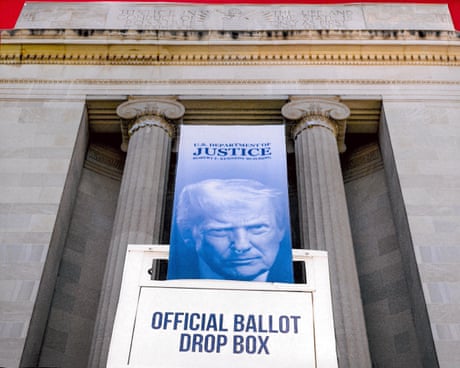
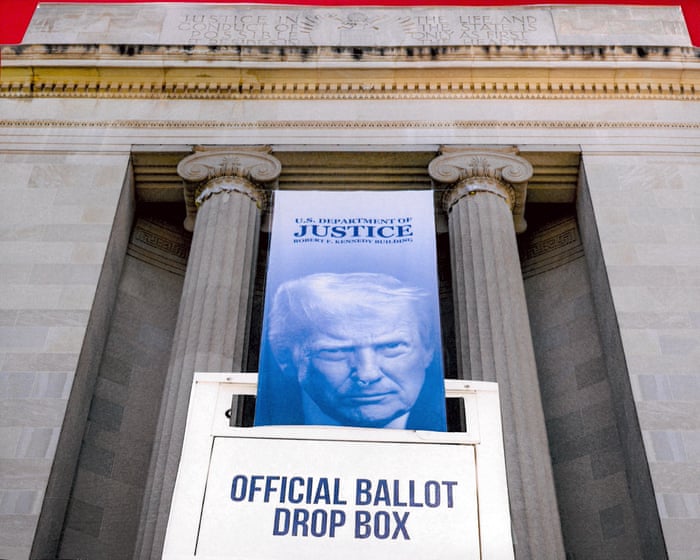
Voting rights experts skeptical over Trump pledge of 1,000 election monitors

Department of Justice plan raises questions over its ability to recruit so many people – and what they would do

Former officials and voting rights experts have expressed skepticism over a pledge by the Trump administration to dispatch 1,000 monitors across the country to scrutinize November’s US midterm elections.

While the Department of Justice (DoJ) has expressed hope that the operation will be the largest in its history, its plan raised questions over its ability to recruit so many people – and what they would do.

Continue reading...

© Photograph: Mike Segar/Reuters

© Photograph: Mike Segar/Reuters

© Photograph: Mike Segar/Reuters

  •  
❌