
 Connexion
Zaporizhzhia, Chornobyl, Kakhovka: a playbook of terror the West still calls deterrence
When Russia menaces a nuclear plant, or a drone strays near an occupied reactor, Western audiences hear an echo of the Cold War: deterrence, the standoff of two rational powers each too afraid to shoot first.
What Ukraine faces is not deterrence but terror: a tactic built on randomness, meant to get Western voters to do Moscow’s calculating for it.
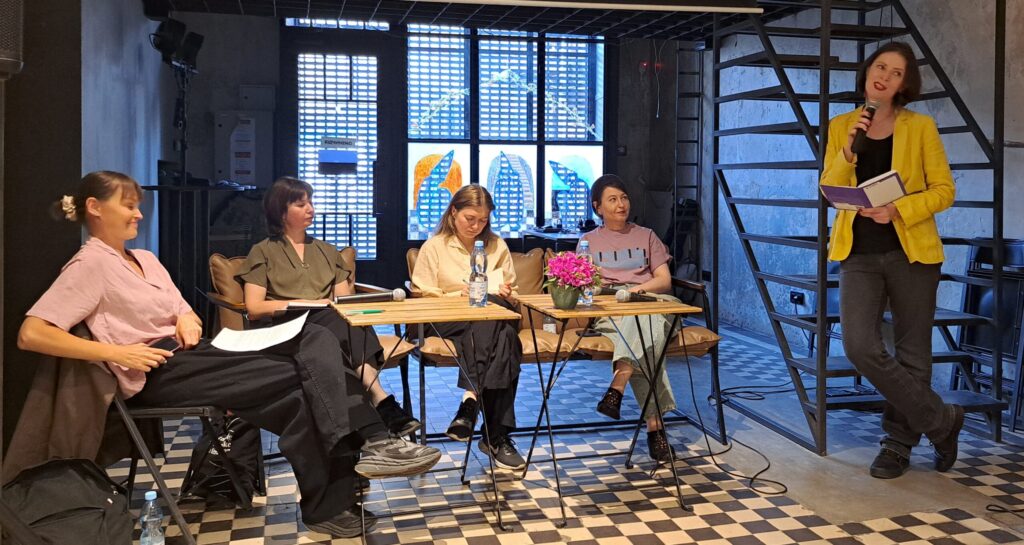
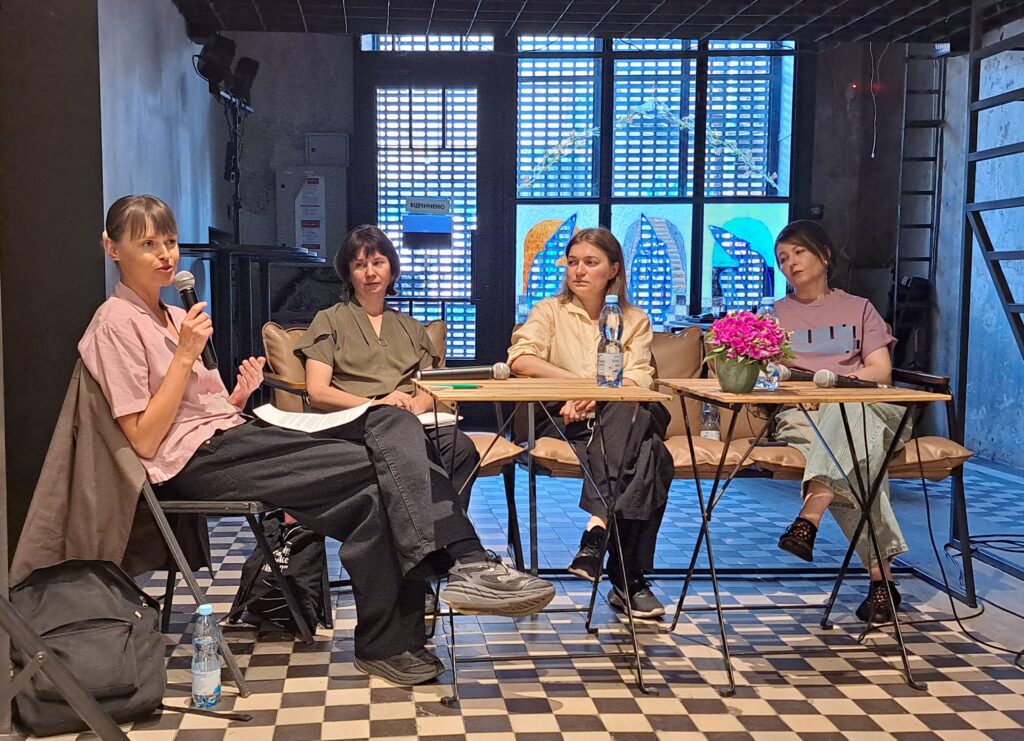
The Ukrainian media scholar Svitlana Matviyenko thinks that the frame is not just wrong but useful to the Kremlin. What Ukraine faces, she argued at a public talk in Lviv on 6 July, is not deterrence but terror: a tactic built on randomness, meant to get Western voters to do Moscow’s calculating for it. She likes to start with a taxi ride.
In April 2024, Matviyenko was invited by the Canadian Senate’s Committee on National Security, Defence and Veterans Affairs to testify in Ottawa on disinformation. The driver who collected her from the airport had no idea who she was.
He drove her through the city, gestured at what the Canadian government had built with public money, and told her the rest of it was flowing to Ukraine—a waste, in his view. When she asked why, his reasoning was blunt: Russia already had nuclear weapons, so what was the point? She opened her testimony, she told the Lviv audience, with that ride.
The night’s sharpest argument was not about the past.
The talk was part of a fellowship run by INDEX, a Lviv institute that brings foreign researchers to live inside wartime Ukraine. Its subject that night was ecocide and what the organizers call nuclear colonialism.
It fell six weeks after a Russian barrage on Kyiv badly damaged the National Chornobyl Museum, which had reopened only weeks earlier for the 1986 disaster’s 40th anniversary; part of its collection was lost; crews saved the rest. That loss hung over the room. But the night’s sharpest argument was not about the past. It was about the word the West uses for the present.
Deterrence is the wrong word
For most of her audiences abroad, Matviyenko said, any mention of nuclear danger summons a single Cold War idea: deterrence—the logic of two rivals holding each other in check, each restrained by the other’s arsenal.
Raise the Russian-occupied Zaporizhzhia plant, Europe’s largest, seized in 2022, or the Chornobyl zone, taken in the first weeks of the invasion, and Western listeners reach for the same frame.
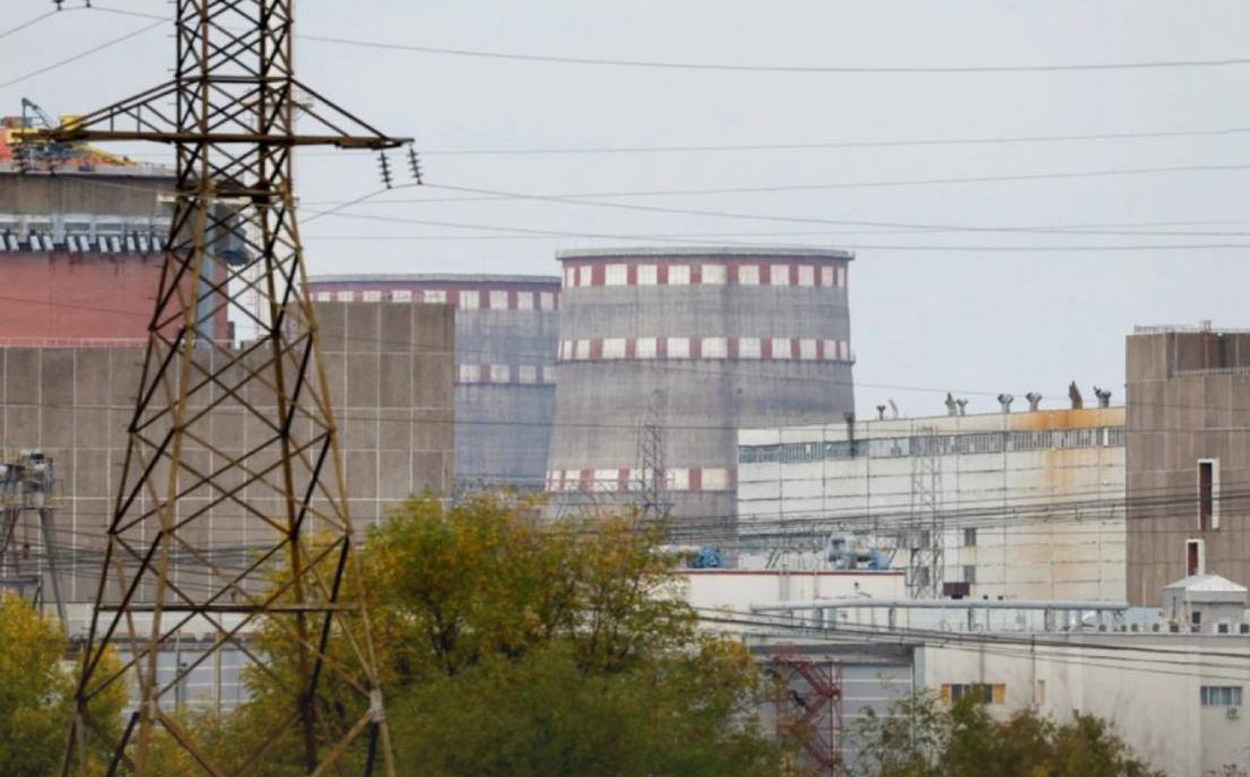
Russia blacked out Europe’s largest nuclear plant 15 times since occupying it in 2022
It is the wrong frame, Matviyenko argued. Deterrence is a game of cold arithmetic: two sides, each move calculated to avoid the worst, each assuming the other wants to avoid it too. Terror works the other way. Its logic is randomness, not calculation—something done at a distance that stuns, freezes, and kills all the same.
Each incident can be waved away as an accident, because the trajectories cannot be proven—and that deniability is not a flaw in the system but the point of it.
You cannot know where the next strike will land or when, only that something will. A drone hits a spent-fuel store; a line fails at an occupied reactor. Each incident can be waved away as an accident, she said, because the trajectories cannot be proven—and that deniability is not a flaw in the system but the point of it. Randomness, in her account, is not a breakdown of the order. It is the order itself.
A card the Kremlin keeps playing
The taxi driver was the argument in miniature. On a far larger scale, so was the autumn of 2022.
As Sasha Dovzhyk, INDEX’s head, put it from the floor—drawing on her recent interview with the historian Serhii Plokhy for the London Ukrainian Review—Moscow reached for nuclear blackmail just as its front was collapsing at Kherson and Kharkiv, its defense minister warning NATO capitals that Ukraine was preparing a “dirty bomb.”
Fear of escalation slowed Western arms deliveries, including F-16s.
By his account, the bluff worked. Fear of escalation slowed Western arms deliveries, including F-16s. It helped produce the failed 2023 counteroffensive—the drive to sever occupied Crimea from the Russian mainland and, with it, break Russia’s hold on the Zaporizhzhia plant. That the plant is still occupied, Plokhy argues, is largely the blackmail’s doing.
Matviyenko’s interest is in why the bluff keeps working. Terror, she said, colonizes the imagination: it gets people abroad to rule out helping Ukraine before Moscow has to lift a finger.
That week, she said, she was publishing a piece in a Canadian outlet making the same case: that what the West takes for deterrence is, in fact, terror. She keeps explaining the difference wherever she can. The fear, she said, spreads faster than she can correct it.
Who gets to speak for the colonized
The evening’s other live argument was aimed at a tactic Ukrainians increasingly meet abroad. The card of great Russian culture, Dovzhyk said, no longer plays well with thoughtful people, so Russia has reached for a newer one: the rights of ethnic and linguistic minorities, of its own colonized peoples.
The trouble is who ends up holding the microphone—often émigré Russians from Moscow and St. Petersburg, with polished reputations, speaking on behalf of communities they do not belong to, and doing it, more often than not, against Ukraine.
In North America, the norms of decolonial discourse are strong enough that a Russian speaking in place of an Indigenous person is challenged on sight.
Matviyenko was less alarmed by this than by a parallel move she does expect in earnest: the weaponizing of ecocide. On the minorities front, she was more sanguine. In North America, she said, the norms of decolonial discourse are strong enough that a Russian speaking in place of an Indigenous person is challenged on sight. Indigenous activism, especially on the environment, is real and deserves genuine partnership. The answer, she said, is not to cede the ground.
The moderator, Nina Direnko, offered the bluntest version. When minority rights are raised to put Ukraine on the back foot, she said, someone in the room should simply raise a hand and ask what those rights mean when Russia is erasing them across occupied Ukraine—and conscripting some of the same minorities to kill Ukrainians. It is a crude move, she allowed. It is also, she said, exactly the one to make.
The harm you cannot see
The ecocide the evening was named for had a clear anchor. Opening the night, Dovzhyk had reached back to 6 June 2023, when Russian forces destroyed the Kakhovka dam, draining the reservoir whose water once cooled the Zaporizhzhia reactors and sending a wall of water and decades of toxic sediment down the Dnipro to the Black Sea. The environmental crime and the nuclear one, in this telling, are the same crime.
The curator and writer Kateryna Iakovlenko traced how Ukrainian artists have followed the harm underground. Early in the war, she said, they favored the view from above—maps, the drone’s-eye survey of scarred terrain.
Then the gaze turned downward, to what lies beneath: contamination, buried and unexploded ordnance, the remains of the dead. She has written about a “new geography” being drawn by the war’s rusting leavings, and about art’s power to record not only what is visible but what slips past the eye.
The story does not start in 1986
If the threat is colonial, the panel argued, so are its roots—and they run deeper than the reactor that exploded in 1986. To talk about nuclear colonialism honestly, Matviyenko said, you have to move your gaze back to the 1970s and earlier, to the Soviet decision to develop this stretch of Ukraine as a nuclear landscape in the first place.
She watched the 40th-anniversary wave of remembrance with some unease: too much of it, she said, ran on the comforting myth of nature quietly reclaiming the exclusion zone.
She has been going to the Chornobyl zone for a decade, several times a year, and she watched the 40th-anniversary wave of remembrance with some unease: too much of it, she said, ran on the comforting myth of nature quietly reclaiming the exclusion zone, greening over the disaster as if it had healed. A book she hopes to finish this year makes the same case—decenter 1986, and look instead at the decades of engineering and politics that built the landscape before it failed.
Larissa Babij, managing editor of the London Ukrainian Review, followed the same thread through the work of Orysia Kulick, whose essay traces the roots of the Soviet program back to the scramble for Nazi Germany’s V-2 rocket technology.
Ukrainians should not borrow ready-made colonial theory but make outsiders look at Ukraine on its own terms.
The weapon had been assembled at a slave-labor camp; as the war ended, both superpowers seized its designs and its engineers. In the United States, that inheritance ran through Wernher von Braun; in the Soviet Union, it ran through the Zhytomyr-born Sergei Korolev, who had himself survived the Gulag.
And the wider enterprise, from uranium to reactors, was built on Gulag labor, its plants and atomic cities concentrated in Ukraine and, to a lesser degree, Lithuania—the very lands the camps had drawn their postwar prisoners from. Ukrainians, Babij argued, should not borrow ready-made colonial theory but make outsiders look at Ukraine on its own terms.
Catholic groups, mothers, and ecological activists found common cause in their fury at a government that had hidden the danger.
That history also holds a lesson about solidarity. The same Chornobyl issue carries an essay by Kacper Szulecki on Poland, where the fallout reshaped politics: Catholic groups, mothers, and ecological activists found common cause in their fury at a government that had hidden the danger, and the movement helped push the country toward democracy. The catch, as Babij drew it out, is that once such coalitions were folded into institutions, the broad ties that had powered them frayed.
That is the thread Matviyenko wants Ukrainians to pick up. Empires, she argued, survive by keeping their subject peoples turned against one another; the work now is to rebuild the horizontal bonds that make a different aftermath possible.
Not justice, but negative peace
Matviyenko, who called herself a pessimist, doubts that justice—courts, convictions, a full reckoning—is what waits on the far side of this war. She reached instead for the peace scholar Johan Galtung and his term, negative peace: the kind that settles in when the fighting stops but the wrongs are left standing.
The work, then, is to prepare for that—to build the ties and habits of care that make survival in an unjust aftermath bearable.
After the Second World War, Matviyenko noted, only a fraction of the guilty were ever punished; she would be surprised if this war ended any differently. The work, then, is to prepare for that—to build the ties and habits of care that make survival in an unjust aftermath bearable.
It was not a hopeful evening. Six weeks after a missile tore through a museum built to remember one nuclear catastrophe, in a country living above the next, the panel was not offering comfort—only a clearer view of the danger.
Read also
-
Russo-Ukrainian war, day 1523: Forty years after Chornobyl, Russia has struck Ukraine’s nuclear infrastructure 155 times
-
Moscow spent centuries explaining Ukraine to the world. A Lviv institute is breaking the monopoly
-
Ukraine threw out the international rulebook after firefighters stood helpless against burning mined forests
