Connexion
Removing political speech from MLS fans is untenable – just ask Austin FC
The protests around an anti-ICE T-shirt show that politics can never be separated from sports, especially now
On 26 September, Daniela Silva was expelled from Austin FC’s match with San Diego FC for wearing a T-shirt reading “Abolish ICE”. She says she was banned from Q2 Stadium for a year (Austin FC said that the ban was issued by the Austin Police Department, not the club, and that they offered to rescind it but that Silva declined).
This happened, really, truly, and you cannot make this up, during Austin FC’s Hispanic Heritage Night. It also happened six days after Immigration and Customs Enforcement (ICE) agents shot a Venezuelan delivery driver, 28-year-old Wilber Garcés Pérez, in the torso in Austin, sparking protests in the city.
Leander Schaerlaeckens is the author of The Long Game: US Men’s Soccer and Its Savage, Four-Decade Journey to the Top, or Thereabouts, which is out now. He teaches at Marist University.
Continue reading...
© Photograph: Scott Wachter/Getty Images
© Photograph: Scott Wachter/Getty Images
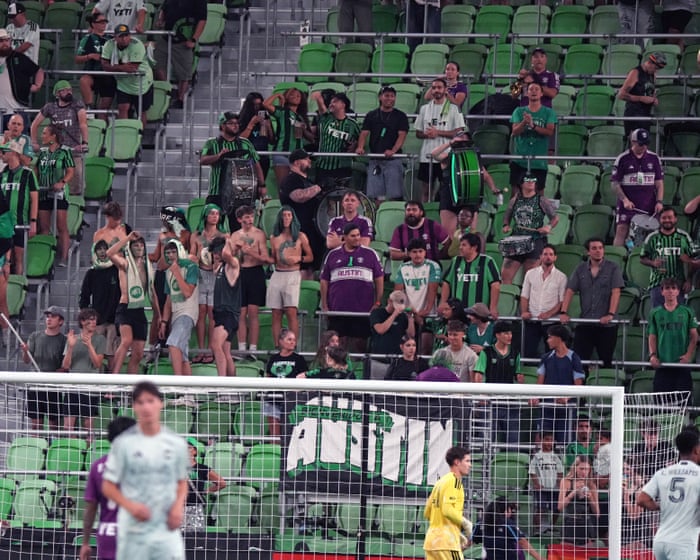
© Photograph: Scott Wachter/Getty Images