Vue lecture

New Orleans Cops Published Policy Document Allowing Weaponized Drones

🎉
YOU'RE INVITED! 404 Media is turning three, and we're throwing TWO separate events in NYC to celebrate: A live taping of the podcast with a special night of talks on Sept. 3, and an open-bar bash on Sept. 4. Subscribers at the Supporter level get free and discounted access to both events. Not a 404 Media Supporter yet? Sign up, and get all the party details here.
New Orleans Cops Published Policy Document Allowing Weaponized Drones

The New Orleans Police Department (NOPD) looked at ways to arm quadcopter drones with weapons, according to a draft version of its drone manual shared with 404 Media. A draft version of the manual, which was live on the NOPD website in June, said that the department’s drones could only be equipped with weapons with written approval from the Superintendent of Police.

The current version, live as of July 1, has different language: “The sUAS shall not be equipped with weapons or hazardous materials of any kind,” referring to small Unmanned Aerial Systems, or drones. According to the NOPD, the operations manual it published to the internet with the rules for weaponized drones was an early draft.

“The manual published on July 1 is the current published version of the policy. Earlier versions were draft versions that were presented for review before adoption of the current policy,” NOPD told 404 media. “NOPD has made it clear we are not and will not be equipping drones with weapons or other hazardous materials.” NOPD didn’t answer follow-up questions about how or why the draft version of the manual was published.

But the publication of a police drone manual that opens the door for weaponized quadcopters is important, and comes as drone companies and police flirt with the idea of putting weapons on their drones. New Orleans has long been a pioneer of camera and drone driven policing and the cops have used controversial tactics to get around public scrutiny and regulations. It shows that what the police are circulating amongst themselves and thinking about privately, what they perhaps want to happen, does not match public policy.

NOPD has a history of finding creative ways to work around public policy and scrutiny when it comes to surveillance tech. A private company called Project New Orleans operates a network of cameras that provide live facial recognition to the city’s cops. The company operated in secret cooperation with NOPD for two years before the Washington Post exposed it in 2025. According to the ACLU, NOPD has continued to use Project New Orleans in contravention of local laws and has stonewalled public records requests.

Federal Aviation Authority regulations prohibit the operation of drones equipped with a “dangerous weapon.” Matthew Guariglia, a senior policy analyst at the Electronic Frontier Foundation, told 404 Media that he didn’t see how the police arming drones could possibly be legal. But the FAA regulation was written in 2018 and things have changed a lot in just the last few years. Last month, Guariglia argued that “we have precious little time” to stop police from arming their drones, and that the industry was moving that way.

One of the companies selling NOPD its drones is Skydio. The US-based manufacturer of quadcopter drones has done very well since the Trump administration banned the sale of foreign-made drones last year. Skydio has always marketed itself as a drone company for first responders and had a cozy relationship with police departments around the country.

In 2020, Skydio wrote “we will not put weapons on our drones and will oppose fully autonomous lethal weapons systems.” 

But Skydio CEO Adam Bry walked this back in a June 15 interview on Decoder. “So this is an area where I think I’ve gotten some things wrong. We’ve said some things previously that led some folks externally and internally to believe that, for example, we would prevent the military from putting weapons on our drones,” Bry said.

“It’s not our place to tell them what they can and can’t do,” he said. “It should be up to the folks who’re putting their lives on the line to decide how to use it.”

He added that terrorists don’t follow terms of service. “They don’t care what our policy says,” he said. “I think when you start trying to draw these bright lines and say: this is good, this is bad, more often than not you’re going to end up on the wrong side of moral questions.” 

Guariglia also pointed to a planned pilot project in Georgia that will test “less lethal” armed drones to nominally stop school shootings. He noted that in recent years many drone regulations have been ignored or relaxed.

“You used to have to have line of sight of your drones and now law enforcement [...] are phasing that out or offering exemptions,” Guariglia said. “If you want to police divisions a few years ago, they were selling drones capable of flying miles and miles in a couple of minutes and you’d ask them about the line of sight rule and they would just shrug. They are preparing for the day when law enforcement gets whatever they want.”

“Clearly they’re thinking about it,” Guariglia said of the NOPD manual that included a provision for armed drones. “Drones have always been a bit of a solution in need of a problem. There are few things that police say they need drones for that they cannot get by other means, and I think by putting other tools on them, they are still on a quest to figure out what drones are really good for.”

Arming drones could lower the bar for police to use force. “We have seen how consequence-free it can be for officers to deploy force at somebody who’s standing in front of them when they have to confront the fact that it’s a fellow human and they still have to draw their night stick or their Taser or their gun,” Guariglia said. “That would become so much easier and so much less emotionally and physically burdensome if they can deploy force by pressing a button.”

All this tech costs a lot of money. “Cities are spending an astronomical amount on drones and for maintenance of the drones. They're hiring all these drone pilots. They have to have special infrastructure to fly all these drones, and companies are getting rich. But really, there is no problem in policing that drones have straight up solved yet,” Guariglia said.

On June 24, the New Orleans city council approved a $250,000 budget request to expand Skydio’s reach in the French Quarter. The funds will purchase a massive docking station and support a “drones as first responders” (DFR) program, meaning that people who call 911 in the French Quarter may see a quadcopter drone before they see a police officer. NOPD told the city council that these drones won’t run facial recognition software and will not be armed.

The existence of the draft that was “presented for review” stands out. On February 7, 2024, NOPD first published an operations manual for drones. It was unequivocal: “The sUAS shall not be equipped with weapons of any kind.” 

Two years later, in 2026, NOPD asked for money for more Skydio drones and the city council questioned the cops about the program in a public meeting on April 16.

“Are these drones or any current drones in the French Quarter armed with any type of weapons?” Councilman Freddie King asked.

“No,” NOPD captain Samuel Palumbo said.

On June 24, 2026, the city council voted 4 - 3 to fund the expansion of the DFR program in the French Quarter.

Around that time, a revised version of the NOPD drone manual that allowed for the use of weaponized drones with the Superintendent’s written permission was live on the NOPD website. The revised version of the manual is dated June 21, 2026. The new manual caught the attention of Eye on Surveillance, a Louisiania activist group. The group said it started calling city council members to alert them to the new language.

Then, on June 30, the operations manual with the weaponization language vanished and a third version of the manual appeared. “The sUAS shall not be equipped with weapons or hazardous materials of any kind,” a revised version of the drone manual dated July 1, 2026 said.

It’s an odd sequence of events from a police department that hasn’t been forthcoming about its use of surveillance tech. “Police have yet to demonstrate that they can responsibly handle the data collection and surveillance capabilities of drones. Choosing to arm already unaccountable sky cameras is a threat on top of a threat, a misuse of public resources, and risks introducing more unaccountable weapons into a city enjoying a decline in gun violence,” Kelsey Atherton, Chief Editor at Center for International Policy — a non-profit that studies emerging technologies — told 404 Media.

Skydio did not return 404 Media’s request for a comment.

  •  

AI Fiction Is Easy to Detect Because It's Stupid and Bad, Research Finds

AI Fiction Is Easy to Detect Because It's Stupid and Bad, Research Finds

Fiction written by artificial intelligence is easy to detect because it struggles with complex story structure and tends to moralize in clunky ways, according to a preprint study from researchers at University of Maryland, College Park and Google DeepMind. They found that AI fiction has tells that go beyond stereotypical overuse of em-dashes and other obvious AI tropes and have more to do with the formulaic nature of the text itself.

“AI stories over-explain themes and favor tidy, single-track plots while human stories frame protagonists’ choices as more morally ambiguous and have increased temporal complexity,” the study, which looked at more than 50,000 AI-generated short stories, found. “Claude produces notably flat event escalation, GPT over-indexes on dream sequences, and Gemini defaults to external character description. We find that AI-generated stories cluster in a shared region of narrative space, while human-authored stories exhibit greater diversity. More broadly, these results suggest that differences in underlying narrative construction, not just writing style, can be used to separate human-written original works from AI-generated fiction.”

  •  

Meta Patents AI Device That Tracks Your Emotions, Watches You Take Your Meds

Meta Patents AI Device That Tracks Your Emotions, Watches You Take Your Meds

Meta has filed a patent for a system that records your voice and surroundings all day, then uses an AI to analyse your mood. The patent’s stated, theoretical goal is for Meta, a company that makes billions of dollars targeting ads at its users based on their data, is to sell users a wearable that tailors workouts for them based on whether they’re happy or sad. 

Patentlyze first noticed the patent which was published on July 2 after Meta filed it back in December of 2025. The filing described an “apparatus” that surveilled a user and their surroundings constantly to craft a better workout. “The audible communications may be associated with contextual factors such as time of day, location, user activity, or digital interaction,” the patent said. “The audible communications may be transcribed, and an emotional-state machine learning model may interpret verbal and nonverbal cues to determine emotional indicators.”

  •  

County With 37 Data Centers Asks Schools to ‘Conserve Electricity’

County With 37 Data Centers Asks Schools to ‘Conserve Electricity’

On June 26, the County Manager of Henrico County, Virginia, John Vithoulkas, sent an email to thousands of county employees asking them to help the local government conserve electricity. “Beginning July 1st, the rate we pay for electricity used in all Henrico County government and school facilities will increase dramatically — by 25%, increasing costs by an estimated $5 million next fiscal year. We anticipate more rate increases for electricity in the years ahead,” a copy of the email obtained by 404 Media said (emphasis his).

Henrico County is a community of more than 350,000 people in eastern Virginia just outside of Richmond. It also hosts 37 data centers and there are plans to build 17 more, including plans to convert hundreds of acres of Civil War battlefields into data centers. Thanks to its proximity to DC and vast amounts of land, Henrico County became a data center hub seemingly overnight and its services clients big and small. Meta built a data center there in 2017.

  •  

Tidal Says It Won’t Pay Royalties for AI-Generated Music

Tidal Says It Won’t Pay Royalties for AI-Generated Music

Music streaming service Tidal announced it won’t pay royalties for AI-generated music in an email to users and an announcement on its website published Monday. “Tidal’s priority is ensuring royalties go to original works directly produced, written, and performed by people,” the announcement reads. “We will therefore not knowingly attribute royalties to music we identify as wholly AI-generated.”

Like much of the internet, music streaming services are awash in AI-generated slop. Spotify promised to fight AI spam with labeling and filtering but also embraced the broader trend of AI music. AI-generated bands like The Velvet Sundown and Breaking Rust have millions of listens on Spotify and make the service money. In May, Spotify announced a deal with Universal that would let fans create “covers and remixes of their favorite songs.”Soon Spotify customers will be able to push a button and discover what Metallica would sound like if it were a reggae band

Tidal is trying something different. The streaming service isn’t a giant in the field — Apple Music, YouTube, and Spotify dominate the charts — but it’s built a reputation by collaborating with artists, giving them a bigger cut of the streaming profits, and focusing on delivering high quality versions of audio. Tidal is the streaming service for listeners obsessed with bit-rate and FLAC. It’s for people who have $200 digital-to-analog converters next to their computer.

The company said it won’t pay for “wholly” AI-generated music but it also said it won’t remove AI-tainted music from the platform entirely. Like Spotify before it, Tidal said it’s going to work to identify the AI slop on its platform, label it, and hold AI-generated music to a “higher standard of content integrity.” Spotify said something similar last year, but there are still plenty of unlabeled AI-generated tracks on the platform.

Tidal also said it won’t remove AI-tainted music entirely. “Artists should have the freedom to create with AI tools, and listeners should have the autonomy to choose the type of content they consume,” it said. As of this writing, The Velvet Sundown and Breaking Rust are both live on Tidal. Breaking Rust’s bio identified it as AI-generated country music, but The Velvet Sundown had no bio at all.

“Tidal will not allow music that is 100% AI-generated to be monetized. No royalties will go to such releases, nor will AI-generated uploads be eligible for direct-to-fan sales,” the company said in an email to its users.

It elaborated on its website. “Starting today, AI-generated music will not be monetizable,” it said. “We are only in the beginning of the era of AI-generated music. We acknowledge the ongoing debate regarding whether certain AI-generated music (e.g. AI-generated music developed from fairly and properly licensed models) should be entitled to earn royalties. This debate will continue as the technology advances and rightsholders and AI music platforms develop licensing models.”

It’s unclear if The Velvet Sundown and other bands like it will keep making money on Tidal. The company told 404 Media that it’s working with an external partner to manage detection and that “wholly AI-generated” was defined as a song where every component of the track was made using generative AI. “Our detection tools will determine how specific tracks and artists will be treated from July 15,” Tidal told 404 Media in an email. “The impact to royalties comes into effect starting July 15 so we don't have numbers to share just yet.”

On June 28, the day before Tidal’s announcement, The Velvet Sundown released a cover of Dolly Parton’s “I Will Always Love You” on Spotify and Tidal. It’s atrocious and it’s not labeled as AI-generated on either service.

“We exist to confuse music journalists, comfort robots, and help Spotify executives sleep at night,” says the frontpage of The Velvet Sundown’s website. “We were basically built for it, engineered to fill playlists, avoid royalties, and haunt your Discover Weekly like a ghost with good taste. Is it art? Is it a loophole? Either way, it streams beautifully."

Update 6/29/26: This story was updated to include comments from Tidal.

  •  

Bodycam Shows Moment Cops Arrested a Man for Speaking Too Long at Data Center Meeting

Bodycam Shows Moment Cops Arrested a Man for Speaking Too Long at Data Center Meeting

In February, police in Claremore, Oklahoma arrested farmer Darren Blanchard for speaking a little too long during a community meeting about data centers. The city charged Blanchard with criminal trespass, a crime with a $200 penalty, but he’s vowed to fight the charge. He recently shared video of the bodycam footage for the first time with 404 Media and answered our questions about the moment cops arrested him for going over his time at a February 17 community meeting of the Claremore City Council.

The plan in February was for the City Council to listen to the concerns citizens had about a planned data center called Project Mustang. The residents of Claremore don’t want the data center and largely feel like the construction project was approved without their input. City officials signed non-disclosure agreements on behalf of the project’s developers and haven’t been forthcoming with details about its construction.

  •  

'We Will Fight to Our Very Last Breath:' Township Leaders Vow to Fight Nuclear AI Data Center

'We Will Fight to Our Very Last Breath:' Township Leaders Vow to Fight Nuclear AI Data Center

Board members of a small township in Michigan agreed to “fight to our very last breath” against an AI data center planned in their community. America’s nuclear scientists and the University of Michigan want to build a massive data center in Ypsilanti Township, Michigan. If built, the data center will, among other things, run simulations to help America build nuclear weapons.

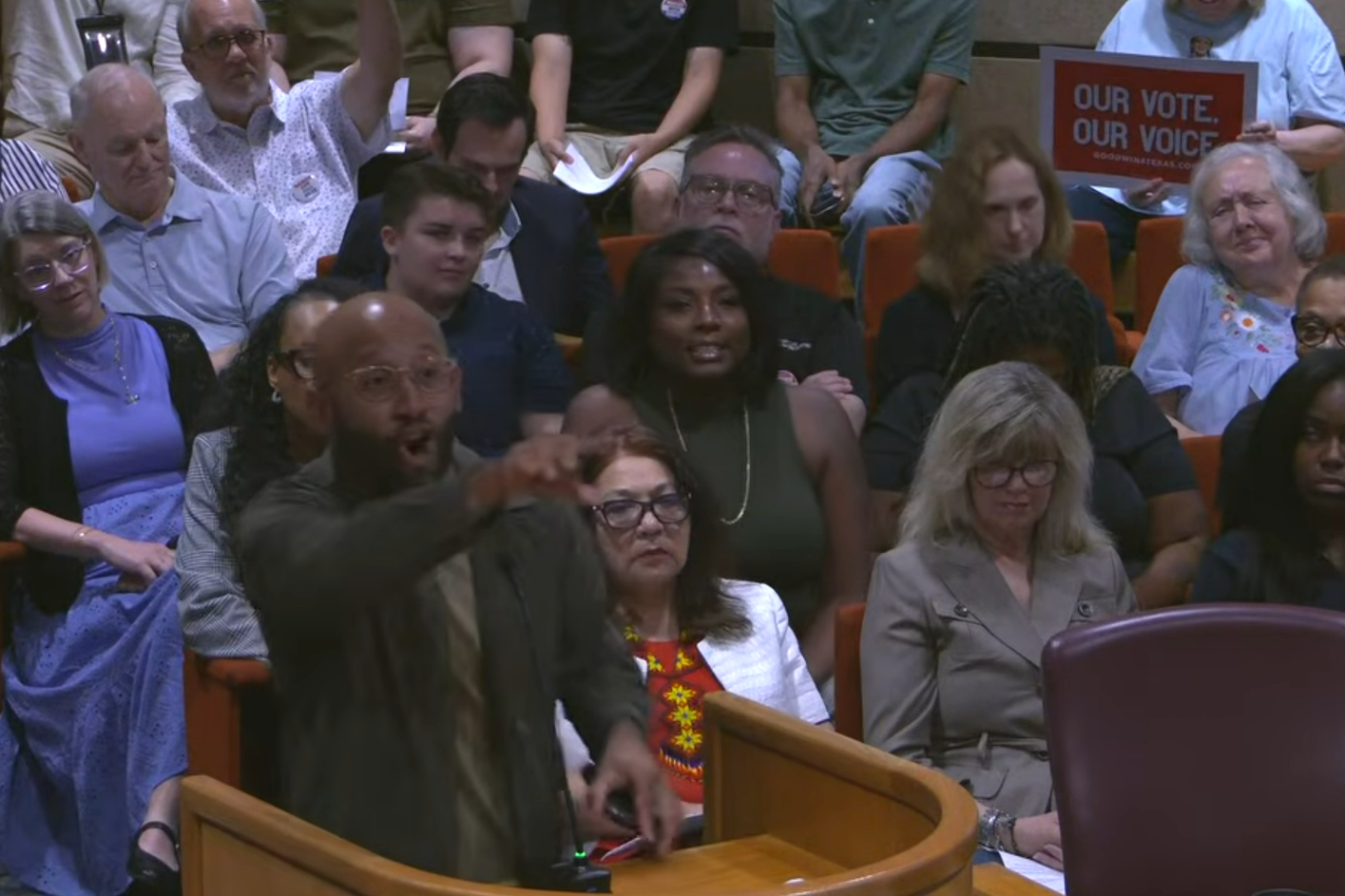
The residents of Ypsilanti Township overwhelmingly oppose the construction of the data center and voiced their opposition to the computer warehouse during a public board meeting on June 16. In a show of support that’s often rare from local leaders in communities with data centers, Ypsilanti Township’s board vowed to fight UofM and Los Alamos National Laboratory, which is partnering with the university, with everything they had.

Throughout most of the three hour board meeting, a photograph from a data center groundbreaking in nearby Saline Township was projected onto a wall behind the board. The photo showed a grinning Michigan Governor Gretchen Whitmer standing in line with Oracle CEO Clay Magouyrk. It was taken at the June 1 groundbreaking of an Oracle and OpenAI data center in nearby Saline Township, one of several Stargate projects. Saline Township is a community of only 2,300 people and the fight against the data center was so contentious that the Township treasurer resigned in tears during a public meeting in May.

During the groundbreaking, a videographer caught Whitmer talking with Magouyrk. In the video Whitmer appeared to tell the billionaire, “We’re used to people saying no, and doing it anyway.” Whitmer’s office has officially denied she said that, but many of the residents of Michigan—including the people of Ypsilanti Township—believe she did.

Governor Whitmer had a hot mic moment at the Saline Data Center groundbreaking, where she tells Oracle CEO Clay Magouyrk, “We’re used to people saying f*ck no, and doing it anyway.” I’m old enough to remember when she doxxed Marshall constituents who opposed her BlueOval project. pic.twitter.com/PRFnjGY5l9

— Heather Dow (@PatriotPostGirl) June 8, 2026

Cilla Cresswell shot the video of Whitmer and was present at the Ypsilanti Township board meeting on Tuesday. “On June 1 I was standing just to the left, right there,” Creswell said, referring to the photo that loomed behind the board during the meeting. “I was there. I recorded that clip [… ] I was right there. And they want to say it’s fake, but I just want to let you guys know it’s real. You can play it on my camera.”

Members of the board and the community referenced the photograph often during the meeting. “You have people in that photograph worth billions of dollars. Not just millions, we’re talking trillions. Soon to be trillionaires. Yet this state, in its zeal to become the data capital of the country, has extended unprecedented tax credits to the richest corporations in the world,” Douglas Winters, a lawyer representing Ypsilanti Township, said in the meeting.

“Having to stare at this picture during this meeting has my blood boiling,” said Ypsi resident Laura Witowski. “I did not realize how emotional I would be. The waste of space. The complete lack of regard for humans and animals and for what?”

During the hours of community comments, residents stepped forward to voice complaints that have now become common about data centers in America. The people of Ypsilanti Township worried about the rising cost of electricity, how much water the building will use, and how noisy the data center would be once finished.

They also called on the Township board to do everything in their power to stop it from even being built. “Put yourselves on the line. Those people will listen to you better than they will listen to us. Please put yourselves, your jobs, and your comfort on the line to stop this for us,” Ypsi resident Jane Wolf said. “Get creative. Tear up the road. Block the road. Break the law. Do whatever you need to do for us. You will be remembered better in history for the job that you did if you can get creative and really put yourselves out there.”

Jill Warren, the wife of a Methodist pastor, suggested residents brush up on the OSS’ Simple Sabotage Field Manual. “Simply slow things down bureaucratically," she said. “Make sure we block where we can. Use very slow agendas and response times and do, within your power, the work that you are entitled to do. For those who aren’t familiar with it, please look up the Simple Sabotage Field Manual and use it in your own lives of action as well [...] they may not care about us, but we care about us and we’re here and we’ll continue to be here and support the work that you’re doing on our behalf.”

Alyssa, an Ypsilanti resident, cited long passages from John Hershey’s Hiroshima—a 1946 book that focused on the victims of the first atomic bombing. “We don’t need simulations to know what a nuclear strike looks like,” she said. “We have pictures, videos, and audio of what happens. We know what it does to bodies. We know what it does to children and what it does to life.”

Board supervisor Brend Stumbo vowed to fight. “This is going to harm our community in our future. We will fight to our very last breath, but we need help. And we need it from the people who have the power to stop things,” she said.

Stumbo explained that, early on, she and other members of the board were ignorant about data centers and that she was grateful to the Township’s residents for informing her. “Now we know and we’re thankful for the residents and non-residents that came to our meetings early and told us, ‘don’t trust UofM,’” she said. “We do not love nor do we appreciate what the board or regents is doing to our community. It needs to stop. And everyone that showed up here today, we greatly appreciate it and we will keep going, like everyone has said, by doing it together […] I will stand with you. I will fight with you. And I know this entire board and our Township attorney will as well. So let’s keep doing it together.”

The Township has, so far, made good on its word and it’s been creative in its opposition. In April, the board voted to institute a 365 day moratorium on supplying water to data centers so it could conduct a scientific study into how hyper scale data centers might affect the community water supply. In response, UofM threatened to sue and claimed that withholding water from an AI data center meant to power nuclear weapons research was unlawful discrimination.

  •  

If AI Is Sentient Then So Is ‘Age of Empires II’

If AI Is Sentient Then So Is ‘Age of Empires II’

In a viral essay about how ludicrous the idea that LLMs are conscious is, science fiction writer Ted Chiang asked us to consider Microsoft Word:

“Being open to the possibility that LLMs are conscious is the same as being open to the possibility that Microsoft Word is conscious, or, more precisely, that multiple distinct consciousnesses are dormant in every Word document containing a conversational transcript, and that they are awakened every time the document is loaded,” Chiang wrote. “Should you consider the possibility that every time you open a Word document, you are bringing multiple conscious interlocutors into existence, and every time you close one, you snuff their existence out? No. Contemplating that scenario is not a good use of your time.”

Let me tell you about a Microsoft AI researcher, then, who recently spent quite a lot of time considering whether the legendary Microsoft real time strategy game Age of Empires II is conscious, and built a basic neural network within the video game using digital goats to prove his point.  

  •  
❌