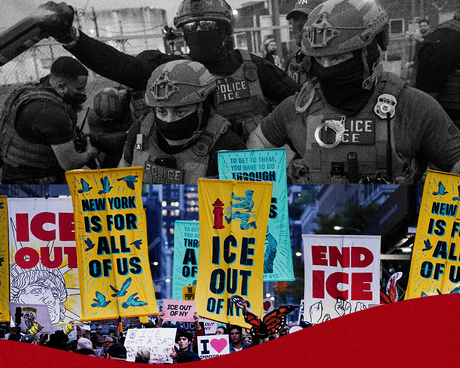
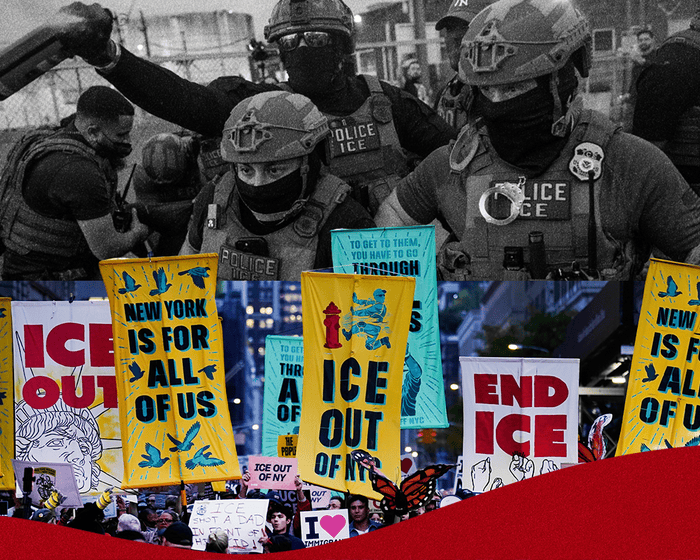
The ruling largely blocked homeland security agents from carrying out field interviews in nine states, including California, as part of a sprawling effort to find noncitizens registered to vote.
The ruling largely blocked homeland security agents from carrying out field interviews in nine states, including California, as part of a sprawling effort to find noncitizens registered to vote.
With ICE arrests and detentions at their highest levels, immigration remains a key issue for voters less than two weeks before election day.From mass raids to quiet crackdown: a timeline of Trump’s strategic ICE pivotSign up for the Stakes newsletterCheryl Bath, Wisconsin asks in a callout question: During covid I was surprised to learn how many foreign workers, especially from Mexico, worked in the Wisconsin farm fields. And now, I was more surprised to learn that these workers would also be de
Cheryl Bath, Wisconsin asks in a callout question: During covid I was surprised to learn how many foreign workers, especially from Mexico, worked in the Wisconsin farm fields. And now, I was more surprised to learn that these workers would also be deported and not allowed to work any longer at these fields even though it was all legal with paperwork. These foreign workers paid into the federal government taxes and social security system which was a plus for U.S. social security. I’ve been wondering how these Wisconsin farms are dealing with the absence of these workers seeing how it is harvesting time right now. Propublica had a article a year or so ago about the effects of this immigration sweep on the workers and the farms but that was still when the workers were still here. I can’t find any follow up or information on this anywhere. I think the farmers really feel left out to deal with this on their own and no one is asking questions. Maybe you can?
Maanvi: Cattle ranchers and dairy farmers have indeed been pushing for immigration reform, not only recently, but for years – because the industry relies so heavily on immigrant labor. In September, the the Texas Cattle Feeders Association, Kansas Livestock Association, and Oklahoma Cattlemen’s Association issued a joint warning that ICE operations were threatening their industy, and would have “a massive chilling effect on the legal, documented, skilled workers that put beef on the table and keep the supply chain moving”. I recently spoke with Matt Teagarden, CEO of the Kansas Livestock Association, who said that the US cattle herd has shrunk to its lowest numbers in 75 years – and ranchers are struggling to keep up with consumer demand. Farms aren’t able to expand operations without immigrant labor – and Teagarden said that this could mean that US consumers will increasingly be eating imported beef. He also noticed that ICE crackdowns are having a systemic impact on agriculture – it’s not only dairy or cattle industry workers who are impacted, but also farmworkers who grow the feed for cows, and immigrant workers who process the dairy and meat before it gets to grocery stores. Two-thirds of farm workers are non-citizen immigrants. As the administration targets these workers, food producers could struggle to keep up operations, and prices are expected to increase steeply, according to a study by the thinktank Fwd.us.
José: Many people caught up in the Trump administration’s dragnet are workers in the US — they pay taxes and contribute to Social Security, while receiving almost none of the benefits. The process to gain asylum or remain in the US can be long and arduous — oftentimes, as undocumented people go through the process, they will receive work permits, Social Security numbers and, in certain states, driver’s licenses. Now, many people with those legal work permits have been arrested by federal immigration officials and sit in detention centers, waiting for their immigration cases to proceed.
People protest the plans by President Donald Trump’s administration to build a section of the border wall at the Big Bend National Park, in Study Butte, Texas, in August.
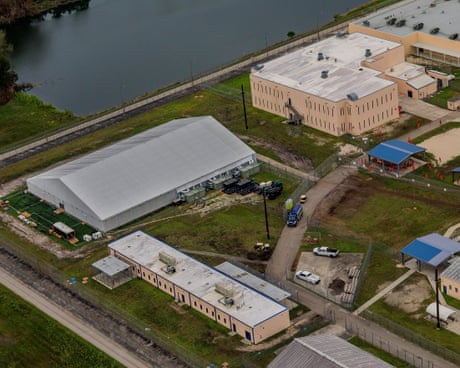
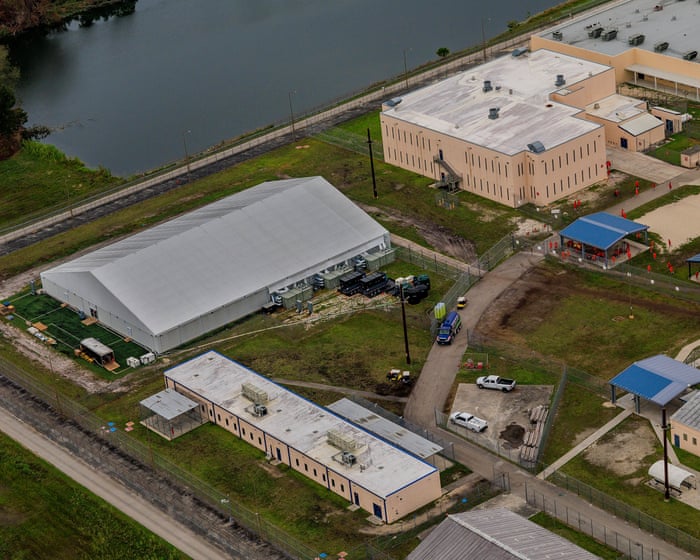
Flights to third countries where the detainees have no ties are scheduled as early as Wednesday, relatives detailSend us your questions about immigration and the midtermsRelatives of gravely ill detainees at two Florida immigration jails say authorities are about to deport their loved ones to unknown countries in Africa despite worsening medical conditions.Flights are scheduled as early as Wednesday, according to the families and the immigration advocacy group the Workers Circle, which has been
Relatives of gravely ill detainees at two Floridaimmigration jails say authorities are about to deport their loved ones to unknown countries in Africa despite worsening medical conditions.
Flights are scheduled as early as Wednesday, according to the families and the immigration advocacy group the Workers Circle, which has been monitoring conditions and speaking with detainees inside two Immigration and Customs Enforcement (ICE) facilities in south Florida.
Lebanese officials were furious, claiming the city erased Gibran’s identity. Yet there was a time when Arab immigrants in the US thought ‘we were all Syrians’This is Muslim New York: artists, thinkers and politicos on defining a new era for the cityOn the morning of 30 April, in the shadow of the financial district’s skyscrapers, a gold cloth slid off a bright yellow sculpture of painted stainless steel, 7ft (2 metres) tall, that spells an Arabic word: “al Qalam”, the pen.The monument, Al Qalam:
Lebanese officials were furious, claiming the city erased Gibran’s identity. Yet there was a time when Arab immigrants in the US thought ‘we were all Syrians’
On the morning of 30 April, in the shadow of the financial district’s skyscrapers, a gold cloth slid off a bright yellow sculpture of painted stainless steel, 7ft (2 metres) tall, that spells an Arabic word: “al Qalam”, the pen.
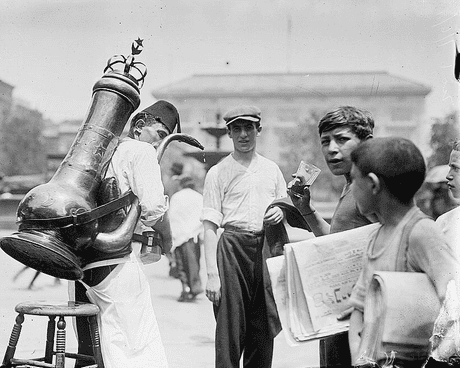
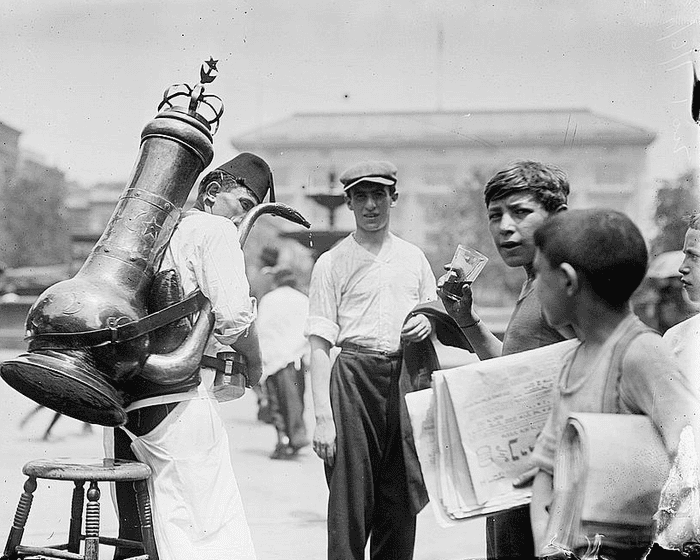
The monument, Al Qalam: Poets in the Park, stands in Elizabeth H Berger Plaza and honors the writers of the vanished neighborhood that New Yorkers once called Little Syria: an Arabic-speaking immigrant community that ran along Washington Street, blocks from where the World Trade Center would later rise. The monument was the first commemorative artwork unveiled under Mayor Zohran Mamdani. Little Syria produced one of the most famous poets ever to live in New York: Kahlil Gibran, author of The Prophet, a book of poetic prose that has never gone out of print. The monument honors the Pen League, the circle of writers Gibran led in Little Syria in the early 20th century.

 Connexion