Vue normale

  • ✇Euromaidan Press
  • Ukraine let young men leave to keep teenage boys home. Restaurants now struggle to hire
    Entry-level employers are finding it harder—and more expensive—to recruit young men. On Work.ua, one of Ukraine’s largest job platforms, the number of male candidates aged 18 to 22 who responded to vacancies fell 19% between July 2025 and July 2026, Lesia Prymakova told Ukrainska Pravda. The decline reached 29% in hospitality and retail. At the same time, advertised entry-level pay moved close to Work.ua’s overall median. The median salary for vacancies open to students
     

Ukraine let young men leave to keep teenage boys home. Restaurants now struggle to hire

17 août 2026 à 10:08

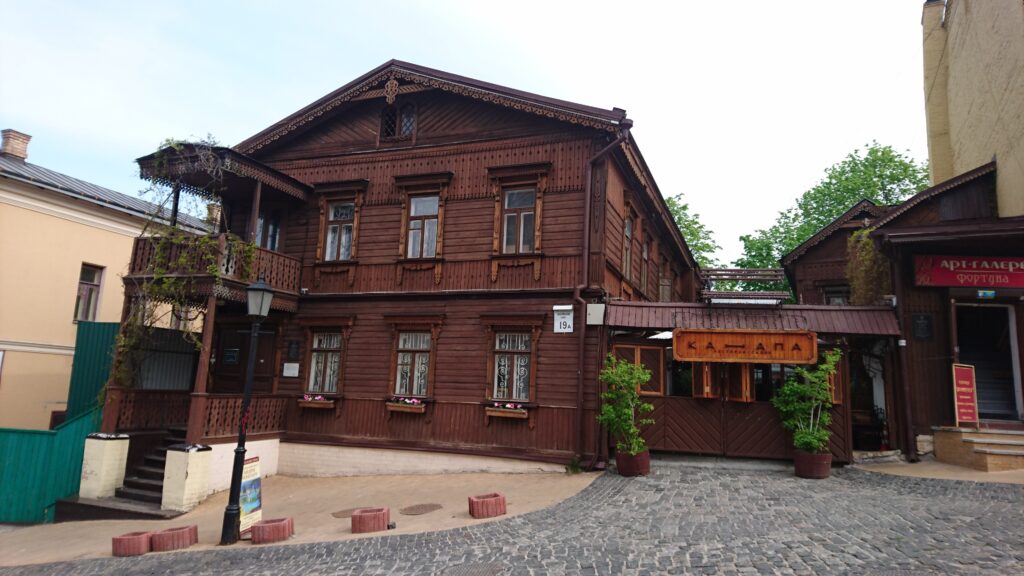
restaurant kanapa in kyiv

Entry-level employers are finding it harder—and more expensive—to recruit young men. On Work.ua, one of Ukraine’s largest job platforms, the number of male candidates aged 18 to 22 who responded to vacancies fell 19% between July 2025 and July 2026, Lesia Prymakova told Ukrainska Pravda. The decline reached 29% in hospitality and retail.

At the same time, advertised entry-level pay moved close to Work.ua’s overall median. The median salary for vacancies open to students rose 24%, while pay for jobs requiring no experience increased 23%.

No reliable count shows how many young men remained abroad.

The candidate pool shrank after the government eased wartime travel restrictions for men aged 18 to 22 last summer, following an initiative by President Volodymyr Zelenskyy. The government said the change was intended to discourage families from taking boys abroad before their 18th birthdays, when the previous rules would have prevented them from leaving.
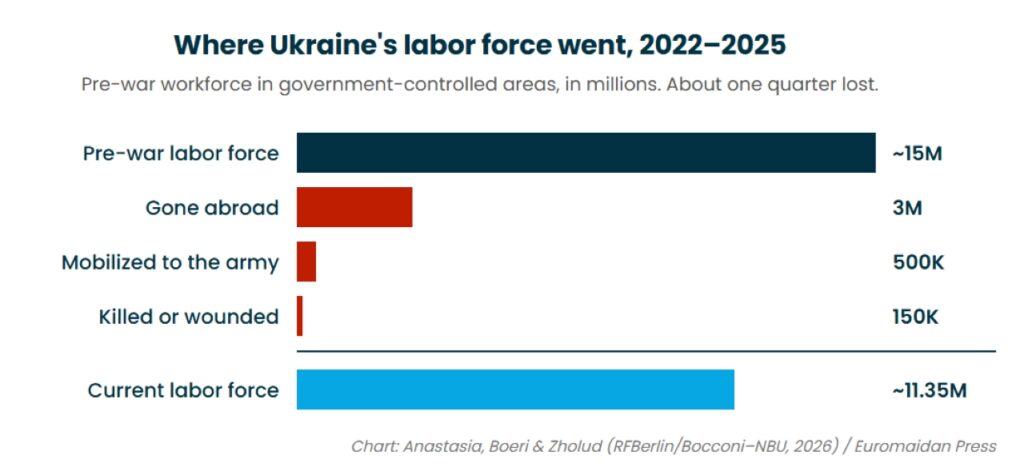
ukraine’s workforce
Ukraine’s pre-war labor force has shrunk by about a quarter. Three million went abroad, hundreds of thousands more to the front. What remains is older. Chart: Anastasia, Boeri & Zholud (RFBerlin/Bocconi–NBU, 2026) / Euromaidan Press

Hospitality and retail feel the squeeze

Restaurant owners tied the decline in young applicants directly to the eased travel rules. Sommelier Oleh Kravchenko, who owns Kyiv wine bar Win Bar, said two of his staff, a bartender and a cook, were preparing to leave the country, and that the bar had begun hiring more women, whereas server positions had earlier been held only by men.

He said his payroll had risen 5 to 10% and that he now raised wages at least every six months, even as rent, utilities, and food costs also climbed. Olena Borysova, who owns the GastroFamily group behind the Bilyi Naliv chain, said young applicants had become rare over the past year.

Ukraine’s labor shortage extends far beyond this age group. Ukraine’s full-time workforce fell from 7 million in 2021 to 5.3 million by late 2025, while the National Bank expects the net outflow of workers to continue into 2027.
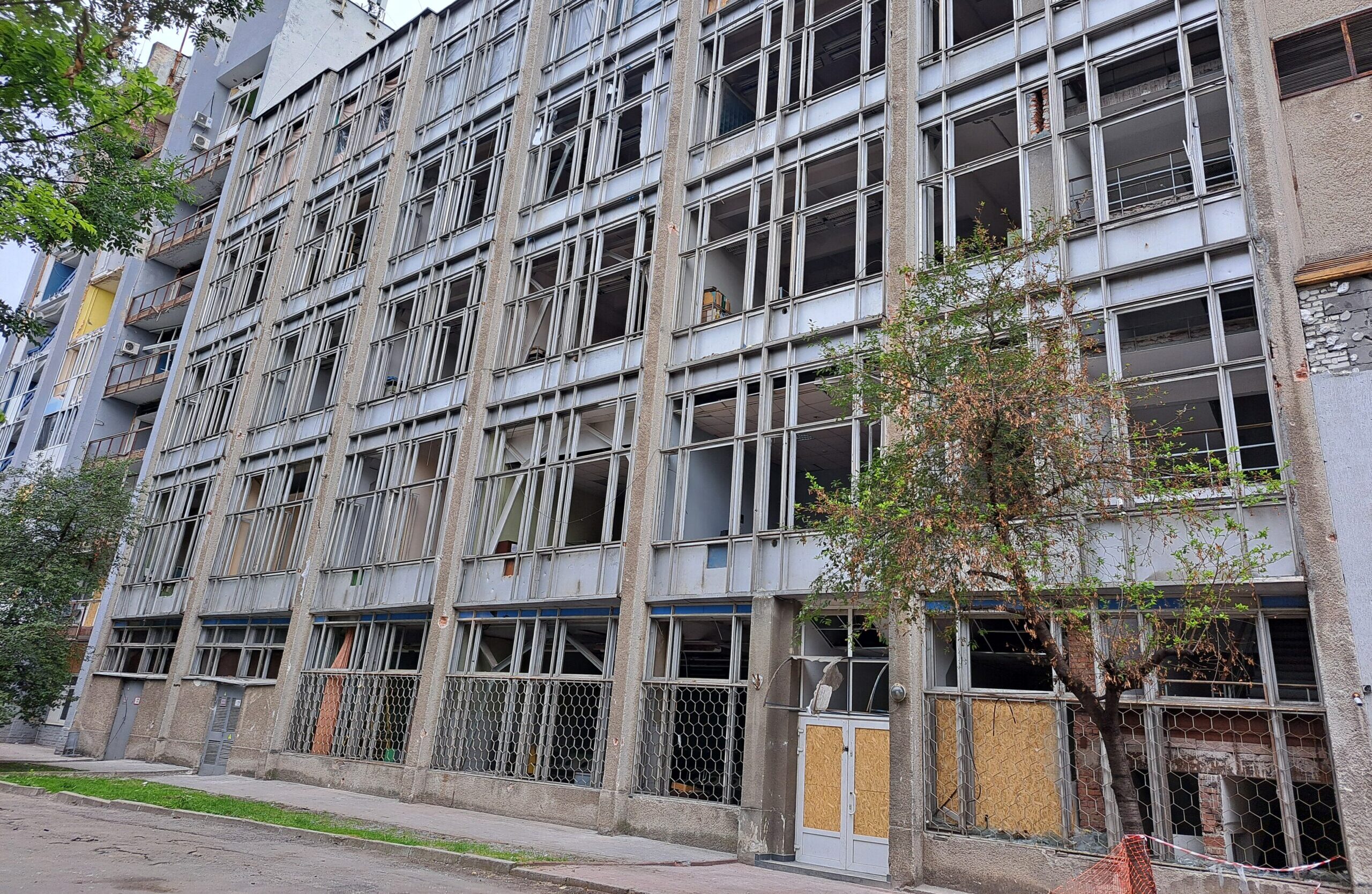
damaged building of elektron in lviv
Explore further

Ukraine’s economy posted its sharpest contraction since the wartime recovery began

Against that backdrop, 48% of companies reported labor shortages in a survey cited by Ukrainska Pravda, without attributing them specifically to the travel change, and Work.ua put the overall median advertised wage up 20% year on year. These are nominal advertised salaries; annual inflation stood at 7.7% in July, so the real increase is smaller.

No one knows how many stayed abroad

No reliable count shows how many young men remained abroad. Social Policy Minister Denys Uliutin cited an estimate from European partners that some 400,000 men aged 18 to 22 left Ukraine between August 2025 and April 2026. However, the estimate does not identify unique individuals or subtract those who later returned, Vasyl Voskoboinyk, head of the NGO Office of Migration Policy, told Ukrainska Pravda.

Voskoboinyk estimated that around 300,000 men in this age group had been working, equivalent to about 2% of Ukraine’s labor force, and said their departures had not caused a broader labor-market collapse.

Available education data show no comparable decline. The Education Ministry recorded a 28% year-on-year rise in university applications, while Kyiv-Mohyla rector Serhiy Kvit said the academy had not seen mass withdrawals. Applications count submissions rather than enrolled or retained students, so the increase indicates continued demand for places rather than a settled outcome.

Voskoboinyk said it was still too early to determine whether the policy had reduced departures among 16- and 17-year-old boys, its stated long-term aim.

Employers widen who they recruit

Employers are recruiting more broadly to fill the gap. Olena Kolesnikova of the Federation of Employers said firms were increasingly willing to hire from groups they had previously overlooked, with 94.4% open to internally displaced people, 91% to veterans, and 88% to people with disabilities.

Keeping young people in Ukraine, she argued, would take more than pay. "The right question is not how to keep young people from leaving, but how to make it worthwhile for a young person to start a career and build a life in Ukraine after they finish studying," she said.
  • ✇Euromaidan Press
  • How did Sberbank’s record dividend end up frozen for Western shareholders?
    Sberbank has reported another jump in profit, on course to pay a dividend even bigger than the record one it handed shareholders earlier this summer. Shareholders in the European Union, the United States, and every other country Moscow calls “unfriendly” will not see a ruble of it.The bank earned more than 1 trillion rubles ($12 billion) in the first half of 2026 alone, up nearly a fifth on the year, a gain in an economy the Central Bank of Russia itself describes as only
     

How did Sberbank’s record dividend end up frozen for Western shareholders?

17 août 2026 à 05:44

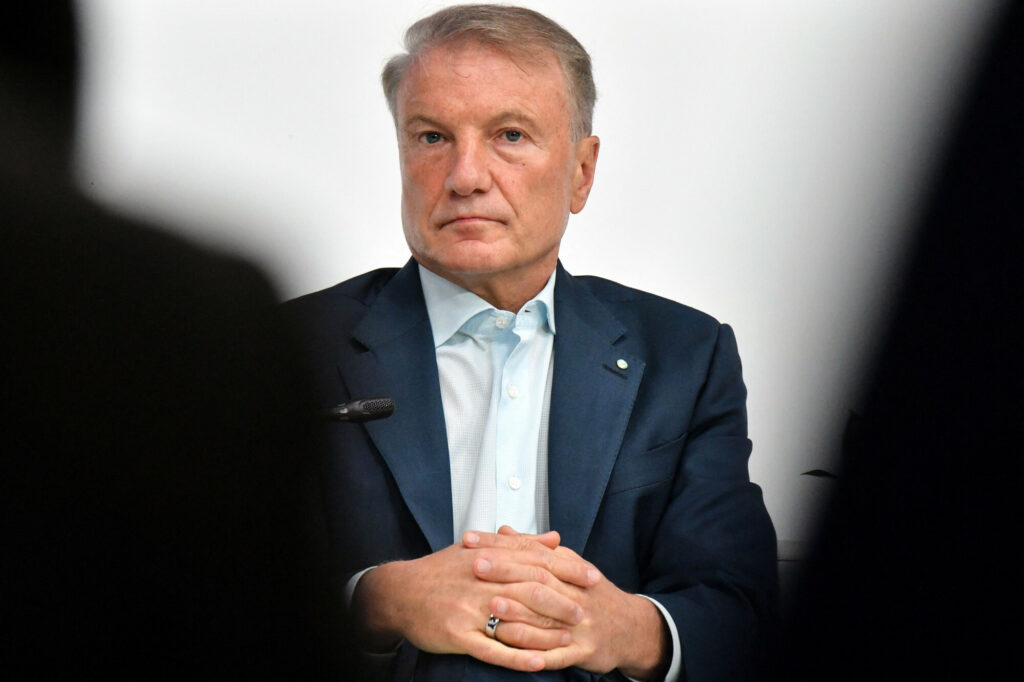
german gref, ceo of sberbank

Sberbank has reported another jump in profit, on course to pay a dividend even bigger than the record one it handed shareholders earlier this summer. Shareholders in the European Union, the United States, and every other country Moscow calls “unfriendly” will not see a ruble of it.

The bank earned more than 1 trillion rubles ($12 billion) in the first half of 2026 alone, up nearly a fifth on the year, a gain in an economy the Central Bank of Russia itself describes as only moderate after a downturn at the start of the year.

For a shareholder in New York or Frankfurt, none of it is money he can spend.

Full-year profit hit a third straight record in 2025. Sberbank pays out half its profit, and the dividend it set for 2025 was already the biggest it had ever paid.

For a shareholder in New York or Frankfurt, none of it is money he can spend. About a quarter of the 2024 payout was set aside in restricted “type-C” accounts for holders from “unfriendly” countries, and nothing has changed since: the dividend is credited to him and then locked.

The Russian state, which owns just over half of Sberbank, faces no such block. It collects roughly half of every payout, while its budget deficit runs past 6 trillion rubles ($71 billion) in five months.

grocery prices in russia, may 2026
Explore further

Russia’s oil money is drying up—so its own people are paying for the war

The market moves the other way

The records are landing on a market that has barely moved in four years. The MOEX index, the main gauge of the Moscow Exchange, had fallen 17 straight weeks by mid-July, its longest losing streak since 1997, back near where it stood the week Russia launched its full-scale invasion in February 2022; anyone who bought Russian shares at the start of the war has made almost nothing since.

Sberbank yields more than 10% on paper, but the stock has fallen about 14% over the past year, so the record dividend does not even cover the price drop, and the foreign holder takes that loss without the payout that might soften it.

Moscow keeps tightening the lock

Russia built the type-C system in 2022 as a countermeasure to Western sanctions that froze its reserves abroad, and officials say the money stays until those reserves are freed.

Within that system, dividends owed to “unfriendly” foreigners are deposited into blocked ruble accounts that they can spend only on Russian taxes, government bonds, and fees.

In June 2026, the block reached ordinary bank deposits after a few words were added to the founding decree: “bank deposits (deposits).” Repayments and interest above 10 million rubles (about $120,000) a month now go the same way.

One court opens a crack

In a ruling dated 14 April 2025, the Supreme Court held that a bank cannot refuse to swap an investor’s frozen depositary receipts—certificates that stand in for shares held abroad—for the actual Russian shares, merely because those securities sit in a blocked type-C account.

A Moscow court then sided with the investor, Vladimir Pelevin, and fined Raiffeisenbank for the delay. The ruling allows a holder to swap receipts for shares, but it does not affect the dividends those shares pay, which still land in type-C.

A compensation scheme, based on a March 2024 decree, pays out only when no “unfriendly” foreigner is anywhere in the ownership chain.

A draft law before Russian lawmakers would allow the state to seize the balances in type-C accounts outright. The decree that created them, in 2022, is titled “On the temporary procedure.”

❌