❌

Vue normale

  • ✇404 Media
  • ‘Flock City PD:’ The Fake Flock-Owned ‘Police Department’ That Searched Real Cameras for Real People
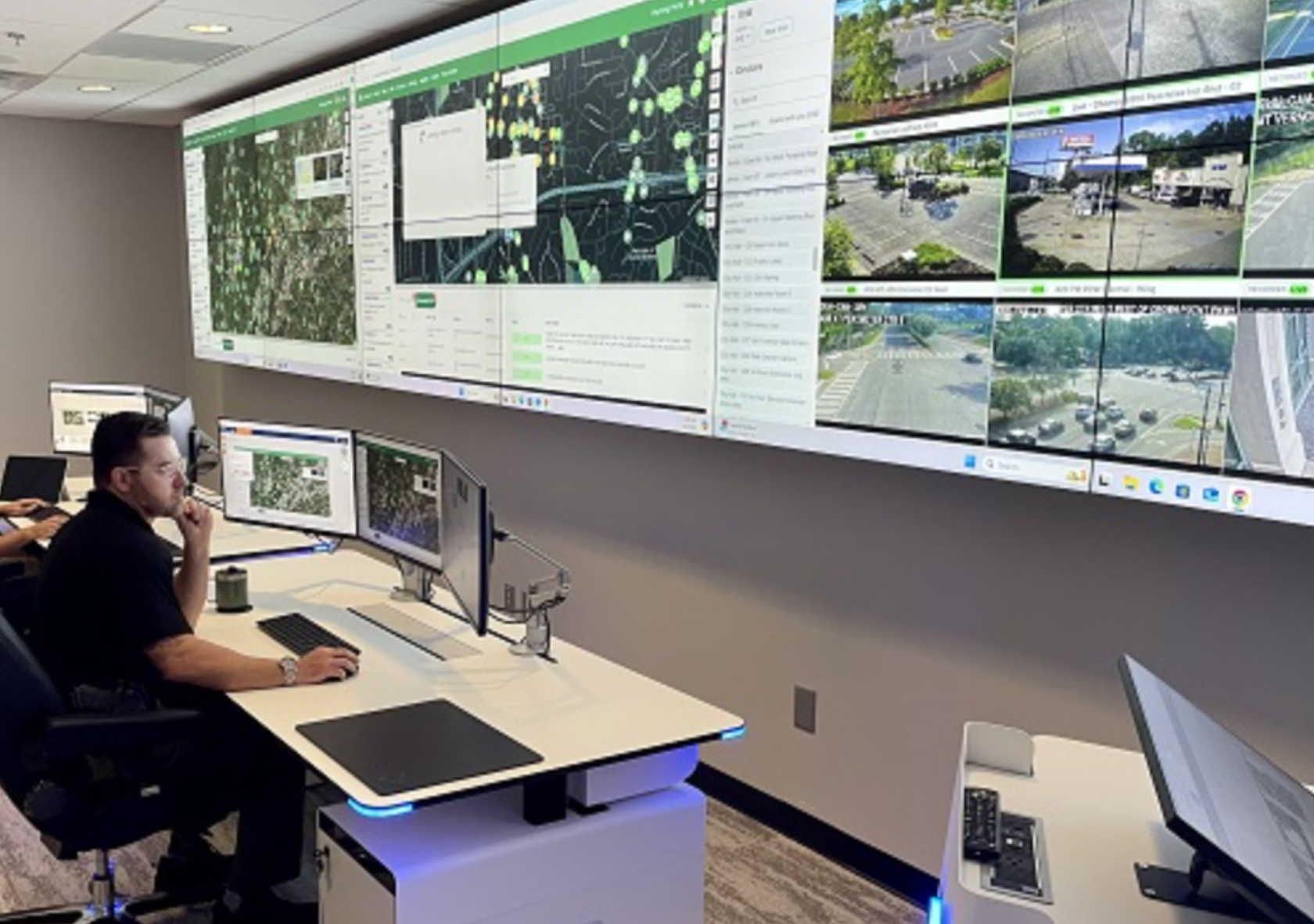
    Flock created a fake police department called “Flock City PD” that it used to search a series of live automated license plate readers in several U.S. cities during demonstrations of its surveillance system’s capabilities, public records show. The records show that Flock City PD searched real cameras for people holding signs, “crowds,” people wearing masks, and more, according to audit logs shared with 404 Media. Flock City PD also searched extremely sensitive queries, which Flock told 404 Med
     

‘Flock City PD:’ The Fake Flock-Owned ‘Police Department’ That Searched Real Cameras for Real People

17 septembre 2026 à 14:07
‘Flock City PD:’ The Fake Flock-Owned ‘Police Department’ That Searched Real Cameras for Real People

Flock created a fake police department called “Flock City PD” that it used to search a series of live automated license plate readers in several U.S. cities during demonstrations of its surveillance system’s capabilities, public records show. The records show that Flock City PD searched real cameras for people holding signs, “crowds,” people wearing masks, and more, according to audit logs shared with 404 Media. 

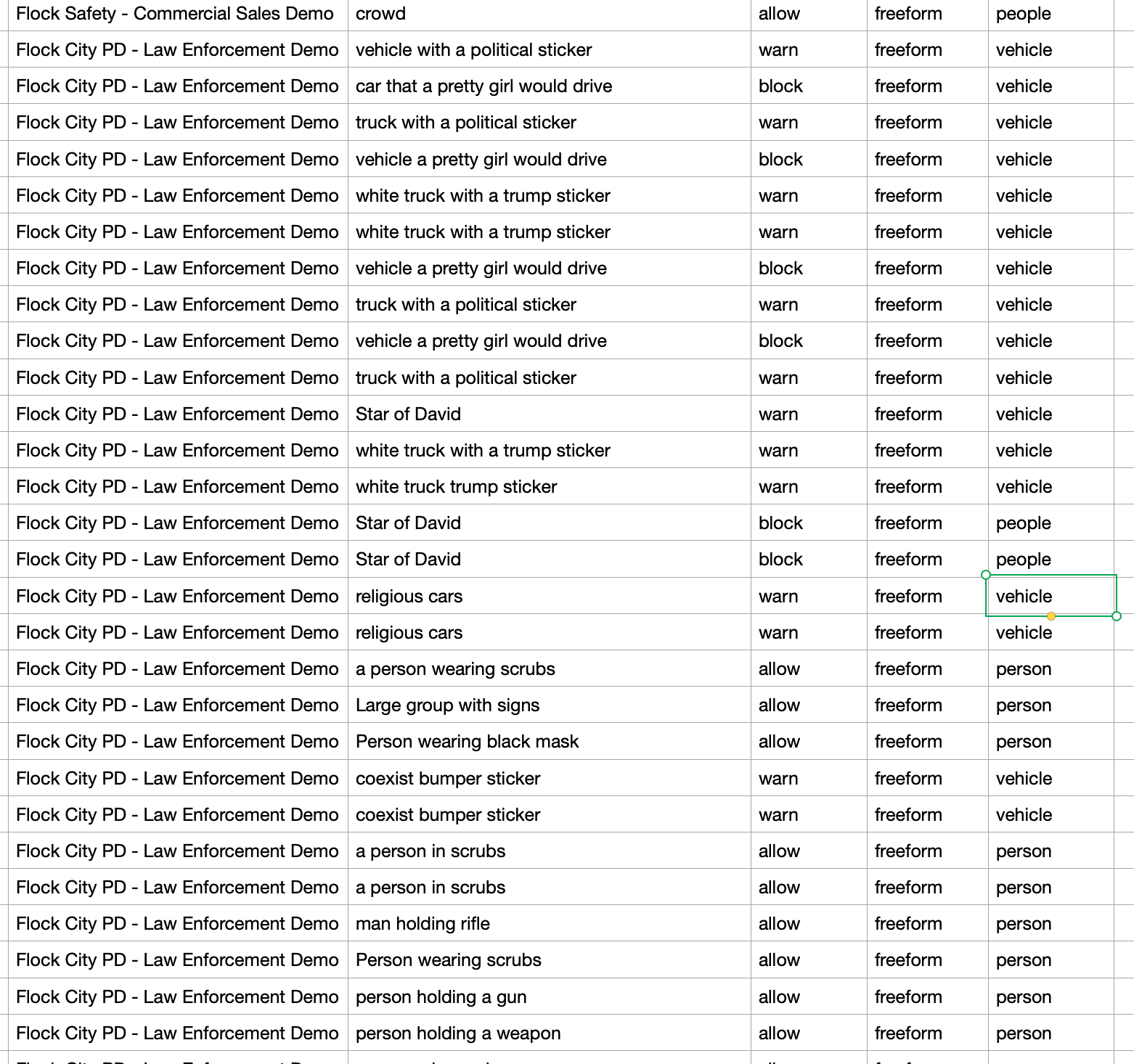
Flock City PD also searched extremely sensitive queries, which Flock told 404 Media were done to prove that the system would not actually perform these searches and that its moderation tools worked. These searches included “coexist bumper sticker,” “vehicle a pretty girl would drive,” “white truck with a trump sticker,” “religious cars,” “Star of David,” and “don’t tread on me flag.” 

Flock employees accessing live cameras for sales purposes, and showing police specifically how to do dubious searches, have become political flashpoints in the backlash against the company. In April, we reported that Flock employees regularly accessed live cameras in Dunwoody, Georgia, at a children’s gymnastics room, at a playground, in a school, at a pool, and in a Jewish community center in the city while demoing the company’s tech to cops. Audit logs obtained by Jason Hunyar, the Dunwoody resident who originally discovered this access, show that an entity called “Flock City PD” also searched live Dunwoody cameras for all sorts of politically contentious topics during sales demos with police. This included searches for behavior that is expressly protected by the First Amendment. 
‘Flock City PD:’ The Fake Flock-Owned ‘Police Department’ That Searched Real Cameras for Real People
The Flock City PD searches. "Allow" means the search was allowed, "warn" means a popup box appeared, and "block" means the search was blocked

Flock accounts called “Flock City PD - Law Enforcement Demo,” “Flock Intelligence,” and “Flock Safety - Commercial Sales Demo” ran searches in Dunwoody and Bryan, Texas, as well as a handful of other unknown jurisdictions, for “coexist bumper sticker,” “Star of David,” “person wearing a mask,” “crowd,” “vehicle with a political sticker,” “man holding rifle,” “person in scrubs,” “don’t tread on me flag,” “car that a pretty girl would drive,” and “vehicle with trump bumper sticker,” among other searches. All of these were “FreeForm” searches, meaning Flock’s AI image recognition algorithm would determine what would be returned. The audit logs show that not all of these searches were allowed by Flock’s system, and that its moderation tools either blocked some of the searches or displayed a warning prompt before doing the search. 

404 Media has previously reported that Flock explicitly taught police how to surveil the No Kings protests, and some of these FreeForm searches are similar to others we reported that real police departments performed themselves.

A Flock spokesperson told 404 Media that some of the searches were done specifically to show the types of searches cops shouldn’t do, and to show some of the guardrails Flock had put in place to prevent these searches. For example, the searches for “vehicle a pretty girl would drive,” is listed as having a moderation “block.” A search for a person with “Star of David” was also listed as having a moderation block, but a search for “Star of David” on a vehicle raised a warning box about the nature of the search before allowing it to proceed.

The searches highlight how Flock employees regularly performed real, invasive searches on real cameras to demonstrate how its technology works; residents of Dunwoody have repeatedly told their city council that they feel like their privacy is being violated as an experiment and sales demonstration for a private company. After Hunyar and 404 Media reported on Flock cameras being accessed in sensitive locations by Flock employees, the company and the city said Dunwoody’s cameras would no longer be used for sales demonstration purposes. The Flock spokesperson said that these demonstrations were done to show police officers what not to do, and said that the “Flock City PD” account no longer searches on any real cameras. They added, “the Flock City PD demo environment is now isolated, and law enforcement agencies cannot form a sharing relationship with it.”

A recent Flock training webinar seen by 404 Media shows a Flock employee logged into the Flock City PD account having access to cameras that seem to be explicitly for training purposes, with names like “Flock Warehouse - LPR Demo Cameras,” “Circle K - Demo,” “Tennessee Demo Cameras,” “Scottsdale AZ Demo Video Cameras,” and “ALPR Demo.”   

“Flock City PD is a demo and testing organization name used for law enforcement demonstrations and for our development engineers to conduct testing. Those searches were part of testing and validating FreeForm search moderation and related safeguards. These were not investigative searches conducted by a customer agency,” the Flock spokesperson told 404 Media. “That is also the context for prompts such as ‘Star of David’ or ‘large group with signs.’ These types of prompts are testing the safeguards of the system — that it appropriately blocks offensive or sensitive searches, or flags searches that may implicate First Amendment protections. Our policy is designed so that offensive or slur-based searches do not yield results, and prompts that may implicate First Amendment concerns trigger notice and audit review. As you can see in your screenshot — the safeguards we built are working.” 

The audit logs show, however, that many of the sensitive searches were not blocked. Searches for “crowd,” “a person wearing scrubs,” “large group with signs” were all explicitly allowed. More sensitive searches, such as for “vehicle with trump bumper sticker,” “don’t treat on me flag,” “coexist number sticker,” “religious cars,” and “Star of David” had a warning box pop up, but Flock says in a blog post published in April that police can bypass this: “Searches for specific content that could potentially implicate First Amendment rights will trigger a pop-up warning the user and advising that this search will be sent to a superior for auditing if the user chooses to proceed.”

In a blog post explaining how it tests Flock, the company wrote, “some vehicle bumper stickers contain words and symbols indicating religious affiliations or nationalities, and the moderation policy needs to recognize, flag, and block these searches. Just like vehicle identification, these algorithms need to be trained in the real world using real-life examples. Those might be training and demo searches for things like ‘Cross bumper sticker,’ ‘Star of David,’ or ‘Japanese flag.’ These searches, if performed, should not return results.”

Dunwoody residents have made clear that they understand that Flock needs to test its systems, but they did not sign up to be guinea pigs for a surveillance company. 

“Flock's claims that they impose restrictions on what users can search for in their database provides the opposite assurance of what they seem to purport. In doing so, they admit that their dynamic surveillance network does in fact capture this sensitive information, and that the gate to that information is controlled solely by the policies of a for-profit corporation,” Hunyar told 404 Media. “As shown in previous demos, their willingness to continuously monitor and catalogue the actions of law abiding citizens exercising their constitutionally protected rights should worry anyone who plans to exercise them now or in the future."
  • ✇404 Media
  • Hackers Stole Flock’s Camera Software, Revealing How the Company Tracks Cars and People
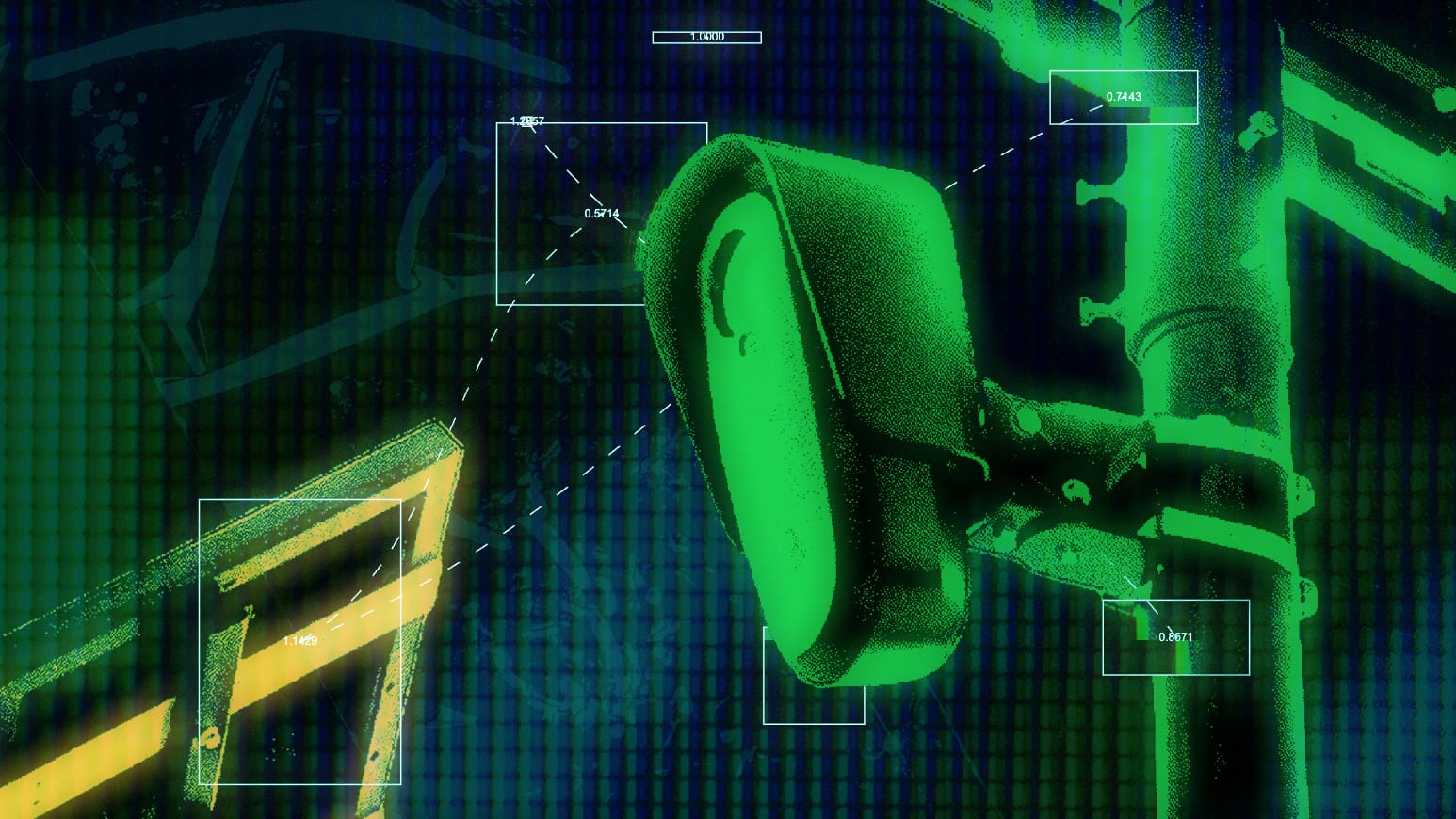
    This article was produced in collaboration with WIRED. You can read their version of the article here.Hackers ripped down a Flock camera above a roadway, made a near-complete copy of the data stored inside it, and shared the files with 404 Media and WIRED, revealing in new detail how exactly Flock Safety’s cameras track the movements of both vehicles and people. The hackers say they are also publishing details on how they managed to obtain the software, in the hopes that other people may copy th
     

Hackers Stole Flock’s Camera Software, Revealing How the Company Tracks Cars and People

16 septembre 2026 à 06:30
Hackers Stole Flock’s Camera Software, Revealing How the Company Tracks Cars and People

This article was produced in collaboration with WIRED. You can read their version of the article here.

Hackers ripped down a Flock camera above a roadway, made a near-complete copy of the data stored inside it, and shared the files with 404 Media and WIRED, revealing in new detail how exactly Flock Safety’s cameras track the movements of both vehicles and people. The hackers say they are also publishing details on how they managed to obtain the software, in the hopes that other people may copy them.

Charges Against Man Who Destroyed 3D-Printed ‘Decoy’ Flock Camera Drastically Reduced After State Admits It Was Not Very Valuable

15 septembre 2026 à 11:43
Charges Against Man Who Destroyed 3D-Printed ‘Decoy’ Flock Camera Drastically Reduced After State Admits It Was Not Very Valuable

In a move that should surprise zero people but is worth noting nonetheless, three felony charges against a man who destroyed a police officer’s “decoy” 3D-printed Flock camera have been reduced to misdemeanors after the police admitted the fake camera was not worth more than a thousand dollars.

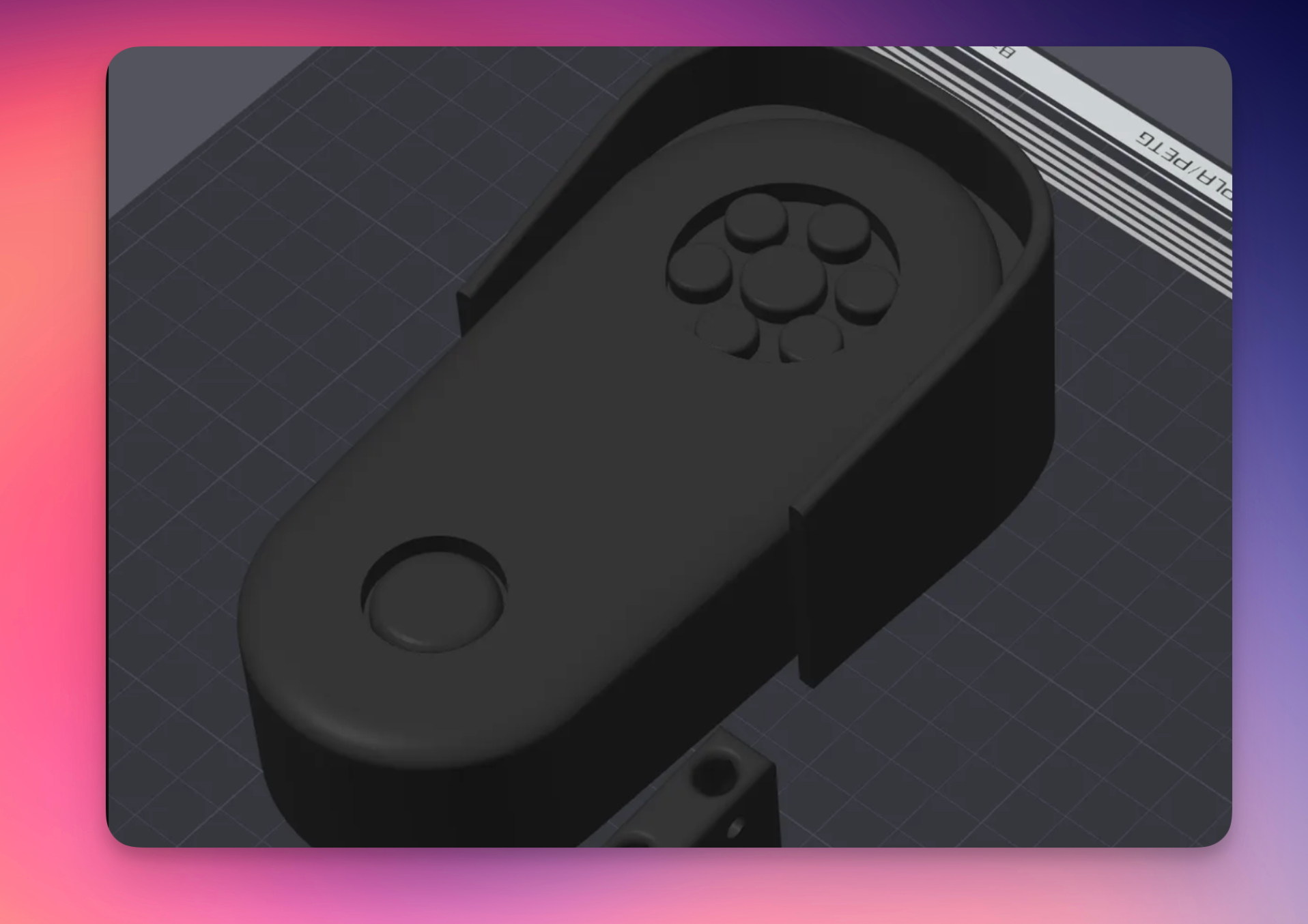
In August, we wrote about the Oviedo, Florida Police Department’s strategy to catch would-be Flock vandals by 3D-printing shells of Flock cameras, attaching them to poles around the city, and then having human cops monitor the poles for multiple nights. The police eventually caught a man named Evan Meyer, who allegedly knocked one of these decoy cameras off a pole and destroyed it with garden shears. Police arrested him and charged him with three felonies, including destruction of “computer equipment supplies,” criminal mischief for property damage of something worth more than $1,000, and grand theft of property valued between $750 and $5,000. 

Charges Against Man Who Destroyed 3D-Printed ‘Decoy’ Flock Camera Drastically Reduced After State Admits It Was Not Very Valuable

All three of these charges were felonies, and the police department and 404 Media have shared a lengthy email exchange in which the department refuses to release any records about how the camera was made because of an ongoing criminal investigation associated with the destruction. 

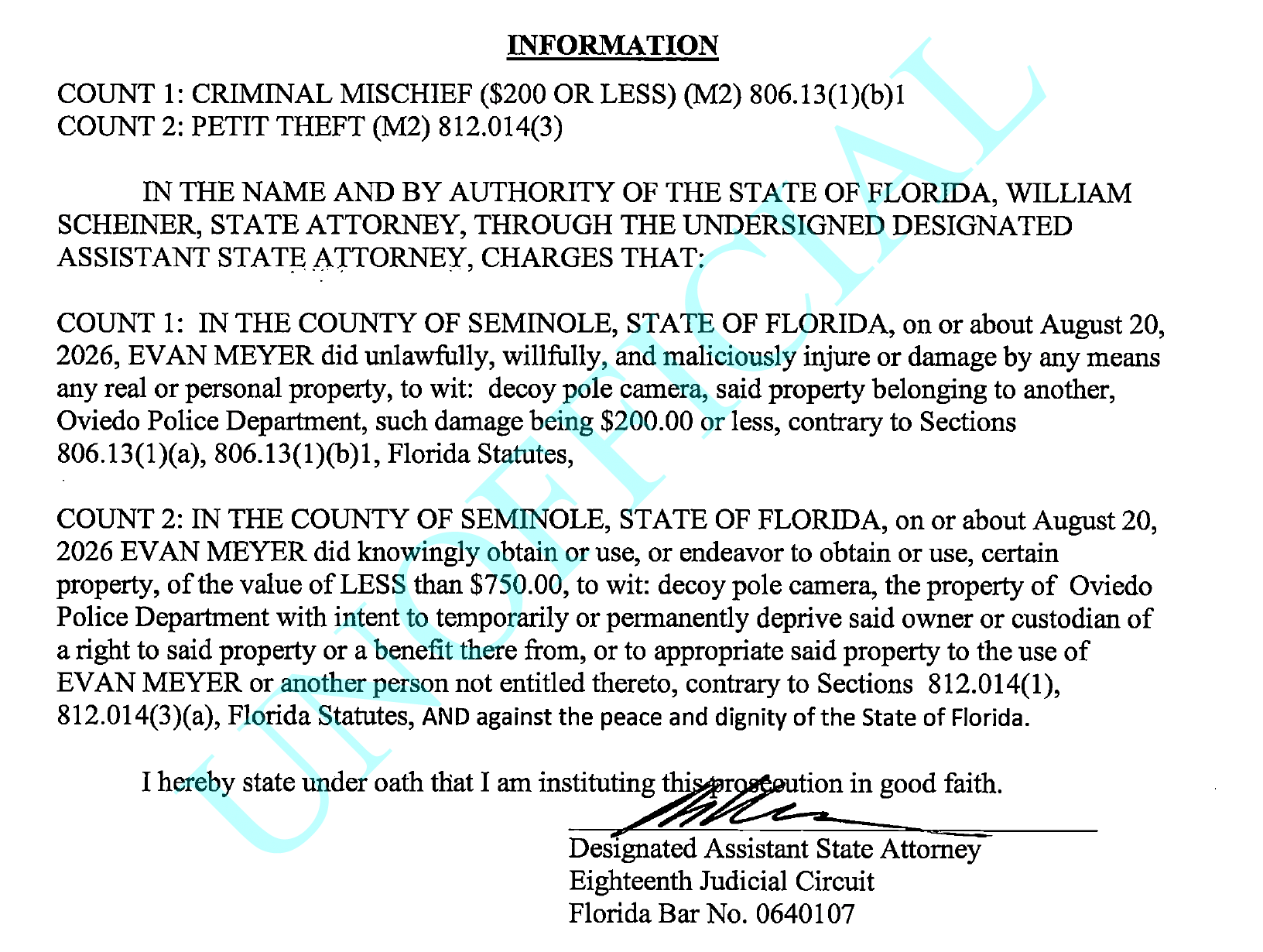
This week, however, Meyer’s charges were drastically reduced in a filing by an assistant state attorney. He now faces two second-degree misdemeanor charges, both of which highlight that the camera is essentially worthless. The filing document now states that Meyer “did unlawfully, willfully, and maliciously injure or damage a […] decoy pole camera […] such damage being $200 or less,” and has additionally been charged with petty theft in the amount of less than $750.  

  • ✇404 Media
  • Cops Search Thousands of Flock Cameras for Reasons of ‘LMAO,’ ‘IDK,’ ‘Hehe,’ and ‘asdfg’
    Last summer, a cop with the Lake County, Indiana Sheriff’s Department used Flock’s surveillance search engine to look for a license plate across more than 19,000 cameras in 1,558 cities and towns. The cop’s stated reason for the search, according to a record of Flock’s system, was “LMAO.” The cop is one of dozens who put gibberish, jokes, or other nonsense into Flock’s “reason” box, highlighting the casualness and lack of care some cops have when searching an incredibly powerful surveillance sys
     

Cops Search Thousands of Flock Cameras for Reasons of ‘LMAO,’ ‘IDK,’ ‘Hehe,’ and ‘asdfg’

14 septembre 2026 à 11:51
Cops Search Thousands of Flock Cameras for Reasons of ‘LMAO,’ ‘IDK,’ ‘Hehe,’ and ‘asdfg’

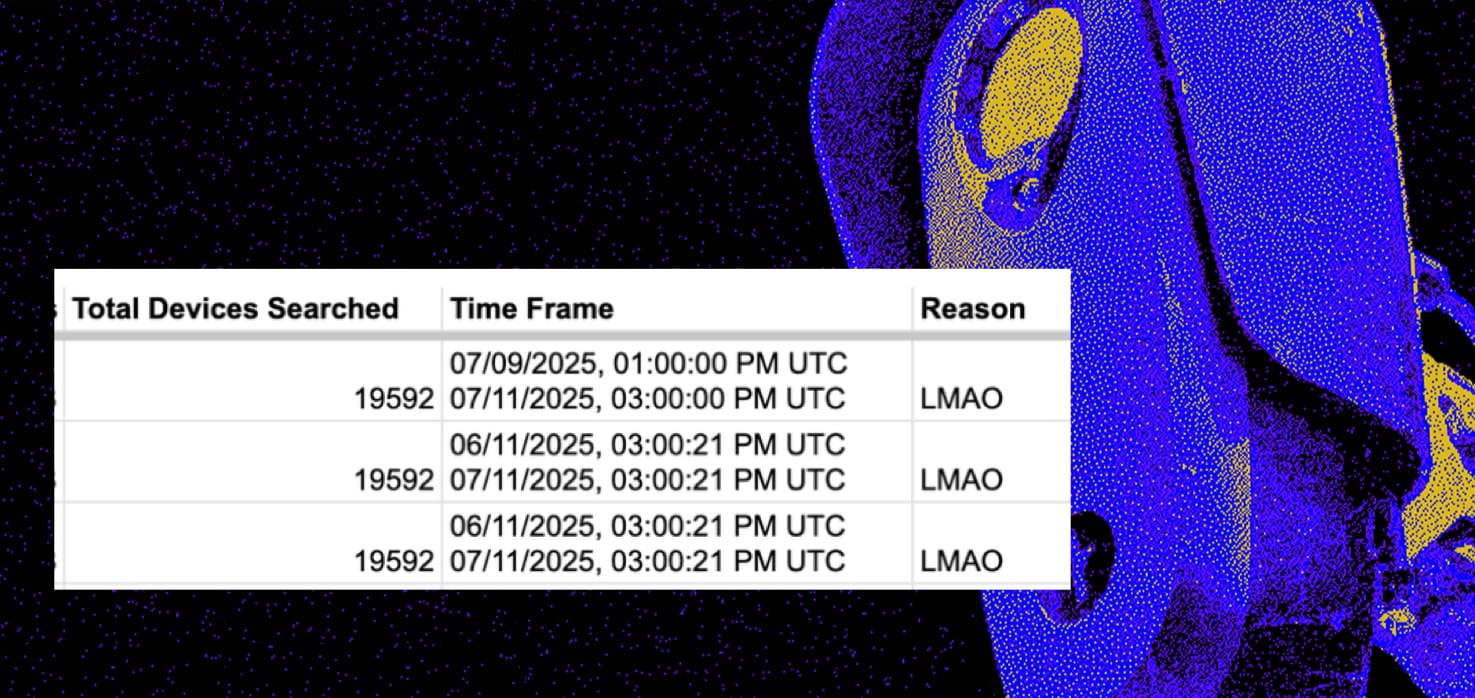
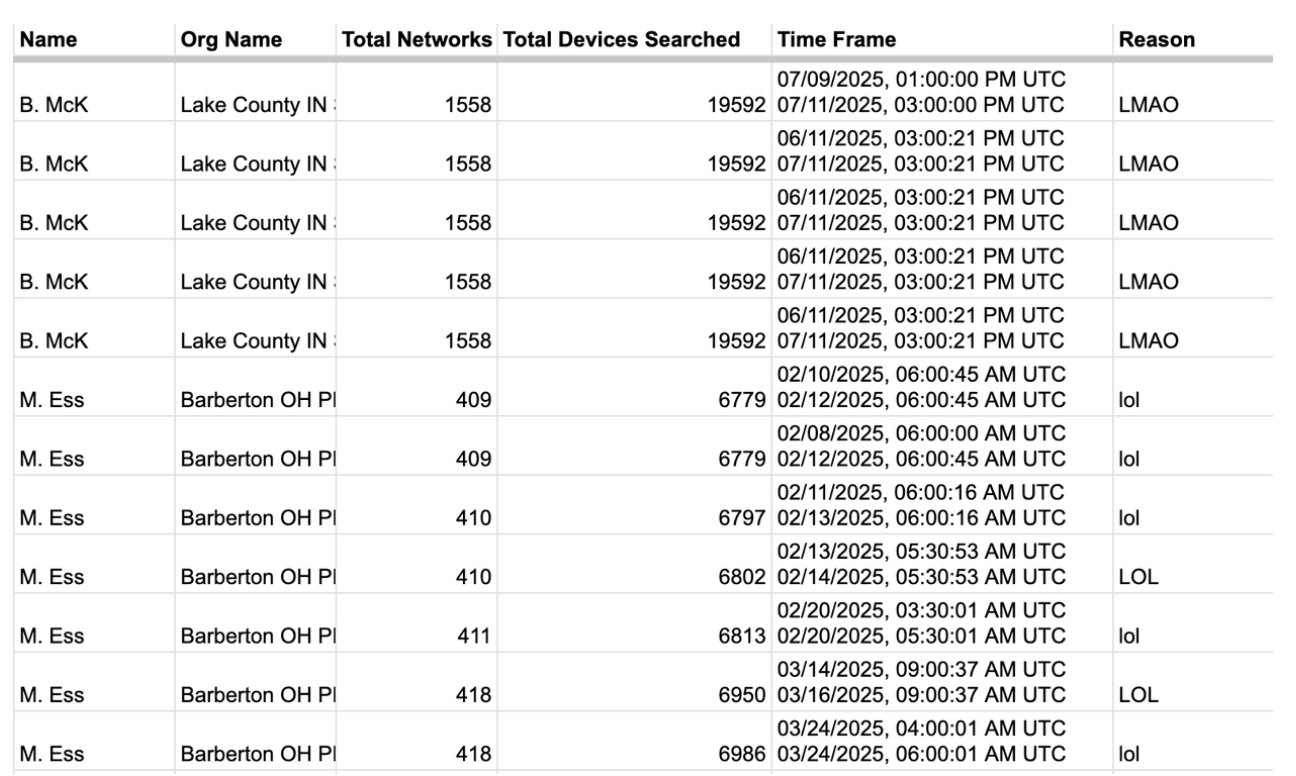
Last summer, a cop with the Lake County, Indiana Sheriff’s Department used Flock’s surveillance search engine to look for a license plate across more than 19,000 cameras in 1,558 cities and towns. The cop’s stated reason for the search, according to a record of Flock’s system, was “LMAO.” 

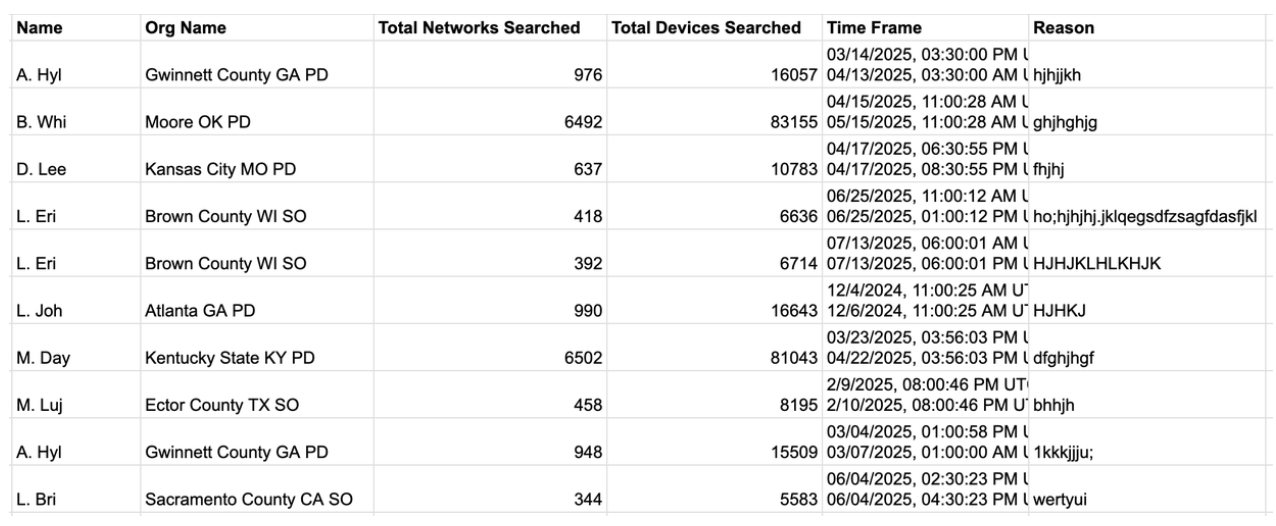
The cop is one of dozens who put gibberish, jokes, or other nonsense into Flock’s “reason” box, highlighting the casualness and lack of care some cops have when searching an incredibly powerful surveillance system. This is on top of the thousands upon thousands of cops who simply wrote something like “investigation,” “test,” or left the box blank as their search “reason,” according to a new analysis by the Electronic Frontier Foundation and shared with 404 Media. 

EFF’s investigation found cops across dozens of jurisdictions writing “LMAO,” “LOL,” “Hehe,” “Haha,” “idk,” “blah,” “TBD,” and “robbery I don’t remember the case number leave me alone” in Flock’s “reason” box for searches. They found cops writing “idiot,” “fuck this new search engine,” “dickhead,” “shithead,” and “WEIRD KID” in the reason box. And they found an entire class of police button mashers, who ran searches for reasons of “asdfg,” “gyghkkghghjkghjk,” “jhjhjkhj,” “jkhhkjhjk,” “nmbvcbnm,” and so on and so forth. The searches came from police departments across the country from 2023 through late 2025, when Flock changed how the “reason” box in its search system functions.

Cops Search Thousands of Flock Cameras for Reasons of ‘LMAO,’ ‘IDK,’ ‘Hehe,’ and ‘asdfg’

As Flock’s automated license plate reader system comes under fire for privacy abuses, the perception of mass surveillance, and cases of police abuse, the company and police departments around the country have tried to paint those who want to limit the technology as wanting to take away a powerful tool that police use to solve very serious crimes. While Flock has been used in high profile cases, the searches published by the EFF and the cases of abuse reported by 404 Media and other news outlets around the country show that police often aren’t taking their responsibilities seriously.

“When law enforcement and tech salespeople pitch ALPRs to city councils, they stick to a familiar script. They trumpet the technology, which is often provided by private companies like Flock Safety, Motorola Solutions, or Axon, as an essential tool for solving high-stakes crimes, such as car jacking, kidnapping, or murder,” the EFF wrote in a blog post about its findings. 

“Police are routinely searching the Flock database without providing any legitimate justification, making a mockery of our civil liberties by logging reasons like ‘LOL,’ ‘LMAO,’ ‘sexy,’ and ‘idk’ to access sensitive ALPR location data […] With no warrant requirements, limited guardrails, and deficient audit processes, ALPR databases have fostered a culture of unrestricted access to everyone’s location information. This culture of abuse has allowed police to treat a mass surveillance network like their own personal search engine, permitting the tracking of the movements of everyday citizens for low-level complaints, personal whims, and sometimes, seemingly, for the lols.”

Cops Search Thousands of Flock Cameras for Reasons of ‘LMAO,’ ‘IDK,’ ‘Hehe,’ and ‘asdfg’

The EFF was able to do this analysis because of the way that Flock documents police use of the system. Each time a search is performed, a record of it is saved in the Flock system, which can be obtained by the public using government records requests. These audit logs show hundreds of thousands of searches of the system; after 404 Media and other news outlets used these types of logs to show police using the Flock system to look for undocumented immigrants on behalf of ICE, a woman in Texas who had an abortion, and protesters, cops were warned by government surveillance centers to be “as vague as permissible” about the reasons for their searches. Late last year, Flock changed its system; rather than having to type in a reason, Flock now has a drop-down list of prepopulated reasons, which the EFF called “a loss for transparency.” 

The EFF contacted departments whose cops performed these “joke” searches, and found that many of them did not do anything about cops who button mashed or put jokes. Cops who wrote “hehe” and “idk” were “counseled,” they were told. A cop who wrote “idiot” got away with it because by the time the department learned about it, it had passed a 90-day time period in which the cop’s union contract allowed for internal investigations. Several other police departments said they would investigate the behavior. The Fishers Police Department in Indiana said that a detective who searched Flock for reasons of “blah” only did so “when he has issues with the technology,” or when “the technology is not moving fast enough for him.” A police department said it investigated a cop who wrote “driving around being weird” in the reason field but found it was for “legitimate public safety purposes.”

“The fact that these searches were not only missed by the agency supervising the officer, but by the often thousands of other agencies whose systems were searched, demonstrates how agencies cannot be trusted to oversee themselves,” the EFF wrote. “Mass surveillance is incompatible with a free society, and especially so when the people with access to this data are treating it like a joke.”   


❌