Vue normale

  • ✇404 Media
  • ‘Own the Narrative’: Leaked Flock Guide Shows How It Teaches Cops to Promote Its Tech

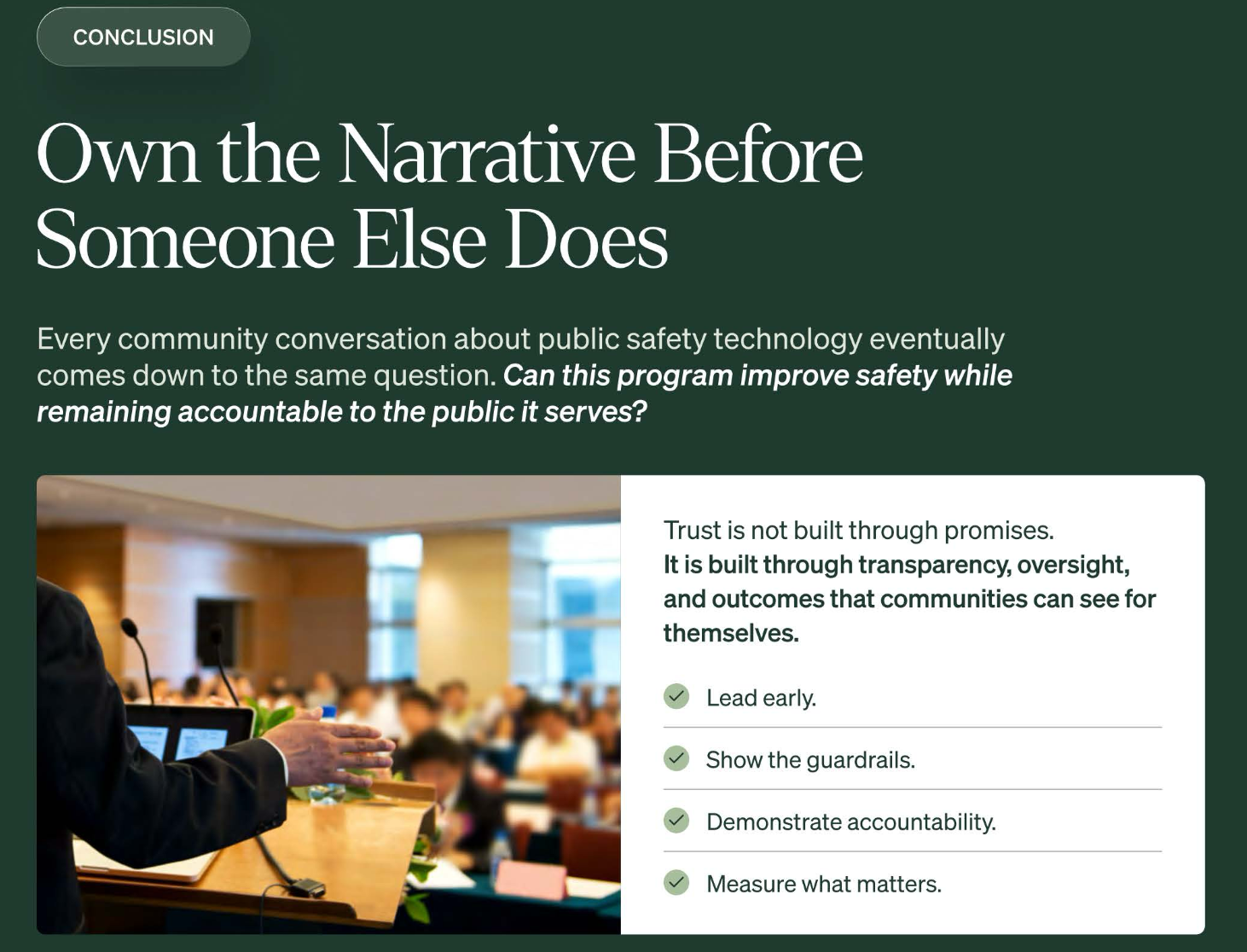
    404 Media has obtained a coaching guide that Flock surveillance gives to police about “how to speak to city councils about public safety technology.” The handbook highlights how Flock and police team up to convince cities to buy and keep its automated license plate reader technology, even when there is widespread public opposition to it, and encourages police to “own the narrative before someone else does” by championing the technology before citizens can oppose it during public comment periods.
     

‘Own the Narrative’: Leaked Flock Guide Shows How It Teaches Cops to Promote Its Tech

3 août 2026 à 13:13
‘Own the Narrative’: Leaked Flock Guide Shows How It Teaches Cops to Promote Its Tech

404 Media has obtained a coaching guide that Flock surveillance gives to police about “how to speak to city councils about public safety technology.” The handbook highlights how Flock and police team up to convince cities to buy and keep its automated license plate reader technology, even when there is widespread public opposition to it, and encourages police to “own the narrative before someone else does” by championing the technology before citizens can oppose it during public comment periods.

The PDF guide notes that the general public and cities now “increasingly expect transparency, oversight, and accountability alongside public safety outcomes,” and tells police to not argue with people who believe that Flock’s license plate readers are “mass surveillance.”

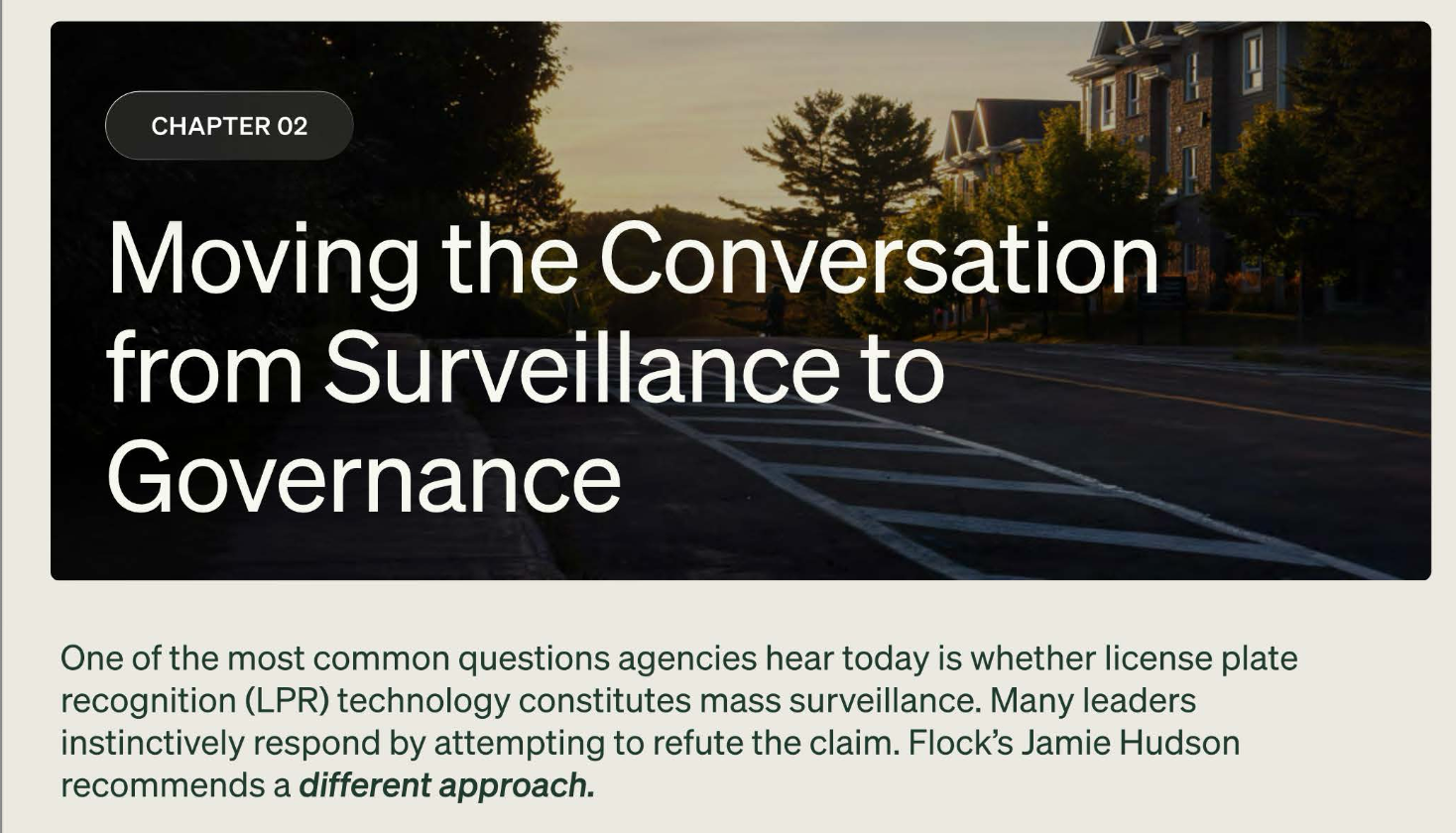
“One of the most common questions agencies hear today is whether license plate recognition (LPR) technology constitutes mass surveillance. Many leaders instinctively respond by attempting to refute the claim. Flock's Jamie Hudson recommends a different approach,” the guide reads.

‘Own the Narrative’: Leaked Flock Guide Shows How It Teaches Cops to Promote Its Tech

“Don’t avoid the concept of mass surveillance because you’re not going to convince opponents that it’s not,” the company recommends. Flock tells law enforcement agencies they need to try to convince city council and city managers that the technology is worthwhile before meetings with the public occur; that they need to have a “carefully scripted presentation” ready to go; and that police need to say they want Flock because they want to keep the community safe: “You care about your community. That’s why you’re bringing this in.” 

Flock began offering this guide as part of a broader attempt to coach police on how to push back against criticism of its policies and security practices, many of which 404 Media has investigated and shed light on. These include the fact that Flock data was regularly making its way to Immigrations and Customs Enforcement (ICE), often in violation of sanctuary city and state laws; that Flock was used to search 83,000 cameras nationwide for a woman who had an abortion in Texas; and that Flock has been used by police to stalk people and surveil protesters. These investigations and broader concern over the surveillance state have led many cities to hold city council meetings to reconsider their Flock contracts, and this Flock-produced guide is an attempt to help police shape the narrative in a way that will either convince cities to buy Flock or to keep their contracts. 

The guide is associated with a Flock webinar for police called “How to Speak to City Councils: Meeting the Moment with Confidence,” which included modules on “how to address misinformation with clarity.” After public opposition late last year, the company began to offer Q&A sessions with its CEO, Garrett Langley, for city council members, police, and mayors to address what Flock described as an “era of unprecedented misinformation.” 

“The recent headlines about our company are largely a result of this environment,” the company told cities. 

“Opponents have a very carefully scripted narrative. They come prepared. You should also have a carefully scripted presentation that addresses those concerns ahead of time,” the guide says. “The agencies that navigate these conversations successfully rarely wait until a council meeting to educate stakeholders. They brief city managers early. They meet with council members before votes occur. They share policies proactively and answer questions before public comment periods become the first introduction to the program.” 
‘Own the Narrative’: Leaked Flock Guide Shows How It Teaches Cops to Promote Its Tech

The guide also tells police that they can convince city councils that Flock is worth the monetary cost by conveniently not focusing on how much the cameras cost, but by “reframing the financial discussion itself” to focus on “the cost of unresolved crime.” Flock also writes that much of the opposition to its technology is happening because people “do not understand how it works or how it is governed.” This idea is one that has been regularly repeated by Langley over the last several months. 

Surveillance companies regularly try to get police to act as quasi salespeople and spokespeople for their companies, pitting a private company and taxpayer-funded law enforcement on one side and citizens on the other. “For years, surveillance vendors like Flock Safety have shaped policy debates cities are supposed to run independently — staging council ‘prep calls’ and exploiting a basic asymmetry: the vendor controls the facts, and city staff are rarely positioned to challenge them,” Sarah T. Hamid, director of strategic campaigns at the Electronic Frontier Foundation told 404 Media after reviewing the guide. “The financial interest is obvious. Flock isn’t just selling surveillance, it’s scripting the public case for buying it. Because Flock treats public trust as a messaging problem rather than a governance outcome, that script keeps officials focused on ‘accountability’ in the abstract instead of the concrete harms and documented abuses its network has already enabled.”

404 Media has watched numerous city council meetings around the country where police talk about how Flock is a critical law enforcement system for them; in many cases, a police chief will speak about Flock and then introduce a Flock employee to give a presentation about the surveillance system. On Monday, 404 Media published an interview with a former Flock government affairs manager who regularly pitched the technology to cities at public meetings. An activist who has been pushing back against Flock in their community and who shared the guide document with 404 Media said that they have regularly seen the strategies suggested by Flock deployed in city council meetings they have attended and watched. 404 Media agreed to keep the activist anonymous to protect them from retaliation.

“I think this document shows a coordinated effort from Flock Safety to compel law enforcement agencies to convince our elected leaders to represent their interests as a company rather than the interests of concerned citizens,” they said. “I have watched many meetings locally in my city and my state and across the country, and you can see the techniques used in this ebook in the presentations given by law enforcement. Pivoting conversations away from concerns about mass surveillance and directing them towards procedure and governance is a vehicle that's used to downplay the concerns of privacy-minded citizens. We have every right to expect our elected leaders to listen to us, and it's very common to see city councils vote with a supermajority in favor of approving Flock contracts despite standing-room only attendance at city council meetings with little to no public support for this product.”

The guide specifically highlights several supposed success stories in which communities had very real concerns about Flock but ultimately decided not to get rid of the technology. For example, it highlights how Flock was able to get a vote in favor of its technology in Oakland, California, despite it being “one of the most scrutinized public safety technology debates in the state,” with “more than 140 public comments” and opposition from the city’s Privacy Advisory Commission: “The conversation shifted when officials stopped asking the public to trust the technology and started showing how the technology could be audited, reviewed, and held accountable.” 

It also tells the story of Richmond, California, which allowed its Flock contract to temporarily lapse after the city’s cameras were included in the company’s national lookup tool. City officials there worried that their cameras’ data would be accessed by ICE, in violation of California and local law. “After concerns emerged around data sharing and sanctuary city policies, the city's program was paused and subjected to intense public scrutiny,” the Flock guide says. “Rather than relying on generalized claims about effectiveness, department leadership presented two and a half years of local results, including 274 arrests and 259 vehicle recoveries connected to the program. The council ultimately voted 4-3 to reinstate the system.”

Flock did not immediately respond to a request for comment. 

  • ✇404 Media
  • Inside an AI TikTok Shop Slop Factory That Shills Supplements Recalled By the FDA
    In February, a content creator from New Zealand named Harry Chang posted a YouTube video called “This AI TikTok Shop Video Made Me $67,420 (Here’s How).” In the video, Chang and another YouTuber, Jimmy Farley, describe how Chang created a viral marketing video for a supplement company called Rosabella called the “Nigerian SECRET to CLEAN LIVER!!”Chang explains that he copy-pasted the script from a video posted by an account called “liverboosthub11” and tweaked it to suggest the supplement he was
     

Inside an AI TikTok Shop Slop Factory That Shills Supplements Recalled By the FDA

30 juillet 2026 à 10:51
Inside an AI TikTok Shop Slop Factory That Shills Supplements Recalled By the FDA

In February, a content creator from New Zealand named Harry Chang posted a YouTube video called “This AI TikTok Shop Video Made Me $67,420 (Here’s How).” In the video, Chang and another YouTuber, Jimmy Farley, describe how Chang created a viral marketing video for a supplement company called Rosabella called the “Nigerian SECRET to CLEAN LIVER!!”

Chang explains that he copy-pasted the script from a video posted by an account called “liverboosthub11” and tweaked it to suggest the supplement he was marketing is “something that’s been used in Asia or Africa for a long time that a lot of people don’t know about in America.”. In Google’s VEO 3, he created an AI-generated Black woman wearing a surgical mask in the foreground of the video, pointing up at another AI-generated Black woman (created in a tool called HeyGen) wearing a pink dress and standing on a stage. He directed the woman in the foreground to have a “strong African American accent,” and to say, “Why is nobody talking about what this hoe said?! If you’ve got issues with that belly, must watch!” 

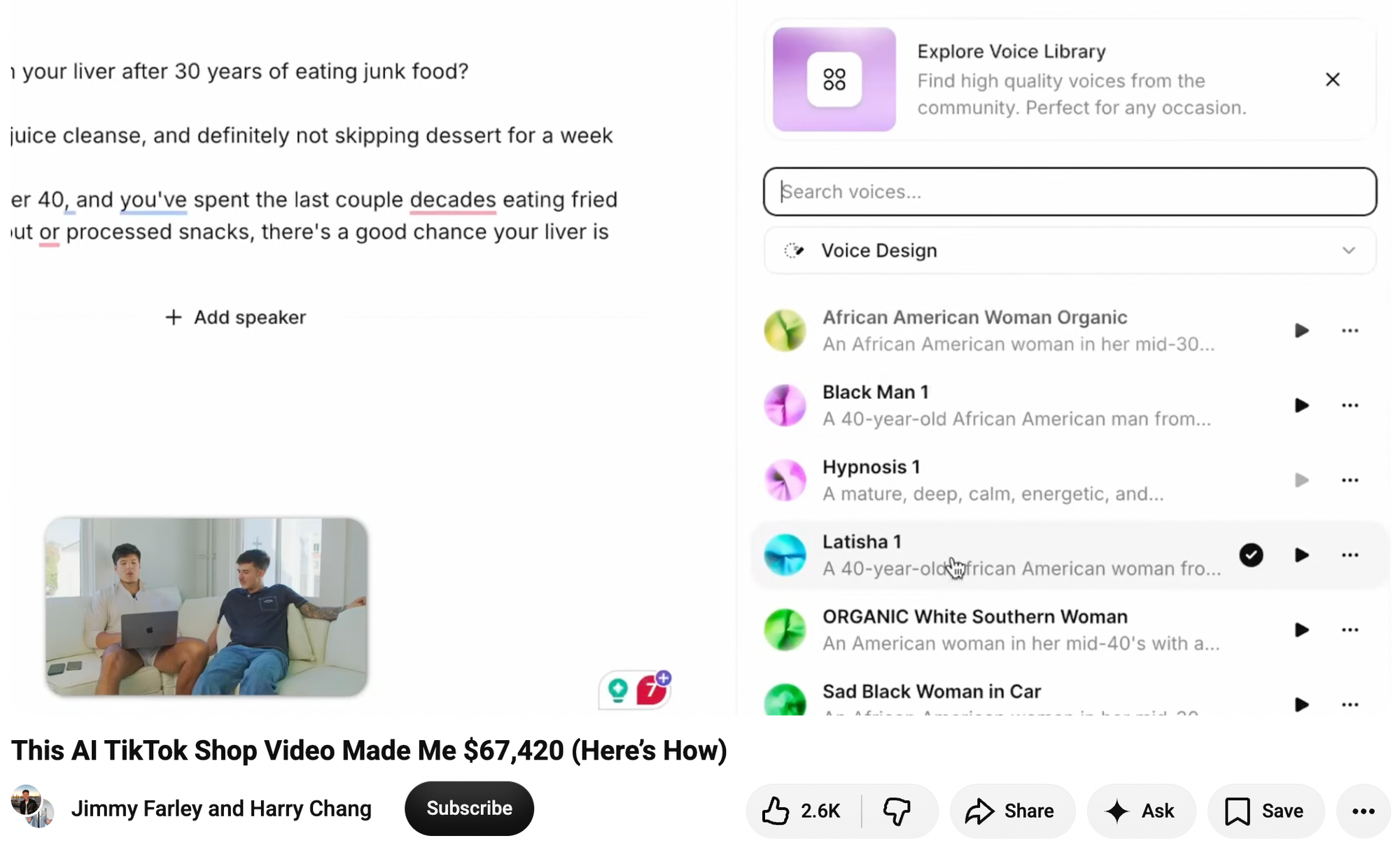
“Builds curiosity, builds intrigue,” Chang says about his creation. “People want to know, ‘damn, what did she say? What did that ho say?’” To make the AI-generated woman on stage read the script he took from liverboosthub11, he pulls up the popular AI voice generator ElevenLabs. He scrolls through a list of voices that he had created, including “African American Woman Organic,” “Black Man 1,” “ORGANIC White Southern Woman,” and “Sad Black Woman in Car.” He settles on a voice called “Latisha 1.” He syncs the voice with the AI-generated videos he created in the video editing software CapCut. This AI video goes on to get 1.3 million views on TikTok and apparently earned him tens of thousands of dollars in affiliate sales.

In another video, Chang explains how he has made tens of thousands of dollars using AI influencers. “I’ve even had my clients buy me Rolexes for selling so much of their products,” he says. 

The video’s title is “How I print $51,000/month profit with AI influencers (feels illegal).” 

A new lawsuit argues that the strategy is, indeed, illegal. (After 404 Media asked for comment for this story, several of the YouTube videos mentioned in this article were deleted).

Inside an AI TikTok Shop Slop Factory That Shills Supplements Recalled By the FDA

In February, a supplement company called Humann sued a competitor called Ambrosia Brands because Ambrosia, through the supplement company called Rosabella, allegedly directed and influenced the creation of hundreds of TikTok Shop videos and ads featuring AI-generated “doctors” that oversold the supposed benefits of Rosabella’s products. Rosabella’s AI marketing practices have previously been written about by 404 Media and The New York Times, but were most thoroughly explored in an excellent episode of the podcast Conspirituality

The lawsuit reveals new details about how this group of 20-something YouTubers built their army of AI-generated influencers. In practice, Rosabella is more of a social media AI content hustle and AI marketing exercise than a supplement company. What happened in this case is the same type of spam and buy-my-course to get-rich-quick strategy that we have repeatedly written about, only this time the slop is being used to shill supplements largely to the elderly. Rather than payouts coming from the number of views a video gets on social media, the payouts are commissions on products sold. The lawsuit was spotted by the lawyer Rob Freund on X.

“All these guys are ex-dropshipping guys,” Mallory DeMille, who studies the wellness and supplements industry and who reported the episode of Conspirituality, told 404 Media. “They could have chosen anything to sell to make AI content out of, but they chose supplements, and it’s interesting they chose supplements because it’s such an unregulated market where [they] can basically pump out whatever product they wanted to with very little oversight. On the marketing side, it’s also pretty unregulated and there’s a lot of real [human] influencers making unfounded health claims without there being many consequences. In terms of ease of making money — wellness, they chose this industry for a reason. I think it’s pretty seamless, has proven to be seamless and now they’ve sold a fuckton because of how easy it is.”

The lawsuit highlights a series of TikTok videos—like the ones I described above, and most of which are still online—featuring AI-generated doctors, TED Talk-style speakers, and videos that are essentially identical to the ones Chang has repeatedly taught people on YouTube how to make. And hundreds of additional videos promoting Rosabella that are not highlighted in the lawsuit are trivial to find on TikTok. Many of them have hundreds of thousands or millions of views and seem to make wild promises about what Rosabella supplements can do.

Inside an AI TikTok Shop Slop Factory That Shills Supplements Recalled By the FDA

In another video, Chang explains why his favorite products to sell fall into the “elderly health” category: “It’s an extremely profitable niche, especially in the U.S., guys.” 

“In the U.S., they have very high demand for health products,” he says. “They don’t have any free healthcare, right? People over 35 literally are very concerned about their health […] You have moms who buy 100 supplements and put them all in their cupboard. It is crazy. It’s crazy.” 

“When you have such a high, problem-solving niche, it’s very easy to write scripts for, very easy to innovate, and just continuously make money,” he says, adding that he usually generates AI influencers who themselves look old.

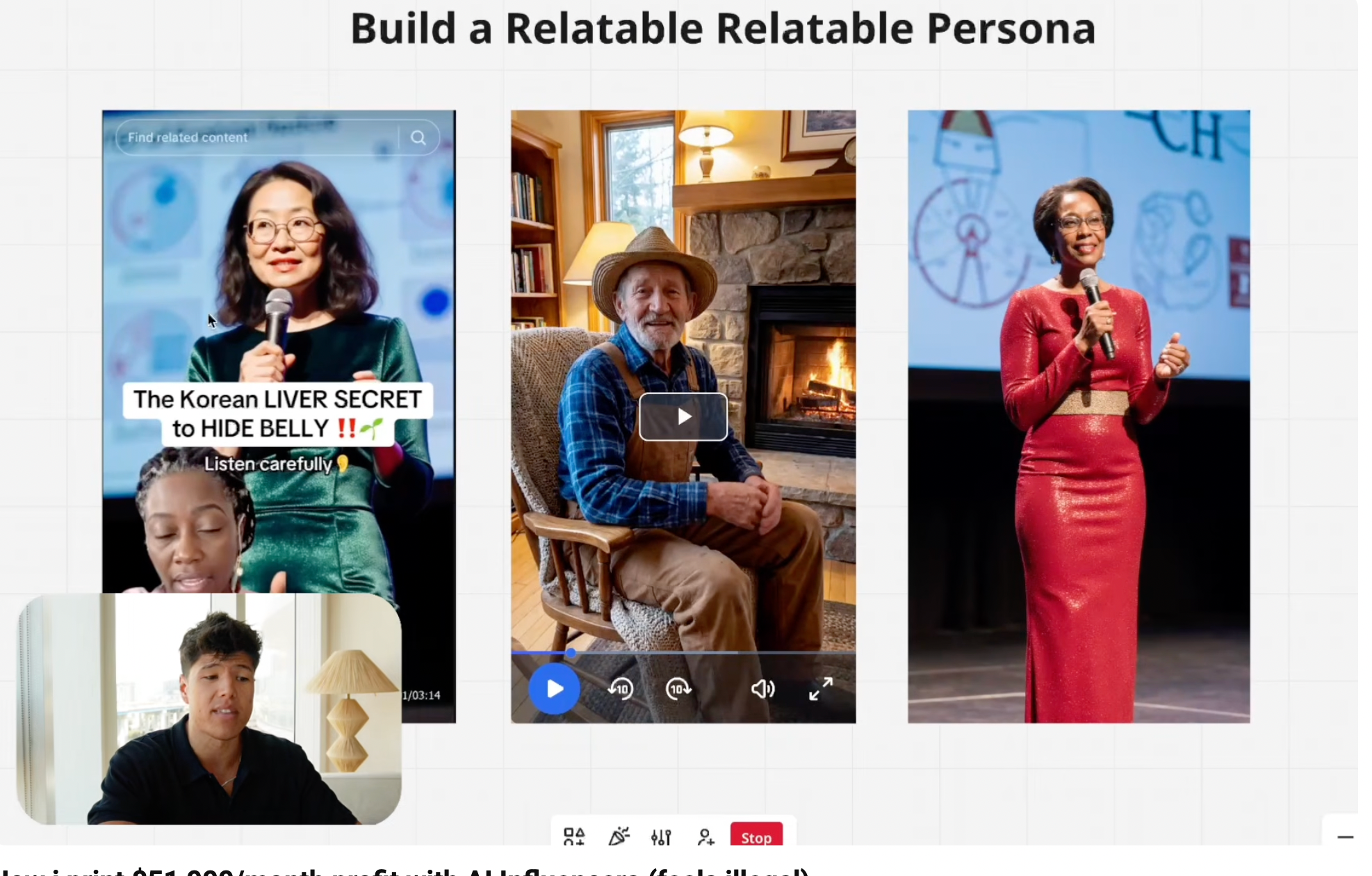
“They’re relatable and credible,” he says of three older-looking AI people he shows on screen, one of which is shilling beetroot powder from Rosabella. “Why? Because they are old. People are more willing to listen to old people only because they see them as more wise and intelligent […] and look how credible they look. They’re speaking on stage like TED Talk-type style and they’re more relatable because they’re more similar to the age we want to target. If you’re trying to sell health products to a 50-year-old, well, make your avatar 50 years old.”

Inside an AI TikTok Shop Slop Factory That Shills Supplements Recalled By the FDA

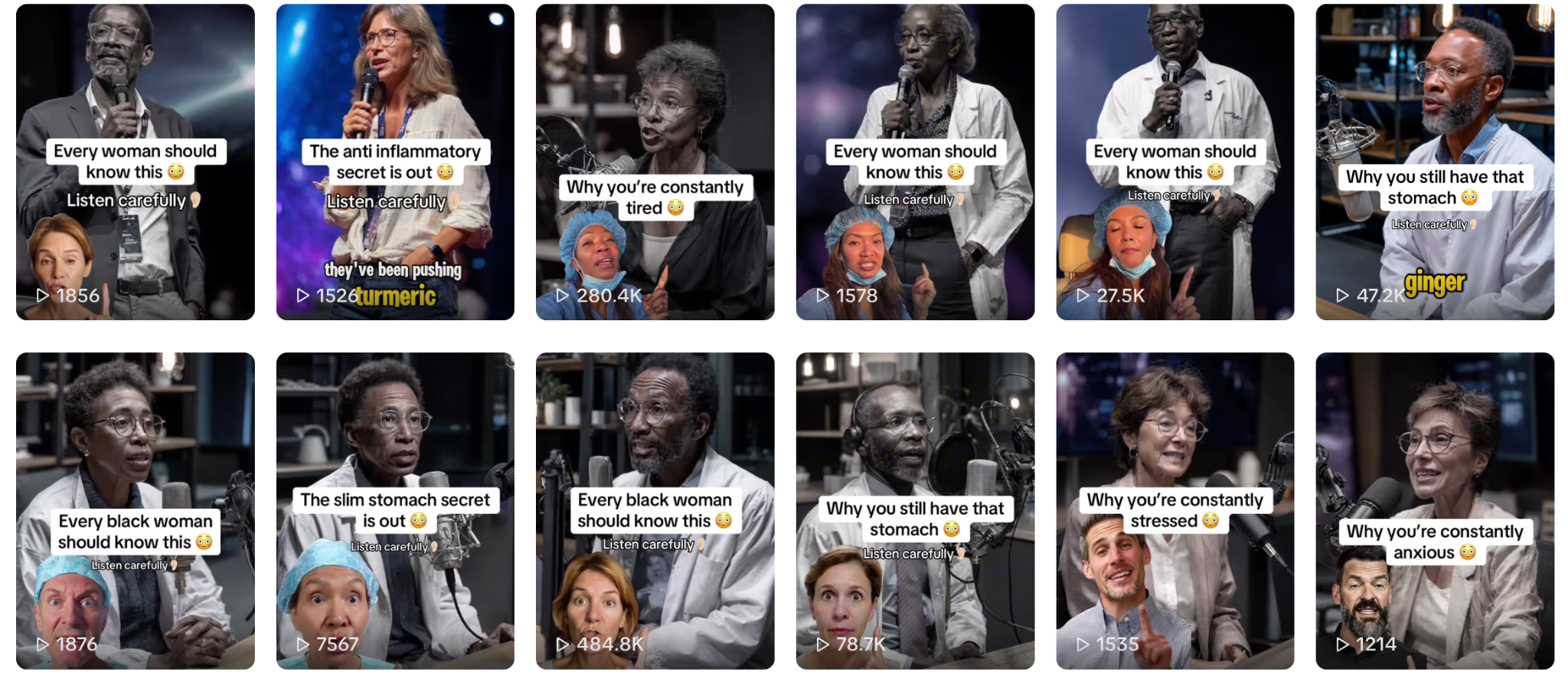
On TikTok, Rosabella used a mix of paid influencers and AI-generated characters to make unfounded medical claims about its products and about beetroot more generally, the lawsuit alleges. “In several TikTok Posts, the post purports to show a doctor, medical professional, or other medical authority espousing the health benefits of Defendant’s products. All or nearly all of the ‘doctors’ featured in the TikTok Posts are AI-generated and fictitious, making the claims in the advertisement false and/or misleading,” the lawsuit notes. “For example, in a June 14, 2025 TikTok post, influencer ‘poormaninla’ purports to depict a doctor in a whitecoat that promotes the alleged health benefits of Defendant’s products. Before the ‘doctor’ begins speaking, a separate speaker is imposed on the screen in a surgeon’s or nurse’s scrubs.”

Inside an AI TikTok Shop Slop Factory That Shills Supplements Recalled By the FDA

The “poormaninla” account is still up on TikTok and its videos are almost entirely AI-generated. Several of the videos have hundreds of thousands of views. “The best food for Black women to eat if they want a slim stomach is not turmeric, it’s not ginger, and it’s definitely not blueberries. Just one teaspoon of this food reduces gut inflammation,” an AI-generated man in a lab coat says in one.

You can see some of the videos promoting Rosabella here:

The lawsuit argues that Rosabella is “orchestrating a misinformation campaign on TikTok through its network of influencers,” who “make various misrepresentations about the health and wellness benefits of Defendant’s beetroot products, which are entirely unfounded.” The lawsuit alleges that Rosabella, through a private Discord channel, offered extensive coaching to content creators on how to make AI-generated TikTok ads; that many of these ads featured fake doctors and other AI-generated people who were made to look authoritative; that some of these videos were racist; and that when people bought Rosabella products through TikTok Shop links on those videos, the creator of those videos would earn a commission. Humann’s argument is that Rosabella’s “false and misleading representations undermine public confidence in other beet products, like Humann’s SUPERBEETS products.” 

Ambrosia says, essentially, there is no evidence it told people what to do in the Discord channel. In court filings, Ambrosia claims that Humann “fails to allege any facts that plausibly show Ambrosia induced or materially contributed to the third-party conduct it complains of.” It remains unclear whether what Rosabella was doing is illegal in the unregulated world of supplements in the U.S., or whether a competitor could win a false advertising lawsuit like this. But there is no doubt about Rosabella’s strategy, what their motivations are, and the incredibly close connection between Rosabella and the network of content creators who made, conservatively, hundreds of AI-generated videos.   

The lawsuit highlights how common fully AI-generated marketing has become on platforms like Instagram and TikTok, and nods at, but does not dive into, the complicated web of YouTube hustlebros that have largely given rise to this practice, and the social media platforms that have incentivized and promoted AI-generated spam and fly-by-night supplement companies. Rosabella is a company that has already been subject to an “extensively drug-resistant salmonella” recall by the Food and Drug Administration. But it is maybe better understood not so much as a supplement company but more as a branding exercise and vertical video content hustle by the same types of AI spammers and buy-my-course bros we’ve written about numerous times over the last few years.

In a video about “why you need to be working with Rosabella” qposted by an account called “Luca Washenko” on the online course sales platform Whop, a man brags “we paid out over $400,000 last month to creators.” He says that individual people have made more than $300,000, and shows “proof and dates of our creators getting tons of views consistently. Got 55 million right there […] I am one of the lead coaches in the Rosabella server.” 

But Washenko isn’t just a creator helping to advertise Rosabella. He is the company’s founder. A YouTube video repeatedly alludes to this, and mentions how much money he and his army of affiliate creators have made selling Rosabella products on TikTok Shop. Washenko is also listed as the cofounder of Rosabella on several trademark filings I found, and his LinkedIn lists him as the founder of “MNY Ventures,” a company that has the Rosabella logo on LinkedIn. Clicking through “MNY Ventures” goes to a LinkedIn page for “Rosabella,” which has several job listings for AI video editors: “MNY Ventures is home to one of the fastest-growing supplement brands in the world, built on the back of a high-performance, results-obsessed culture. We don't just create ads; we create market-leading campaigns that generate massive revenue,” one of the LinkedIn job listings reads. “Your mission is to lead the production of our high-converting AI videos quickly and at high quality. You will be responsible for consistently creating on-brand and compliant video content based on proven formulas designed to maximize reach, ensuring MNY Ventures maintains its position as the #1 leader in AI video marketing for e-commerce.” The listing adds the person will need to produce “10 high-quality AI videos per day, following our preset scripts and styles.” 

In a video called “Inside a TikTok Shop Meetup with Million Dollar Creators,” there is no doubt about Rosabella’s strategy, Washenko’s motivations, or Rosabella’s close relationships with the people spamming AI-generated content shilling its products. Rosabella is just the latest of Washenko’s creations. His previous claim-to-fame was selling caffeine vapes on TikTok. 

“There have been creators that are now millionaires from working with Rosabella,” Washenko says in the meetup video. “It’s one thing if you make money, it’s another thing if you can help everybody around you make money. An event like this where you can go face-to-face and shake hands with people and they say, ‘You’ve changed my life.’ And I’m like ‘You’ve changed mine.’ Those are the moments that are so special, especially when everything is remote. It’s online. It’s Discord, that’s one thing. You look them in the eye and they say, ‘I was able to pay my mortgage when I lost my job because I was making videos for you.’ That’s a different feeling.” 

Washenko explains there are two reasons why people should make content promoting Rosabella: “If you want to be the Tiger Woods of creator, if you want to be the Caitlin Clark, you want to be the Michael Phelps, you want the golden rings you want to be the greatest, to be the number one, that’s what we’re all about. That’s the Rosabella family,” he says. “Along the way, you’ll make a ton of money.” 

Later in the video, Washenko stands on stage addressing a crowd, shouting out “all the people I’ve been talking to on Discord from day one, from 18 months, I started Rosabella in my mom’s basement.” He shouts out all the creators who he’s helped make rich and who helped make him rich. He then says there’s one other “person I want to shout out today.” He calls up Harry Chang, the YouTuber who made the video “How I print $51,000/month profit with AI influencers (feels illegal).” Washenko presents him with a Rolex. “I cannot be any more proud to be working on a brand with you,” and for that, I want to give you this watch today. It’s a Rolex, by the way.” 

After 404 Media asked for comment on the video, it was deleted from YouTube.

DeMille, who reported the episode of Conspirituality diving into Rosabella, Washenko, and Chang, told me the men are “just actively bragging about it online. I can’t believe they’re openly talking about it like this.”

“A lot of the videos of these AI slopfluencers, they’re using narratives that real-life wellness influencers have seen success using, but they’re taking these narratives and inputting them into whatever AI systems they’re using and making people look whatever age they want,” DeMille said. “There’s no thought behind it. There’s no anything behind the content that they’re turning out. These videos they’re replicating in their AI machines are also being used to sell something, but it’s being generated into something else to sell something else. It’s this inception of bad information by people who don’t actually care.”

“These guys behind these AI slopfluencers have proven that they don’t care, and they obviously care more about money and wealth than they do about health,” she added.

Washenko did not respond to a request for comment. Ambrosia Brands did not respond to a request for comment. 
A request sent to Rosabella was returned by someone named Emmanuel Obonga. The response said, “We don’t currently have an active affiliate program. However, we’d be glad to keep your information on file and reach out if we revisit or launch one in the future.” In the course of reporting an earlier story about the AI influencer company Doublespeed, Rosabella previously told 404 Media that it “does not use Doublespeed or any AI-generated accounts to promote our products on TikTok or any other platform. We are committed to authentic engagement and building genuine connections with our community. Regarding the claim about being viral on TikTok, this is based on organic content created by real customers and creators who love our product. We’ve seen a lot of positive buzz and user-generated videos that have helped spread the word naturally.”

Daniel Martens, a lawyer representing Humann, told 404 Media Rosabella’s strategy “makes [the] whole supplement industry look bad. If you’re masquerading as a doctor telling consumers how promising all these benefits that don’t exist [are], that’s harmful.

❌