Vue normale

  • ✇Coda Story
  • Why Trump-backer Justin Sun is suing the Trumps’ firm
    Donald Trump and the crypto world have done well out of each other. The Trump family has made profits of several billion dollars, and ‘cryptopreneurs’ have found the United States a newly supportive environment for their products. But the crypto world is not a single entity, and there are potential differences of opinion and approach between the parts that specialise in fraud, money laundering, and speculation (as well as the small number of societally beneficial uses), and a court case between
     

Why Trump-backer Justin Sun is suing the Trumps’ firm

29 avril 2026 à 07:55

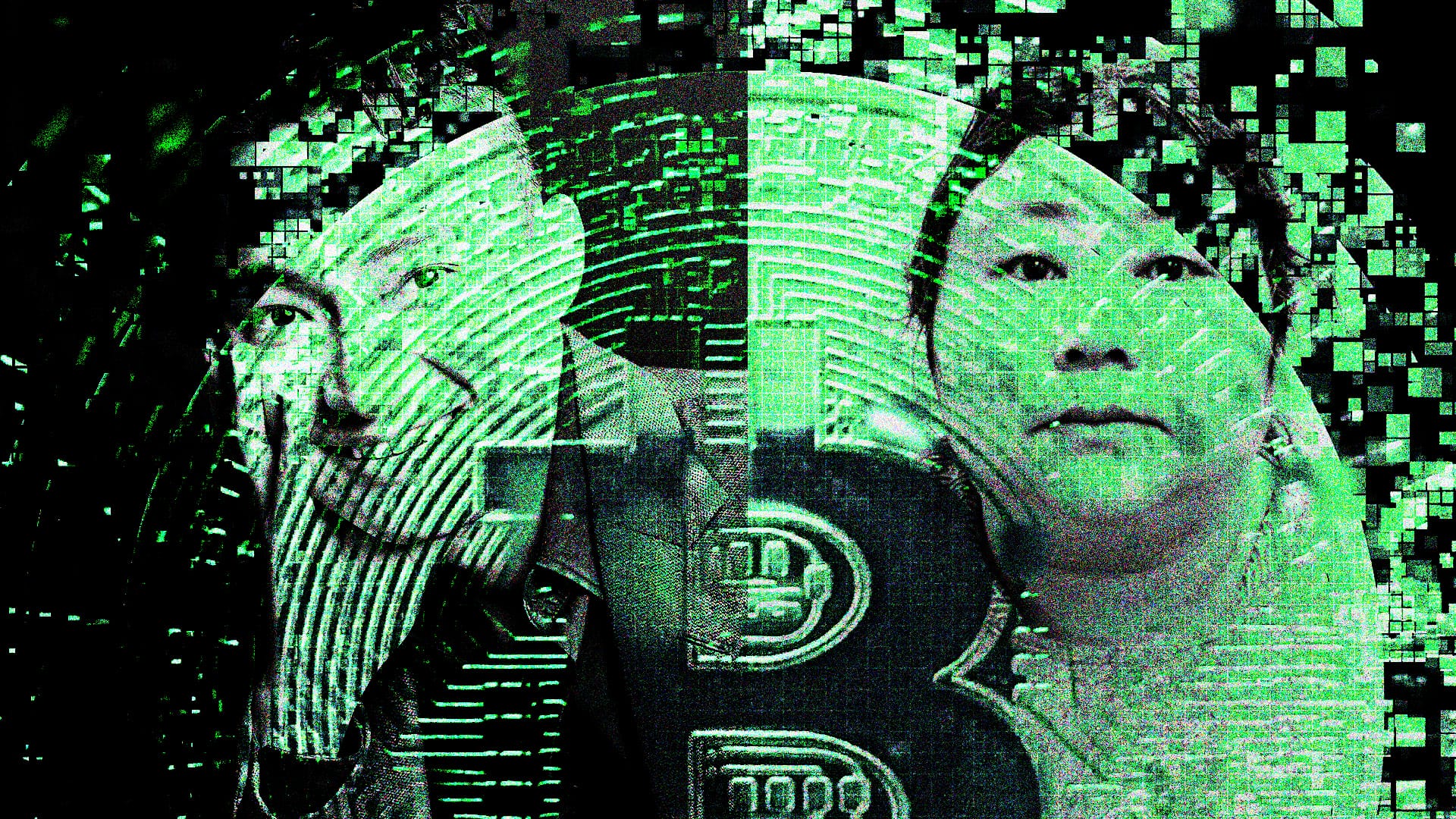
Donald Trump and the crypto world have done well out of each other. The Trump family has made profits of several billion dollars, and ‘cryptopreneurs’ have found the United States a newly supportive environment for their products. But the crypto world is not a single entity, and there are potential differences of opinion and approach between the parts that specialise in fraud, money laundering, and speculation (as well as the small number of societally beneficial uses), and a court case between billionaire Justin Sun and the Trump family’s World Liberty Financial threatens to blow those divides wide open.

Sun is a colourful gentleman and a firm favourite of this newsletter, thanks to his efforts to essentially buy the Pitcairn Islands, his voyage into kind-of space, his consumption of a $6.2 million banana, his stewardship of the Tron blockchain, his premiership of Liberland, and his frankly adorable continued usage of “H.E.” (his excellency) as a title despite losing his Grenadian ambassadorship three years ago after being accused of fraud by the Securities and Exchange Commission.

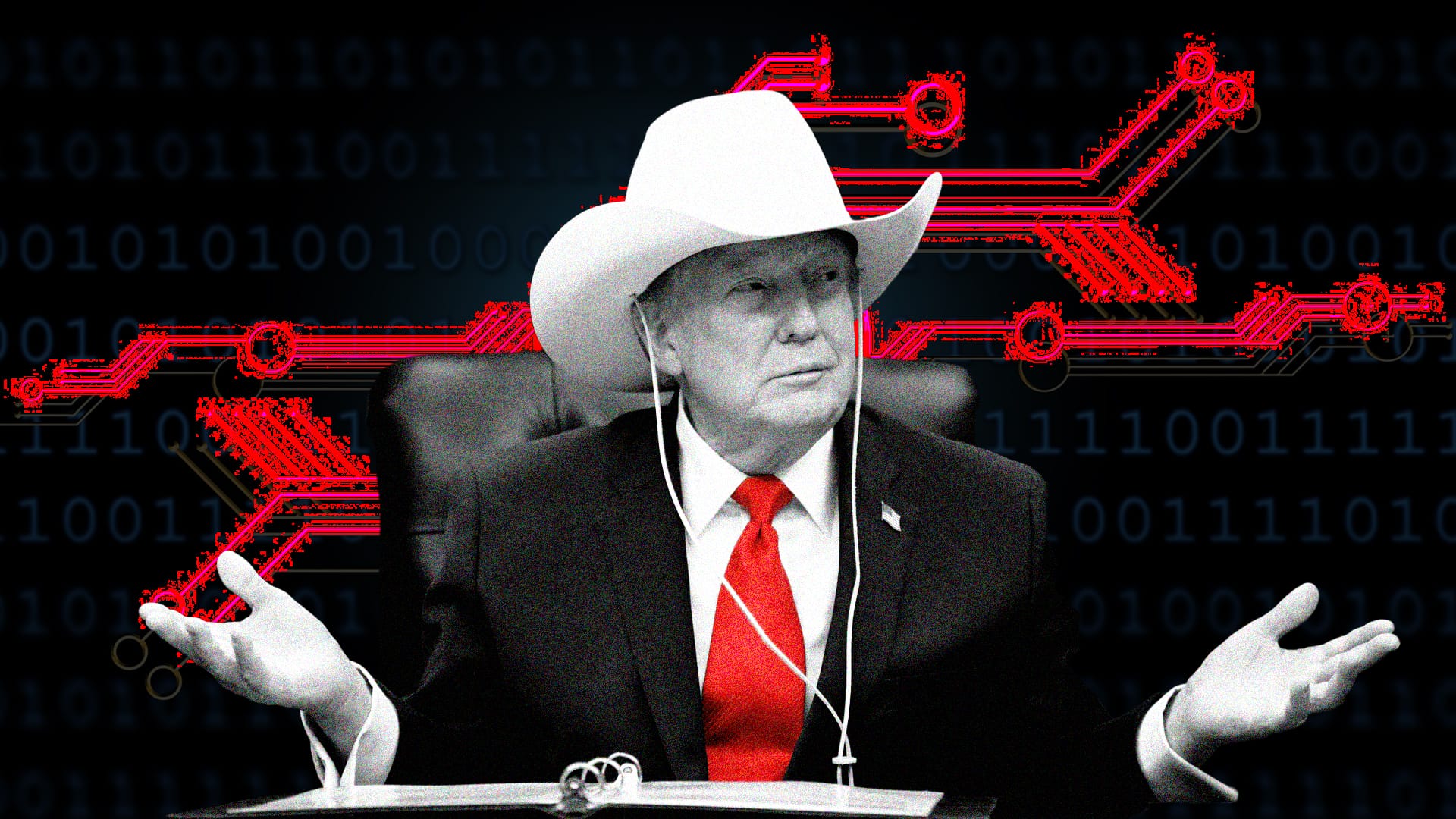
He also had a key role in transforming Trump from cryptosceptic into cryptoenthusiast after investing millions of dollars in World Liberty Financial in late 2024, which helped to persuade the president — then running for re-election — that there was money to be made on the blockchain. 

Considering the improbability of the Trump family building an actually successful crypto company, and the strong likelihood World Liberty Financial would find a way to keep investors’ money as has happened with Trump ventures in the past, quite a lot of people assumed Sun’s money was in reality more of a gift than an investment. But it appears these doubters were wrong, at any rate that’s what it says in the suit that Sun has filed in California alleging that World Liberty Financial has abused his rights.

“Mr. Sun invested $45 million to purchase $WLFI tokens from World Liberty not only because of the project’s claims that it would promote adoption of decentralized finance… but also because of the Trump family’s association with the project,” his claim states. “But as Mr. Sun unfortunately has learned, World Liberty’s operators, including Chase Herro, see the project as a golden opportunity to leverage the Trump brand to profit through fraud.”

Sun has been careful to make clear this is not an attack on the president (“Unfortunately, certain individuals on the World Liberty project team have been operating the project in a manner that goes against President Trump’s values,” he posted on X), who is, he says, being betrayed by underlings — as autocrats have always been throughout history —  but he is certainly airing a lot of dirty laundry, which is likely to upset influential people.

Perhaps the most significant allegations, which World Liberty Financial denies, is that the Trump family’s company is on the verge of collapse, having paid most of its money to its owners, and that it tried to extort money from Sun to keep it in business. This is not just significant for its investors but also for America’s diplomatic ties, since Abu Dhabi has invested $2 billion via World Liberty Financial’s USD1 stablecoin, and the United States can ill-afford to further irritate its allies in the Gulf right now.

The timing of the lawsuit is interesting. It was notable that, shortly after Trump returned to the White House, the Securities and Exchange Commission paused its investigation into Sun. In March, that investigation was finally wrapped up, with Sun paying $10 million but not admitting wrong-doing, so he is perhaps no longer concerned about facing legal action himself.

Sun was also a major investor in Trump’s memecoin, but is not the only person who seems to have soured on that particularly unlovely project. One of the perks of being an investor in the token is the right to have dinner with Trump, but the value of that ticket dropped this year to just $539,000 from $3.28 million in 2025, with the Financial Times quoting an expert as calling the friendship between Trump and the crypto-world “a shotgun marriage,” which seems fair.

The Trump family has, however, made $320 million in fees from the memecoin alone, so I suspect they’re not that bothered.

A tale of two scammers

There was, hard though it is to imagine, a time when Trump was just a strangely-tinted TV personality with strong views on where Barack Obama was born. And back then, in those prelapsarian days, 2014’s billion-dollar Moldovan bank fraud was a big deal. It’s great to see that mega-oligarch Vlad Plahotniuc has been jailed for 19 years for his involvement in a crime that ruined his homeland.

Moldova has struggled through the resulting period of economic, financial, diplomatic and political turmoil, and it was great to see that Viktor Orbán’s defeat in Hungary has meant it can make progress on its movement towards membership of the European Union.

The other mastermind of the bank fraud is pro-Kremlin politician Ilan Shor who was convicted and sentenced in absentia. He remains, of course, at liberty. Though his A7A5 sanctions-evading cryptocurrency has still not recovered the trading volume it had before the recent hack of the Grinex trading platform where people bought and sold it. Grinex blamed the hack on Western intelligence agencies, but Chainalysis has an interesting alternative explanation, based on the fact that A7A5 is gradually being squeezed by Western sanctions (including the latest ones from the European Union).

“Faced with mounting international pressure and a shrinking operational footprint, actors associated with Grinex could be using the guise of an alleged hack to quietly siphon liquidity and execute an exit scam,” Chainalysis suggested. I’m not saying that is what happened and to be honest, I think it’s more likely that this was the handiwork of Ukrainian hackers or standard financial criminals. I mention it, however, because Shor does have a previous record when it comes to setting up a money laundering scheme and then defrauding everyone who was foolish enough to trust him with their money. 

The billion-dollar bank fraud was a clever way to profit out of the ‘Moldovan Laundromat,’ which had been allowing Russians to smuggle money out of their homeland before Shor and his co-conspirators destroyed the Moldovan banking system and stole everyone’s cash. It would be remarkable if he had basically done the same thing for a second time with his stablecoin. Crypto people call it a rug pull.

A version of this story was published in this week’s Oligarchy newsletter. Sign up here.

The post Why Trump-backer Justin Sun is suing the Trumps’ firm appeared first on Coda Story.

  • ✇Coda Story
  • The performative war on money laundering
    Dutch friends like to tell me that their nation’s primary characteristic is bluntness, and the Netherlands’ Court of Audit has done nothing to challenge the stereotype with its bracing assessment of the country’s and, by extension, the world’s failure in fighting money laundering. Published last month, after an extensive analysis of the country’s efforts to stop dirty money, the Court’s report concludes that the system is expensive, discriminatory, and — possibly — completely ineffective. No one
     

The performative war on money laundering

8 avril 2026 à 08:11

Dutch friends like to tell me that their nation’s primary characteristic is bluntness, and the Netherlands’ Court of Audit has done nothing to challenge the stereotype with its bracing assessment of the country’s and, by extension, the world’s failure in fighting money laundering. Published last month, after an extensive analysis of the country’s efforts to stop dirty money, the Court’s report concludes that the system is expensive, discriminatory, and — possibly — completely ineffective. No one has really checked on that last point, so they can’t be sure, which if anything makes it all worse.

The Netherlands hosts the largest port in Europe, and is therefore home to a vast smuggling industry — Dutch politicians not infrequently warn that it’s becoming a narco-state — which requires an equally vast money laundering industry to service its profits. The Court of Audit set out to check the government’s response to this challenge, concluding that it cost banks €1.6 billion a year. It’s a price tag that has increased by almost 17% between 2021 and 2024, during which time the number of reports the banks’ 13,000 compliance officers made more than doubled.

“We think it is important that these employees make a meaningful societal contribution to preventing and combatting money laundering. There is no evidence that shows that they do,” the report witheringly observes.

The court sent surveys out to “politically-exposed people” (PEP is a jargon term meaning anyone in a position of power, or a close relative or associate) asking about their experiences. One person’s 83-year-old mother was asked to explain the source of an inheritance she received after the PEP applied for a loan. It is an eye-opening section, revealing how process is prioritised over any kind of judgement about where the risk of money laundering genuinely lies, but the real shock is in the section about different religious groups, which shows how the transactions of immigrant-focussed churches and mosques are systematically checked more thoroughly than local Protestant or Catholic congregations.

“A bank told a mosque that it was not possible to collect so much money after a prayer meeting,” the report notes. “The mosque’s trustees said the bank could come and see for itself but the bank declined. Feeling powerless and unable to deposit the money with the bank, the trustees hid it in the mosque.”

Imagine if we had an ongoing health crisis. And imagine that the government had created an expensive, intrusive system to tackle it, which was generating an endlessly increasing amount of paperwork, employing thousands of people and actively discriminating against religious and ethnic minorities. Surely, someone would at least put in the hours to check if the system worked, whether it was making people healthier, and assess therefore whether all these bad side effects were justified? 

With anti-money laundering policy, that is simply not happening. It’s based on faith rather than facts: we just need to do more of the same thing, and eventually we’ll get the results we want; if we don’t, we need to do the same thing even more. Interestingly, Texan judge Jeremy Kernodle — fresh from gutting the Corporate Transparency Act — has returned to the fight against anti-money laundering regulation. He has killed Geographic Targeting Orders, which were supposed to collect information around real estate transactions. “FinCEN’s explanations are vague, conclusory, and unpersuasive,” the court ruled. “The fact that some bad actors have conducted non-financed real estate transactions does not make such transactions categorically ‘suspicious.’”

I’m not saying I agree with Mr. Kernodle, because I don’t, but I don’t think pushback on anti-money laundering orthodoxy is necessarily a bad thing, since it obliges us to think more deeply about what actually works, rather than just going along with ineffective old policies. I hope people outside the Netherlands read the Court of Audit’s report and start wondering whether this approach isn’t long past time for a complete overhaul.

How do you solve a problem like crypto?

It’s quite unusual for there to be a divide in the UK’s anti-corruption community, which tends to agree on technocratic solutions to the problems around illicit finance, but one has emerged around the role of cryptocurrencies in political donations. Spotlight on Corruption doesn’t think the government’s moratorium on crypto donations goes far enough. There needs to be a ban, they argue, in primary legislation with additional safeguards. I agree.

The folks at RUSI, on the other hand, think a moratorium on crypto donations is a better idea since it would prime the country to take regulating cryptocurrencies more seriously, and prepare the way for them to be widespread. Take a look, judge for yourself, and let me know what you think. The difference may reflect deeper and unresolvable political differences in how countries should respond to globalisation, but it’s an interesting one to think about.

One thing I think we all agree on is the need for an urgent overhaul of all rules around electoral finance, while there’s still an honest system to approve them.

On that note, interesting news from Cambodia, which has extradited Li Xiong to China. Xiong, who is accused by governments worldwide of playing a key role in the now-collapsed Huione group, which was laundering money for crime syndicates on an industrial scale, with particular expertise in cryptocurrencies. Of course, the criminals have not stood still and have new markets up and running, but it is striking how quickly the extradition went ahead.

In contrast, the legal proceedings around the mammoth tax fraud exposed two decades ago by Sergei Magnitsky grind tortuously on, with the culprits still safe in Russia. They certainly enjoyed themselves in Europe for a while, however, as a court case in Paris shows. “The spending spree included: €668,517, ($771,703) at a Parisian art and antique gallery; €696,015 ($803,445) across two high-end French women’s fashion brands; €96,814 ($111,757) at a luxury jewellery store in Courchevel, an exclusive ski resort in the French Alps; and €127,182 ($146,813) for a Courchevel tour package.”

There are few things that reveal the moral bankruptcy of the regime in the Kremlin more than this case. It’s not enough that corrupt officials could kill a good man who exposed their $230 million theft from the Russian people, but the Russian state then shielded them while they splashed the loot on European luxury holidays, and continues to do so to this day. 

Nothing on the same scale is happening in the United States of course, but still this analysis of how enforcement of the Foreign Corrupt Practices Act is being politicised is a bit grim: “The transformation of U.S. antibribery tools into economic weapons also threatens to undo the global system the United States helped establish to punish business corruption.”

A version of this story was published in this week’s Oligarchy newsletter. Sign up here.

The post The performative war on money laundering appeared first on Coda Story.
  • ✇Coda Story
  • Why Kleptocrats go to war without a care in the world
    Kleptocracy is a global system, which allows crooks, thieves, oligarchs, tycoons, and the like to enjoy their wealth while evading any responsibility to the society where they obtained that wealth. It infects different countries to different extents, and I’ve been very impressed by the Bloomberg investigations into how kleptocratic the Iranian elite has become. If you’d like a shortcut to those investigations, this new video is worth watching. Obviously, Iran’s regime has been vicious and aggres
     

Why Kleptocrats go to war without a care in the world

11 mars 2026 à 09:22

Kleptocracy is a global system, which allows crooks, thieves, oligarchs, tycoons, and the like to enjoy their wealth while evading any responsibility to the society where they obtained that wealth. It infects different countries to different extents, and I’ve been very impressed by the Bloomberg investigations into how kleptocratic the Iranian elite has become. If you’d like a shortcut to those investigations, this new video is worth watching. Obviously, Iran’s regime has been vicious and aggressive from the start, but I do think there is a new kind of vicious aggression that develops when a country’s elite becomes kleptocratic, and thus is — in essence — colonising its own country. 

If it is extracting wealth, hiding that wealth offshore and thus secure in its future, it is able to take risks and make decisions without concerning itself about their effect on ordinary people. “While ordinary Iranians contend with a collapsing currency, rising prices, fuel shortages and now war, elites like (Hossein) Shamkhani have translated political lineage into global capital — buying property abroad, securing foreign passports and moving freely through systems that everyday citizens cannot enter,” Bloomberg notes.

Much of the elite’s ability to enrich itself has come from its evasion of Western sanctions, which Iranians have had decades of practice in learning how to dodge. And the role of cryptocurrencies in enabling Iran’s kleptocrats is clearly significant, as demonstrated by this report from Chainalysis. But of course the backbone of the corruption has been the elite’s control over trade, and thus its ability to move value to safe havens like Dubai (that’s not looking as safe as it did of course but, don’t worry, the money can easily find a new home), which gives it the security to fire missiles without worrying too much about retaliation.

In this though, I’m not sure Iran is particularly unusual. A lot of the governments involved in the crisis in the Middle East are a bit like those F. Scott Fitzgerald characters who “smashed up things and creatures and then retreated back into their money or their vast carelessness”.

Israel’s Benjamin Netanyahu has been dancing on the edge of a corruption trial for the best part of a decade, ever since he was indicted in 2019 for, among other things, accepting “hundreds of thousands of pounds in luxury gifts from billionaire friends”. Donald Trump’s family has assets worth more than double what they were just two and a half years ago. The earnings from crypto alone are enough to guarantee the most comfortable of futures. These two are very definitely careless people, as is everyone around them.

If this ill-planned military adventure ends badly, then the elites of none of the combatant countries will end up suffering in the way that ordinary Iranians, Israelis or Americans will. This sense of impunity infects much of the discussion of the war: how, for example, could someone who feels any connection to other people be exulting in their death in the way that U.S. Secretary of War Pete Hegseth does? In this bloodthirstiness, as in so many other aspects of kleptocracy of course, Russia led the way, but the rest of the world is catching up and I don’t think we’re ready for what that will look like.

An important aspect of this, again long visible in Russia with its dreadful public services and military failure in Ukraine, is that corruption does not just enrich elites, it also degrades state capabilities. “Corruption at the top always rolls downhill. Once it becomes open and acknowledged, it leads to corrupt and slovenly acts throughout a system,” as Phillips Payson O’Brien argues, in a piece which builds on another article in which he lays out how the Russian model might be worth applying to much of what’s happening in the United States.

This of course adds fresh weight, not that it’s needed, to the urgency of shoring up defences not just against foreign interference in the democratic processes of those countries that still have them, but to getting big money out too. It’s great that a U.S. politician has, for the first time, taken the Political Integrity Pledge and won (though admittedly only a primary), but just to get to the stage of standing in the general election, he’s had to raise more than $20 million. Too much of that and pretty soon you’re talking about real money.

This week at Tether

Talking about real money, the latest episode of Tether watch is a weird one: our favourite crypto concern has just invested $50 million in a smart mattress company. Now admittedly, that isn’t even two days’ worth of last year’s profits, so it’s not exactly a big deal for CEO Paolo Ardoino but it’s still sufficiently sinister to be worthy of mention.

I find it disturbing enough that tech companies are harvesting our browsing history to make money from, but it’s a whole other level to have Tether — Tether!?! — monitoring what people get up to in bed. It’s all, apparently, about personal sovereignty, which is to say you should stop trusting big companies with your data and instead trust it to Tether, including with what’s happening in your head: “Paolo's $200 million acquisition of a majority stake in brain-computer interface company Blackrock Neurotech may not be because he is optimistic about the size of the brain-computer interface market, but because he does not want the brain-computer interface to be controlled by others”.

Historians are going to be so confused by this; assuming of course that there will still be historians, which may be an over-optimistic assumption about a future with brain-computer interfaces.

The need to know your enemy

I’ve been talking to quite a lot of people about money laundering of late, and one of the enduring problems is the lack of reliable ways to gauge the scale of the problem. We’ve been saying it’s between 2% to 5% of the world economy since the late 1990s, but beyond repeating that age-hallowed guesstimate, how do you measure it? 

Often we turn to other measures, such as how many suspicious activity reports get filed, or how many fines get imposed. So, on that note, is it good or bad that the UK’s Financial Conduct Authority imposed fines last year of just £124 million, a decline of 78% from half a decade earlier? Maybe this means there’s 78% less crime? Or maybe it means that the FCA has stopped investigating 78% of crime? Or maybe 2021 was just a really big year for fines (which it was)? Or maybe something else happened?

The answer to this is that we should properly investigate money laundering not just criminally but also academically, looking at gaps in statistics and devising new methods of measuring how large the criminal economy is, rather than rely on proxies for it. That would not only help us identify what to target, but also help us see what techniques are working as criminal wealth rises and falls. As it stands, it feels like we’re waging a war without a clear idea of where the enemy is, and what the final goal might be, and there’s quite enough of that going on elsewhere at the moment.


A version of this story was published in this week’s Oligarchy newsletter. Sign up here.

The post Why Kleptocrats go to war without a care in the world appeared first on Coda Story.

  • ✇Coda Story
  • Can a Task Force set up to punish the little guy, take on Trump?
    This is going to be a big year for the Financial Action Task Force, the world’s standard-setter on money laundering regulations, under its new president Giles Thomson. Quite apart from the standard folderol of plenary meetings, reports and publications, it is due to send a mission to assess the United States. This whole process will not be quick, and there will be the usual abundant opportunity for acronyms, circumlocution and horse-trading. But eventually the hooves are going to have to hit
     

Can a Task Force set up to punish the little guy, take on Trump?

4 mars 2026 à 08:55

This is going to be a big year for the Financial Action Task Force, the world’s standard-setter on money laundering regulations, under its new president Giles Thomson. Quite apart from the standard folderol of plenary meetings, reports and publications, it is due to send a mission to assess the United States.

This whole process will not be quick, and there will be the usual abundant opportunity for acronyms, circumlocution and horse-trading. But eventually the hooves are going to have to hit the road. There is simply no way of hiding the fact that, under Donald Trump, the United States has broken its promise to bring greater transparency to shell companies; nor that it has scaled back prosecution of financial crimes, pardoned convicted financial criminals, and unleashed a crypto frenzy.

Throughout its history the FATF, set up by the G7, has been able and willing to overlook transgressions from big countries that it wouldn’t tolerate from smaller ones. It punished the remote island states of Niue and the Marshall Islands in its first ever blacklist for their lack of transparency around shell companies, for example, while merrily tolerating the fact that not even the Federal Bureau of Investigation could figure out who owned a corporation in Nevada. Nauru got punished for moving dirty Russian wealth while the UK and Switzerland didn’t.

The FATF’s structure, which ensures it is dominated by large economies, is a classic example of how, if you’re not at the table, you’re on the menu. But, in the past, those large economies have at least pretended to go along with its recommendations. They’ve made promises, passed legislation, convened working groups, said the right things: all of which has given everyone the diplomatic cover they need to keep each other off the naughty step.

Trump’s not doing any of that, and it’s hard to believe that he’s going to change that habit. If the FATF criticizes his administration, I think we can safely assume Trump won’t take that well, and could — if past behavior is any guide — pull the United States out. But if the FATF doesn’t criticize what he’s been up to, it will lose all credibility. 

Speaking for myself, I think the FATF’s conception, structure and techniques are all flawed, perhaps irreparably, and that it has been part of the problem, rather than part of the solution, for most if not all of its 37-year history. Perhaps, therefore, Giles Thomson should get ahead of the looming fiasco by declaring a complete overhaul of the whole organization, re-examining its recommendations, its memberships, its strategy, and more.

What are the chances of that happening? Well, here’s some news from the Pacific: “Papua New Guinea one step away from being blacklisted, global money laundering watchdog warns”. Is Papua New Guinea the problem? No. Do we get anywhere by pretending that it is? Also no. Will the FATF carry on regardless anyway? I would love to be surprised by the answer to that question.

The need to clean house 

I’m a big fan of this video from Transparency International’s UK chapter, which lays out the inglorious history of corruption in British politics, and urges the government to be more ambitious in its new piece of legislation. TI has pointed out three areas where it thinks the government should go further, and I agree with all of them, but I would also like to see a complete ban on crypto donations, which would help prevent compliance departments being overwhelmed by automated efforts to circumvent donation limits.

I would also urge you to read this comment piece from RUSI about the threat to democracy posed by big funders from the American right, which has significance far beyond British politics. The world’s remaining democracies have been slow to recognize how radically the values of many U.S. billionaires have diverged from what we traditionally associate with conservatism, and to shore up their defences against them. “The task now is to strengthen our democratic guardrails — calmly, transparently and proportionately — before those boundaries are redrawn by others,” the writers Neil Barnett and Eliza Lockhart conclude.

Transparency International’s Russian chapter has been in exile since 2022 for obvious reasons (last year, for example, it had to issue a statement to argue that “fighting corruption is not terrorism”) but it has continued to conduct really valuable investigations into how illicit wealth flows in and out of its home country, including a recent one detailing the use of shell companies in the UK’s tax havens to trade with Russia, and identifying $8 billion worth of transactions.

The worst offender as a source of opaque companies was the British Virgin Islands, though Bermuda was also a problem, moving sanctioned products — including lead and zinc — as well as oil and other fossil fuels, a surprisingly large number of yachts, and a jet that ended up belonging to Chechen strongman Ramzan Kadyrov (whose ill-health is, apparently, once more the subject of speculation, poor chap).

“For many years now, we have observed a dysfunctional equilibrium in which illicit financial flows, tax evasion, sanctions circumvention, and other forms of misconduct are channelled through firms and intermediaries registered in unaccountable jurisdictions,” TI-Russia notes. Fortunately, however, the British government is hosting an illicit finance summit this June and so has the perfect opportunity to set an example by making sure this kind of thing stops happening on the territory it’s responsible for if nowhere else.

Here’s an interesting story from the Netherlands, where luxury firm Louis Vuitton was fined half a million euros for failing to identify customers spending large amounts of cash. This case was part of an investigation into the Chinese money laundering technique known as ‘daigou’, in which value is transferred internationally not via the financial system but by buying expensive objects and then reselling them in China. High-end fashion is often used in the system, and it will be intriguing to see if other countries follow the Dutch lead and investigate unusual cash purchases.

And here’s a piece on our favorite crypto company Tether, which is apparently valued by market participants at between $200 and $350 billion. That is less than estimates made in the summer, but still an awful lot of money. Fun fact: finance firm Cantor Fitzgerald has a five percent stake in Tether, which is thus worth $10 to $17.5 billion, via a convertible bond. Another fun fact: Cantor Fitzgerald is owned by Commerce Secretary Howard Lutnick’s children. 

Interesting question, would the prospect of your family earning a windfall of that size affect how stringently you would approach the regulation of a financial institution accused of involvement in industrial-scale money laundering? Lutnick, who led Cantor Fitzgerald for over 30 years, is of course not the kind of man who would let petty cash cloud his judgement, so this question is of academic interest only, but still, worth thinking about.

A version of this story was published in this week’s Oligarchy newsletter. Sign up here.

The post Can a Task Force set up to punish the little guy, take on Trump? appeared first on Coda Story.

  • ✇Coda Story
  • Why we must make elections cheap again
    I like writing about the huge consequences of tiny details: a compromise made at a G7 meeting in 1989 by people who didn’t know what they were doing that now defines all anti-money laundering work; an opportunist deal among London bankers in the mid-1950s which created the globalized financial system; things like that (read my books if you want more.) Few tiny details are more consequential than the rules around democratic processes, and particularly those that define who pays for them: just
     

Why we must make elections cheap again

25 février 2026 à 08:55

I like writing about the huge consequences of tiny details: a compromise made at a G7 meeting in 1989 by people who didn’t know what they were doing that now defines all anti-money laundering work; an opportunist deal among London bankers in the mid-1950s which created the globalized financial system; things like that (read my books if you want more.)

Few tiny details are more consequential than the rules around democratic processes, and particularly those that define who pays for them: just look at the effects of the U.S. Supreme Court’s decision in a dull-sounding case in 2010. A lot of other democracies are looking at the U.S. right now and thinking they’d like to avoid replicating this experiment with endless money, which is one reason why the UK has a new ‘Representation of the People Bill’.

As it stands, it looks like a big missed opportunity.

Much of the requirement for the tighter rules proposed in the bill is the need to tackle foreign interference, a concern stoked by suggestions that the Kremlin helped secure victory for both Brexit and Donald Trump in 2016. Although I can see why we don’t want Vladimir Putin near our political systems, I’ve always thought these concerns missed the point: home-grown oligarchs dislike democracy as much as Russian ones do and, since they are more numerous, richer and far better-connected, we should worry about them more.

So, it is a great shame that the UK’s new bill hasn’t imposed a cap on political donations to prevent the kind of funding arms race that has infected the United States, and which is gearing up in the UK too, or stripped away a lot of the unnecessary complexity in the existing regulations that create the kind of loopholes exploited in the Brexit referendum. Most importantly, it has failed to address the growing threat of cryptocurrencies and impose the same kind of ban on crypto donations that Ireland has.

A democracy is sovereign, and a crucial defence of that sovereignty is ensuring only actual voters fund its operations. British law enforcement agencies acknowledge that they already don’t have the resources they need to keep up with what bad actors are doing with crypto, so why would politicians take the risk of allowing crooks to buy influence by making it easier for them to hide what they’re doing?

“If you put an element of crypto in what is already a complicated and sometimes lengthy trail to hide the true source of the funds, you are just adding another layer of complexity. Anything we can do to take away that friction is good,” said Rachael Herbert, director of the National Economic Crime Centre, to a parliamentary committee.

It is not too late to close this gap in the bill, and to prevent it from becoming one of those little details with huge consequences. Blocking cryptocurrencies will not solve the problem caused by oligarchs’ assault on democracy, but at least it would help not make it worse, and it is always easier to mend things before they break.

On that note, credit to Daniel Lobo-Lewis for trying to use some of the mechanisms of the unregulated U.S. political funding system for a good cause (“Give us money to get money out of politics. It makes sense if you don't think about it too hard”) by creating the political integrity project. He’s built a tracker so you can see how much cash different candidates have raised, and which of them have pledged to try to get money out of politics, and it’s a lot of fun to play around with. 

Here’s what it looks like when there is unfettered money in politics. Lobbyists for crypto firms are planning to spend $263 million on the midterm elections this year. That is not only more than the entire oil and gas industry spent in 2024, but more than double the total spent by all parties in the UK’s last general election. This is not healthy.

I’ve largely avoided writing about the Jeffrey Epstein revelations, because I don’t feel like I have anything to add to what everyone else has already said, but they do spectacularly demonstrate the size of the threat posed to girls in particular and society in general when the political, cultural, financial and economic elites of a country become entangled, give each other money, do each other favours, and generally take over the world. 

Preventing this kind of collusion is why it’s important to keep big money out of politics, so at least there is a source of power in society that’s independent of the oligarchs.

Crooks thriving in chaos

While on the subject of human trafficking, Chainalysis has produced this alarming report on how crypto helped traffickers move their profits last year, including from child sexual abuse material (CSAM), with a staggering 85% increase in them dong so over 2024.

“CSAM networks have evolved to subscription-based models and show increasing overlap with sadistic online extremism (SOE) communities, while strategic use of U.S.-based infrastructure suggests sophisticated operational planning,” the report notes.

The report gives more evidence for how Chinese money laundering networks based in Southeast Asia are using cryptocurrencies to expand their influence globally (as they also are in fraud), with business deals coordinated via the encrypted messaging app Telegram, and laundered via sophisticated techniques beyond the reach of law enforcement even at the best of times.

And this is not the best of times, what with the United States having abdicated its traditional role as the only country serious about investigating, prosecuting and convicting financial criminals.

“Enforcement is now solely in Washington’s hands, allowing politically driven cases to proceed or be stifled,” noted John Lothian in this scathing commentary contextualised by the FT. “Given the pardons issued by President Trump, there has never been a better time to be a crook. This chaotic formula for enforcement is a disaster or a cluster of disasters waiting to happen, given the explosive growth in retail futures trading, prediction markets, and legitimized crypto trading… ‘God help us’ is the last defence.”

A version of this story was published in this week’s Oligarchy newsletter. Sign up here.

The post Why we must make elections cheap again appeared first on Coda Story.
  • ✇Coda Story
  • The war against corruption: Why corruption is winning
    Transparency International has published its annual Corruption Perceptions Index and, for once, I think this rather tiresome survey of how likely various countries’ public officials are to be crooked has something important to tell us. Generally speaking, the CPI spends its time informing us that poor countries have worse governance than rich countries, which is not a very useful insight. What it fails to do is tell us that a significant reason for this fact is that rich countries make it very e
     

The war against corruption: Why corruption is winning

18 février 2026 à 08:55

Transparency International has published its annual Corruption Perceptions Index and, for once, I think this rather tiresome survey of how likely various countries’ public officials are to be crooked has something important to tell us. Generally speaking, the CPI spends its time informing us that poor countries have worse governance than rich countries, which is not a very useful insight. What it fails to do is tell us that a significant reason for this fact is that rich countries make it very easy for poor countries’ rulers to steal from their subjects, obscure the theft, and spend the proceeds on property in Mayfair, Miami or St Moritz.

But I do think it’s important that, this year, influential Western countries are sliding down the rankings: the United States has dropped to its lowest-ever score and last year’s crackdown on independent media and judges haven’t even been reflected in that score yet. “We’re seeing a concerning picture of long-term decline in leadership to tackle corruption,” noted TI. “Even established democracies, like the U.S., UK and New Zealand, are experiencing a drop in performance. The absence of bold leadership is leading to weaker standards and enforcement, lowering ambition on anti-corruption efforts around the world.”

Hopefully, TI’s index and its grave conclusions will help galvanize opposition to the pro-oligarch policies that are infesting the world, and help to stave off oligarchical takeover in places that are still doing okay. That is, I suppose, valuable. 

Still, I haven’t changed my opinion that the Corruption Perceptions Index should be abolished. It is absurd that Hong Kong is ranked as the 12th cleanest jurisdiction in the world, while China — the country it exists to loot — is 76th. Just as ridiculous is the position of the United Arab Emirates at 21st in the list, considering its growing role as a lynchpin of global kleptocracy, including from Russia (ranked a lowly 157).

The United Kingdom may have fallen to 20th but that is still far too high for a country that, by its own admission, launders a hundred billion pounds a year. That’s equivalent to the entire GDP of Kenya, which is down at 130 in the list.

You simply cannot understand corruption on a country-by-country basis because kleptocracy is a globalized phenomenon, and anything that suggests you can — particularly something so crude as a league table — is too misleading to be useful. 

Talking about multijurisdictional wizardry, check out this report from the FACT coalition on how U.S. companies structure their affairs. Thanks to new accounting rules, it is possible to see how and where U.S. corporations pay tax. Some of the results are pretty remarkable: Boeing pays more tax in Germany than in the United States; Tesla pays only $28 million to the U.S. Treasury, fully 27 (!) times less tax than it pays in China.

Of course, a large chunk of these companies’ profits barely get taxed at all, but instead are routed to countries that treat them generously, of which Ireland, the Netherlands, Bermuda and Singapore are particular standouts. 

The fact that this information is disclosed is good, because it allows ordinary citizens to see how big companies win special treatment, and hopefully thus increases public pressure for fair taxation. I would not therefore be at all surprised if some skilled and energetic lobbyists are right now working very hard to make sure the disclosures end as soon as possible.

Of course, you do not need to leave the United States to obtain complicated corporate structures, as shown in this recent piece from Bloomberg, about how the Russian oligarch, party-goer and billionaire Suleiman Kerimov opened a Delaware-based trust to, er, manage assets held by a Liechtenstein-based foundation but originating from his business empire in Russia, where he remains a member of the upper house of parliament. But then Kerimov was sanctioned in 2018 for what the first Trump administration called “worldwide malign activity”. He was specifically accused of bringing millions of euros into France in suitcases, using it to purchase villas, and evading taxes on them (there’s no school like the old school).

Despite the sanctions, Kerimov continued to benefit from the trust, according to Bloomberg. But the Treasury Department has gradually been catching up with everyone involved: a $216 million fine for a venture capital firm in June; an $11.5 million settlement from a private equity firm in December; and a $1.1 million fine for an attorney around the same time.

I’d like to say that hopefully this will focus minds on the majesty of sanctions and the importance of complying with them. And there are certainly some — such as the excellent folks of Collectif Sassoufit who are campaigning against corruption in Congo — who want the United States to designate more people, since justice can’t be obtained at home. I, however, think it’s time to have a serious reconsideration of Western over-reliance on sanctions, particularly in the light of the way that the United States is using them now. 

If you want an example of what I mean, consider the case of Kimberly Prost, an impeccably-credentialled Canadian judge at the International Criminal Court who was sanctioned because the White House didn’t like the way she’d authorised investigations into U.S. military personnel in Afghanistan (other ICC staff were also sanctioned for investigating other alleged American and Israeli transgressions), and who suffers repeated indignities as a result. “I have an e-reader,” she said. “it’s not even an American product, but for some reason, I assume tied to the payment, I’d purchase books, I’d start to read them and then they’d disappear.” You just, she admitted, “sort of end up using cash a lot.”

Frivolous sanctions like this are just driving countries to find ways around the restrictions (it’s notable that banks in Canada, the UK, and the Netherlands are happy to keep serving her, and it seems unlikely they’d be doing that without permission from their respective governments) and, in decades to come when genuine criminals can bank with impunity, future generations will despair at how U.S. governments wasted the powerful weapon that was their dominance of the global financial system.

A version of this story was published in this week’s Oligarchy newsletter. Sign up here.

currents

Subscribe to our coda currents newsletter

Insights from the Coda newsroom on the global forces that shape local crises.

The post The war against corruption: Why corruption is winning appeared first on Coda Story.

  • ✇Coda Story
  • Why the law lets financial criminals off the hook
    There’s a story I often tell when I talk about my new book: a couple of years ago, an adviser to a senior politician here in the UK asked me for some suggestions for policy proposals for tackling financial crime. I told him I’d like more resources for law enforcement agencies. His reply: “that’s not going to get us many headlines, is it?” This story is intended to illustrate how one of the reasons for the world’s failure to stop money laundering is that politicians are addicted to the sugar r
     

Why the law lets financial criminals off the hook

11 février 2026 à 08:55

There’s a story I often tell when I talk about my new book: a couple of years ago, an adviser to a senior politician here in the UK asked me for some suggestions for policy proposals for tackling financial crime. I told him I’d like more resources for law enforcement agencies. His reply: “that’s not going to get us many headlines, is it?”

This story is intended to illustrate how one of the reasons for the world’s failure to stop money laundering is that politicians are addicted to the sugar rush of new policy announcements, but shun the hard work of enforcing old ones. But it’s indicative of a problem with journalism too. Journalists like to talk about shiny new things — crypto! AI! — and ignore the old ones that we’ve already reported on. 

This is the lesson I draw from the horror of the Jeffrey Epstein revelations, with the rich, powerful men dividing up the world between themselves. Crooks and thieves may invent new tools, but they’re always designed to do the same old job: steal. A world-weary shrug — “politicians on the take? How is that a story? Bring me something new” — just lets them off the hook.

So in a small gesture towards being the change I want to see in the world, this week’s newsletter is about massive problems that have been going on for so long that everyone’s kind of forgotten about them, but which we should still be trying to solve because they’re still massive problems.

Global Financial Integrity, a research and advocacy organisation in Washington DC, has been arguing for almost two decades that we need to spend as much time looking at how illicit value flows through the trade system as we do looking at the financial system. In simple terms, by lying on the documentation that accompanies trade shipments, exporters can suck wealth out of poorer countries and — according to GFI’s analysis — have been doing so on a vast scale for decades.

In its latest analysis of trade flows out of Sub-Saharan African nations, GFI has identified “a renewed intensification of trade misinvoicing risks across the region”, with an average of $112.97 billion in value disappearing each year over the past decade, and at an accelerating rate. This total significantly exceeds that of the countries’ new debt over the same period, meaning that they should be seen effectively as net creditors to the world, rather than as net debtors.

“Illicit outflows on the scale observed in Africa have dire consequences for development. Every dollar siphoned out of African economies is a dollar not taxed or invested at home,” GFI concludes.

This phenomenon is often called ‘Trade-Based Money Laundering’, and is central to how illicit finance works, including the business model of the giant new ‘Chinese Money Laundering Networks’, but policy proposals for how to tackle it are sorely lacking. 

There has been, however, no shortage of suggestions for how to stop criminals being able to hide their identities behind shell companies when moving illicit funds. Corporate transparency has been pushed by the Financial Action Task Force since its earliest days. 

Efforts to achieve that goal have foundered in the European Union and the United States, but the UK has been a bright spot, with its notoriously filthy corporate registry of a decade ago adopting new rules to clean itself up. It would be nice to think this would mean we’d no longer see insiders from ex-Soviet republics using UK-registered companies to arrange questionable deals, but here’s the Organised Crime and Reporting Project to set us right.

“Two UK companies with no prior record in the mining industry have won tens of millions of dollars in Uzbek state procurement contracts,” the report states. “One was owned, on paper, by a septuagenarian British bookkeeper with no evident ties to Central Asia. The other, by a UK corporate services provider that for years managed corporate structures that shielded their true ownership from public view.”

The real meat in this sandwich, however, is how — after the journalists asked questions about the companies — their owners were able to seamlessly change the inconsistent pieces of information in the registry, much of it backdated, despite the supposedly more stringent new requirements.

I know this may all seem a bit academic because, thanks to the gutting of the U.S. Corporate Transparency Act, it’s easier, cheaper and murkier to use an American shell company these days anyway, but it’s important to remember that the battle hasn’t yet been won anywhere.

And one of the reasons it hasn’t been won is incompetence by underfunded and under-supported regulatory bodies. This was once again on display in the disastrous attempt to punish a British lawyer for allegedly persecuting a whistleblower who helped to expose the workings of the vast OneCoin scam. 

Everything about the case has been a fiasco: the fact that the fraud happened in the first place; the fact that the fraudster was able to retain a British lawyer; the fact that the regulatory action took eight years to happen; the fact the tribunal threw the case out; and now the fact the regulator is on the hook for everyone’s costs. I would say this has achieved nothing, but it’s worse than that: now the regulators have a reason to be even more timid than they already are.

It means that theft keeps happening and even when efforts are made to find the stolen wealth and punish those responsible, the damage has already been done. For instance, it’s good that UK prosecutors are launching a case against Nigeria’s notorious former oil minister, but how much better would it have been if theft hadn’t been so easy in the first case?

Of course that’s not to say that we shouldn’t talk about shiny new problems too, so here’s this week’s instalment of Tether watch. Fair warning — it is unusually gross, even by the low standards of this newsletter’s most regularly-appearing crypto company.

“Private Telegram groups for the sharing of secretly taken footage of women and girls take payment via the popular Chinese digital payments systems Alipay and WeChat Pay, as well as the cryptocurrency Tether.” One group “offers access to more than 40,000 videos of secretly taken footage from hotels, homes and public toilets for a $20 ‘V.I.P.’ membership”.

Tether denies any wrongdoing, and says that it cooperates with dozens of law enforcement agencies worldwide. It’s clearly doing something right anyway, since it claims to have made more than $10 billion in profits last year, having issued $50 billion worth of new crypto currency, and has launched a separate stablecoin — USAT, as opposed its normal USDT — for the American market.

A version of this story was published in this week’s Oligarchy newsletter. Sign up here.

The post Why the law lets financial criminals off the hook appeared first on Coda Story.

❌