Last month Fort Worth, Texas police arrested political activist EJ Carrion a week after he cursed at a city council meeting. In his driveway, they told him the charge was “disrupting some kind of procession,” according to body cam footage of the arrest obtained by 404 Media.Carrion was one of hundreds of Tarrant County residents who’d turned up for a Commissioner's Court meeting on August 4 to speak out against a plan to close a third of the area’s polling places. “You said you were all about
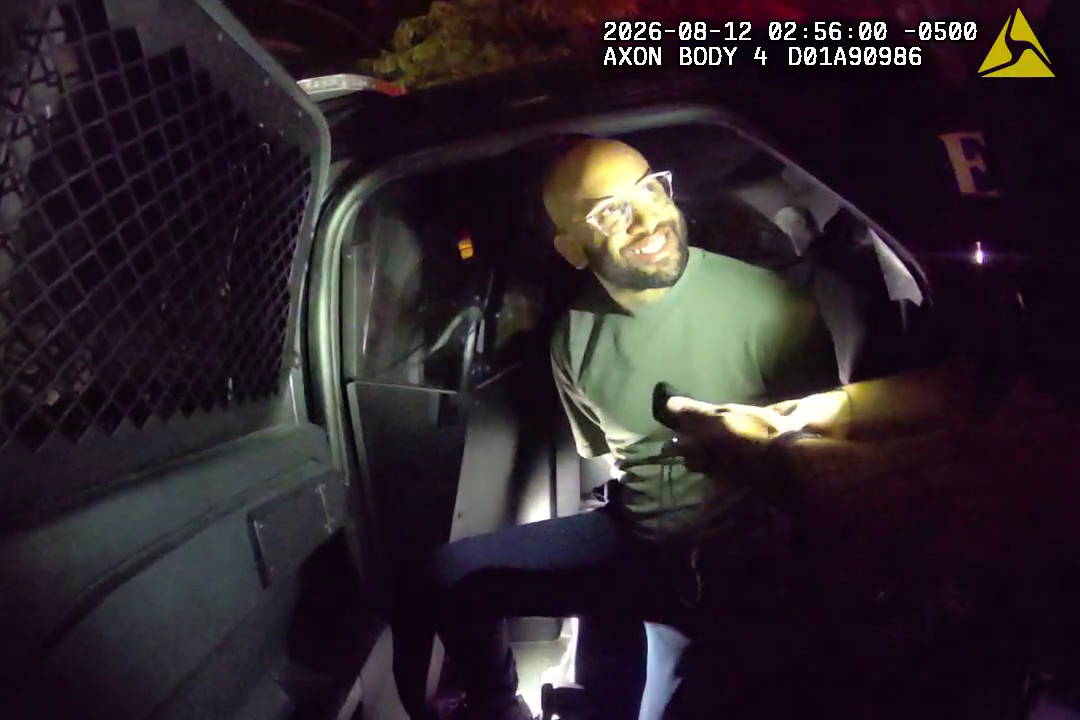
Last month Fort Worth, Texas police arrested political activist EJ Carrion a week after he cursed at a city council meeting. In his driveway, they told him the charge was “disrupting some kind of procession,” according to body cam footage of the arrest obtained by 404 Media.
Carrion was one of hundreds of Tarrant County residents who’d turned up for a Commissioner's Court meeting on August 4 to speak out against a plan to close a third of the area’s polling places. “You said you were all about cooling the temperature and yet you vote for this extremist bullshit. All of you are bullshit,” Carrion said during the meeting on August 4 before walking out the door.
A week later, Fort Worth Police pulled Carrion over in his driveway and arrested him.
“Why am I getting arrested?” Carrion asked?“So you have a warrant for disorderly conduct, disrupting a meeting. It’s from Tarrant County. I don’t have the details on it [...] it’s a misdemeanor warrant. We’ll take you to Tarrant County and you’ll see the judge and that’s it,” one of the officers said.
“Wait [...] see the judge?” Carrion said. “Guys [...] are you guys serious right now?”
“All it says for us is that you did have a warrant for your arrest from Tarrant County for a disorderly conduct for disrupting some type of procession. I’m not sure what the details are,” the police said.
“Because I disrupted a meeting [...] so because someone doesn’t like me, you’re arresting me? That’s what it sounds like,” Carrion said. “Because of fucking Tim O’Hare, it’s unbelievable.”
“Because of who?”
“Judge Tim O’Hare [...] he’s the biggest pussy,” Carrion said.
Judge Tim O’Hare is a county judge who presides over the Tarrant County Commission — one of the area’s ruling legislative bodies. Back in the August 4 meeting, O’Hare demanded police remove Carrion from the building. But Carrion was already leaving. “I’m walking out, small man,” Carrion said as he left.
As he was being arrested a week later, Carrion called a friend to tell him what was going on. “So, the judge put a warrant on you for getting kicked out of commissioner’s court?” The friend asked.“That’s what it sounds like,” Carrion said, his hands in cuffs while he sat in the back of a police car.
This is not the first time O’Hare has had people arrested for their behavior during public meetings. In 2025, O’Hare had two different people charged with Class A misdemeanors for clapping in support of someone’s speech during the public comment period of the meeting. On Monday, four women filed a federal lawsuit against O’Hare, claiming his tenure on the court has “created a culture of fear and chilled protected speech, cutting to the heart of the Constitution’s free speech and due process guarantees.”
Mia Hyder had never attended a public meeting before when she showed up to the city council meeting in Springfield, Missouri. After briefly speaking at a podium during a public comment period, she was arrested and dragged away in handcuffs. “Hello, my name is Mylie Hyder. I’m a Springfield, Missouri constituent, and I’m here to oppose the usage of ALPR cameras, most commonly made by Flock Safety. These cameras are not just surveillance,” Hyder started.“I’m sorry ma’am,” Springfield Mayor Jef
Mia Hyder had never attended a public meeting before when she showed up to the city council meeting in Springfield, Missouri. After briefly speaking at a podium during a public comment period, she was arrested and dragged away in handcuffs.
“Hello, my name is Mylie Hyder. I’m a Springfield, Missouri constituent, and I’m here to oppose the usage of ALPR cameras, most commonly made by Flock Safety. These cameras are not just surveillance,” Hyder started.
“I’m sorry ma’am,” Springfield Mayor Jeff Schrag said. Her mic was cut. A cop approached her at the podium.
Hyder held up both of her middle fingers while continuing to speak: “They are an invasion of our privacy,” she said.
The cop said, “You’re under arrest,” grabbed her arms, and pulled her out of the room. “I can do this all night. I get paid by the hour,” the cop added.
“Does this conclude the public hearing,” Schrag said.
“Yes sir,” a council member responded. The meeting continued with a city employee talking about sidewalk code.
Hyder was one of two people arrested in Springfield, Missouri on Monday during a city council meeting where tensions rose after the council stalled a review of the city’s Flock cameras.
Dozens of people showed up to the Springfield City Council Meeting on September 22 with plans to let city leaders know how they felt about the city’s use of automated license plate readers. There was a resolution before the council that would trigger a review of the controversial camera systems, but Schrag moved to send the resolution to committee and prevent public comment on the issue.
The move passed 5 - 3, the crowd shouted at city leaders, and Schrag ordered citizens to clear the room and shut off cameras recording the event. As people left, police detained and ticketed Noah Powell. Later in the evening Mia Hyder tried to speak out about Flock during public comments about a housing issue. Police arrested her while Schrag looked on. “Sorry ma’m,” the mayor said as police led Hyder away in handcuffs.
Springfield has 41 Flock cameras, according to the Flock Transparency Portal. City councilor Brandon Jenson had proposed a resolution to “conduct a comprehensive review of all relevant contracts” related to the ALPR cameras. The council was set to vote on Jensons’ proposed review on Monday and hear comments from the community. But when the resolution came up during the meeting, Mayor Schrag immediately pushed to send it to a committee and avoid public comment.
Jenson spoke before the vote to push the resolution to a committee. “All I’m trying to do is get people answers to some real questions that they’ve brought to us for months. And it’s a shame that it comes to this sort of, I guess, theater that I’m a part of to try to get those answers,” he said. “This isn’t how government is supposed to run. It’s just disappointing. And we’re not even allowing folks to speak who clearly came out to share their voices tonight.”
When the council voted to send the bill to committee, someone in the crowd shouted “Bullshit!” Schrag tried to move on to the next agenda item, but the crowd booed and yelled. The mayor then paused the meeting, turned off the cameras, and cleared the room.
Police detained Powell, a freelance photographer in Springfield, as people filed out of the room. “I don’t have a lot of experience getting tickets or being detained,” Powell told 404 Media. “So this is kind of new for me.”
Footage obtained by 404 Media showed several people leaving the city council meeting and yelling at city leaders. Powell said he was the only person put in handcuffs, detained, and ticketed at that moment. The Springfield Police Department did not return 404 Media’s request for comment.
“Well, I said: ‘Jeff Schrag is a cuck.’ I said: ‘Fuck you Jeff.’ I said: ‘Worthless’ and then, also, the final thing I said was: ‘Jeff Schrag has a tiny, stinky, cock,’” Powell explained. “I just let myself get handcuffed and let them do whatever power trip they wanted to do. Got my ticket and left.”
Powell said he was only in handcuffs for five minutes. “They just wanted to put on a show,” he explained. Powell added that he planned to fight the charge in court. “I’ve already sought legal representation, so we’re going to see where it gets […] I don’t think I should have been put in cuffs. I read the law, the city ordinance, and it said that I should have just been asked to leave.”
Hyder told 404 Media that she’d just moved to the area and thought that the city council meeting would be a good place to get involved in the community. She said that she’d stayed behind when Schrag cleared the room earlier in the evening.“I don’t know why I stayed. I just felt like not staying was giving up,” she said. Hyder explained that she waited until the public comment period for a different issue, filled out a form to talk, and then got up to deliver a written statement about Flock cameras. She said she didn’t flip off the city council until she saw the police officer approaching.
“After I saw the police officer out of the corner of my eye and everyone was kind of yelling at me, and there was a lot of ruckus, that’s when I pulled out the double birds,” she said.
💡
Seen something at a city council meeting? I would love to hear from you. Using a non-work device, you can message me securely on Signal at +1 347 762-9212 or send me an email at matthew@404media.co.
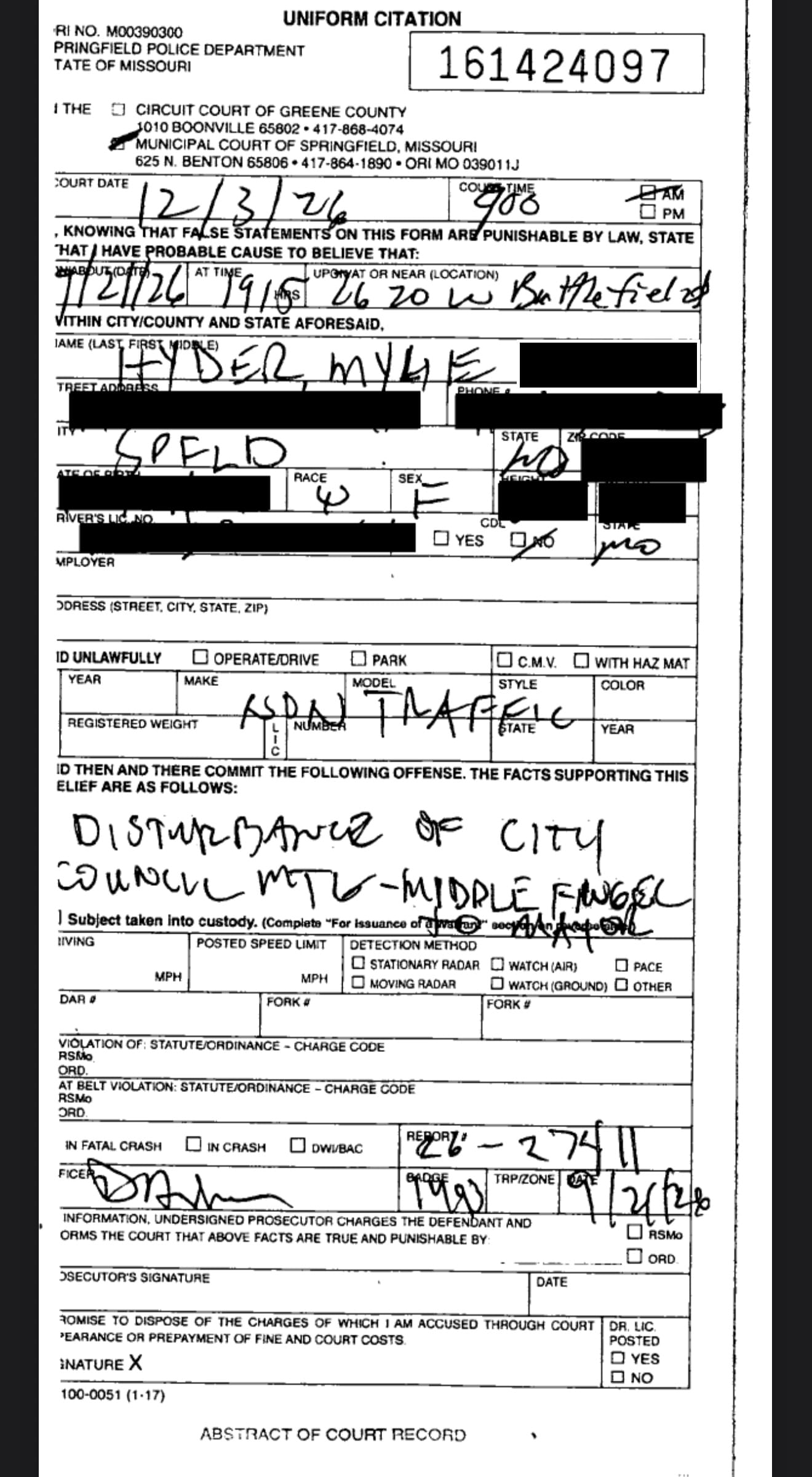
The police officer who arrested her said Hyder was being charged with disrupting the peace. He took her into the hallway outside of the meeting and held her in handcuffs for around five minutes before issuing her a ticket and letting her go.
Hyder told 404 Media she didn’t regret it. “I feel like being silent would have been like being complicit,” she said. “I felt like it was kind of stupid that I disturbed the peace. Okay, yeah, I did flip them off. That wasn’t a shining moment, but I did that when I was about to be arrested. When I knew my time was up.”
Hyder added she’d continue to attend city council meetings.
A copy of Hyder's ticket.
Flock Out SGF, a local group that’s lobbying against ALPRs in Springfield, told 404 Media that the resolution was meant as a compromise. “Many people came out to the council meeting and had carefully prepared statements for public comment, but no citizens were heard,” they said. “The two individuals who were arrested for voicing their concerns in the face of being silenced were not unreasonable, and we stand by their actions.”
Powell and Hyder are just the two latest American citizens detained or arrested this year for their behavior during a city council meeting. In February a farmer was arrested in Oklahoma for going over his time during a data center meeting. In Kansas, police arrested a high school teacher for clapping during public comments. In Texas, cops arrested a man in his driveway for public disturbance a week after he said “bullshit” during a county meeting.
Springfield did not return 404 Media’s request for comment.
Most people in the world who use AI feel good about the technology and believe it will be a net positive for the future, according to a new study from Gallup. This is not the case in the United States, however, which is one of the few countries surveyed where negative emotions towards AI outweigh the positive. The new survey from Gallup and Microsoft polled people in 37 different countries about AI. “The study, which will ultimately cover 140 countries, measures public engagement with AI acro
Most people in the world who use AI feel good about the technology and believe it will be a net positive for the future, according to a new study from Gallup. This is not the case in the United States, however, which is one of the few countries surveyed where negative emotions towards AI outweigh the positive.
The new survey from Gallup and Microsoft polled people in 37 different countries about AI. “The study, which will ultimately cover 140 countries, measures public engagement with AI across five dimensions. In addition to emotional response, the survey captures awareness, frequency of use, expected impact and trust,” the study said.
Most people polled — a median of 81% — were aware AI tools exist, but only a median of 43% used them daily. Gallup told 404 Media it defined a “daily user” as an employed person who used AI everyday for either work or personal reasons or an unemployed person who used the tech every day.
The study found that people had a mixed, but generally optimistic, view of artificial intelligence. “AI engagement can be viewed as an adoption ladder, moving from awareness to ever having used AI and then to more frequent use,” the survey said. Generally — but not always — the more someone used AI the more they trusted its results, the more positive they felt towards it, and the more they believed it would help make a better future.
Digging in, however, the results are more complicated. Some people who reported positive feelings towards AI also said they didn’t trust its results. “People may therefore see considerable potential in AI even while remaining uncertain about whether they can rely on the information it provides,” the survey said.
Daily users tended to trust AI “to provide accurate information,” according to the study. “The survey cannot establish whether greater trust leads people to use AI more often, whether experience with AI builds trust, or both. But the strength and consistency of the relationship suggest that trust and adoption are connected.”
Globally, most people surveyed felt good about AI and expected to improve their country. As AI adoption increased in a country, so too did positive feelings. But not in the United States, which was one of only three countries surveyed where negative emotions towards AI outweighed the positive.
Pablo Diego-Rosell, a senior scientist at Gallup, told 404 Media that he’d seen similar results in other western countries. “The Netherlands, Canada, the U.K., New Zealand, Ireland and Malta all rank near the top in terms of worry,” he said. He noted that he hasn’t seen survey results from some of the bigger European countries like Germany and France but said that worrying about AI “appears to be a uniquely Western phenomenon.”
Gallup called this the “Paradox of the Worried West.”
“The biggest unanswered question is causality. We see a very strong relationship between frequent AI use, greater trust and lower worry, but we do not know which direction that relationship runs,” Diego-Rosell said. “Does experience with AI make people more comfortable with it, or are people who already trust AI simply more willing to use it?”
“There is also a broader question about what trust in AI actually means. In this study, we measure one specific dimension: whether people trust AI to provide accurate information,” he added. “But trust in AI can also involve whether people believe it is reliable, safe, fair, transparent, protective of privacy, and likely to act in ways that serve their interests.
The west didn’t have a monopoly on negative emotions towards AI, however. The other two countries where negative emotions towards the technology outweighed the positive were Egypt and Palestine.
“One possibility is that these results partly reflect the broader emotional context in which people are evaluating AI. When people are living in environments where worry, stress or other negative emotions are already elevated, some of that broader emotional climate may shape how they react to a technology like AI,” Diego-Rosell said. “At the same time, our data do not allow us to determine how much of the response is specific to AI versus the wider circumstances people are experiencing.”
It’s possible that people in the US, Egypt, and Palestine are already anxious and worried and that this is coloring their perception of AI. Israel is waging war on Palestine, settling in its territory, and using AI to pick targets to bomb in Gaza.
Americans — where much of AI is built and first deployed — have been repeatedly told in the past few months by AI evangelists and company insiders that the technology could, literally, end all life on Earth. The constant stream of news stories about AI swarms “breaking containment” while AI experts claim there’s a one in ten chance the technology kills everyone on the planet probably had a hand in altering the American mood.
“The broader story is that public engagement with AI is much more complicated than simply being ‘for’ or ‘against’ it,” Diego-Rosell said. “People who are aware of AI are more likely to expect it to help than harm, and positive emotions outweigh negative ones. At the same time, trust in AI’s accuracy is considerably lower than optimism about its potential, and worry remains widespread in some countries. So optimism, skepticism and concern can coexist.”
Representatives from the University of Michigan faced tough questions and a lot of vitriol from the citizens of Ypsilanti Township Wednesday night. The University partnered with America’s nuclear weapons scientists at Los Alamos National Laboratories (LANL) to build a hyperscale data center in the Township and residents are pissed. On Wednesday night the University hosted a town hall meant to ameliorate people’s anger and concerns. It didn’t work.LANL and U of M want to build a $1.2 billion 2
Representatives from the University of Michigan faced tough questions and a lot of vitriol from the citizens of Ypsilanti Township Wednesday night. The University partnered with America’s nuclear weapons scientists at Los Alamos National Laboratories (LANL) to build a hyperscale data center in the Township and residents are pissed.
On Wednesday night the University hosted a town hall meant to ameliorate people’s anger and concerns. It didn’t work.
LANL and U of M want to build a $1.2 billion 220,000 hyperscale data center in Ypsilanti Township. The residents are worried about electricity costs, water usage, and noise like other communities across the country considering data centers. But citizens and leaders of the Township are also worried that this particular data center would further nuclear weapon research. They’ve also said the University has condescended to them during the entire process, lied, and ignored them.
Judging by footage of the Wednesday night’s town hall, U of M didn’t win anyone over and openly deepened citizens’ anger and mistrust. U of M faculty director Patricia Hurn delivered a prepared statement while people in the audience shouted at her. “This facility is going to be used for many different purposes including improving cancer care, strengthening the power grid, accelerating drug discovery, and sustainable computing,” she said over jeers from the crowd.
“Many of us are interested in finding the generalized cure for cancer,” Hurn said. The crowd laughed and mocked her. She pressed on. “And many of us want to drop infant mortality. Some of us want clean energy.
“How about healthcare?” Someone shouted from the crowd.
“All of those things are going to require — and some of you are listening to me so I’ll just keep talking to you — some of us want those answers and we know that to get them is going to take really strong and big abilities to do computing,” she said.
Steven Ceccio, the project’s lead engineer, attempted to address some of the practical concerns surrounding the project. “The project is tremendously smaller in scope and size than these commercial data centers,” he said, pointing to a slide that compared the size of the proposed LANL data center to The Barn in nearby Saline Township, a massive $56 billion 1.4 gigawatt OpenAI project.
Later in the night, a man named Andy called Ceccio out. He said he worked in data centers all around the country. “I think it’s convenient that this is 1/20th the size of a data center when you’re comparing it to The Barn that’s going over in Saline. That’s an aberration. That’s not a normal sized data center. When you compare the data center that you’re about to build to the average data center in the United States, you’re at the very top of that bracket,” Andy said.
“I’ve been to beautiful data centers, absolutely gorgeous, they poured tons of money into them. But they’re still loud. And they still have emissions and they still have generators,” Andy added. “They don’t belong in residential areas next to schools and apartments. When you go to these facilities they’re in the middle of nowhere because that’s where they belong.”
Throughout the evening, representatives from the University avoided calling the project a data center. “The biggest difference besides its size is its purpose. It’s really a scientific computing center, it’s not a commercial activity — Los Alamos and U of M are nonprofit activities and we’re using this to advance scientific research and development,” Ceccio said.
Los Alamos did not attend the meeting. “If Los Alamos cared so much why aren’t they here?” A woman named Jamie asked at the town hall.
The laboratory sent a letter to be read at the meeting in lieu of attending in person, meant to address community concerns. The letter called supercomputing an essential tool. “It allows researchers to model, analyze, and test complex systems, and it powers discovery faster and with more precision than our Manhattan project founders could have thought possible,” it said.
LANL stressed that there would be no plutonium on site in Ypsialanti Michigan and that no weapons would be produced there. “Instead, the facility would use advanced computing to model complex systems, run sophisticated simulations, and analyze massive datasets,” the letter said. LANL pointed to its work modeling wildfire behavior, tracking diseases, and strengthening the power grid.
But LANL also conceded that the data center would also be used as part of nuclear weapons research and development. “As part of Los Alamos’ national security mission, some computational research conducted using the facility could relate to nuclear modernization,” it said. This work uses modeling and simulation to help scientists assess the safety, security, and reliability of the nation’s existing nuclear stockpile without nuclear testing. It is computational research — not the manufacturing, sample, testing, or production of nuclear weapons.”
In several public meetings of the Ypsilanti Township board, both residents and leaders have speculated that the Los Alamos data center might be a target in a drone strike. Douglas Winters, the attorney for Ypsilanti Township, even called the proposed site a high-value target. “It is important to emphasize that neither Los Alamos, the University of Michigan, nor any state or federal agency has classified it that way,” LANL’s letter said, adding that the Township board and city attorney had “created that terminology without basis.”
“It’s kind of a silly thing to say that, somehow, I made up the term ‘high-value target,’” Winters told 404 Media. “Or, somehow, they don’t recognize that Los Alamos — the worldwide name associated with the atomic bomb [...] would not be considered a high-value target when they have $1.2 billion worth of computers that they describe as being the biggest, baddest, and fastest in the world.”
Anger built as the town hall went on.
Jennifer Burnside said she lives “roughly two miles from the proposed site.” She said she had worked at the University for 10 years and was shocked at how it was behaving. “There is an outside power that is coming into a community that does not play by the same rules. They’re not beholden to the community and do not have to answer for their actions,” she said. “It feels like we’re being taken advantage of. We don’t want this data center and we should not have it forced upon us.”
“I live about two and a half miles from the proposed site in a fairly poor neighborhood. Most of us couldn’t afford to move out if we wanted to if this thing is as heinous as we think it will be,” a man named Corey said. “I think the thrust of your argument this evening has been: ‘You’ve heard that it’ll be really really really really bad. It’ll only be really bad.’ And that’s not good enough for us.”
Corey added that the University had made themselves into cartoon-style mustache twirling villains. “There is no trust, we don’t believe you,” he said. “We don’t want Los Alamos here, they’re one of the biggest villains of the 20th century,” he said. “We want them far far away from us and everyone else.”
“You guys know where you fucked up, right? You didn’t do this two years ago. Why didn’t you approach the community first?” A Township resident named Eric said. “You’re asking us to come aboard when the water’s already poisoned. No pun intended.”
Ypsilanti Township resident and University of Michigan graduate Shalina Nicohl Rankin said that the University needed to show up with the board of regents next time. “This is our home. We said loudly and clearly that we do not wantyou here. We did not invite you,” she said. “I was taught leaders and best [a reference to the University’s motto]. Leaders and best, but you crawl into bed with Los Alamos, one of the most despicable companies on the face of the Earth. Who is known for giving people cancer and developing nuclear bombs and you bring it into our backyard.”
Fielding questions about nuclear weapons research, engineer Ceccio lamented that the weapons existed. “I would love to live in a world where we have no nuclear weapons. I would love to live in a world where we have no nuclear proliferation [...] and I would do everything I can to make that world happen,” he said. “But right now, some of the institutions of our country are here for our national security and Los Alamos is one of them. And I, for one, am proud to be part of them to help in this important mission.”
The people of Ypsilanti Township were not proud and made it clear that they did not feel like their concerns were considered. The final speaker of the evening was Township supervisor Brenda Stumbo. She said the University had repeatedly lied to the Township’s citizens and leaders. “It started with a lie,” Stumbo said. “People are leaving. They're selling their homes because of the thought of Los Alamos being here. That’s a fact. The emotion and the rage is fear. We don’t deserve this. Please, change your mind.”
The town hall ran three hours and the University has promised to hold another October first. Winters told 404 Media he wouldn’t be attending. “Maybe they should come to our September 15 board meeting,” he said.
The University of Michigan did not return 404 Media’s request for comment.
Doctor Doom took the podium at a Public Safety Committee meeting on Tuesday to thank the council for covering the city in surveillance cameras. “Doom took over Axon enterprises [...] and now Doom will be watching you. Your continued cooperation expanding Doom’s surveillance network is required,” the Marvel supervillain said.“This is the first of Doom’s gifts to the city of Seattle. The second gift is this: Doom will expand the real-time crime center to all neighborhoods with over 1,000 camera
Doctor Doom took the podium at a Public Safety Committee meeting on Tuesday to thank the council for covering the city in surveillance cameras. “Doom took over Axon enterprises [...] and now Doom will be watching you. Your continued cooperation expanding Doom’s surveillance network is required,” the Marvel supervillain said.
“This is the first of Doom’s gifts to the city of Seattle. The second gift is this: Doom will expand the real-time crime center to all neighborhoods with over 1,000 cameras watching every move,” Doom said. “Doom has total dominion over the city of Seattle. Doom will be behind the cameras watching those seeking reproductive or gender-affirming care. Doom will be able to find your immigrant neighbors and Doom will be able to ensure the safety of the women of Seattle alongside officers that stalk their exes.”
Doom is actually Clifford Cawthon, a policy advisor for the Washington State Department of Commerce. Cawthorn donned the silver mask and gloves to draw attention to tech-driven mass surveillance in Seattle, an issue he’s been passionate about for years. Cawthon is also a member of Community Not Cameras, a local activist group that’s attempting to reign in Seattle’s use of surveillance systems sold by Flock and Axon.
Seattle’s PD has access to 62 surveillance cameras around the city, many of them hooked up to a real-time crime center (RTCC). “The RTCC takes in information from a vast pool of sources, including CCTV, [body-worn camera], geolocation data, automatic license plate recognition (ALPR), alert sources like shot detection or alarm systems, and computer-aided dispatch (CAD) software,” according to a description on the surveillance company Axon’s website.
Cawthon said he and a colleague got the idea for appearing before the city council as Doctor Doom after seeing an activist in California go viral for dressing as Darth Vader to talk about Flock cameras at a public meeting. They’d also recently visited Seattle’s RTCC and were struck by how much it resembled a super villain’s lair. Cawthon told 404 Media it reminded him of the film Minority Report.
“There is a wall of about nine screens in which they can bring up cameras from around the city at any given time,” Cawthon said. “They can also log in, conceivably, even from their home computers with the right credentials [...] I am not reassured by the kind of dazzling scale of this complex communications center.”
After the visit to the RTCC and after Vader appeared in California, one of Cawthon’s colleagues called him with an idea. “What if Doctor Doom went to the city council?” Cawthon said. Community Not Cameras was looking to drive attention to the issue of mass surveillance and had just drafted a petition with specific asks of the city council. A pop-culture infused stunt might get people talking.
“We thought, wouldn’t it be interesting if the Seattle city council meets Victor von Doom, the Lord Emperor of Latveria,” Cawthon told me, adopting the vaguely Eastern European accent of Doctor Doom. “And Victor von Doom shares with this pathetic American municipal council that they are actually doing Doom’s bidding without even realizing it.”
Cawthon is a comics fan and knew that Doom was on people’s radar because he’s the villain in the forthcoming Avengers Doomsday. He told me that pop culture has taught people to identify with heroes like the Jedi, the Avengers, the X-Men, and the Fantastic Four. “Would our heroes really use tools of mass surveillance on a regular basis in a way that’s unaccountable and hurts innocent people? They wouldn’t,” he said.
“The absurdity of the real time crime center and the absurdity of Axon and Flock owning these devices and this data being used around the country to capture and lock up and deport people and to harass women,” Cawthon said in his normal voice. “It was so clear this is a tool of abuse and being used in such villainous ways [...] we figured, why not use satire, political theater, to really illustrate what these tools mean.”
Cawthon grandstanded behind the podium at the Seattle city council meeting on Tuesday. “Doom is above all. The means are more than justified by the ends,” he said. “Doom will keep you safe,” and “We must work to crush any dissent to Doom’s vision of public safety.”
On the phone with me, Cawthon ran through the list of his problems with surveillance tech. “The data is not secure, in many cases these companies — and they’re very open about this — work with ICE, work with the US military, and border patrol. There are multiple instances of police officers literally using this data to stalk their partners and abuse everyday people. And, of course, racial profiling,” he said. “The increased potential for racist harassment of black and brown folks like myself.”
Cawthon said reactions to his political theater have been positive and that it's achieved the goal of driving people to look at the Community Not Cameras petition. The group wants Seattle’s city council to take five actions including redirecting the flow of money away from surveillance tech and back into community-based crime prevention programs.
He said that the council had already agreed to its first demand. Last month a committee voted to move $250,000 away from CCTV expansion. Now the measure just needs approval from the full council.
“Doom will be watching you. Glory to Latveria,” Doom said during the city council meeting on Tuesday.
Last month activist Anthony Ralphs showed up to a San Diego City Council meeting dressed as Darth Vader and explained how much the Empire loved Flock cameras. Footage of the stunt went viral. Ralphs told 404 Media that he’d dressed as Vader after years of attending public meetings as himself and failing to draw attention to the issues of surveillance. Earlier this month, a woman attended a public meeting in Texas in full Joker makeup to complain about decorum at city council meetings.
According to Cawthon, this was all about “donning this pop culture persona and drawing a connection between what is in reality a massive threat to our civil liberties and civil rights.”
“These stories, these ideas about fascism, authoritarianism, they can be very close to home if we let them. Becoming the character and going to city councils is political theater in the best way. It is informing people in a way that is accessible because you know these cultural figures are in the zeitgeist,” he said. “I know plenty of people that, when I talk about public policy, they just throw up their hands and say ‘Okay, well, that’s cool and thank you for sharing with me but politics isn’t my thing,” he said. “But I can talk Marvel with them, I can talk video games, and we have a common language.”
For the last three years Jake Welch has been 3D scanning public restrooms and archiving their peculiarities on a website called The Restroom Archive. “It started as a joke,” Welch, the site’s creator and head archivist, told 404 Media. The Restroom Archive describes itself as “an ongoing repository of publicly accessible restrooms.” When someone first visits the Archive, the site serves them a random 3D scan of a public restroom, its location, and a brief written description. Hurricane, Utah’
For the last three years Jake Welch has been 3D scanning public restrooms and archiving their peculiarities on a website called The Restroom Archive. “It started as a joke,” Welch, the site’s creator and head archivist, told 404 Media.
The Restroom Archive describes itself as “an ongoing repository of publicly accessible restrooms.” When someone first visits the Archive, the site serves them a random 3D scan of a public restroom, its location, and a brief written description. Hurricane, Utah’s Gypsy Emporium Antique Mall, for example, was scanned on April 11, 2026 and features paintings of a squirt gun on two of its four walls. “This restroom is accessed by passing through the antique mall through a back hallway and through the door of a jail cell,” the description says.
The renders are created with smartphone photogrammetry apps like Polycam which take hundreds of photos of an area and stitches them together to create a 3D environment. The results are imperfect. The rooms appear to run at the seams as if they’re built from wax and the tech has trouble with reflective surfaces, sometimes rendering mirrors as an abyss. There’s often a blank spot or warp in the render where the person who took the photos has been marred out of the scan. Sometimes the process captures a shoe or bit of arm which ends up in the final render unattached to a human.
The brief descriptions and imperfect scans make the Archive uncanny, but also funny. “I had just discovered Polycam for the first time, and went out with friends one night, staying out late. We went to an IHOP, and I kind of started to scan the restaurant as a joke,” Welch, a freelance designer in NYC when he’s not scanning restrooms, told 404 Media.
A month later, he scanned a bathroom restaurant while out with his wife. “I came back and we were just laughing at how funny of an idea that was and I kind of just kept doing it,” he said.
After scanning the restaurant, Welch went on a road trip with friends and scanned all the restrooms he hit along the way. “After I had like five or six of them, I started noticing things that I liked about each of them. I was like: ‘I like that this one has this weird trash can from outside in the restroom,’ or ‘I love that this one has the hand dryer plugged into an outlet right below it.’ It was all of these things that I thought were just hilarious, but also kind of interesting,” he said.
“Some of them are scary. Some of them show their wear from the use of people passing through them. But some of them are really interesting and well-designed, well-decorated, or super eclectic,” Welch said. “Maybe this is the artist brain in me but I started to see them as storytelling. They very much reflect the culture of where they’re situated and the people that are using them.”
According to Welch, some of the most frightening restrooms are the ones he saw on road trips. “I feel like it’s always the ones that are on the highway as you’re passing through a truck stop. There’s the Minute Market in Washington, Utah. So grimy looking. Or ampm in Barstow, California. Sometimes in its bar where it’s just totally graffitied and worn. The mirror is completely covered, you can’t even see in it. They’re often scary,” he said.
Welch said he’d also observed vast regional differences in America’s toilets. I think it has a lot to do with suburban versus urban,” he said. “Most of my restrooms in Utah are quite spacious, or maybe a little bit more commercial because there's a lot of [chain restaurants] in Utah. Here in New York, all the restrooms are really small, really impromptu. Oftentimes, I'm scanning them in these tiny hole-in-the-wall restaurants where you have to walk through the kitchen to get to the back, and it's obvious that they don't let everybody use the restroom. So those ones are usually a little bit more decrepit, a little bit more neglected, or sometimes they use them like storage rooms, a little bit more multifunctional because space is tighter in New York.”
After three years of scanning the restrooms and uploading them, Welch decided to overhaul the Archive and open it up to public submissions. “There are submission agreements that they have to abide by, but they're really loose,” he said. “It's it's things like just making sure that the scans are quality, making sure that they're not scanning anything too terrible or too gross because I have to vet all of them before they're posted, or, you know, making sure that people aren't trespassing or aren't scanning private residential restrooms or anything like that.”
Most Android and iOS smartphones can handle scanning a bathroom, but Welch preferred his iPhone. “If it’s a pro model, it has lidar, which uses lasers in your phone to measure distance,” he said. “I don’t even know why they have that. It feels like the use cases are kind of limited, but for me, it’s like I can’t get any other phone besides a pro model anymore because I like the lidar too much for bathroom scanning.”
There’s better methods of scanning that would create cleaner and more accurate visions of the world’s bathrooms. “I’ve had a lot of people in the comments in some of my videos saying that I should use Gaussian splats, which are a newer technique for making 3D models, and they’re a lot higher fidelity,” Welch said. “It’s built up with these blurry-looking point clouds, and they’re a little bit more crisp. But I kind of like this aesthetic of the blobby, stitched together photogrammetry. It kind of feels like it’s befitting of the space.”
He also liked the strange abysses the iPhone makes. “Another aspect of the lidar, since it’s lasers, when it bounces off a reflective surface you get really weird artifacts. So that’s why, if you look at a lot of the scans, a lot of the trash cans or a lot of the mirrors, they get really really wacky. So I think that’s fun,” he said.
When he set out to redesign the site a few weeks ago, Welch said it was important that he take it as seriously as possible. The contrast between the strange subject matter and the serious archive was important. “I started doing a lot of research on real life internet archives used by museums, libraries, and also just started doing research on public bathroom signage, and started to pull together these conventions to design a new website,” he said. “And part of that was the descriptions [...] there's something about the subject matter being so funny and humorous and taboo that made me want to completely steer away from that and take the archive 100% seriously.”
The redesign, and a viral Instagram reel, drove traffic to the Archive and submissions started to come. “I’ve had a few from around the world. I had one in Dublin that’s a typical tavern-pub bathroom, but in the description they said that the walls were covered with tags of left-wing groups and soccer clubs,” he said. “To my untrained eye, as an American, I wouldn’t have known.”
And, of course, there were new and different kinds of scary public bathrooms. “The very first user-submitted submission was in the basement of the Tri-Cities airport in Tennessee and it had been completely gutted. It’s just a dirt room,” he said. “I opened it up and I’m like, ‘what the hell am I looking at?’ And then I notice in the corner, like the ghost of an imprint of a urinal with the plumbing still attached. I'm like, ‘oh my God, this is a restroom.’ It was such a left field submission, but it was honestly kind of validating to me of why I should open it up to the public.”
Welch told me he envisioned a future where bathroom scans poured in from around the world “It's cool to see new restrooms. I'm hoping that it gets attention in other parts of the world where maybe restroom designs are different,” he said.
Then he told me about a hole in his archive. “Sign up to be an archivist,” he said. “We need your scans in South Carolina.”
A city in Oklahoma tried to charge a farmer more than $17,000 to fulfill a public records request for information related to a proposed data center and the farmer’s arrest at a city council meeting. Now, in a win for the farmer, the State’s attorney general has stepped in and told the city to drop the fees and “provide access promptly” to the documents.Farmer Darren Blanchard attended a meeting about Project Mustang — a proposed 225 acre data center in Claremore, Oklahoma — in February and pl
A city in Oklahoma tried to charge a farmer more than $17,000 to fulfill a public records request for information related to a proposed data center and the farmer’s arrest at a city council meeting. Now, in a win for the farmer, the State’s attorney general has stepped in and told the city to drop the fees and “provide access promptly” to the documents.
Farmer Darren Blanchard attended a meeting about Project Mustang — a proposed 225 acre data center in Claremore, Oklahoma — in February and planned to speak in opposition to the project. He left in handcuffs after the city council ordered him arrested for going 30 seconds over his allotted three minute speaking limit.
Claremore charged Blanchard with trespassing, a municipal crime with a $200 penalty. Blanchard pleaded not guilty, hired an attorney, and vowed to fight the charges on free speech grounds. As part of his defense, Blanchard and his lawyers filed a public records request asking the bodycam footage from the arrest and city records related to previous disturbances at public meetings. Claremore told Blanchard and his lawyers that they’d be happy to fulfill his request, but it would cost $17,125.44.
Katie Griffin, one of Blanchard's lawyers, filed a complaint with the Oklahoma Attorney General about the fees and requested someone at the State take a look. Claremore sent its own letter to the AG, outlining why it thought the fees were justified. “The City knows and is aware that any documents released to Mr. Blanchard and to those associated with him, regardless of the privacy implications of individuals named in such documents, are subject to wide distribution, including on social media,” said Claremore’s lawyers in a copy of the letter obtained by 404 Media.
Claremore’s lawyers also complained that Griffin wouldn’t narrow the focus of her request.“Her persistence in maintaining an overly onerous request demonstrates that this dispute has nothing to do with transparency and likely has everything to do with causing excessive time/money expense to the City in order to generate public sympathy for her client and negative publicity for the City,” Claremore’s lawyers said.
Blanchard’s legal team told 404 Media this statement “is affirmatively false” and that they had, in fact, narrowed the scope of the original request. “In response to our narrowed request, RFR raised the City of Claremore's fee estimate for the production of these records from $16,540.44 to $17,125.44. No further requests for clarification have been received by Mr. Blanchard's legal team from RFR to date,” Blanchard’s legal team said.
The bulk of the fees Claremore wanted to charge are for a legal review of 2,800 records related to Blanchard’s arrest and Claremore’s relationship with security contractors and Rogers State University where the meeting took place. Claremore said that the legal review “to ensure that all information which must be withheld relating to members of the public and the City’s personnel is redacted in order to protect their privacy” would cost $16,540.44.
Claremore also wanted to charge a fee of $585 for a 15 hour search — roughly what it costs to employ a city clerk for two days. To do otherwise, the city argued, would cause “excessive disruption to its essential functions,” according to a letter Claremore’s lawyers sent to the Oklahoma Attorney General’s office.
Anthony Sykes, an Assistant Attorney General for Oklahoma, didn’t accept Claremore’s argument, according to a copy of his response obtained by 404 Media. Sykes explained that Oklahoma’s laws only allowed the City to charge for “direct costs of record copying, or mechanical reproduction.” A public body can charge fees for records requests, but only for the direct cost of searching and copying. Critically, if it charges fees at all it must disclose them publicly.
“The City has not posted a schedule of fees as required by the Open Records Act. Having failed to give the requisite notice of the fees charged for public access to City records, the City is foreclosed from charging search fees,” Sykes said. “If I were to conclude otherwise, there would be no incentive for public bodies to comply with the statute. They could simply ignore what the ORA requires and charge what they deem reasonable on a case-by-case basis.”
“I also note that the City also failed to explain how 15 hours of staff time would cause ‘excessive disruption’ of its ‘essential functions,’ such that a search fee would be statutorily permissible in the first place,” Sykes added in a footnote. “Similarly, the City has not provided any justification for charging the hourly rate of the City Clerk — as opposed to a less costly member of the Clerk’s staff — to search for the records.”
Claremore also said it had found more than 10 hours of bodycam footage from Blanchard’s arrest but, again, needed time to review it “to ensure all available redactions are made to protect the privacy of the public and City personnel,” Claremore’s lawyers said. “Much of the footage at issue in Ms. Griffin’s request was taken in a very crowded room and features an incalculable number of people. A review of this footage by legal counsel is required in order to determine what, if any, portions should be redacted as required by law.” 404 Media acquired a portion of the bodycam footage from Blanchard’s arrest and published it in June.
Sykes told Claremore to release the footage without a lengthy review and redaction process. “The footage sought here is of a public meeting attended by scores of people,” he said in his response to the City. “No one in attendance had any reasonable expectation of privacy, and the City has not identified any provision of state or federal law that justifies redaction of any portion of the footage [...] the City should be able to provide access promptly.”
Blanchard’s legal team told 404 Media it was “grateful for the intervention of the Attorney General's Office in this matter and their favorable advisement advocating for governmental transparency and compliance with the Open Records Act.”
“Mr. Loeffler [one of Claremore’s lawyers] responded to our correspondence timely to indicate that he anticipates the City of Claremore will be finished assembling these records ‘soon.’ He did not provide a date certain by which these records would be made available,” Blanchard’s legal team said. “He also informed us that the video footage of Mr. Blanchard's arrest is ready to be picked up from the Claremore Police Department. Mr. Loeffler did not indicate how long those records had been available.”
Blanchard’s case is one of a number of people who’ve been arrested at public city meetings in the past year. Police arrested a high school teacher in Kansas for clapping during the public comment period of a city meeting about data centers. The city charged them with interfering with law enforcement and later dropped the case. In Texas a man was arrested in his driveway a week after he’d said “bullshit” during a public city meeting.
The City of Claremore, Oklahoma did not return 404 Media’s request for comment.
Update 9/2/26: This story has been updated to include comments from Blanchard’s legal team.
Brevard County deputy sheriff Michael Fultz resigned from the force after an internal investigation detailed extreme cases of alleged sexual misconduct, racism, and abuse, including Fultz’s use of Flock to stalk his ex-girlfriend. News6 in Florida first reported the story, and 404 Media has uncovered additional details about the former deputy’s use of Flock after obtaining a copy of the investigation. Hired in 2024, Brevard County named Fultz its Deputy of the Year in 2025. The day of the cer
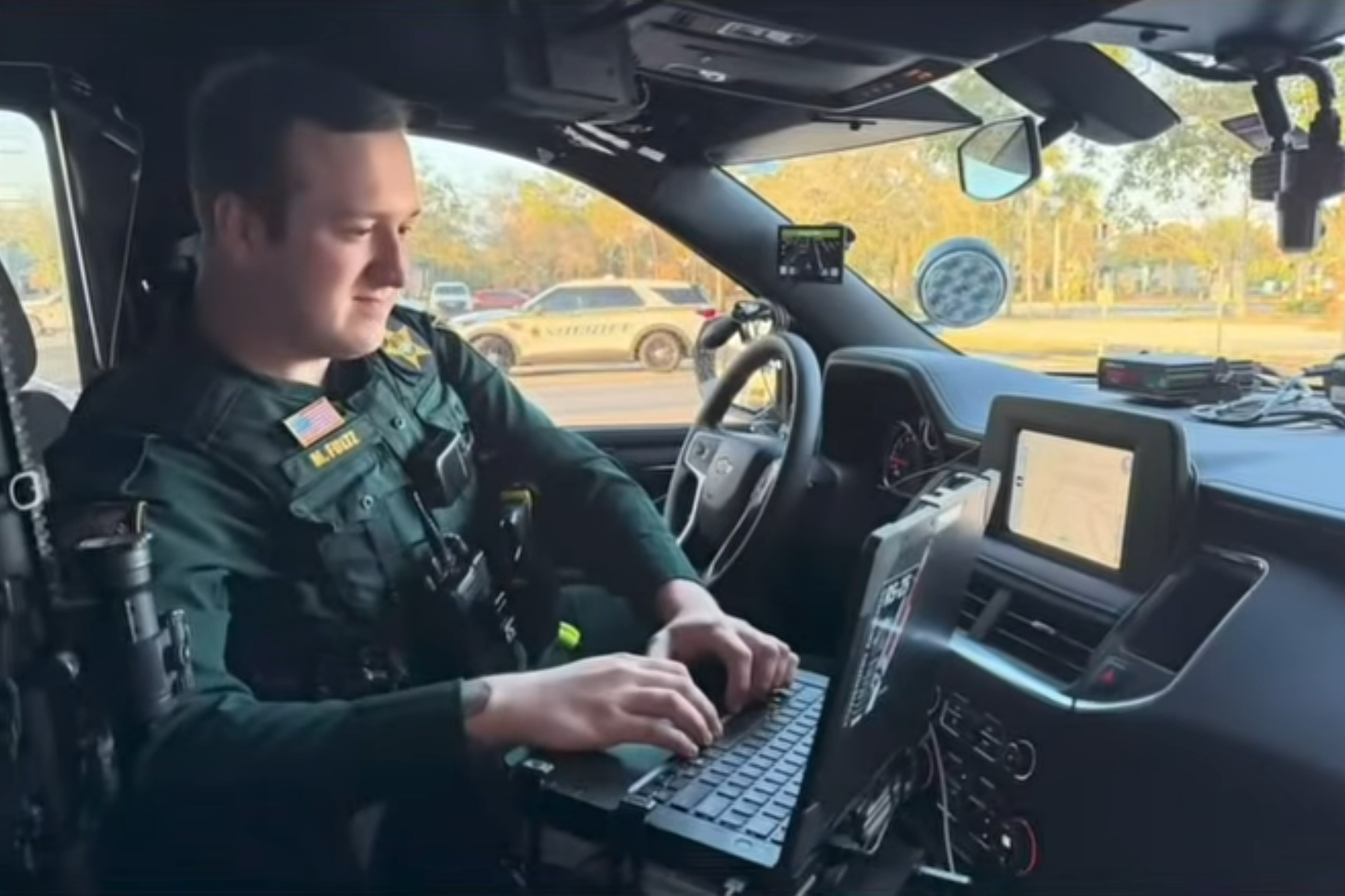
Brevard County deputy sheriff Michael Fultz resigned from the force after an internal investigation detailed extreme cases of alleged sexual misconduct, racism, and abuse, including Fultz’s use of Flock to stalk his ex-girlfriend. News6 in Florida first reported the story, and 404 Media has uncovered additional details about the former deputy’s use of Flock after obtaining a copy of the investigation.
Hired in 2024, Brevard County named Fultz its Deputy of the Year in 2025. The day of the ceremony Fultz’s ex-girlfriend sent a letter of complaint to the sheriff’s office with a long list of complaints about his behavior. The letter was enough to prompt the sheriffs to investigate Fultz which is when they discovered he’d used Flock to stalk her.
The 43-page investigation found Fultz had posed for pictures as Adolf Hitler, freely used racial slurs in texts, masturbated on camera in his police vehicle, took pictures of his ex-girlfriend with his service weapon in her mouth during sex, repeatedly broke the law to generate clout online for his motorcycle themed Instagram and TikTok accounts, and used Flock to stalk his ex-girlfriend.
A synthetic Israel-funded think tank has published more than 100 articles since it launched less than a month ago. First spotted by Politico, the Hanover Institute for Public Policy is run by the American advertising firm Piro Inc, paid for by Israel, and appears designed to generate content for LLMs that are continually scanning the internet to inform their responses, with the goal of tweaking chatbot answers in favor of Israel. Every few days, the Hanover Institute publishes around a dozen
A synthetic Israel-funded think tank has published more than 100 articles since it launched less than a month ago. First spotted by Politico, the Hanover Institute for Public Policy is run by the American advertising firm Piro Inc, paid for by Israel, and appears designed to generate content for LLMs that are continually scanning the internet to inform their responses, with the goal of tweaking chatbot answers in favor of Israel.
Every few days, the Hanover Institute publishes around a dozen articles related to Israel, antisemitism, and Palestine. Every article’s headline has a question. The articles have no byline, often contain graphs, and cite real sources but do not link to them.
“The reframe is the denominator. Six documents from five bodies is a count of assertions, not a change in the kind of evidence available,” it said. “Adding a seventh organization stating the same conclusion does not convert an organizational determination into an adjudicated finding, because the evidentiary route is the same in each case: a body assembling material, applying its own threshold, and publishing.”
The site’s about page said the lack of a byline was “the convention at institutional publishers” and that it wants readers to weigh the sources “rather than the author.”
“Accountability for the material is not anonymous,” Hanover said on its about page. “The registrant responsible for distributing it is named in the disclosure at the foot of every page and on the public register at the Department of Justice, where each report is filed. The researchers are not named because a finding should stand or fall on its sources rather than on the standing of whoever assembled it, and because the subject attracts harassment. That is a considered editorial position, not an oversight.”
An analysis from AI detection tool Pangram found that three Hanover Institute articles we tested were written entirely by AI. Only the bibliography at the end of each article was human written, according to Pangram. The images, too, are AI generated.
There’s evidence that Hanover’s articles are not just written by LLMs, but are also written for LLMs. The site has an llms.txt, a webpage markdown that’s designed to make it easier for LLMs to scrape a website and the “registrant responsible for distributing” is the marketing firm Piro, which advertises a service to manipulate chatbot answers on its website.
Piro did not return 404 Media’s request for comment, but co-founder Daniel Rosenberg explained how its system worked in a post on LinkedIn. “Every day, more buying journeys begin with an AI conversation instead of a Google search. If the models don't understand your story, they'll tell someone else's,” he said.
“The question was: how do you make sure AI knows how to tell them? We spent the last year searching for the best technical minds in the space, learning how AI models discover, evaluate, and synthesize information across the web,” he said on LinkedIn. “Then we built a process that brings both disciplines together: identify where a brand's narrative is thin, inconsistent, or missing, then strengthen the signals that shape how AI understands and explains it [...] We call it AI Story Optimization.”
Prio’s website explained more. “Search is no longer about keywords. It’s about story. About trust. Not only the trust of a language model deciding whether to cite you, but the trust of the actual human being reading that answer and deciding whether to buy. That is two audiences in one sentence: the engine that recommends you, and the person who believes it,” Piro said on a page advertising its AI Story Optimization service.
“We map every surface the models read. Reddit threads, YouTube transcripts, G2 reviews, publisher pages, forums, comparison sites, and we score each one by how much it actually shapes what the engines say about you. Not a vanity dashboard. A ranked map of real influence,” Piro said on its website.
Hanover is registered as a foreign agent with the United States government which means it has to file paperwork disclosing its broad goals and its funding. According to Foreign Agents Registration Act (FARA) paperwork reviewed by 404 Media, Piro is working with LaPam — the Israeli government’s official advertising agency: “Piro, Inc. will provide strategic communications and media relations services in connection with LaPam’s engagement on behalf of the State of Israel,” the paperwork states. Piro has also uploaded copies of each article to FARA’s website.
According to FARA paperwork, these activities are political and “may include the creation and dissemination of factual, source-supported informational materials intended to educate the U.S. public regarding Israel and related issues through publicly distributed content.”
The FARA paperwork also included two invoices from HAVAS Media — a European advertising agency working for Israel — provided to Piro for its services. One invoice dated April 30, 2026, included a total of $900,000 to develop the project. “Services include audience research, content architecture, scriptwriting, asset production, distribution planning, interactive performance analysis, and final program evaluation. All content is developed for distribution via digital and social media platforms in the United States.” Another invoice filed on June 20 showed that HAVAS paid Piro an additional $100,000 for two months of work.
“It shouldn't surprise any of us that Israel is funding a disinformation and propaganda machine intended to manipulate the American public,” Margaret DeReus, the executive director of the Institute for Middle East Understanding, told 404 Media. “This is just the newest iteration of what Israel has been doing for decades and it isn't working. No amount of chatbot manipulation can reverse the massive surge in public support for Palestinian freedom"
Hanover’s articles feel impersonal, a dry reading of complicated and deadly conflicts. According to its website, however, the work is deeply personal.
“The Institute’s original founder traced this work to a moment in his own childhood. At ten, he asked the man his grandmother had married about the numbers tattooed on his arm; the man had survived Auschwitz. What a child could not fully grasp, the adult came to understand: that such hatred is recent rather than distant, that it reached within a single lifetime and within his own family,” the website said. “That is his account of why the work exists. It is not offered as a credential for it.”
The Hanover Institute did not return 404 Media’s request for comment.
Emporia Kansas has dropped its criminal case against Lux Claridge, a high school teacher who was arrested for clapping during a city data center meeting.“Today, I was informed by my attorney that the city has dropped my charges and has passed my information along to the county. As far as I know, I'm in the clear unless the county is feeling froggy,” Claridge told 404 Media in an email on Monday.Claridge's lawyer forwarded them a message from Emporia's assistant city attorney: "Due to conflict
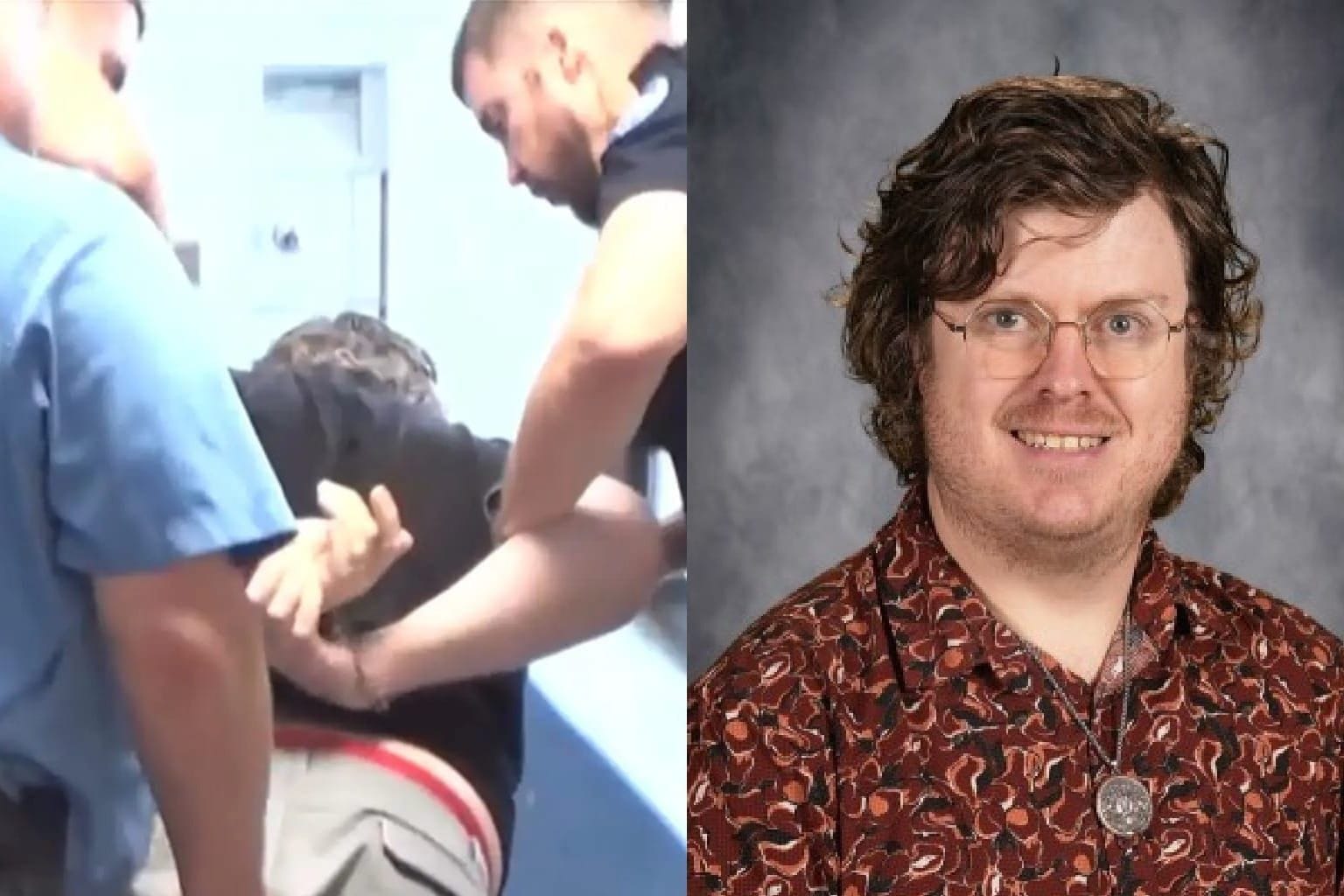
Emporia Kansas has dropped its criminal case against Lux Claridge, a high school teacher who was arrested for clapping during a city data center meeting.
“Today, I was informed by my attorney that the city has dropped my charges and has passed my information along to the county. As far as I know, I'm in the clear unless the county is feeling froggy,” Claridge told 404 Media in an email on Monday.
Claridge's lawyer forwarded them a message from Emporia's assistant city attorney: "Due to conflicts on this matter, the case has been dismissed without prejudice in municipal court and sent to the County Attorney’s office for their review."
The small town of Emporia, Kansas is fighting against its city commission and a proposed hyperscale data center project that would sit on 1,000 acres of prairie land near Claridge’s home. Claridge attended a commission meeting on July 22 and planned to speak out against the project, but was dragged out of the meeting and arrested by police when they clapped during a presentation.
Emporia held Claridge for eight hours and charged them with disorderly conduct and interfering with a law enforcement officer. The city refused to show 404 Media a copy of the arrest report and has not responded to a request for comment about the dropped charges.
After Clardige’s arrest, Emporia’s city commission moved to virtual meetings and ended public comment. The city said it was doing so “in the interest of public safety.” According to Claridge, the city commission announced that in-person meetings with open public comments will return soon. “Our mayor is ‘willing to give us another shot to act like grown ups,’” Claridge said, quoting Emporia mayor Becky Smith. They added that the city will vote on whether or not to ban hyper-scale data centers outright in November.
According to a press release from the Emporia city commission, the city will meet in-person in a special session open to the public on August 26. “Public comment is expected to resume at the regular September 2 meeting,” the announcement said. In a different press release, the city said the November vote on a data center ban hinges on a County court giving it the OK.
Emporia did not return 404 Media’s request for a comment.
Ypsilanti Township in Michigan passed a six month moratorium on “major electric utility infrastructure” on Tuesday night. The moratorium is a delaying tactic, the latest in the Township’s long fight to stop the construction of a $1.2 billion data center that’s backed by the University of Michigan and the Pentagon’s nuclear war scientists at Los Alamos National Laboratories (LANL).Last year, the university announced it was partnering with LANL on the construction of a massive 220,000 square fo
Ypsilanti Township in Michigan passed a six month moratorium on “major electric utility infrastructure” on Tuesday night. The moratorium is a delaying tactic, the latest in the Township’s long fight to stop the construction of a $1.2 billion data center that’s backed by the University of Michigan and the Pentagon’s nuclear war scientists at Los Alamos National Laboratories (LANL).
Last year, the university announced it was partnering with LANL on the construction of a massive 220,000 square foot hyperscale data center in Ypsilanti Township and residents have been fighting it ever since. During a meeting of the Township Board on August 18, the council unanimously passed a resolution that will delay the construction of new electrical infrastructure for 180 days.
💡
Do you know anything else about this story? Is your town fighting a data center? I would love to hear from you. Using a non-work device, you can message me securely on Signal at +1 347 762-9212 or send me an email at matthew@404media.co.
Data centers need a lot of energy, and Michigan’s power authority will have to build new substations in the Township to power the proposed facility. The moratorium asked the local power authorities to use the six month delay to study noise pollution and how the new infrastructure would affect existing customers.
The moratorium is narrowly focused on “the nature and scale of electrical infrastructure necessary to serve new high-energy-demand land uses [...] including infrastructure associated, but not limited to hyper-scale data centers, mid-sized data centers, artificial intelligence computing facilities, and high-performance computational centers, industrial facilities, and other intensive electrical users.”
Earlier this month, the University of Michigan announced it had settled on a specific plot of land in Ypsilanti Township — a 144-acre plot on Textile Road. In a press release about the decision, the University said the data center would have the “capacity to change the world” and insisted it would not be a “high value target risk” in a war, that it would not store any hazardous nuclear material, and was not a weapons production facility. LANL previously confirmed that the data center will be used for nuclear weapons research. Ypsilanti Township Supervisor Brenda Stumbo told WEMU news that the selection of the site was a “travesty of justice” because it ignores constituents’ concerns about environmental impact.
During the August 18 moratorium vote, the Board projected a large stock photograph of an electric substation behind its members. The photo was meant to remind people of the size of the incoming infrastructure and the lack of communication from the university about it.
“This picture’s really important to think about because U of M has been so crystal clear that they’ve been communicating to us abundantly — which is not true,” Township clerk Debbie Swanson said during the meeting. “That speaks to the lack of respect.”
Ypsilanti Township's data center fight is unique in that its board of local leaders are united with the community in opposition to the project. Township Board members have repeatedly spoken about the University's lack of respect and lack of communication. “We will fight to our very last breath,” Strumbo said during a Board meeting in June. In April, the Board voted to institute a 365 moratorium on delivering water to data centers. The University threatened legal action in response and called the move “discriminatory.”
The University of Michigan declined to comment on this story.
X’s algorithm learns what you hate and shows you more of it, according to a new study just published in the Proceedings of the National Academy of Sciences (PNAS). The paper, titled Value misalignment of X’s feed algorithm is a reflection of value tensions in engagement, found that the site’s algorithm prioritized engagement above all else when it generated a user’s For You Page. It also showed that X serves more ragebait to people who say they are Democrats, although the exact reason for tha
X’s algorithm learns what you hate and shows you more of it, according to a new study just published in the Proceedings of the National Academy of Sciences (PNAS). The paper, titled Value misalignment of X’s feed algorithm is a reflection of value tensions in engagement, found that the site’s algorithm prioritized engagement above all else when it generated a user’s For You Page. It also showed that X serves more ragebait to people who say they are Democrats, although the exact reason for that is unclear.
“In 2026 that’s maybe not the most surprising headline ever,” Ziv Epstein, a postdoctoral researcher at Stanford University, and co-author of the paper, told 404 Media. “So we actually dug in a little deeper to figure out why this is actually happening, and it turns out that X's feed algorithm, like a lot of these social media algorithms, is optimized for engagement [but] it turns out that not all types of engagement are considered equally.”
The study’s goal was to understand how a user’s self-professed values system might shape what they see on X. “We recruited a nationally representative sample of N = 715 Americans who are active users of X in September and October 2024, quota matched on ethnicity, gender and partisanship, to install a browser extension to collect their [For You Page] and Following feeds,” the study said.
Epstein said the study was observational and meant to get people asking questions about what they want to see on social media, how their feed is designed, and by whom. “There are these social media algorithms that have enormous amounts of power in our lives, they shape the information that we consume, and we have very little transparency into how they operate and what their implications are,” he said. “And so, we were very interested in trying to understand the particular effects of this particular algorithm, and so I think that has kind of important implications for civil society and just fighting some of the technofeudalistic tendencies of platforms to control these algorithms.”
For the study, researchers collected a “values inventory” of the volunteers using a research tool called the Schwartz Theory of Basic Values. The values inventory in the study is presented as a wheel with 19 points that corresponded to features like “tolerance,” “dominance,” “hedonism,” and “openness to change.” Users also reported their political alignments.
Then researchers watched how users engaged with posts on X and how those posts reflected their self-reported values. “We observe that the inventory of posts from followed accounts reflects users’ self-stated values — but that there is an overall negative correlation (misalignment) between users’ explicit values and the values in content that the algorithm is more likely to amplify,” the study said.
When a user on X sees a post that makes them mad — like a press release from a politician from a political party they don’t like — sometimes they’ll fight about the post in the replies. It doesn’t matter who you follow or what your stated values are, X reads replying as engagement and will send more of the infuriating posts the user’s way.
“When we look at commenting, the act of replying to posts, that's where we actually see some kind of meaningful misalignment between people’s values and the values of the content they’re replying to,” Epstein explained.
Most of the participants liked and reposted content on X and got served more of the same sort of content. Replying was rare, just 6.8% of the interactions according to the study, but had an outsized impact on the algorithm. “Replying is only a fraction of engagement, but there does seem to be some evidence that these algorithms are prioritizing and learning more from this kind of rarer form of engagement,” Epstein said. “So it’s this feedback loop of outrage baiting. The algorithm learns that you get outraged and then continues to serve more content in that direction and that seems to be particularly true of the Democratic users of our study.”
Though this happened across the political spectrum, the study found that ragebaiting occurred more for users that identified themselves as Democrats. “Democrat users confront the abundant value-misaligned content by replying to it, which the algorithm in turn preferentially learns from and continues to feed them,” the study said. “This highlights a core tension with how engagement-maximizing algorithms operate on social media: frictions between users’ stated preferences and their behaviors of reactive confrontation are exploited by engagement-maximizing algorithms to create runaway feedback loops of increasing value misalignment.”
Epstein said he’d need to do more research to find out why X seems to serve ragebait to Democrats more often than Republicans. It could be that there’s more rightwing content on X overall or it could be that Democrats tend to engage with posts they disagree with more often. “There might be some kind of differential effects on information diets there, or it might be something more psychological about how different you know partisan identities are triggering different kinds of actions and reactions, but ultimately I don't want to speculate too much,” he said.
I asked Epstein if he worried that prioritizing “values” in a social media algorithm might lead to more siloed user bases and more echo chambers. “I do think that if we go kind of down this path of thinking through and imagining value line social media feeds, we do have to be very aware of the potentials of value echo chambers, right?” he said. “Where people just, you know, they have the certain values that they have, and all the content they see is just aligned with those values. I think that is a very scary and dark reality.”
But he also said that values are intentional and that thinking about the kind of stuff you want to see on a social media site before you pull up your feed is a positive. “You're pumping the brakes, you're taking a breath, and you're thinking about what you actually really care about. In this world — and I don't have the data for this — but I would speculate that a lot of people actually do care about seeing a diverse set of content and engaging meaningfully across these lines, and you know maybe that isn't a particular value on my 19-dimensional wheel, but this is just a starting point of thinking about our intentions and thinking very deliberately about the kind of information we want to be exposed to, versus the the knee-jerk reaction that we're kind of learning in this very kind of short, shallow attention span, emotion and negative affect-driven model of these very myopic forms of engagement.”
X did not return 404 Media’s request for comment, but Nikita Bier — X’s former head of product — confirmed that the site’s algorithm had at one time been set to favor replies. “This is no longer true,” Bier said in a post on X. “The largest contributor of seeing ragebait was the reply predictor and we were aware that angry replies were causing people to see more of that content. So last month, we gave the reply predictor a 15x boost if it’s a friend’s post — and it reduced ragebait by [an] order of magnitude.”
Update 8/18/26 at 1:30PM: This story has been updated to include a comment from X’s former head of product

 Connexion