
 Connexion

Civil society is Ukraine’s superpower. A free course traces how it grew from Euromaidan to the front

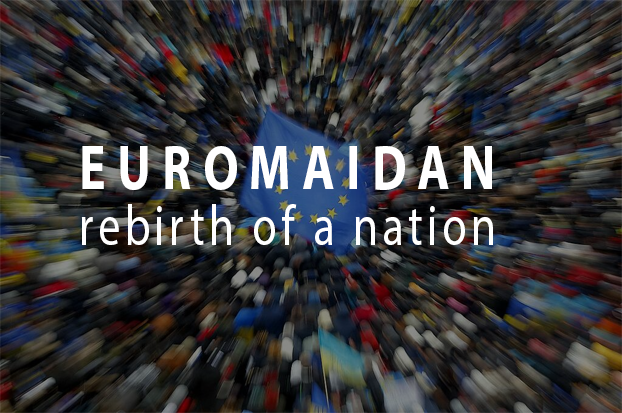
I remember the day Euromaidan started. For months before it, the country had felt like it was going the wrong way, and I felt powerless to stop it. My life was one rally after another: against the pressure on small entrepreneurs, in defense of the Ukrainian language, against the plan to turn Hostynnyi Dvir, a historic arcade in Kyiv, into a shopping mall. The authoritarian pressure kept rising, and so did the helplessness.
Then, on 21 November 2013, the journalist Mustafa Nayem wrote a Facebook post calling people to the square after President Viktor Yanukovych's government suspended preparations to sign the association agreement with the EU. Nobody knew how to stop what was happening. But we knew we had to act.
Thirteen years later, a free online course, Ukraine: History of Civil Society, tells the story of what was born on that square: a civil society that has carried Ukraine through revolution and war. Among its authors is Oleksandra Matviichuk, who co-founded Euromaidan SOS; one of its presenters, the researcher Kateryna Zarembo, now serves as a combat medic.
A country inside a country
The regime's reach felt total. It extended to the courts and the police; we even wondered whether it extended to the army. It was like tentacles spreading everywhere, and you were one small, frightened person watching them close in. But then you get together with others and start thinking, and start doing even silly little acts of resistance. That is what the Maidan was: a microcosm of resistance, a city inside a city, a country inside a country.
It was an alchemist's laboratory where initiatives were born, some funny, some silly, some very useful. The Maidan had its own newspaper and its own self-defense: guys trained by former security officers to patrol its edges and by former army officers to hold defensive formations behind wooden shields. Farmers delivered food so the protesters would have something to eat, and one man boiled a huge pot of borscht every day. Artists formed their own art sotnia, a unit named after the Cossack "hundreds" the protest was organized into. There was an Open University of the Maidan with lectures on civil society, and a library. Girls dressed as angels handed flowers to the Berkut riot police, to warm their hearts.
Euromaidan SOS searched for the protesters who went missing: abducted, jailed, or dragged through the courts. AutoMaidan drivers rescued activists from hospitals, because the regime could order hospitals to hand over anyone with visible signs of a Berkut beating. Volunteer medics built a parallel health care system. And there were the initiatives to tell the world what was happening, one of which became Euromaidan Press.
If you came, you found a job. First I cooked and brought food, made sandwiches. Then I started in the kitchen, got bored, and found my way to a translating job. At Christmas, I took my small daughter to the Maidan, and we sang carols to the activists in the tents.
I didn’t think of it then, but I was doing what the course’s last lecture describes: passing it on. The course follows Myroslava Barchuk, who went to the Revolution on Granite in 1990 as a student with her mother, then to the Orange Revolution, and whose son Nestor came to the Euromaidan chanting “Ukraine is Europe!” Freedom in Ukraine, the course argues, is carried from one generation to the next, often by hand.

Everyone brought what they could. "I am a drop in the ocean," went one of the mottos. We didn't know what to do, but we knew we had to do something, and suddenly there was this acute sense that it depends on you. Even if you're one drop, your effort matters.
The more pressure there was, the more people came. In January 2014, the activist Ihor Lutsenko was abducted together with Yurii Verbytskyi. Lutsenko was beaten and left in a forest; Verbytskyi was found dead. And still more people came.
The course’s lecture on the Revolution of Dignity describes what we lived through from the outside.
Its lecture on the Revolution of Dignity describes what we lived through. After the failed attempt to clear the square on 11 December, it says, the Maidan turned into "Maidan Sich," a fortified island "with its own system of governance," from security to garbage collection. "For thousands of Ukrainians, for whom the state had become a threat and an instrument of violence, the Maidan became a space of security."

Not self-expression, but survival

This is what the West tends to miss about Ukrainian civil society, says Yevhen Hlibovytskyi, director of the Frontier Institute and one of the course's authors, whom I interviewed for Euromaidan Press.
"The state in Ukraine is far more threatening, it carries more dangers, and the relationship between the citizen and the state is far more strained. It is mostly a zero-sum game," he says. "That is why civil society in Ukraine flourished as an instrument of security, an instrument to protect society from the arbitrariness of the state."
Seen through Western eyes, he says, it looks baroque, a strange, unnecessary splendor. "In Ukraine, this splendor was a requirement of life, a condition of survival."
The West, he says, doesn't understand why Ukraine needs its civil society at all, "or that activism is not a form of self-expression. Activism is rather a form of service. It is a need, not some optional leadership."
Ukrainians are still too traumatized by their past to hand the state full power, he says: "We want the state to be weaker, more limited, so that if at some point it becomes arbitrary, it cannot harm people or take their lives."
From the Maidan to the front
For many years, Ukrainians had lived in a passive belief that they could not change anything. The course opens on that problem: countries that lived through totalitarianism, it says, "might have millions of residents but not many citizens." In 2013, the lecture says, only 8% of Ukrainians said they were involved in public affairs.
After the Euromaidan Revolution, that changed. Activists lobbied for the anti-corruption institutions that exist today. Lawyers keep pushing judicial reform. Come Back Alive, founded in 2014 to buy helmets and body armor, is now one of the largest charities supplying the army. In 2017, the course notes, over half of Ukrainians trusted volunteers, against 5.3% who trusted parliament.
Not all the reforms are done. What keeps them going are the people who feel they cannot stop.
Many of those people went into the state itself.
- Mustafa Nayem, whose post started it all, and Ihor Lutsenko both served in parliament.
- Tamila Tasheva, founder of CrimeaSOS to help those displaced by Russia's occupation of Crimea, became the president's representative in Crimea and is now an MP.
- Maria Tomak, who began on the Maidan as a volunteer with Euromaidan SOS and co-founded the Media Initiative for Human Rights, headed the department of the Crimea Platform at the president's mission for Crimea.
- Olha Reshetylova, a journalist who co-founded Come Back Alive in 2014, became Ukraine's first military ombudsman in December 2024.
- Oleksandra Matviichuk, co-founder of Euromaidan SOS, heads the Center for Civil Liberties, which received the Nobel Peace Prize in 2022.
Some stopped. Many kept going, all these 13 years, exhausted to the bone. They make themselves by building the Ukraine they want to see.
Christine Eliashevsky-Chraibi was one of them. Her mother survived Ravensbrück, the Nazi concentration camp for women, where she was imprisoned as a young Ukrainian political activist; the family later settled in Canada. Christine answered the call for translators on the Maidan and never left. She stayed with Euromaidan Press for 12 years, because she felt it was her duty to keep telling the world what she could about Ukraine. She died this year. We wrote about her in our tribute.
Many others now defend Ukraine with their lives. Lutsenko, the activist who was almost killed during the Euromaidan Revolution, is serving his fifth year in this war, in drone units, and now helps train new drone pilots. Kateryna Zarembo, too, traded research for a medic’s kit.
Roman Ratushnyi was beaten by the Berkut on the first night the police attacked the protesters. He went on to defend the Protasiv Yar neighborhood in Kyiv from illegal construction, and was killed near Izium in June 2022. "The less people fight for changes, the less they are citizens," he said, in words the course's final lecture quotes. His older brother Vasyl was killed in February 2025. Their father is still serving, and their mother is left without her sons.
What the West could learn
Hlibovytskyi's point now reads less like theory than like a warning. "The Western world has learned to combine freedom and a high quality of life," he says. "Ukraine adds resilience to this mix. And this resilience will be needed in the West too, in time. The world has become dangerous. The sense of security turned out to be deceptive."
It doesn't matter which ocean you live behind, he says, "if cyberterrorists are acting against you or identity politics is destroying solidarity." Look at Russia's hybrid warfare spreading across Europe: disinformation, drones over airports, sabotage. Ukrainians didn't wait for their government to act.
In the West, governments work, so criticizing them can be a form of self-expression. In Ukraine, you have to build the state yourself. "No state can protect citizens who do not want to be protected," Hlibovytskyi says. "The state of democracy depends directly on how citizens carry out their duties."
Bruised, but not broken
Ukraine is taking blow after blow. Millions have left, and many have been killed. We are exhausted. And still the drive keeps going forward, still it tries to reform, even as so many reformers are at the front and the pace has slowed. It is bleeding and bruised, but it is still there: the drive toward a life in which justice and dignity are honored. It is the soul of the country.
That is what is underestimated. Euromaidan is too often described as a product of outside forces. That is a lie. What fed it was the quest for justice and dignity that drove all those people onto the square. "Justice is a fundamental archetypal feature of Ukrainians," the dissident Myroslav Marynovych says in the course's final lecture. "If it is violated, Ukrainians rise to revolt."
About the course
Ukraine: History of Civil Society is free on Coursera: 12 lectures of 9 to 13 minutes, from the Revolution on Granite through Euromaidan to the full-scale war. It was created by the East Europe Foundation and the Ukrainian Institute with EU funding. Its authors include Oleksandra Matviichuk, Olha Onuch, Sevgil Musayeva, and Yevhen Hlibovytskyi, and it is presented by Kateryna Zarembo and Tymofii Brik.
