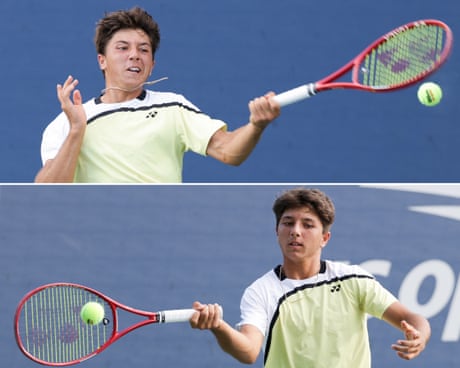
Teo Davidov doesn’t hit backhands. He serves from both sides. The 16-year-old from Denver is treating the tennis world to a wildly unorthodox style – and proving it’s more than a parlor trickTeo Davidov always has the upper hands. An amiable junior prodigy from Denver, the 16-year-old was the oddest sight at this year’s US Open, the only player in the tournament – man, woman or junior – who hits only forehands. To be clear: it’s not that he doesn’t have a backhand or can’t hit a backhand. He’s a
Teo Davidov doesn’t hit backhands. He serves from both sides. The 16-year-old from Denver is treating the tennis world to a wildly unorthodox style – and proving it’s more than a parlor trick
Teo Davidov always has the upper hands. An amiable junior prodigy from Denver, the 16-year-old was the oddest sight at this year’s US Open, the only player in the tournament – man, woman or junior – who hits only forehands. To be clear: it’s not that he doesn’t have a backhand or can’t hit a backhand. He’s ambidextrous and so he doesn’t bother with them.
It’s nothing personal. “To be honest, I like the traditional backhand-forehand,” he says. “I like the classiness of it. I like hitting backhands myself just to play around, just for fun.” He hits those from both wings, too.
The 23-year-old’s epic win over Carlos Alcaraz means there is a real chance of an American man winning the US Open for the first time since 2003In yet another graveyard shift at the US Open, Ben Shelton showed he can hang around late, ousting defending champion Carlos Alcaraz in five sets in a quarter-final that started on Tuesday night and finished on Wednesday morning. When Shelton fired the final ball out wide for his seventh ace of the night, the clock on the Arthur Ashe Stadium court read 3
The 23-year-old’s epic win over Carlos Alcaraz means there is a real chance of an American man winning the US Open for the first time since 2003
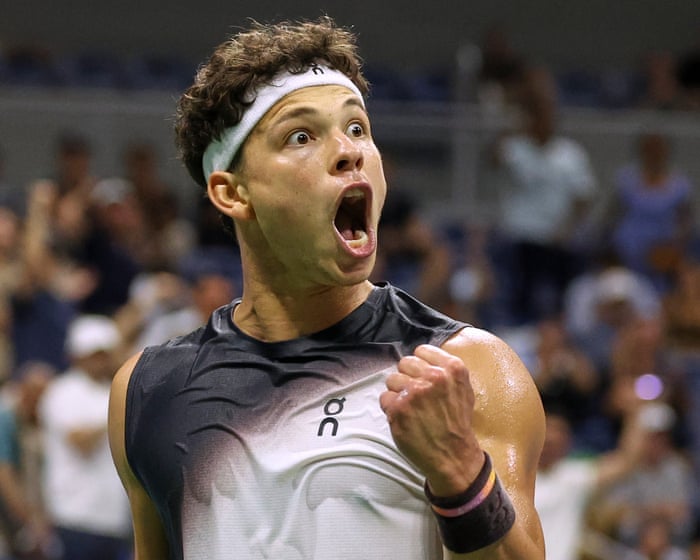
In yet another graveyard shift at the US Open, Ben Shelton showed he can hang around late, ousting defending champion Carlos Alcaraz in five sets in a quarter-final that started on Tuesday night and finished on Wednesday morning. When Shelton fired the final ball out wide for his seventh ace of the night, the clock on the Arthur Ashe Stadium court read 3.33am. It was the latest-ever finish at the Open and the fifth-latest finish in grand slam history.
After embracing Alcaraz at the net, he pumped his fists and greeted his coach’s box with a primal scream. Parents have a name for this: the zoomies. Then Shelton looked to the stands and gestured at his mother and his girlfriend, soccer star Trinity Rodman. In his on-court interview, he asked that his sister, Emma, be given the day off. She had spent the entire night and much of the early morning watching her little brother play.
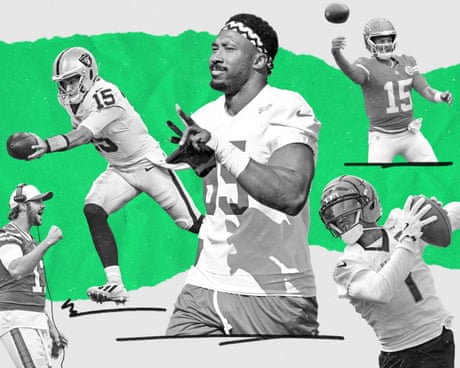
The new season kicks off on Wednesday night. Our writers have their say on the MVP, rookies to watch and the disasters waiting to happenQuarterbacks living under center. The NFL has developed into a shotgun league, where most quarterbacks take the majority of their snaps three to seven yards away from the center. But the increase in efficiency when it comes to snaps taken right behind the center should have coaches directing their quarterbacks to do more of it. Matthew Stafford, Caleb Williams,
The new season kicks off on Wednesday night. Our writers have their say on the MVP, rookies to watch and the disasters waiting to happen
Quarterbacks living under center. The NFL has developed into a shotgun league, where most quarterbacks take the majority of their snaps three to seven yards away from the center. But the increase in efficiency when it comes to snaps taken right behind the center should have coaches directing their quarterbacks to do more of it. Matthew Stafford, Caleb Williams, and Sam Darnold led the way in 2025, and others will follow. DF
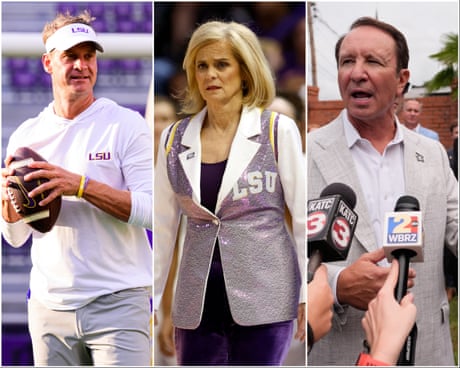
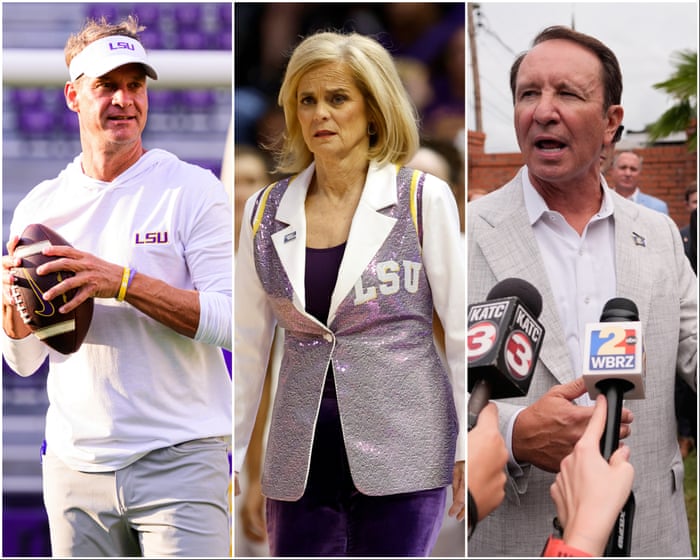
Recruiting ex-pros. Inflaming Ukraine-Russia tensions. Suing the SEC and being sued back. The school is adapting to a new reality – and also creating a new oneIn 1893, a chemistry professor named Charles Coates arrived at Louisiana State University and wrote that, to his surprise, “there was practically no athletics in the student body: no football, no tennis, and only very little baseball in the spring.” A broad program of sports struck him as the kind of thing a school should have, particularl
Recruiting ex-pros. Inflaming Ukraine-Russia tensions. Suing the SEC and being sued back. The school is adapting to a new reality – and also creating a new one
In 1893, a chemistry professor named Charles Coates arrived at Louisiana State University and wrote that, to his surprise, “there was practically no athletics in the student body: no football, no tennis, and only very little baseball in the spring.” A broad program of sports struck him as the kind of thing a school should have, particularly as US universities were beginning to tout intercollegiate athletics as critical to a balanced higher-ed experience and another way to justify the cost of entry. But 133 years on, sports aren’t merely the main attraction at LSU. They’re the school’s raison d’être, the blinkered obsession that consumes the university and its most prominent ambassadors.
Any doubt that the business of educating college students is just a nettlesome distraction from the business of college sports in Baton Rouge has been emphatically dispelled over the past 10 months. On the football side, the school has spent or committed roughly $162m to its last three head coaches: Ed Orgeron, the folksy national champion in 2019 who received a $17m buyout when he was fired two years later; Brian Kelly, the unloved underachiever who received a $54m buyout after being fired last October; and Lane Kiffin, the Kelly replacement whom it signed to a $91m deal a month later. Clemson, the opponent for LSU’s season opener at home on Saturday, are about to find out what all that money buys.

 Connexion