Vue normale

  • ✇Coda Story
  • Iran’s cryptocurrency enablers
    There has never been a better time to be a billionaire. It’s official, Forbes says so, and it’s got the numbers to prove it. Top of the magazine’s annual list is, of course, Elon Musk who is only a Bernaud Arnault (worth about $147 billion) and some change away from being the world’s first trillionaire. But to get the real headliner, we need to drop down to number 17 where we find Changpeng Zhao ($110 billion, since you ask), founder of cryptocurrency exchange Binance and business partner of
     

Iran’s cryptocurrency enablers

18 mars 2026 à 09:55

There has never been a better time to be a billionaire. It’s official, Forbes says so, and it’s got the numbers to prove it. Top of the magazine’s annual list is, of course, Elon Musk who is only a Bernaud Arnault (worth about $147 billion) and some change away from being the world’s first trillionaire.

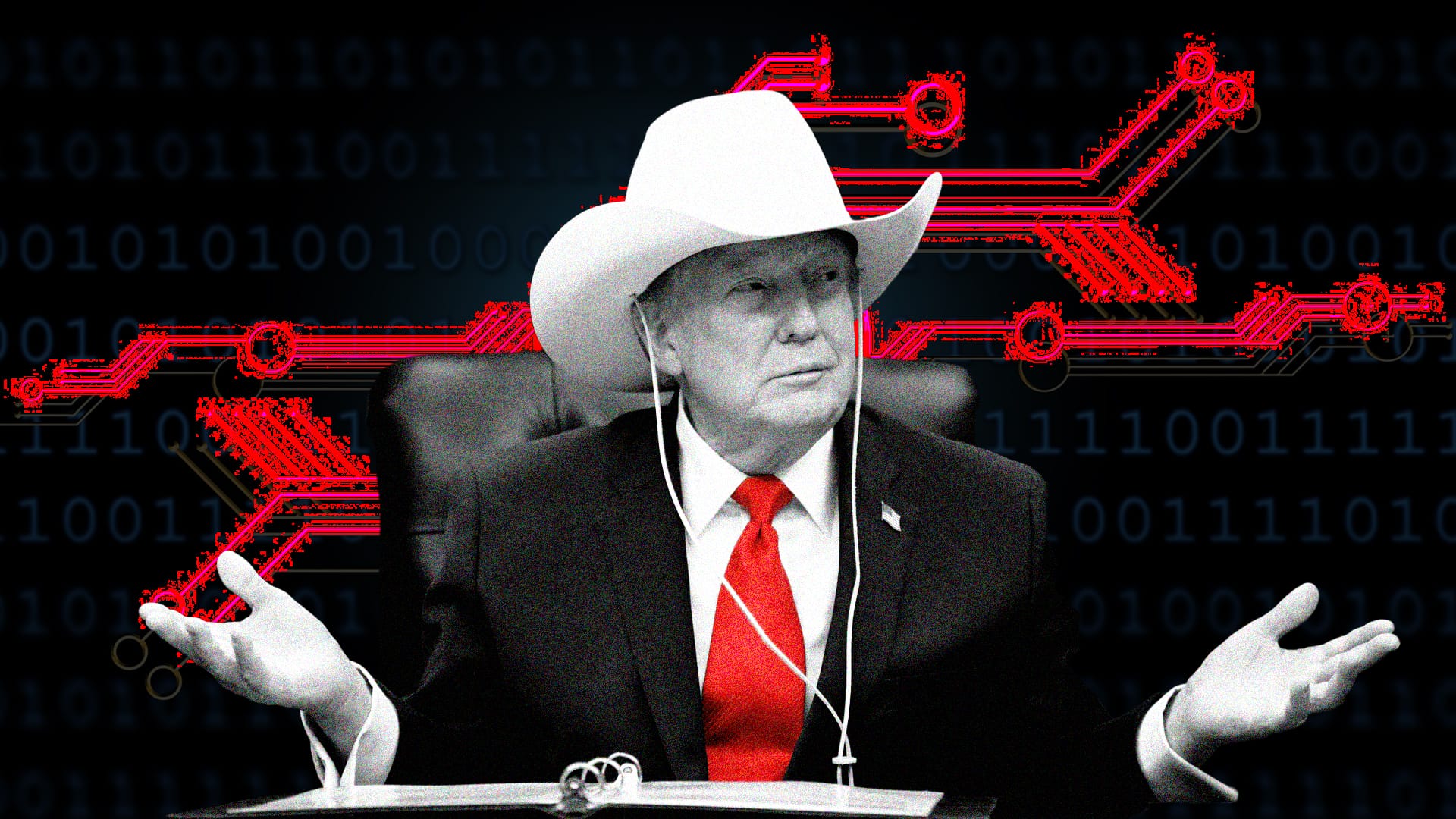
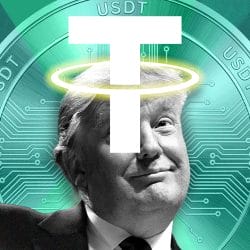
But to get the real headliner, we need to drop down to number 17 where we find Changpeng Zhao ($110 billion, since you ask), founder of cryptocurrency exchange Binance and business partner of the Trump family’s own crypto firm. Centibillionaires are old hat now but CZ is, as far as I can tell, the first centibillionaire on the Forbes list to have been pardoned by the U.S. president for egregious financial criminality. That feels like quite a big deal so congratulations to him.

CZ’s pardon last October was, according to the White House, because his 2023 plea deal and $4.3 billion fine for enabling money laundering on an industrial scale were the result of “an overly prosecuted case by the Biden administration” and part of a war on cryptocurrency.

Awkwardly for all concerned, Binance is now suing the Wall Street Journal after it reported that $1 billion had moved through the company to Iran-backed terror groups. And the Wall Street Journal has not only declined to spike the story, it has doubled down by reporting that the Justice Department is now investigating the firm’s actions. “The Wall Street Journal couldn’t determine whether the Justice Department is investigating Binance itself for potential misconduct, or solely the customers on its platform,” the WSJ said. But either way, considering the White House has committed to wiping out Iran’s support of terror groups and upended the global energy markets in its quest to do so, the news reports alleging that CZ’s company enabled those same groups would surely be embarrassing for all concerned, were any of them the kind of people capable of embarrassment.

After all, the fact that Iran is using crypto on a huge scale to evade the sanctions placed on its activities, and to support foreign proxies like Hezbollah, with the active connivance of some of the biggest companies in the crypto world, could only be a surprise to the most witlessly incurious of numbskulls. Or perhaps, I suppose, they are all making so much money from crypto that they don’t care who else might be.

While we’re on the subject of Trump, he’s at No. 640 on the list of billionaires as I write this, nearly tripling his wealth in just the last two years. Forbes has this very apropos explanation: “Donald Trump has presided over the most lucrative presidency in American history, adding billions to his net worth, largely by cashing in on crypto.” 

But, I hear you ask, what about non-billionaires? How are the few billion of us whose net worth isn’t counted in the billions doing? Well, not great. And I’m beginning to feel a bit concerned about what this all means for democracy. “The widening gap between the rich and the rest is at the same time creating a political deficit that is highly dangerous and unsustainable,” said Oxfam International Executive Director Amitabh Behar back in January, and the situation has gotten worse since then.

The Bank of England’s animal stories 

I spend a lot of time at the moment talking in public about money laundering because of my new book. Top of my list for policy suggestions for tackling financial crime, if anyone were to ask, is that governments should stop printing large denomination bills: $100 bills, €200 notes or — worst of all — Switzerland’s colossal 1,000-france banknote are little used by ordinary people, but extremely helpful for criminals looking to transport large amounts of wealth in a small space.

So, in one way it was great that Britain was temporarily convulsed by controversy around banknotes last week. It’s high time we talked more about them. Could this spell the end of the UK’s own big bill: the £50, of which the Bank of England issued almost an extra 30 million last year, even though pretty much the only people that ever use them are criminals and tax dodgers? Would Britain finally get serious about ending the epidemic of financial crime?

No, of course not, the controversy was entirely about the Bank of England’s decision to replace the pictures of people on its next series of banknotes with pictures of animals. For some reason, badgers were mentioned. Also otters. “It says all you need to know about the lack of seriousness of the Bank,” said former business secretary Sir Jacob Rees-Mogg, without any apparent irony, considering his own spectacular lack of seriousness in agreeing to comment on this absurdly unserious confection.

A sledgehammer that cracks nuts

While researching the anti-money laundering system that has grown over the last few decades, I have come to find it strange that there isn’t more public disquiet over the powers that governments have awarded themselves to check ordinary people’s transactions. When there is concern, it tends to come from crypto/libertarian bores (the kind of people who talk about ‘Operation Choke Point 2.0’), so perhaps no one else wants to be associated with it. But I think the situation would be a bit healthier if more of us engaged with what is being done to us in ways that we can get.

I obviously think that tackling money laundering is of huge importance, but I am coming round to the view that more public pushback over exactly how that is being done would be good. It would force policymakers to justify what they’re doing, and therefore come up with some techniques that actually work, instead of the ineffective but intrusive mess we have at the moment.

To cut a long story short, I found this contribution from the Dutch non-profit organisation ‘Privacy First’ to be interesting. “Instead of managing risk, banks seek to eliminate it by withdrawing altogether from customers or sectors perceived as problematic. The burden of compliance and over-enforcement often falls not on criminals, but on already marginalised communities with limited access to remedies,” it says.

I agree with that, and I agree also with its argument that beneficial ownership transparency should not be absolute. Were there to be opt-outs from ownership registries for vulnerable people, there would be less scope for rich crooks to argue that shell company transparency is a violation of their human rights. 

A version of this story was published in this week’s Oligarchy newsletter. Sign up here.

The post Iran’s cryptocurrency enablers appeared first on Coda Story.

  • ✇Coda Story
  • Why Kleptocrats go to war without a care in the world
    Kleptocracy is a global system, which allows crooks, thieves, oligarchs, tycoons, and the like to enjoy their wealth while evading any responsibility to the society where they obtained that wealth. It infects different countries to different extents, and I’ve been very impressed by the Bloomberg investigations into how kleptocratic the Iranian elite has become. If you’d like a shortcut to those investigations, this new video is worth watching. Obviously, Iran’s regime has been vicious and aggres
     

Why Kleptocrats go to war without a care in the world

11 mars 2026 à 09:22

Kleptocracy is a global system, which allows crooks, thieves, oligarchs, tycoons, and the like to enjoy their wealth while evading any responsibility to the society where they obtained that wealth. It infects different countries to different extents, and I’ve been very impressed by the Bloomberg investigations into how kleptocratic the Iranian elite has become. If you’d like a shortcut to those investigations, this new video is worth watching. Obviously, Iran’s regime has been vicious and aggressive from the start, but I do think there is a new kind of vicious aggression that develops when a country’s elite becomes kleptocratic, and thus is — in essence — colonising its own country. 

If it is extracting wealth, hiding that wealth offshore and thus secure in its future, it is able to take risks and make decisions without concerning itself about their effect on ordinary people. “While ordinary Iranians contend with a collapsing currency, rising prices, fuel shortages and now war, elites like (Hossein) Shamkhani have translated political lineage into global capital — buying property abroad, securing foreign passports and moving freely through systems that everyday citizens cannot enter,” Bloomberg notes.

Much of the elite’s ability to enrich itself has come from its evasion of Western sanctions, which Iranians have had decades of practice in learning how to dodge. And the role of cryptocurrencies in enabling Iran’s kleptocrats is clearly significant, as demonstrated by this report from Chainalysis. But of course the backbone of the corruption has been the elite’s control over trade, and thus its ability to move value to safe havens like Dubai (that’s not looking as safe as it did of course but, don’t worry, the money can easily find a new home), which gives it the security to fire missiles without worrying too much about retaliation.

In this though, I’m not sure Iran is particularly unusual. A lot of the governments involved in the crisis in the Middle East are a bit like those F. Scott Fitzgerald characters who “smashed up things and creatures and then retreated back into their money or their vast carelessness”.

Israel’s Benjamin Netanyahu has been dancing on the edge of a corruption trial for the best part of a decade, ever since he was indicted in 2019 for, among other things, accepting “hundreds of thousands of pounds in luxury gifts from billionaire friends”. Donald Trump’s family has assets worth more than double what they were just two and a half years ago. The earnings from crypto alone are enough to guarantee the most comfortable of futures. These two are very definitely careless people, as is everyone around them.

If this ill-planned military adventure ends badly, then the elites of none of the combatant countries will end up suffering in the way that ordinary Iranians, Israelis or Americans will. This sense of impunity infects much of the discussion of the war: how, for example, could someone who feels any connection to other people be exulting in their death in the way that U.S. Secretary of War Pete Hegseth does? In this bloodthirstiness, as in so many other aspects of kleptocracy of course, Russia led the way, but the rest of the world is catching up and I don’t think we’re ready for what that will look like.

An important aspect of this, again long visible in Russia with its dreadful public services and military failure in Ukraine, is that corruption does not just enrich elites, it also degrades state capabilities. “Corruption at the top always rolls downhill. Once it becomes open and acknowledged, it leads to corrupt and slovenly acts throughout a system,” as Phillips Payson O’Brien argues, in a piece which builds on another article in which he lays out how the Russian model might be worth applying to much of what’s happening in the United States.

This of course adds fresh weight, not that it’s needed, to the urgency of shoring up defences not just against foreign interference in the democratic processes of those countries that still have them, but to getting big money out too. It’s great that a U.S. politician has, for the first time, taken the Political Integrity Pledge and won (though admittedly only a primary), but just to get to the stage of standing in the general election, he’s had to raise more than $20 million. Too much of that and pretty soon you’re talking about real money.

This week at Tether

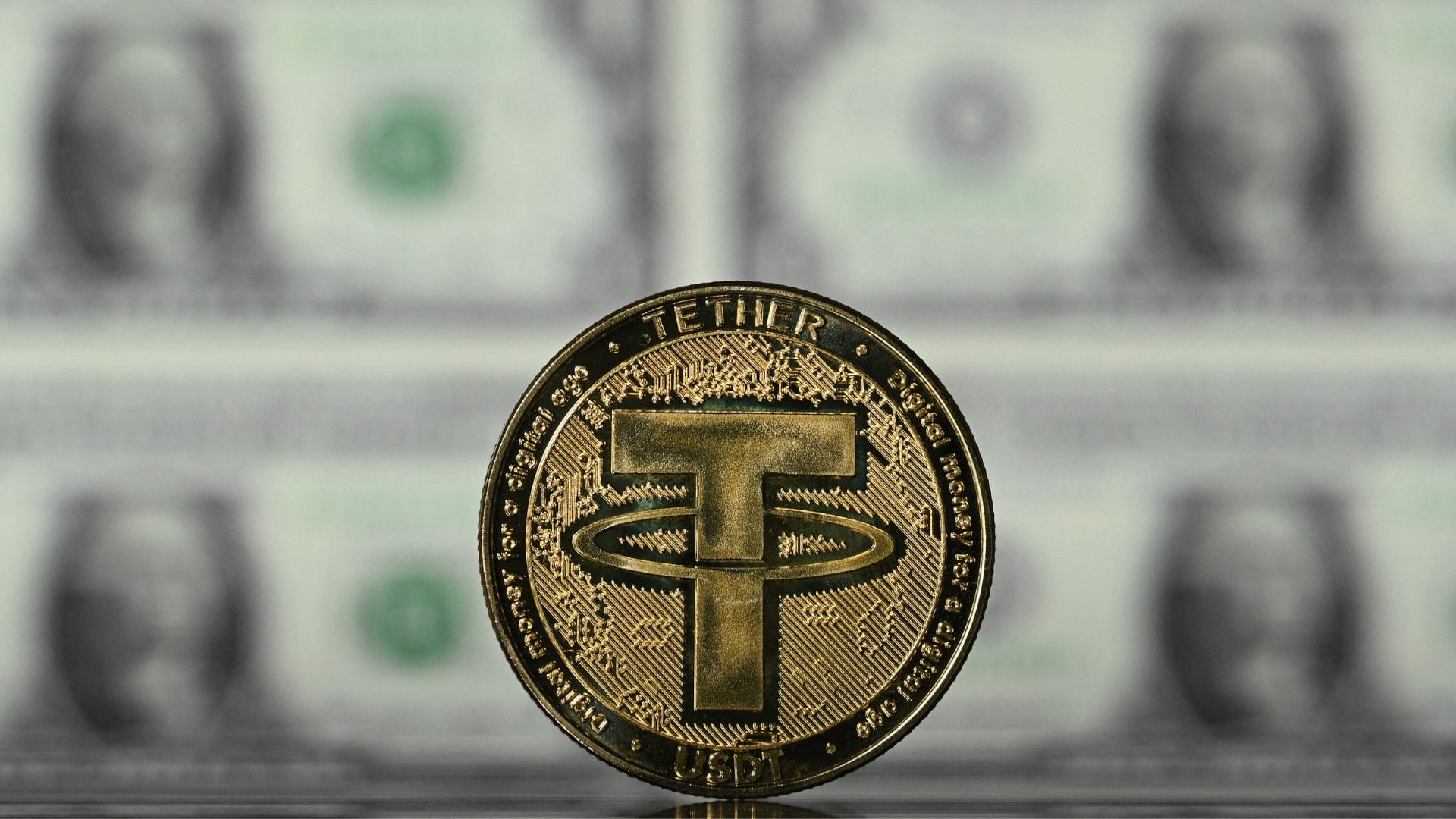
Talking about real money, the latest episode of Tether watch is a weird one: our favourite crypto concern has just invested $50 million in a smart mattress company. Now admittedly, that isn’t even two days’ worth of last year’s profits, so it’s not exactly a big deal for CEO Paolo Ardoino but it’s still sufficiently sinister to be worthy of mention.

I find it disturbing enough that tech companies are harvesting our browsing history to make money from, but it’s a whole other level to have Tether — Tether!?! — monitoring what people get up to in bed. It’s all, apparently, about personal sovereignty, which is to say you should stop trusting big companies with your data and instead trust it to Tether, including with what’s happening in your head: “Paolo's $200 million acquisition of a majority stake in brain-computer interface company Blackrock Neurotech may not be because he is optimistic about the size of the brain-computer interface market, but because he does not want the brain-computer interface to be controlled by others”.

Historians are going to be so confused by this; assuming of course that there will still be historians, which may be an over-optimistic assumption about a future with brain-computer interfaces.

The need to know your enemy

I’ve been talking to quite a lot of people about money laundering of late, and one of the enduring problems is the lack of reliable ways to gauge the scale of the problem. We’ve been saying it’s between 2% to 5% of the world economy since the late 1990s, but beyond repeating that age-hallowed guesstimate, how do you measure it? 

Often we turn to other measures, such as how many suspicious activity reports get filed, or how many fines get imposed. So, on that note, is it good or bad that the UK’s Financial Conduct Authority imposed fines last year of just £124 million, a decline of 78% from half a decade earlier? Maybe this means there’s 78% less crime? Or maybe it means that the FCA has stopped investigating 78% of crime? Or maybe 2021 was just a really big year for fines (which it was)? Or maybe something else happened?

The answer to this is that we should properly investigate money laundering not just criminally but also academically, looking at gaps in statistics and devising new methods of measuring how large the criminal economy is, rather than rely on proxies for it. That would not only help us identify what to target, but also help us see what techniques are working as criminal wealth rises and falls. As it stands, it feels like we’re waging a war without a clear idea of where the enemy is, and what the final goal might be, and there’s quite enough of that going on elsewhere at the moment.


A version of this story was published in this week’s Oligarchy newsletter. Sign up here.

The post Why Kleptocrats go to war without a care in the world appeared first on Coda Story.

  • ✇Coda Story
  • Can a Task Force set up to punish the little guy, take on Trump?
    This is going to be a big year for the Financial Action Task Force, the world’s standard-setter on money laundering regulations, under its new president Giles Thomson. Quite apart from the standard folderol of plenary meetings, reports and publications, it is due to send a mission to assess the United States. This whole process will not be quick, and there will be the usual abundant opportunity for acronyms, circumlocution and horse-trading. But eventually the hooves are going to have to hit
     

Can a Task Force set up to punish the little guy, take on Trump?

4 mars 2026 à 08:55

This is going to be a big year for the Financial Action Task Force, the world’s standard-setter on money laundering regulations, under its new president Giles Thomson. Quite apart from the standard folderol of plenary meetings, reports and publications, it is due to send a mission to assess the United States.

This whole process will not be quick, and there will be the usual abundant opportunity for acronyms, circumlocution and horse-trading. But eventually the hooves are going to have to hit the road. There is simply no way of hiding the fact that, under Donald Trump, the United States has broken its promise to bring greater transparency to shell companies; nor that it has scaled back prosecution of financial crimes, pardoned convicted financial criminals, and unleashed a crypto frenzy.

Throughout its history the FATF, set up by the G7, has been able and willing to overlook transgressions from big countries that it wouldn’t tolerate from smaller ones. It punished the remote island states of Niue and the Marshall Islands in its first ever blacklist for their lack of transparency around shell companies, for example, while merrily tolerating the fact that not even the Federal Bureau of Investigation could figure out who owned a corporation in Nevada. Nauru got punished for moving dirty Russian wealth while the UK and Switzerland didn’t.

The FATF’s structure, which ensures it is dominated by large economies, is a classic example of how, if you’re not at the table, you’re on the menu. But, in the past, those large economies have at least pretended to go along with its recommendations. They’ve made promises, passed legislation, convened working groups, said the right things: all of which has given everyone the diplomatic cover they need to keep each other off the naughty step.

Trump’s not doing any of that, and it’s hard to believe that he’s going to change that habit. If the FATF criticizes his administration, I think we can safely assume Trump won’t take that well, and could — if past behavior is any guide — pull the United States out. But if the FATF doesn’t criticize what he’s been up to, it will lose all credibility. 

Speaking for myself, I think the FATF’s conception, structure and techniques are all flawed, perhaps irreparably, and that it has been part of the problem, rather than part of the solution, for most if not all of its 37-year history. Perhaps, therefore, Giles Thomson should get ahead of the looming fiasco by declaring a complete overhaul of the whole organization, re-examining its recommendations, its memberships, its strategy, and more.

What are the chances of that happening? Well, here’s some news from the Pacific: “Papua New Guinea one step away from being blacklisted, global money laundering watchdog warns”. Is Papua New Guinea the problem? No. Do we get anywhere by pretending that it is? Also no. Will the FATF carry on regardless anyway? I would love to be surprised by the answer to that question.

The need to clean house 

I’m a big fan of this video from Transparency International’s UK chapter, which lays out the inglorious history of corruption in British politics, and urges the government to be more ambitious in its new piece of legislation. TI has pointed out three areas where it thinks the government should go further, and I agree with all of them, but I would also like to see a complete ban on crypto donations, which would help prevent compliance departments being overwhelmed by automated efforts to circumvent donation limits.

I would also urge you to read this comment piece from RUSI about the threat to democracy posed by big funders from the American right, which has significance far beyond British politics. The world’s remaining democracies have been slow to recognize how radically the values of many U.S. billionaires have diverged from what we traditionally associate with conservatism, and to shore up their defences against them. “The task now is to strengthen our democratic guardrails — calmly, transparently and proportionately — before those boundaries are redrawn by others,” the writers Neil Barnett and Eliza Lockhart conclude.

Transparency International’s Russian chapter has been in exile since 2022 for obvious reasons (last year, for example, it had to issue a statement to argue that “fighting corruption is not terrorism”) but it has continued to conduct really valuable investigations into how illicit wealth flows in and out of its home country, including a recent one detailing the use of shell companies in the UK’s tax havens to trade with Russia, and identifying $8 billion worth of transactions.

The worst offender as a source of opaque companies was the British Virgin Islands, though Bermuda was also a problem, moving sanctioned products — including lead and zinc — as well as oil and other fossil fuels, a surprisingly large number of yachts, and a jet that ended up belonging to Chechen strongman Ramzan Kadyrov (whose ill-health is, apparently, once more the subject of speculation, poor chap).

“For many years now, we have observed a dysfunctional equilibrium in which illicit financial flows, tax evasion, sanctions circumvention, and other forms of misconduct are channelled through firms and intermediaries registered in unaccountable jurisdictions,” TI-Russia notes. Fortunately, however, the British government is hosting an illicit finance summit this June and so has the perfect opportunity to set an example by making sure this kind of thing stops happening on the territory it’s responsible for if nowhere else.

Here’s an interesting story from the Netherlands, where luxury firm Louis Vuitton was fined half a million euros for failing to identify customers spending large amounts of cash. This case was part of an investigation into the Chinese money laundering technique known as ‘daigou’, in which value is transferred internationally not via the financial system but by buying expensive objects and then reselling them in China. High-end fashion is often used in the system, and it will be intriguing to see if other countries follow the Dutch lead and investigate unusual cash purchases.

And here’s a piece on our favorite crypto company Tether, which is apparently valued by market participants at between $200 and $350 billion. That is less than estimates made in the summer, but still an awful lot of money. Fun fact: finance firm Cantor Fitzgerald has a five percent stake in Tether, which is thus worth $10 to $17.5 billion, via a convertible bond. Another fun fact: Cantor Fitzgerald is owned by Commerce Secretary Howard Lutnick’s children. 

Interesting question, would the prospect of your family earning a windfall of that size affect how stringently you would approach the regulation of a financial institution accused of involvement in industrial-scale money laundering? Lutnick, who led Cantor Fitzgerald for over 30 years, is of course not the kind of man who would let petty cash cloud his judgement, so this question is of academic interest only, but still, worth thinking about.

A version of this story was published in this week’s Oligarchy newsletter. Sign up here.

The post Can a Task Force set up to punish the little guy, take on Trump? appeared first on Coda Story.

  • ✇Coda Story
  • Why we must make elections cheap again
    I like writing about the huge consequences of tiny details: a compromise made at a G7 meeting in 1989 by people who didn’t know what they were doing that now defines all anti-money laundering work; an opportunist deal among London bankers in the mid-1950s which created the globalized financial system; things like that (read my books if you want more.) Few tiny details are more consequential than the rules around democratic processes, and particularly those that define who pays for them: just
     

Why we must make elections cheap again

25 février 2026 à 08:55

I like writing about the huge consequences of tiny details: a compromise made at a G7 meeting in 1989 by people who didn’t know what they were doing that now defines all anti-money laundering work; an opportunist deal among London bankers in the mid-1950s which created the globalized financial system; things like that (read my books if you want more.)

Few tiny details are more consequential than the rules around democratic processes, and particularly those that define who pays for them: just look at the effects of the U.S. Supreme Court’s decision in a dull-sounding case in 2010. A lot of other democracies are looking at the U.S. right now and thinking they’d like to avoid replicating this experiment with endless money, which is one reason why the UK has a new ‘Representation of the People Bill’.

As it stands, it looks like a big missed opportunity.

Much of the requirement for the tighter rules proposed in the bill is the need to tackle foreign interference, a concern stoked by suggestions that the Kremlin helped secure victory for both Brexit and Donald Trump in 2016. Although I can see why we don’t want Vladimir Putin near our political systems, I’ve always thought these concerns missed the point: home-grown oligarchs dislike democracy as much as Russian ones do and, since they are more numerous, richer and far better-connected, we should worry about them more.

So, it is a great shame that the UK’s new bill hasn’t imposed a cap on political donations to prevent the kind of funding arms race that has infected the United States, and which is gearing up in the UK too, or stripped away a lot of the unnecessary complexity in the existing regulations that create the kind of loopholes exploited in the Brexit referendum. Most importantly, it has failed to address the growing threat of cryptocurrencies and impose the same kind of ban on crypto donations that Ireland has.

A democracy is sovereign, and a crucial defence of that sovereignty is ensuring only actual voters fund its operations. British law enforcement agencies acknowledge that they already don’t have the resources they need to keep up with what bad actors are doing with crypto, so why would politicians take the risk of allowing crooks to buy influence by making it easier for them to hide what they’re doing?

“If you put an element of crypto in what is already a complicated and sometimes lengthy trail to hide the true source of the funds, you are just adding another layer of complexity. Anything we can do to take away that friction is good,” said Rachael Herbert, director of the National Economic Crime Centre, to a parliamentary committee.

It is not too late to close this gap in the bill, and to prevent it from becoming one of those little details with huge consequences. Blocking cryptocurrencies will not solve the problem caused by oligarchs’ assault on democracy, but at least it would help not make it worse, and it is always easier to mend things before they break.

On that note, credit to Daniel Lobo-Lewis for trying to use some of the mechanisms of the unregulated U.S. political funding system for a good cause (“Give us money to get money out of politics. It makes sense if you don't think about it too hard”) by creating the political integrity project. He’s built a tracker so you can see how much cash different candidates have raised, and which of them have pledged to try to get money out of politics, and it’s a lot of fun to play around with. 

Here’s what it looks like when there is unfettered money in politics. Lobbyists for crypto firms are planning to spend $263 million on the midterm elections this year. That is not only more than the entire oil and gas industry spent in 2024, but more than double the total spent by all parties in the UK’s last general election. This is not healthy.

I’ve largely avoided writing about the Jeffrey Epstein revelations, because I don’t feel like I have anything to add to what everyone else has already said, but they do spectacularly demonstrate the size of the threat posed to girls in particular and society in general when the political, cultural, financial and economic elites of a country become entangled, give each other money, do each other favours, and generally take over the world. 

Preventing this kind of collusion is why it’s important to keep big money out of politics, so at least there is a source of power in society that’s independent of the oligarchs.

Crooks thriving in chaos

While on the subject of human trafficking, Chainalysis has produced this alarming report on how crypto helped traffickers move their profits last year, including from child sexual abuse material (CSAM), with a staggering 85% increase in them dong so over 2024.

“CSAM networks have evolved to subscription-based models and show increasing overlap with sadistic online extremism (SOE) communities, while strategic use of U.S.-based infrastructure suggests sophisticated operational planning,” the report notes.

The report gives more evidence for how Chinese money laundering networks based in Southeast Asia are using cryptocurrencies to expand their influence globally (as they also are in fraud), with business deals coordinated via the encrypted messaging app Telegram, and laundered via sophisticated techniques beyond the reach of law enforcement even at the best of times.

And this is not the best of times, what with the United States having abdicated its traditional role as the only country serious about investigating, prosecuting and convicting financial criminals.

“Enforcement is now solely in Washington’s hands, allowing politically driven cases to proceed or be stifled,” noted John Lothian in this scathing commentary contextualised by the FT. “Given the pardons issued by President Trump, there has never been a better time to be a crook. This chaotic formula for enforcement is a disaster or a cluster of disasters waiting to happen, given the explosive growth in retail futures trading, prediction markets, and legitimized crypto trading… ‘God help us’ is the last defence.”

A version of this story was published in this week’s Oligarchy newsletter. Sign up here.

The post Why we must make elections cheap again appeared first on Coda Story.

  • ✇Coda Story
  • Why the law lets financial criminals off the hook
    There’s a story I often tell when I talk about my new book: a couple of years ago, an adviser to a senior politician here in the UK asked me for some suggestions for policy proposals for tackling financial crime. I told him I’d like more resources for law enforcement agencies. His reply: “that’s not going to get us many headlines, is it?” This story is intended to illustrate how one of the reasons for the world’s failure to stop money laundering is that politicians are addicted to the sugar r
     

Why the law lets financial criminals off the hook

11 février 2026 à 08:55

There’s a story I often tell when I talk about my new book: a couple of years ago, an adviser to a senior politician here in the UK asked me for some suggestions for policy proposals for tackling financial crime. I told him I’d like more resources for law enforcement agencies. His reply: “that’s not going to get us many headlines, is it?”

This story is intended to illustrate how one of the reasons for the world’s failure to stop money laundering is that politicians are addicted to the sugar rush of new policy announcements, but shun the hard work of enforcing old ones. But it’s indicative of a problem with journalism too. Journalists like to talk about shiny new things — crypto! AI! — and ignore the old ones that we’ve already reported on. 

This is the lesson I draw from the horror of the Jeffrey Epstein revelations, with the rich, powerful men dividing up the world between themselves. Crooks and thieves may invent new tools, but they’re always designed to do the same old job: steal. A world-weary shrug — “politicians on the take? How is that a story? Bring me something new” — just lets them off the hook.

So in a small gesture towards being the change I want to see in the world, this week’s newsletter is about massive problems that have been going on for so long that everyone’s kind of forgotten about them, but which we should still be trying to solve because they’re still massive problems.

Global Financial Integrity, a research and advocacy organisation in Washington DC, has been arguing for almost two decades that we need to spend as much time looking at how illicit value flows through the trade system as we do looking at the financial system. In simple terms, by lying on the documentation that accompanies trade shipments, exporters can suck wealth out of poorer countries and — according to GFI’s analysis — have been doing so on a vast scale for decades.

In its latest analysis of trade flows out of Sub-Saharan African nations, GFI has identified “a renewed intensification of trade misinvoicing risks across the region”, with an average of $112.97 billion in value disappearing each year over the past decade, and at an accelerating rate. This total significantly exceeds that of the countries’ new debt over the same period, meaning that they should be seen effectively as net creditors to the world, rather than as net debtors.

“Illicit outflows on the scale observed in Africa have dire consequences for development. Every dollar siphoned out of African economies is a dollar not taxed or invested at home,” GFI concludes.

This phenomenon is often called ‘Trade-Based Money Laundering’, and is central to how illicit finance works, including the business model of the giant new ‘Chinese Money Laundering Networks’, but policy proposals for how to tackle it are sorely lacking. 

There has been, however, no shortage of suggestions for how to stop criminals being able to hide their identities behind shell companies when moving illicit funds. Corporate transparency has been pushed by the Financial Action Task Force since its earliest days. 

Efforts to achieve that goal have foundered in the European Union and the United States, but the UK has been a bright spot, with its notoriously filthy corporate registry of a decade ago adopting new rules to clean itself up. It would be nice to think this would mean we’d no longer see insiders from ex-Soviet republics using UK-registered companies to arrange questionable deals, but here’s the Organised Crime and Reporting Project to set us right.

“Two UK companies with no prior record in the mining industry have won tens of millions of dollars in Uzbek state procurement contracts,” the report states. “One was owned, on paper, by a septuagenarian British bookkeeper with no evident ties to Central Asia. The other, by a UK corporate services provider that for years managed corporate structures that shielded their true ownership from public view.”

The real meat in this sandwich, however, is how — after the journalists asked questions about the companies — their owners were able to seamlessly change the inconsistent pieces of information in the registry, much of it backdated, despite the supposedly more stringent new requirements.

I know this may all seem a bit academic because, thanks to the gutting of the U.S. Corporate Transparency Act, it’s easier, cheaper and murkier to use an American shell company these days anyway, but it’s important to remember that the battle hasn’t yet been won anywhere.

And one of the reasons it hasn’t been won is incompetence by underfunded and under-supported regulatory bodies. This was once again on display in the disastrous attempt to punish a British lawyer for allegedly persecuting a whistleblower who helped to expose the workings of the vast OneCoin scam. 

Everything about the case has been a fiasco: the fact that the fraud happened in the first place; the fact that the fraudster was able to retain a British lawyer; the fact that the regulatory action took eight years to happen; the fact the tribunal threw the case out; and now the fact the regulator is on the hook for everyone’s costs. I would say this has achieved nothing, but it’s worse than that: now the regulators have a reason to be even more timid than they already are.

It means that theft keeps happening and even when efforts are made to find the stolen wealth and punish those responsible, the damage has already been done. For instance, it’s good that UK prosecutors are launching a case against Nigeria’s notorious former oil minister, but how much better would it have been if theft hadn’t been so easy in the first case?

Of course that’s not to say that we shouldn’t talk about shiny new problems too, so here’s this week’s instalment of Tether watch. Fair warning — it is unusually gross, even by the low standards of this newsletter’s most regularly-appearing crypto company.

“Private Telegram groups for the sharing of secretly taken footage of women and girls take payment via the popular Chinese digital payments systems Alipay and WeChat Pay, as well as the cryptocurrency Tether.” One group “offers access to more than 40,000 videos of secretly taken footage from hotels, homes and public toilets for a $20 ‘V.I.P.’ membership”.

Tether denies any wrongdoing, and says that it cooperates with dozens of law enforcement agencies worldwide. It’s clearly doing something right anyway, since it claims to have made more than $10 billion in profits last year, having issued $50 billion worth of new crypto currency, and has launched a separate stablecoin — USAT, as opposed its normal USDT — for the American market.

A version of this story was published in this week’s Oligarchy newsletter. Sign up here.

The post Why the law lets financial criminals off the hook appeared first on Coda Story.

  • ✇Coda Story
  • How Stablecoins make it easy to sidestep sanctions
    In recent years, Western countries have been very reliant on sanctions as a tool of foreign policy and I think it’s a mistake. It’s not too much of an exaggeration to say that sanctions are law enforcement by press release. They punish people without a trial, with little if any chance of appeal, while outsourcing all the hard work to private companies. There’s a small insight into what this looks like in practice from a fine imposed on Britain’s Bank of Scotland last week over its failure t
     

How Stablecoins make it easy to sidestep sanctions

4 février 2026 à 09:33

In recent years, Western countries have been very reliant on sanctions as a tool of foreign policy and I think it’s a mistake. It’s not too much of an exaggeration to say that sanctions are law enforcement by press release. They punish people without a trial, with little if any chance of appeal, while outsourcing all the hard work to private companies.

There’s a small insight into what this looks like in practice from a fine imposed on Britain’s Bank of Scotland last week over its failure to notice that a new customer had been sanctioned for his role in Russian-occupied Crimea. He had registered with a slightly-different spelling of his name — “a changed character and an additional character in the forename, a missing middle name and a changed character in the surname” — which briefly out-foxed the bank’s compliance systems.

I’ve written about this particular gentleman’s adventures in transliteration before. Having opened the account, the bank failed to notice that although he had been removed from the European Union’s sanctions list, he had not been removed from the equivalent UK list, meaning that for 18 days he had access to financial services he should not have had, until various automatic systems and manual checks caught up with him.

In the circumstances, the Bank of Scotland is probably happy to pay its 160,000-pound fine, which also serves to remind financial institutions to invest in all possible compliance-related software, to employ more people who can check and double-check everyone and everything, just in case the next fine is bigger and comes with sharper teeth. 

The upshot is that sanctions just got more expensive, more laborious and more complicated. But have they got any more effective? For that, we need to remember what they were supposed to achieve. “Our actions, taken in coordination with partners and allies, will degrade Russia’s ability to project power and threaten the peace and stability of Europe,” said then-Treasury Secretary Janet Yellen in February 2022, when announcing a first tranche of sanctions, to which many others have since been added, in many countries.

Now, I’m not saying this hasn’t been completely without effect – Russian oil revenues dropped sharply last year, for example — but it’s important to remember she was talking almost exactly four years ago, which means Ukraine has been resisting Vladimir Putin’s Russia for longer than either the USSR or the USA spent fighting Adolf Hitler’s Germany. Whatever the argument about the effectiveness or otherwise of sanctions in eventually stopping Putin’s war machine, you have to agree that they haven’t worked very quickly.

And this creates a problem. As with incompletely applied restrictions on money laundering, sanctions imposed without other enforcement mechanisms fail to defeat the people they’re aiming at, while incentivising them to learn how to circumvent restraints. 

So what’s the solution? Should we just give up on sanctions altogether and create a financial free-for-all equivalent of this year’s Enhanced Games, when cheating will be legalised so a rich man “with a mission to build superhumanity” can pay poorer people to take performance-enhancing drugs and see what happens?

You might think that’s a rhetorical question to which the answer is “OBVIOUSLY NOT!!!”, but that’s kind of what’s already happened. In April, Donald Trump’s Department of Justice decided to step back from the Biden administration’s policy of trying to make crypto companies obey the law. “The Department will no longer target virtual currency exchanges, mixing and tumbling services, and offline wallets for the acts of their end users,” the deputy attorney general said in a memorandum titled ‘ending regulation by prosecution’.

It is hard to over-stress quite how wildly this Enhanced Games-esque policy diverges from the approach taken towards money laundering since 1970, when the authors of the Bank Secrecy Act specifically stated that banks were responsible for the criminal acts of their clients, a financial anti-doping policy subsequently adopted by the whole world.

What’s been the result of the White House’s unilateral surrender? Obviously, it’s too early to see the full effects, but the general outlines of a catastrophe are already visible.

“Illicit cryptocurrency addresses received at least $154 billion in 2025. This represents a 162% increase year-over-year, primarily driven by a dramatic 694% increase in the value received by sanctioned entities,” said Chainalysis, the respected crypto investigations organisation. “We must caveat that this figure represents a lower-bound estimate based on illicit addresses we’ve identified to date.”

That means sanctioned entities moved almost seven times more value via crypto in 2025 than in 2024! That whole approach of using Western dominance of the financial system to restrain geopolitical adversaries is gone, and who knows what, if anything, will replace it.

Stablecoins now account for 84% of all illicit volume, according to Chainalysis, which also separated out the booming business being done by Chinese money laundering networks, which are seizing an ever-greater share of the market with their “industrial-scale processing capacity, operational resilience, and technical sophistication”.

US officials love stablecoins, since their issuers tend to buy Treasury bills to guarantee their assets’ value, which helps provide some extra support for the long-term U.S. policy of piling debt onto future generations rather than raising taxes on presidents’ wealthy friends. But if the approach now involves handing a sanctions-evasion opportunity to mobbed-up Chinese kleptocrats, Russians and others, then it is even more disastrously short-termist than it already appears.

Stablecoin giant Tether, by the way, may be buying a lot of U.S. government debt but is also hedging its bets and investing heavily in gold, of which it buys two tonnes a week. Of course, it keeps its stash in nuclear bunkers in Switzerland. Because why wouldn’t the people behind Tether want to resemble Bond villains even more than they do already? Next month perhaps they’ll announce a new corporate headquarters inside a Japanese volcano, with its own shark pool, stealth catamaran, and space station.

And that’s before we get to the effect of artificial intelligence on how criminals can complicate and obfuscate crypto laundering schemes, something I’ve been hearing about for a while. “The intersection of AI and cryptocurrency reflects the operational reality of contemporary jihadism,” notes one rather terrifying report. “Current counter-terrorism finance systems” it warns, “are structurally misaligned with how terrorists use crypto today.” I see no sign that any government minister anywhere is close to being ready for any of this, or to be honest, even aware that it’s happening.

A version of this story was published in this week’s Oligarchy newsletter. Sign up here.

currents

Subscribe to our coda currents newsletter

Insights from the Coda newsroom on the global forces that shape local crises.

The post How Stablecoins make it easy to sidestep sanctions appeared first on Coda Story.

❌