
 Connexion
Russia’s war economy is starving its own strategic projects
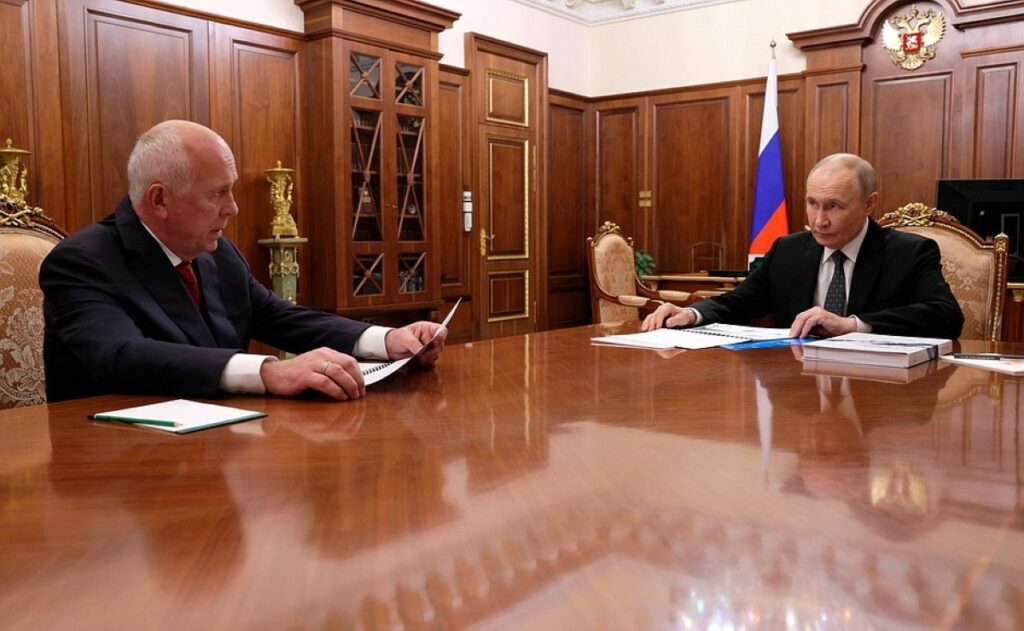
On 17 June 2025—a year ago—Rostec CEO Sergei Chemezov met Putin at the Kremlin and reported that the state arms corporation had more than doubled its net profit to roughly $1.4 billion. Then, in the same meeting, he said three waste incineration plants would have to be frozen “until better days, when money is cheaper.”
Rostec produces 80% of the weapons Russia fires in Ukraine.
Long-term investments have become unviable
In June 2026, a study found that Russia had suspended roughly $2.3 billion worth of data center construction—gutting the infrastructure its government says is essential for sovereign AI.
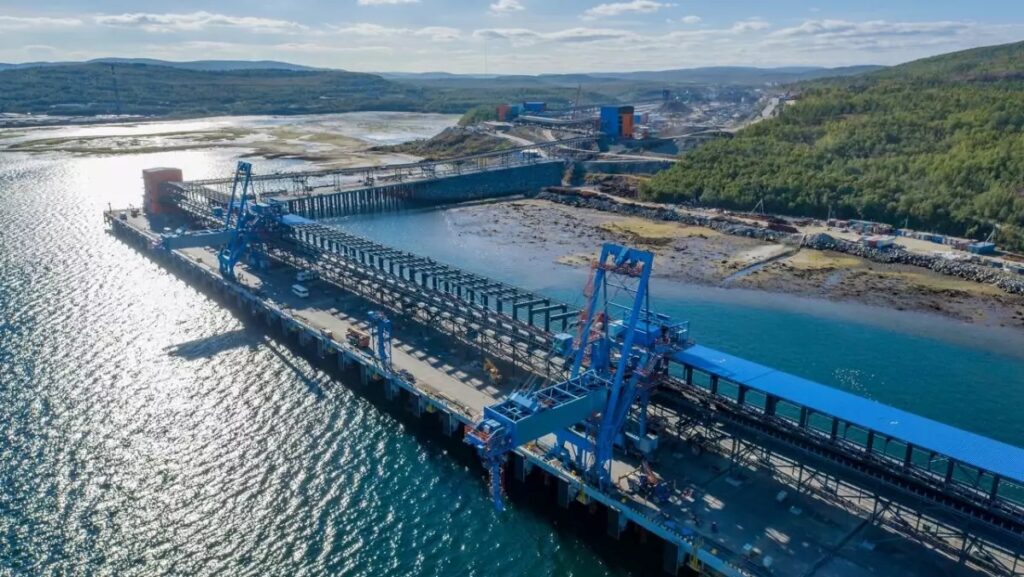
In May 2026, it emerged that the railway to Putin’s flagship Arctic coal port had been halted because Russian Railways could not pay the builders, leaving a terminal that opened to great fanfare shipping just 3% of its design capacity.
“The goal of restoring economic growth is incompatible with the war and accelerating nationalization.”
Russia’s war spending has pushed interest rates high enough to make decade-long investments mathematically unviable, emptied the federal budget, and left state companies choosing between the front and the future.
Boris Grozovsky, a Russian economic journalist and editor of the independent outlet Strana i Mir, told Radio Liberty that the government has no interest in restoring economic growth: “The goal of restoring economic growth is incompatible with the war and accelerating nationalization, and I don’t see anyone seriously pursuing it.”
The data centers Russia cannot build
Russia suspended 38 data center projects over the preceding three years, worth roughly $2.3 billion in total, according to a study by the consulting firm Tekhexpo and the research group PKR, reviewed by Forbes Russia.
“It remains unclear how the task of developing independent AI can be achieved.”
Russia is simultaneously drafting legislation to mandate a sovereign domestic artificial intelligence ecosystem—and watching the buildings that AI needs go unbuilt. “It remains unclear how the task of developing independent AI can be achieved, especially as legislation governing artificial intelligence is now being prepared for adoption,” Filipp Vratskikh, CEO of Tekhexpo, told Forbes.
Commercial data centers are built to pay back over roughly ten years. Stanislav Mirin, an analyst at iKS-Consulting, told Forbes that the Central Bank’s benchmark rate hit 21% in 2025 before falling to still above 14%: “At such rates, the business model often simply does not work.”
Those rates exist because war spending fuels inflation, and the Central Bank raises rates to contain it—a loop that makes any investment taking years to pay back impossible to finance.

Electricity is the second obstacle. About three-quarters of Russia’s commercial data center capacity is in the Moscow region, where obtaining approval for new power connections has become “virtually impossible” for new investors, according to the same study.
Rostelecom president Mikhail Oseyevsky has warned that spare electricity capacity in Russia’s largest cities is nearly exhausted.
Rostelecom president Mikhail Oseyevsky has warned that spare electricity capacity in Russia’s largest cities is nearly exhausted, already limiting new data center construction and blocking large-scale deployment of AI, The Moscow Times reported.
The Arctic port with no railway
In March 2025, Russia opened the Lavna coal terminal in Murmansk—a deep-water port on the western shore of the Kola Bay that Putin personally inspected by helicopter in 2023, describing it as essential to Russia’s Northern Sea Route ambitions.
The project had been in development for more than a decade, with total investment in the wider Murmansk Transport Hub exceeding $1.7 billion. Design capacity: 18 million tons of coal per year.
The port is open. The train cannot reach it.
The Barents Observer reported in May 2026 that construction of the railway branch line connecting the terminal to Russia’s national network had been suspended because Russian Railways lacked the funds to pay its contractors.
The port is open. The train cannot reach it. In its first seven months of operation, the terminal shipped just 3% of its annual design capacity, according to The Coal Hub, an independent coal market platform.
Coal throughput at the older Murmansk Commercial Sea Port has been falling alongside the new terminal’s failure to ramp up, The Barents Observer found—down more than 40% year-on-year in January 2026 alone, and roughly 60% below its 2020 peak, according to The Barents Observer’s investigation published in May 2026.
Coal for Lavna comes mainly from Kuzbass—Russia’s main coal-mining region in southwestern Siberia, on the other side of the country.
The deeper problem is that even a completed railway might not save the project. Coal for Lavna comes mainly from Kuzbass—Russia’s main coal-mining region in southwestern Siberia, on the other side of the country—where production has been falling for years and dropped sharply again in early 2026.
“Even if the state manages to secure the funding to fully commission the Lavna port and the railway line leading to it,” The Barents Observer concluded, “there will be nothing to load.”
The mechanism
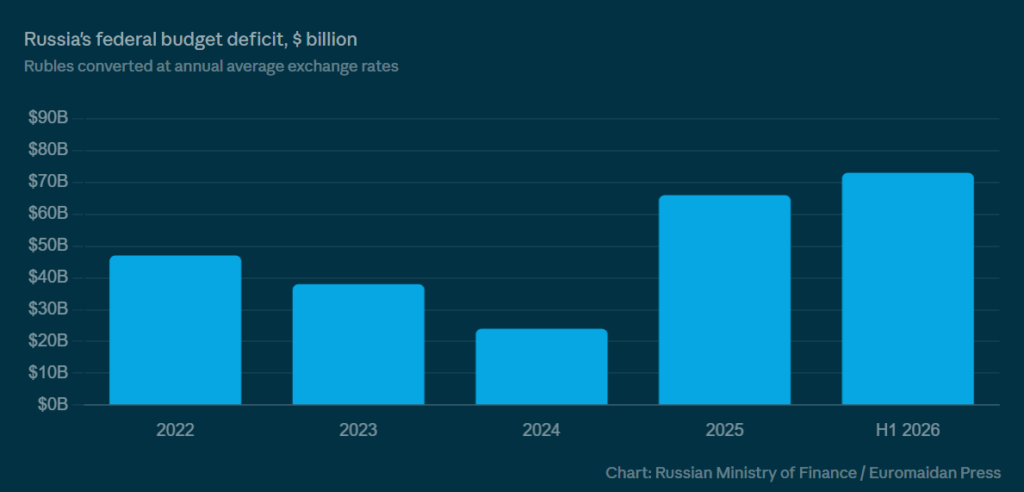
The same forces drive both failures. Russia’s Finance Ministry data, relayed by Interfax, put the federal budget deficit at $77 billion for January–May 2026—already 51% above the full-year target.
The government’s priority is funding the military and defense industry.
The war share of spending keeps growing; everything else competes for what remains. Grozovsky told Radio Liberty that the government’s priority is funding the military and defense industry “in the volumes it needs,” while preventing mass wage arrears and social unrest.
The arms maker’s incinerators are still unbuilt.
